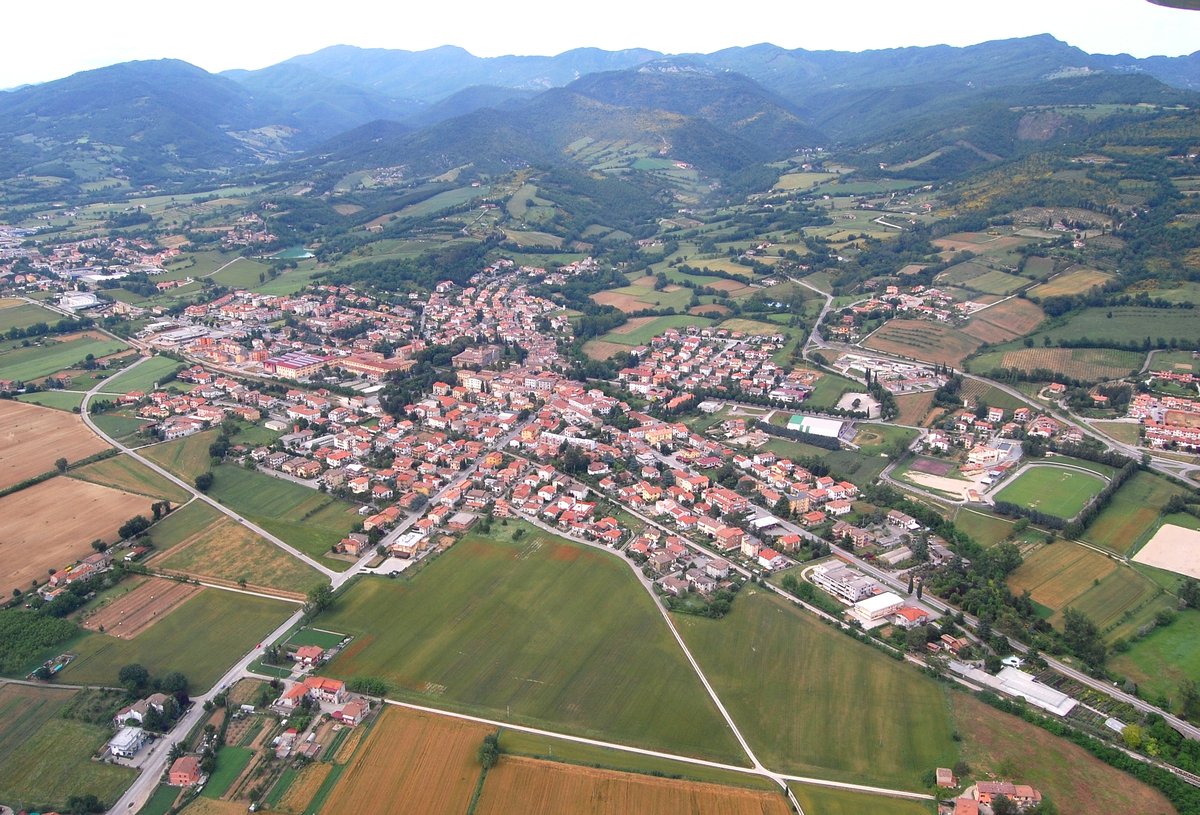
In San Giustino, Umbria, the archaeological area of Colle Plinio reveals the remains of Pliny the Younger’s villa, which he described as a vast natural amphitheater. Excavations have uncovered production and thermal structures, while the nearby museum in 18th-century Villa Graziani displays the artifacts. A visit combining archaeology, landscape, and Roman rural history.
Highlights:
Archaeological museum with artifacts from Etruscan to Imperial times
Guided tour of the excavation area by reservation
Villa Graziani from the 1600s with Italian garden
Panoramic views of the Upper Tiber Valley
Introduction
Imagine walking among the remains of a Roman villa that Pliny the Younger called his favorite, describing it as a natural “immense amphitheater.” At Colle Plinio, in the municipality of San Giustino, the remains of the villa in Tuscis emerge among fields and olive groves, with an atmosphere that feels ancient. And then there’s the museum, housed in the 17th-century Villa Graziani: a dive into the history of the Umbrian landscape, among amphorae, mosaics, and a model that reconstructs the dwelling. A place that smells of the past and tranquility.
Introduction
Imagine walking among the remains of a Roman villa that Pliny the Younger called his favorite, describing it as a natural “immense amphitheater.” At Colle Plinio, in the municipality of San Giustino, the remains of the villa in Tuscis emerge among fields and olive groves, with an atmosphere that feels ancient. And then there’s the museum, housed in the 17th-century Villa Graziani: a dive into the history of the Umbrian landscape, among amphorae, mosaics, and a model that reconstructs the dwelling. A place that smells of the past and tranquility.
Historical Background
The villa originated in the Etruscan era (3rd-2nd century BC) as a productive nucleus; then in the 1st century BC, Marcus Granius Marcellus expanded it with an atrium and courtyards. Pliny the Younger (61-114 AD) inherited the property and transformed it into a lavish residence, complete with baths, gardens, and a small temple. After his death, the villa passed to the state and was frequented until the 5th century. Systematic excavations from 1986 to 2003 brought to light 2 hectares of structures, now visitable by appointment.
Historical Background
The villa originated in the Etruscan era (3rd-2nd century BC) as a productive nucleus; then in the 1st century BC, Marcus Granius Marcellus expanded it with an atrium and courtyards. Pliny the Younger (61-114 AD) inherited the property and transformed it into a lavish residence, complete with baths, gardens, and a small temple. After his death, the villa passed to the state and was frequented until the 5th century. Systematic excavations from 1986 to 2003 brought to light 2 hectares of structures, now visitable by appointment.
- 3rd-2nd century BC – Etruscan phase: square and kiln.
- 2 BC-15 AD – Granius phase: atrium and pars rustica.
- Late 1st century AD – Plinian phase: expansions with portico and small temple.
- 2nd-3rd century AD – Imperial property, abandonment in the 5th century.
- 1986-2003 – Excavation campaigns by the Universities of Perugia and Alicante.
- 3rd-2nd century BC – Etruscan phase: square and kiln.
- 2 BC-15 AD – Granius phase: atrium and pars rustica.
- Late 1st century AD – Plinian phase: expansions with portico and small temple.
- 2nd-3rd century AD – Imperial property, abandonment in the 5th century.
- 1986-2003 – Excavation campaigns by the Universities of Perugia and Alicante.
Pliny’s Villa in His Own Words
Pliny describes his villa in a letter to his friend Apollinaris: a very long portico, an ancient atrium, geometric terraces bordered with boxwood, and a hippodrome full of curves and sculpted hedges. Water features were everywhere: fountains, pools, jets that watered rose-lined paths. The bedrooms were silent and darkened, with walls painted with vines and birds. The baths had swimming pools and the dining room offered views of the countryside. A description so vivid that, walking among the ruins, you can almost see it come to life.
Pliny’s Villa in His Own Words
Pliny describes his villa in a letter to his friend Apollinaris: a very long portico, an ancient atrium, geometric terraces bordered with boxwood, and a hippodrome full of curves and sculpted hedges. Water features were everywhere: fountains, pools, jets that watered rose-lined paths. The bedrooms were silent and darkened, with walls painted with vines and birds. The baths had swimming pools and the dining room offered views of the countryside. A description so vivid that, walking among the ruins, you can almost see it come to life.
The Museum at Villa Graziani
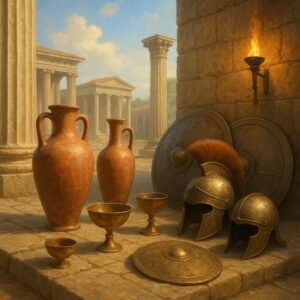
On the ground floor and in the basements of Villa Graziani (17th century), the museum tells the story of the agrarian landscape of the Upper Tiber Valley. Among the exhibits, brick stamps with Pliny’s initials (CPCS) stand out, along with amphorae, ceramics, and a large scale model of the villa. The cellars narrate the wine cycle, while on the first floor the loggia offers a view of the Italian garden. The museum is educational and visits are by mandatory reservation (at least 3 days in advance).
The Museum at Villa Graziani
On the ground floor and in the basements of Villa Graziani (17th century), the museum tells the story of the agrarian landscape of the Upper Tiber Valley. Among the exhibits, brick stamps with Pliny’s initials (CPCS) stand out, along with amphorae, ceramics, and a large scale model of the villa. The cellars narrate the wine cycle, while on the first floor the loggia offers a view of the Italian garden. The museum is educational and visits are by mandatory reservation (at least 3 days in advance).
Why Visit It
1. A dive into Pliny’s letters: no other place makes his letters so tangible. 2. The combination of excavation and museum: first you see the ruins, then you deepen your knowledge at the museum with models and artifacts. 3. The tranquility of the Valtiberina: far from mass tourism, among hills and holm oak woods.
Why Visit It
1. A dive into Pliny’s letters: no other place makes his letters so tangible. 2. The combination of excavation and museum: first you see the ruins, then you deepen your knowledge at the museum with models and artifacts. 3. The tranquility of the Valtiberina: far from mass tourism, among hills and holm oak woods.
When to Go
The most enchanting time? Late spring or early autumn, when the soft light caresses the fields and Villa Graziani’s garden is in bloom. In summer, the heat is noticeable, but the museum’s cool halls offer shelter. Avoid Mondays, as they are closed, and always book in advance.
When to Go
The most enchanting time? Late spring or early autumn, when the soft light caresses the fields and Villa Graziani’s garden is in bloom. In summer, the heat is noticeable, but the museum’s cool halls offer shelter. Avoid Mondays, as they are closed, and always book in advance.
Nearby
A few kilometers away, Città di Castello is worth a stop: its medieval historic center, the Museo del Duomo, and the Pinacoteca comunale. Or, for a food and wine experience, visit the wineries of Valtiberina where you can taste local wines like Rosso di San Giustino.
Nearby
A few kilometers away, Città di Castello is worth a stop: its medieval historic center, the Museo del Duomo, and the Pinacoteca comunale. Or, for a food and wine experience, visit the wineries of Valtiberina where you can taste local wines like Rosso di San Giustino.