Politeama Rossetti: Historic Theater with a 20-Meter Stage and Diverse Programming

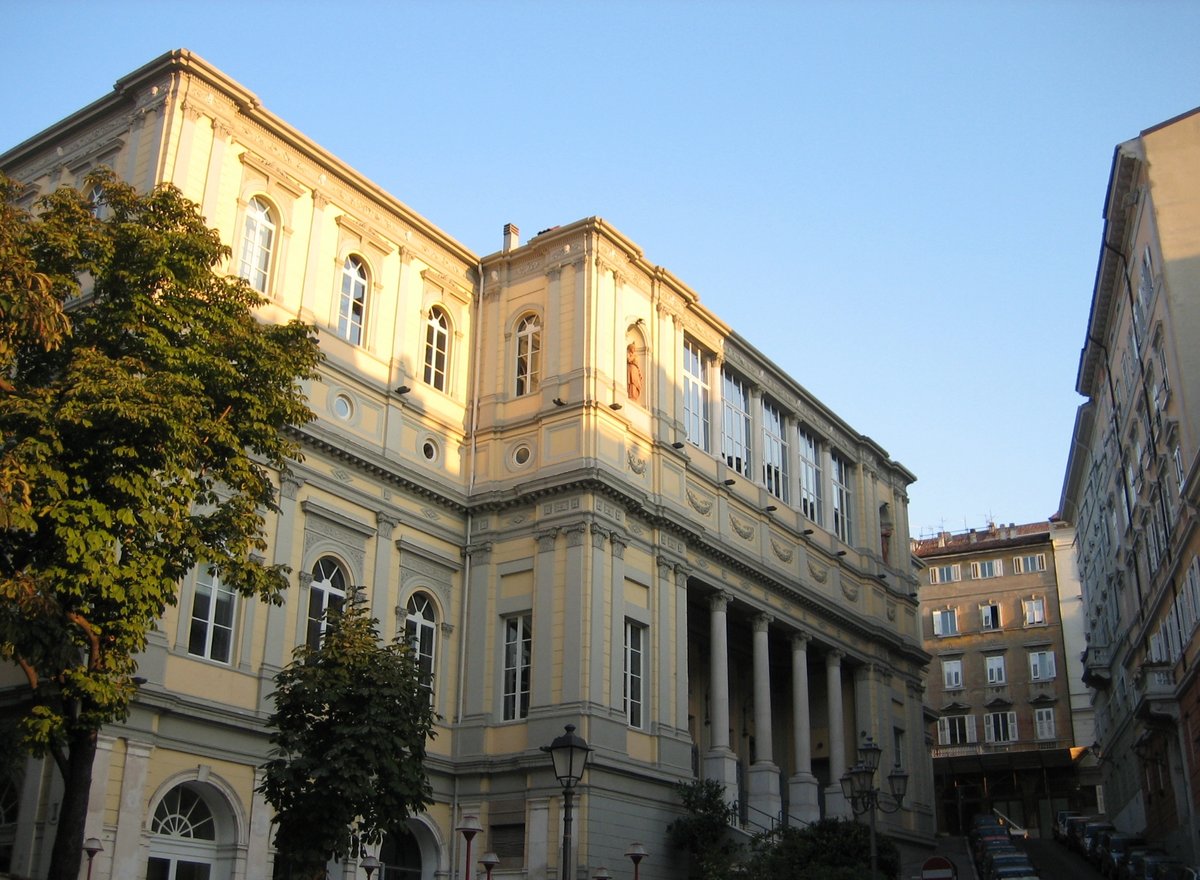
The Politeama Rossetti is Trieste’s most important theater, active since 1878 with a neoclassical facade and elegant interior. Its programming ranges from drama to musicals, from dance to opera, with family shows and special events. Located in the heart of the city, it offers an authentic cultural experience and an informal, welcoming atmosphere.

  • Stage of nearly 20 meters, among the largest in Italy, with functioning 19th-century mechanisms
  • Diverse programming: drama, musicals, dance, opera, family shows, and special events
  • Imposing neoclassical facade and excellent acoustics designed to avoid using microphones
  • Guided tours available to discover behind-the-scenes secrets and history from 1878
Copertina itinerario Politeama Rossetti: Historic Theater with a 20-Meter Stage and Diverse Programming
Politeama Rossetti in Trieste: Historic Theater active since 1878 with a neoclassical facade, one of Italy’s largest stages, programming from drama to musicals, and behind-the-scenes guided tours.

Good to know


Introduction

When you arrive in Trieste, the Politeama Rossetti doesn’t go unnoticed. Its neoclassical facade, with those imposing columns and triangular pediment, immediately makes you realize you’re facing something important. It’s not just a theater; it’s a landmark for the city, a place where culture blends with daily life. I like to think of it as the beating heart of Trieste, especially in the evening when the lights come on and the atmosphere becomes magical. I’ve passed by many times, and each time I stop to look at it: it has that somewhat ancient but always vibrant charm, as if the stories told on stage continue to resonate within its walls.

Historical Notes

The Politeama Rossetti has a history that begins in 1878, when it was inaugurated as an open-air theater. Architect Nicolò Bruno gave it the horseshoe shape that still characterizes the hall today. Initially, it was called Politeama Ciscutti, then in 1904 it took the name Rossetti, in honor of the Triestine dialect poet. During the First World War, it was even used as a military hospital. Throughout the twentieth century, it hosted everything: operas, plays, concerts, even variety shows. In the 1980s, it risked closure, but fortunately was saved and renovated. Today, it is managed by the Teatro Stabile del Friuli Venezia Giulia and is one of the most active theaters in the Northeast.

  • 1878: Inauguration as Politeama Ciscutti
  • 1904: Dedication to Domenico Rossetti
  • 1915-1918: Use as a military hospital
  • 1980: Risk of closure and subsequent recovery
  • 2018: Restoration of the facade

Behind the Scenes

What few people know is that the Rossetti hides some interesting secrets. Its stage is one of the largest in Italy, with a depth of almost 20 meters, allowing for truly spectacular stage designs. During a guided tour (which I highly recommend), I discovered that beneath the stage there are original 19th-century mechanisms still in working order, used for special effects. Another curiosity: the theater has unique acoustics, designed so that microphones aren’t needed in certain parts of the hall. And then there’s the foyer, a more intimate space where meetings with artists or small performances are often held. I was struck by how, behind the elegance of the main hall, there’s a whole world of gears, ropes, and secret passages.

The Programming That Surprises

What I love about the Rossetti is that it doesn’t stick to the classics. Yes, there are major works and dramas, but you’ll also find brilliant comedies, musicals, contemporary dance, and even children’s shows. The theatre season runs from October to May, but in summer the theatre doesn’t sleep: they organise ‘Rossetti Estate’ with open-air performances in the courtyard. Once I saw a comedy in Triestine dialect and, even though I didn’t understand everything, the energy in the room was contagious. I recommend always checking the website because there are often previews or special events, like open rehearsals or meetings with directors. And a tip: gallery seats cost less but have an excellent view, especially for dance performances.

Why Visit It

Three concrete reasons not to miss it. First: it’s the only historic theater in Trieste still active with such a diverse program. Second: the atmosphere is different from more formal theaters—here it’s more informal and welcoming. Third: the location is perfect, in the heart of the city, so after the show you can take a stroll to the sea or stop by one of the nearby venues. And then there’s a fourth, more personal reason: seeing a show at the Rossetti makes you feel part of the real Trieste, not the touristy one. It’s an authentic experience that stays with you.

When to go

In the evening, without a doubt. Seeing the Rossetti illuminated, with people arriving for the show, is an experience in itself. In winter, when it gets dark early and the theater lights reflect on the wet streets, there’s a special atmosphere. But summer has its charm too: the open-air shows in the courtyard are informal and pleasant, with that cool breeze coming from the sea. Personally, I prefer the winter season, when the theater is at its busiest and you can feel that air of anticipation in the auditorium before the curtain rises. Perhaps avoid days of heavy rain, because the main entrance can get a bit crowded with umbrellas.

In the Surroundings

After leaving the theater, you’re spoiled for choice. Just a stone’s throw away is Piazza della Borsa, with its neoclassical building beautifully illuminated in the evening. If you’re in the mood for a drink or a snack, you’ll find several characteristic venues in nearby Via Torino, some with outdoor seating even in winter. Alternatively, if you prefer to continue with cultural activities, a few minutes’ walk away is the Teatro Verdi, Trieste’s other major theater, smaller and more intimate, often hosting classical music concerts. Two different theatrical worlds just a short stroll apart.

💡 Did You Know…?

Politeama Rossetti has a special connection to literature: it was here in 1902 that Gabriele D’Annunzio’s “La figlia di Iorio” was first performed, an event that marked the history of Italian theater. Today, during guided tours, you can still admire the stage that hosted that premiere. Additionally, the theater is known for its excellent acoustics, the result of careful restoration that preserved its original characteristics—a detail particularly appreciated by performance enthusiasts.