Raphael’s Birthplace in Urbino: Original Rooms and Father’s Workshop

Raphael’s Birthplace in Urbino allows you to breathe in the atmosphere where the great Renaissance master grew up. Located in the heart of the UNESCO-listed historic center, this 15th-century home preserves its original structure with rooms overlooking the inner courtyard. It’s an intimate place offering a tangible perspective on the painter’s life, away from the crowds of major museums.

  • Original 15th-century rooms featuring the workshop of his father Giovanni Santi, vaulted ceilings, and terracotta floors
  • Period furniture and historical documents that tell the story of Raphael and his family
  • Reproductions of artworks and early drawings showcasing the painter’s artistic development
  • Location in Urbino’s historic center, perfect for combining your visit with the Ducal Palace

Copertina itinerario Raphael's Birthplace in Urbino: Original Rooms and Father's Workshop
Step into the 15th-century residence at Via Raffaello 57 in Urbino, a UNESCO World Heritage site. Discover Giovanni Santi’s workshop, period furniture, historical documents, and reproductions of artworks in an authentic and uncrowded setting.

Good to know


Introduction

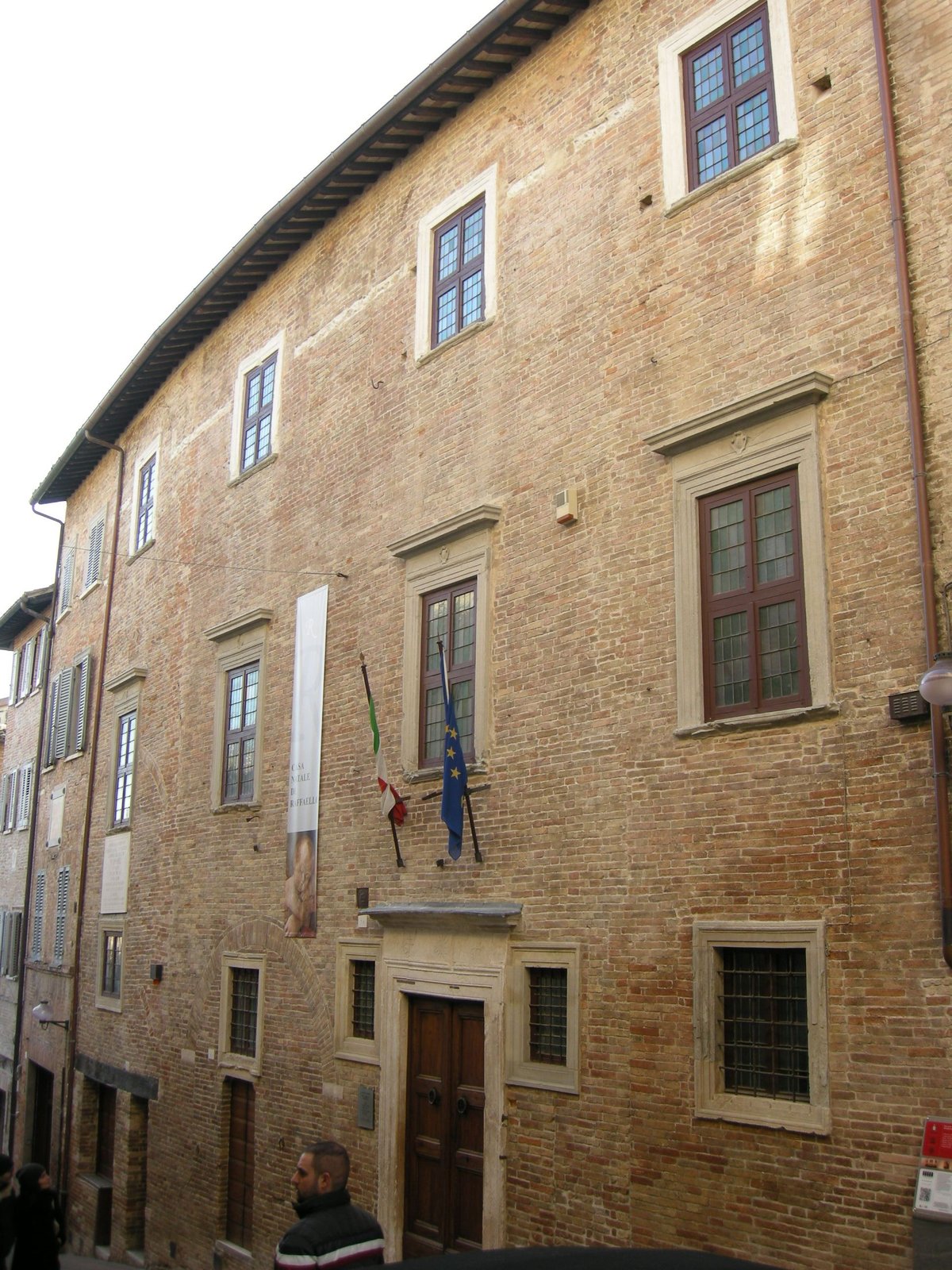
Entering the Birthplace of Raphael Sanzio in Urbino is like stepping back into the Renaissance. Don’t expect a grandiose museum, but an intimate space where everything speaks of the painter. The red brick facade, typical of the historic center, welcomes you on a narrow, quiet street. Inside, the atmosphere is surprisingly authentic: you can still feel the air of a fifteenth-century bourgeois home. Personally, I was struck by the simplicity of the rooms, which contrasts with the greatness of the artist born here in 1483. It’s an experience that brings you closer to Raphael in a direct, almost personal way, far from the crowds of major museums. You’ll wander through rooms with vaulted ceilings and terracotta floors, observing period furnishings that recreate daily life of the era. An unmissable stop for anyone wanting to understand the roots of one of Italian art’s geniuses.

Historical Notes

The house was built in the 15th century and belonged to the Sanzio family, who were well-integrated into Urbino society. Raphael was born here on April 6, 1483, and spent his early years here before moving to Florence and Rome. His father, Giovanni Santi, was a court painter for the Montefeltro family, and it was here that Raphael took his first steps in art. The house was restored and opened to the public as a museum in 1974, preserving many original elements. It is not just a memorial but a place that tells the story of an artist’s formation in a vibrant city like Urbino. Sometimes I wonder what it would have been like to grow up in these rooms, with windows overlooking the Marche hills. The timeline summary:

  • 1483: Raphael Sanzio is born in the house
  • 1494: Death of his father Giovanni Santi
  • 1500: Raphael leaves Urbino for Florence
  • 1974: Opening to the public as a museum

The Original Environments

Visiting the house means exploring spaces that have maintained their original structure. On the ground floor, the workshop of his father Giovanni Santi is perhaps the most evocative room: here Raphael learned the first basics of painting, among pigments and canvases. Going up to the first floor, the main hall with the fireplace and period furniture transports you to a domestic atmosphere. You’ll notice details like the coffered ceilings and Gothic windows that filter soft light. In a side room, there’s a reconstruction of Raphael’s studio, with reproductions of his youthful drawings. I was surprised by the presence of everyday objects, like ceramics and utensils, which make everything very tangible. It’s not a cold museum-house, but a place that still seems inhabited, where you can imagine the artistic conversations of the time.

The Collection of Works

In addition to the furnishings, the house hosts a small but significant collection of works related to Raphael. Don’t expect masterpieces like those at the Uffizi, but rather documents and reproductions that tell his life story. There are engravings, copies of paintings, and archival documents, such as the artist’s baptismal certificate. Particularly interesting is the section dedicated to his training, with references to the influence of Pietro Perugino and other masters. I appreciated the presence of clear explanatory panels that explain the context without being too technical. There is also a reproduction of the famous ‘Madonna of the Goldfinch,’ which allows you to see Raphael’s style up close. It’s a way to delve deeper into his art without having to face endless queues. The house thus becomes an ideal starting point to explore his genius.

Why Visit It

Visiting Raphael’s Birthplace is worthwhile for at least three concrete reasons. First, it’s an authentic and uncrowded place where you can enjoy art without stress. Second, it offers an intimate perspective on the painter’s life, showing you his humble roots and not just his successes. Third, it’s perfect for those wanting to delve into the Marche Renaissance, often overlooked compared to Florence or Rome. Plus, its location in Urbino’s historic center allows you to combine the visit with other UNESCO sites. Personally, I found it a more engaging experience than many larger museums because you feel part of the history. If you’re passionate about art, it’s a fundamental piece for understanding Raphael.

When to Go

The best time to visit the house is early morning or late afternoon, when natural light streams through the windows and creates a warm, evocative atmosphere. Avoid the midday hours, especially in summer, as the rooms can become a bit stuffy. In terms of season, autumn is ideal: Urbino is less crowded, and the colors of the surrounding hills make everything more picturesque. I’ve noticed that spring brings more visitors, but the city remains lively. If you want a tip, go on a weekday to avoid the organized weekend groups. In winter, the house is cozy and quiet, perfect for a peaceful visit.

In the Surroundings

After the visit, explore the historic center of Urbino, a UNESCO World Heritage site. Just a short walk away is the Ducal Palace, with its Renaissance architecture and the National Gallery of the Marche, where you can admire works by Raphael and other artists. Another thematic experience is walking along the city walls, which offer panoramic views of the hills. If you’re interested in craftsmanship, look for local workshops that produce ceramics similar to those seen in the house. Urbino is small, so everything is within walking distance, with no need to calculate distances. Personally, I recommend stopping at one of the typical trattorias to sample Marche dishes, such as passatelli in broth.

Itineraries nearby


💡 Did You Know…?

A little-known fact: the house still preserves the fresco of the Madonna and Child attributed to Raphael’s father, Giovanni Santi, which originally decorated the façade. During restoration, it was detached and placed inside for preservation. Additionally, according to local tradition, the first-floor room with the cross-vaulted ceiling is believed to be the very one where Raphael was born on April 6, 1483. Observing the house’s windows, you’ll notice they offer a direct view of the Ducal Palace, symbol of the Montefeltro family’s power—a detail that highlights the deep connection between the artist and the court that shaped his genius.