Rocca Aldobrandesca: Medieval Fortress with 360° Views over the Orbetello Lagoon

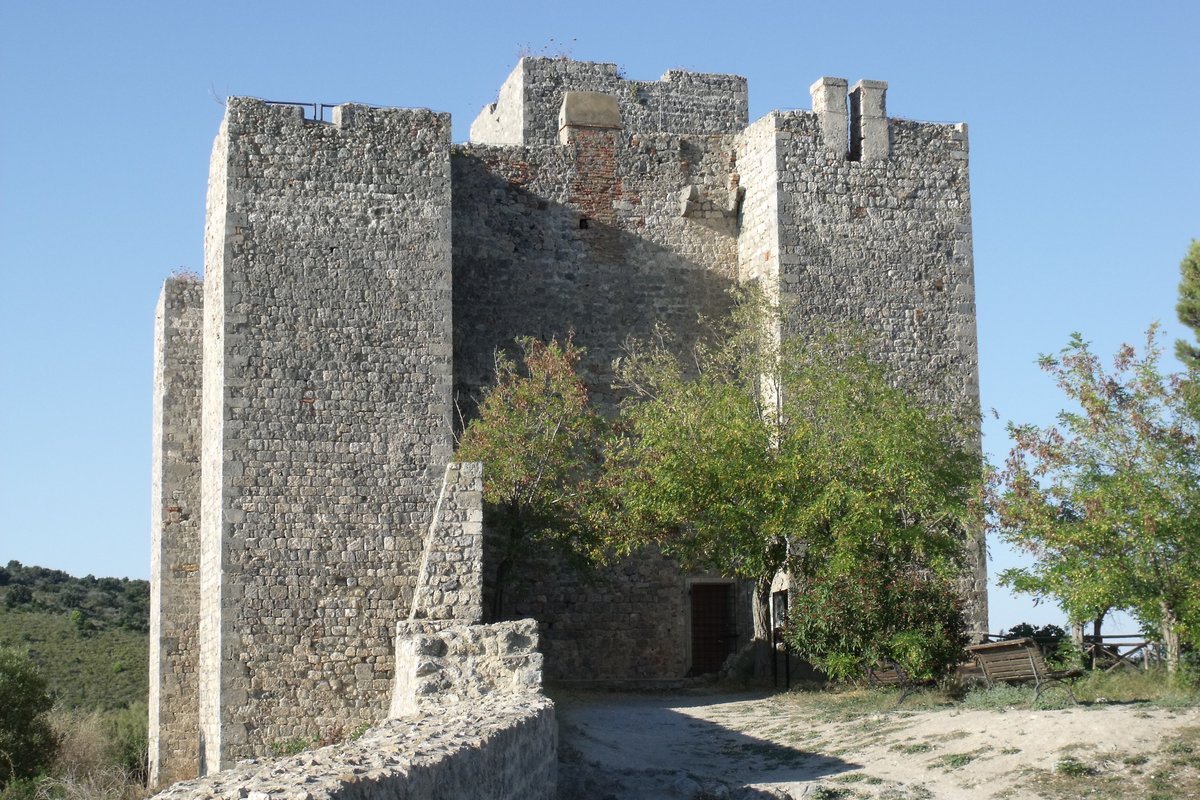
The Rocca Aldobrandesca is a 13th-century medieval fortress that overlooks Orbetello from its strategic position. It offers 360-degree views of the lagoon, Tombolo della Giannella, and Monte Argentario, with well-preserved structures like massive walls and a main tower. It’s easily accessible from the historic center and ideal to combine with a walk along the Spanish Walls or a boat tour in the lagoon.

  • 13th-century medieval fortress built by the Aldobrandeschi family
  • 360-degree views over the Orbetello Lagoon, Tombolo della Giannella, and Monte Argentario
  • Main tower with narrow stone steps and breathtaking panoramas
  • Massive walls with a patrol walkway and authentic historical details


Events nearby


Copertina itinerario Rocca Aldobrandesca: Medieval Fortress with 360° Views over the Orbetello Lagoon
Visit the 13th-century fortress in the heart of Orbetello. Climb the tower for panoramic views of the lagoon, Tombolo della Giannella, and Monte Argentario. Explore massive walls and discover the history of the Aldobrandeschi family.

Good to know


Introduction

As soon as you arrive in Orbetello, the Rocca Aldobrandesca greets you from afar. This medieval fortress dominates the landscape with its massive walls that seem to have emerged from a history book. It’s not just a monument, but a visual landmark that accompanies you as you explore the city. The feeling is that of standing before a stone giant recounting centuries of stories. Personally, I enjoy observing it from the lagoon: from there, you immediately understand why the Aldobrandeschi chose it as a stronghold. It’s a place that doesn’t go unnoticed; rather, it invites you to discover what lies behind those imposing walls.

Historical Overview

The Rocca Aldobrandesca was not built by chance. It was constructed in the 13th century by the powerful Aldobrandeschi family, who controlled much of southern Maremma. This fortress served to protect Orbetello, a strategic point between the mainland and the lagoon. Over the centuries, it witnessed various dominations, from the Orsini to the Spanish, who modified and adapted it to their military needs. Every stone seems to hold a different memory. I recall that during a visit, I noticed traces of later interventions, as if each era wanted to leave its mark. It’s not a linear history, but an intertwining of power and defense that can still be read in its structures.

  • 13th century: construction by the Aldobrandeschi
  • 15th century: transition under Orsini control
  • 16th century: modifications during Spanish rule
  • Today: a historical monument open to visitors

Exploring the Walls

Walking along the walls of the fortress is an experience that makes you feel part of history. The patrol path offers breathtaking views of the Orbetello lagoon and the Giannella tombolo. From up there, you understand why this place was so strategically important: it controlled both the sea and the mainland. Pay attention to details, like the arrow slits for archers or the spots where artillery was positioned. It’s not uncommon to find small engravings or marks left by soldiers of the past. I stopped to observe a particular corner from which you can perfectly see the island of Giglio in the distance. It’s a place that invites you to slow down and imagine what life must have been like here centuries ago.

The Secrets of the Tower

The main tower of the Rocca is the heart of the visit. Climbing its narrow stone steps is like traveling back in time. Once at the top, the 360-degree view takes your breath away: on one side, the lagoon with its pink flamingos, on the other, the hills of Maremma. Inside, you’ll notice structures that tell of daily life in the fortress, such as fireplaces or torch niches. There’s a particular, almost suspended atmosphere. During my last visit, I discovered that at certain times of the year, they organize guided tours that reveal curious anecdotes, like medieval construction techniques. It’s not just a tower, but a privileged observatory on history and nature.

Why Visit It

Visiting the Rocca Aldobrandesca is worth it for at least three concrete reasons. First, accessibility: it’s located in the center of Orbetello, so you can easily combine it with a stroll through the village. Second, it offers a unique perspective on the lagoon that you’ll rarely find elsewhere. Third, it’s a well-preserved example of medieval military architecture in Maremma, with authentic details that help you understand how these fortresses functioned. It’s not your typical impeccably restored castle, but a place that retains its historical imperfections. Personally, I appreciate this aspect: it feels more genuine, more lived-in.

When to go

The best time to visit the fortress? Undoubtedly in the late afternoon, when the sun sets behind the hills and the light turns golden. In summer, avoid the hottest hours because the stone walls retain heat. In spring and autumn, on the other hand, you can enjoy the visit at any time of day, with the fresh air making the climb to the tower more pleasant. I’ve noticed that in these seasons the colors of the lagoon are particularly intense. If you can, try to coincide with a day of clear skies: the view stretches all the way to Monte Argentario and beyond, offering panoramas that stay in your memory.

In the Surroundings

After the Rocca, I recommend exploring the historic center of Orbetello, with its Spanish walls and the characteristic Phoenician causeway. It’s a village that’s pleasant to wander through on foot, among narrow alleys and small squares. Another related experience is a visit to the Orbetello lagoon, perhaps with a boat excursion to observe the wildlife, including the famous flamingos. These are two realities that perfectly complement the history of the Rocca, showing you how the territory has been shaped over time. They are not distant places, but part of the same historical and natural fabric.

Itineraries nearby


💡 Did You Know…?

An ultra-realistic curiosity: the Rocca Aldobrandesca was long used as a prison until the last century. It is said that political prisoners were also held in its cells during the Napoleonic period. Today, during visits, you can still see the graffiti left by inmates on the walls, a touch of human history that makes the place even more evocative. Additionally, the fortress has undergone recent restorations that have brought to light some interior spaces, allowing for a better appreciation of the original structure.