Alfonsino Castle: The Red Fortress on Brindisi’s Port

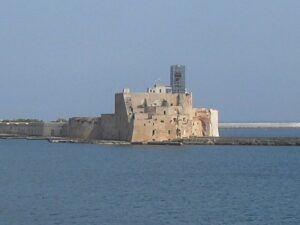
Alfonsino Castle, also known as Forte a Mare or Red Castle, stands on Sant’Andrea Island at the mouth of Brindisi’s port. Built starting in 1481 by the Aragonese and expanded by the Spanish, it offers breathtaking views and a path among walls, ramparts, and a charming inner harbor. After a €5 million restoration, it reopened to the public.
50-minute guided tours with mandatory booking.
Full ticket €8, reduced €6 for residents.
Accessible via ramps and elevator.
Open daily, with morning and afternoon shifts.


Events nearby

Copertina itinerario Alfonsino Castle: The Red Fortress on Brindisi's Port
Guided tour of Alfonsino Castle on Sant’Andrea Island: Aragonese and Spanish history, fortifications, dock, and Renaissance hall. Booking required, ticket €8.

Good to know


Welcome to the Red Castle

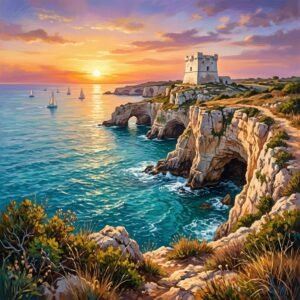
Imagine a fortress that seems to float on the waters of Brindisi’s port, all painted in red carparo stone that glows like embers at sunset. This is Castello Alfonsino, also called Castel Rosso or Castle of the Sea, perched on the island of Sant’Andrea. Reaching it is an experience: you walk along the long jetty and suddenly the bulk of the fort looms before you, massive yet elegant. The color, due to the local stone, changes with the light: in the morning it’s almost orange, then turns vermilion. The place is isolated, silent, with the smell of salt and a view stretching over the Pigonati canal. A true gem, far from the city chaos.

Welcome to the Red Castle

Imagine a fortress that seems to float on the waters of Brindisi’s port, all painted in red carparo stone that glows like embers at sunset. This is Castello Alfonsino, also called Castel Rosso or Castle of the Sea, perched on the island of Sant’Andrea. Reaching it is an experience: you walk along the long jetty and suddenly the bulk of the fort looms before you, massive yet elegant. The color, due to the local stone, changes with the light: in the morning it’s almost orange, then turns vermilion. The place is isolated, silent, with the smell of salt and a view stretching over the Pigonati canal. A true gem, far from the city chaos.

Historical Background

The history of Castello Alfonsino begins in 1481, when Ferdinand I of Aragon decided to fortify the island to defend the port after the Turkish threat on Otranto. His son Alfonso, Duke of Calabria, transformed a previous tower into a fortress. Then, from 1558 to 1604, the Spanish under Philip II added the imposing Forte a Mare, with lance-shaped bastions and a moat cut into the rock. Over the centuries, the castle withstood Venetian and French attacks, served as a quarantine station, and later as a base for the Italian Navy until 1984, when a severe storm damaged it heavily. Restored, it reopened in 2021 and again in December 2024 after €5 million in works.

  • 1481 – construction of the Aragonese fortress
  • 1558-1604 – Spanish expansion (Forte a Mare)
  • 1984 – decommissioning after storm
  • 2021 – first reopening
  • 23 December 2024 – reopening after restoration

Historical Background

The history of Castello Alfonsino begins in 1481, when Ferdinand I of Aragon decided to fortify the island to defend the port after the Turkish threat on Otranto. His son Alfonso, Duke of Calabria, transformed a previous tower into a fortress. Then, from 1558 to 1604, the Spanish under Philip II added the imposing Forte a Mare, with lance-shaped bastions and a moat cut into the rock. Over the centuries, the castle withstood Venetian and French attacks, served as a quarantine station, and later as a base for the Italian Navy until 1984, when a severe storm damaged it heavily. Restored, it reopened in 2021 and again in December 2024 after €5 million in works.

  • 1481 – construction of the Aragonese fortress
  • 1558-1604 – Spanish expansion (Forte a Mare)
  • 1984 – decommissioning after storm
  • 2021 – first reopening
  • 23 December 2024 – reopening after restoration

The Dock and the Renaissance Hall

One of the most evocative spots in the castle is the dock, a small inner harbor hidden among the walls. You access it through a vaulted archway that has connected the Aragonese part to the Spanish one since 1577 – a sort of water courtyard where ships once docked. Climbing up, you reach the reception hall, where a stone washbasin from 1527 stands out, adorned with viceregal coats of arms. Light filters through the slits and silence is broken only by the sound of the sea. It’s easy to imagine soldiers of the past gathering here, perhaps discussing defensive strategies. The guides tell anecdotes that make everything come alive.

The Dock and the Renaissance Hall

One of the most evocative spots in the castle is the dock, a small inner harbor hidden among the walls. You access it through a vaulted archway that has connected the Aragonese part to the Spanish one since 1577 – a sort of water courtyard where ships once docked. Climbing up, you reach the reception hall, where a stone washbasin from 1527 stands out, adorned with viceregal coats of arms. Light filters through the slits and silence is broken only by the sound of the sea. It’s easy to imagine soldiers of the past gathering here, perhaps discussing defensive strategies. The guides tell anecdotes that make everything come alive.

The Forte a Mare: Spanish Architecture

The most imposing part is the Forte a Mare, commissioned by Philip II and completed in 46 years. It is a triangular structure with two pentagonal bastions and a circular tower, perfect for withstanding attacks from the sea. The Mannerist gate from 1609, with its two-tone white stone and carparo, is a masterpiece of military elegance. Inside, the restored ground floor (recently reopened) reveals spacious rooms with vaulted ceilings, a torpedo room, and the patrol walkways offering sweeping views of the harbor. The entire structure is an example of how defense could become art.

The Forte a Mare: Spanish Architecture

The most imposing part is the Forte a Mare, commissioned by Philip II and completed in 46 years. It is a triangular structure with two pentagonal bastions and a circular tower, perfect for withstanding attacks from the sea. The Mannerist gate from 1609, with its two-tone white stone and carparo, is a masterpiece of military elegance. Inside, the restored ground floor (recently reopened) reveals spacious rooms with vaulted ceilings, a torpedo room, and the patrol walkways offering sweeping views of the harbor. The entire structure is an example of how defense could become art.

Why Visit

Three good reasons not to miss Castello Alfonsino. First: the unique atmosphere. Being on a fortified island, cradled by the sea and wrapped in the red color of the stone, is an experience you’ll hardly forget. Second: the layered history. Aragonese and Spanish left tangible marks, from the dock to the Renaissance washbasin, passing through the bastions. Third: the guided tour (the only way to access) is run by the Le Colonne association with knowledgeable guides who know how to inspire passion. The ticket costs 8 euros, 6 for residents, and children under 5 enter for free. Booking is mandatory, but it’s worth it.

Why Visit

Three good reasons not to miss Castello Alfonsino. First: the unique atmosphere. Being on a fortified island, cradled by the sea and wrapped in the red color of the stone, is an experience you’ll hardly forget. Second: the layered history. Aragonese and Spanish left tangible marks, from the dock to the Renaissance washbasin, passing through the bastions. Third: the guided tour (the only way to access) is run by the Le Colonne association with knowledgeable guides who know how to inspire passion. The ticket costs 8 euros, 6 for residents, and children under 5 enter for free. Booking is mandatory, but it’s worth it.

When to go

The best time to visit the castle is late afternoon, just before sunset. The slanting light sets the carparo stone ablaze with a deep red hue, and the sea takes on golden reflections. In summer, the sun beats down hard, so it’s best to avoid the central hours. In winter, the wind can be biting, but the colors are just as beautiful. Morning guided tours (weekdays at 11:30, weekends also at 17:30) still offer good light, but the real spectacle is at sunset.

When to go

The best time to visit the castle is late afternoon, just before sunset. The slanting light sets the carparo stone ablaze with a deep red hue, and the sea takes on golden reflections. In summer, the sun beats down hard, so it’s best to avoid the central hours. In winter, the wind can be biting, but the colors are just as beautiful. Morning guided tours (weekdays at 11:30, weekends also at 17:30) still offer good light, but the real spectacle is at sunset.

In the Surroundings

Once back in the city, don’t miss the Castello Svevo (also known as the Earth Castle), which stands on the inner harbor and hosts exhibitions and events. Nearby, the Provincial Archaeological Museum Francesco Ribezzo houses artifacts from the ancient Benedictine abbey of Sant’Andrea, which once stood on the island before the castle. A stroll along Brindisi’s waterfront, among bars and restaurants, rounds off the day. If you have time, the historic center with its Romanesque cathedral is worth a detour.

In the Surroundings

Once back in the city, don’t miss the Castello Svevo (also known as the Earth Castle), which stands on the inner harbor and hosts exhibitions and events. Nearby, the Provincial Archaeological Museum Francesco Ribezzo houses artifacts from the ancient Benedictine abbey of Sant’Andrea, which once stood on the island before the castle. A stroll along Brindisi’s waterfront, among bars and restaurants, rounds off the day. If you have time, the historic center with its Romanesque cathedral is worth a detour.

Itineraries nearby


💡 Did You Know…?

Legend has it that at sunset the castle turns red, recalling the battles against the Venetians. In 1529, sixteen Venetian galleys were repelled by the newly installed artillery. Today, walking along the bastions, you can still feel the air of those conflicts.