Sentinum Archaeological Park: Roman Mosaics and the 295 BC Battlefield

The Sentinum Archaeological Park in Sassoferrato takes you to the heart of Roman history, on the grounds of the 295 BC Battle of the Nations. Explore an outdoor site with authentic remains, perfect for families and history enthusiasts, away from tourist crowds.

  • Well-preserved Roman mosaics and foundations of ancient domus
  • Baths with recognizable hypocaust heating system
  • Battlefield of the Battle of the Nations in 295 BC between Romans and Italic peoples
  • Well-marked path in a tranquil and evocative area

Copertina itinerario Sentinum Archaeological Park: Roman Mosaics and the 295 BC Battlefield
Walk among the ruins of an ancient Roman city in Sassoferrato, where the Battle of the Nations was fought in 295 BC. Admire well-preserved mosaics, hypocaust-heated baths, and foundations of domus in a crowd-free outdoor area.

Good to know


Introduction

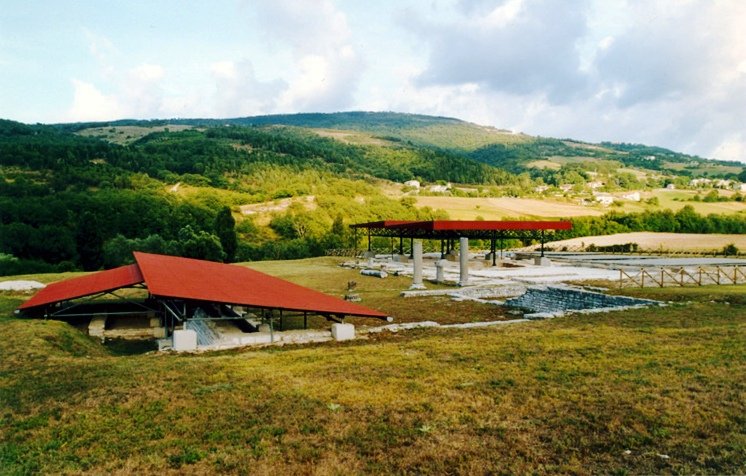
Walking among the ruins of the Sentinum Archaeological Park is like flipping through an open-air history book. Don’t expect a monumental and imposing site, but rather an intimate and evocative place, where grass grows between the remains of ancient roads and stone walls tell stories of epic battles. The feeling is that of discovering a well-kept secret among the Marche hills, far from the more beaten tourist trails. The atmosphere is tranquil, almost contemplative, and allows you to easily imagine daily life in this ancient Roman city. Personally, I was struck by the simplicity of the place and its ability to transport you back in time without the need for grand reconstructions. It’s a place that speaks to those who know how to listen.

Historical Overview

Sentinum was not just a provincial town. Here, in 295 BC, the decisive Battle of the Nations was fought, a titanic clash between the Romans and a coalition of Samnites, Senonian Gauls, Etruscans, and Umbrians. The Roman victory paved the way for the domination of central Italy. The site you visit today was a thriving Roman municipium, with baths, a forum, and residences, active until the 4th-5th centuries AD. After centuries of oblivion, systematic excavations began in the 1900s, bringing this precious piece of history back to light. The timeline of key moments is as follows:

  • 295 BC: The famous Battle of the Nations.
  • 3rd-1st centuries BC: Development as a Roman center.
  • 4th-5th centuries AD: Decline and abandonment.
  • From the 1900s to today: Archaeological excavations and preservation.

A Path Among the Stones

The beauty of Sentinum is that you explore it on foot, following a well-marked path that winds through the ruins. Don’t miss the remains of the Baths, where you can still clearly recognize the calidarium (the hot room) and the hypocaust heating system. It’s impressive to think about the technology of that time. A little further on, the foundations of the domus (patrician houses) with their geometric mosaics, although often covered for protection, give an idea of the wealth of some of its inhabitants. Walking on the via basolata, the main paved road, you’ll almost hear the noise of carts. The area isn’t very large, but every corner holds a detail: a drainage channel, a well, the outline of the walls. I recommend taking your time, without rushing.

The Battle You Can Feel in the Air

What makes this park unique is its inseparable connection to the military event. It’s not just about seeing remains, but about walking on the ground of one of the most significant clashes of ancient Italic history. Looking towards the gentle surrounding hills, you can try to imagine the deployment of Roman legions and allied tribes. Some believe the actual battlefield extended into the neighboring countryside. This context transforms the visit into an almost emotional experience. For military history enthusiasts, it’s an unmissable stop, but even for those who aren’t, the awareness of being in such a history-laden place adds a special charm. It made quite an impression on me, I must confess.

Why Visit

For at least three concrete reasons. First, it’s a top-tier historical site without the crowds, where you can enjoy it in peace. Second, it’s perfect for families: children can run safely among the oaks and learn while having fun, thanks also to the educational paths. Third, it offers an authentic glimpse into life in a Roman frontier city, not a themed reconstruction. See how they really lived, from the baths to the houses. Plus, the connection with the famous battle gives the place national importance, transcending local boundaries. It’s a piece of Italian history within easy reach.

When to Go

Avoid the midday hours on the hottest summer days, as there is little shade. The best time is early afternoon in spring or early autumn: the light is warm and low, enhancing the colors of the stone and grass, and the atmosphere is truly magical. A clear winter day, with crisp air and perhaps a touch of frost on the meadows, also offers picturesque views and excellent visibility over the hills. The key is to choose a dry day for comfortable walking on the trails.

In the Surroundings

A visit to Sentinum perfectly complements a historical-artistic itinerary. In Sassoferrato, the Civic Archaeological Museum is a must-see: it displays the most beautiful artifacts found in the park, such as statues, inscriptions, and everyday objects that complete the picture. A bit further away, the Rocca di Sassoferrato (or Castello di Sentino) is worth a stop—an imposing medieval fortress that overlooks the valley from above. It offers breathtaking views and another chapter of history, more recent but equally fascinating. Two eras in contrast, just a few kilometers apart.

Itineraries nearby


💡 Did You Know…?

During excavations, a mosaic with a figure of Orpheus enchanting animals emerged, a rare detail for a provincial site that shows the high artistic level achieved here. Additionally, investigations have revealed traces of a thermal bath system with a hypocaust heating system, a sign that Sentinum was a well-organized city. The Battle of the Nations, fought nearby, changed the course of Roman history: the Romans, led by consuls Decius Mus and Fabius Rullianus, defeated a coalition of Samnites, Gallic Senones, Etruscans, and Umbrians, consolidating their dominance in central Italy. Today, walking among the ruins, you can almost hear the echo of those events, made tangible by the artifacts displayed in the nearby Sassoferrato Archaeological Museum.