Torrazzo di Cremona: Italy’s tallest bell tower

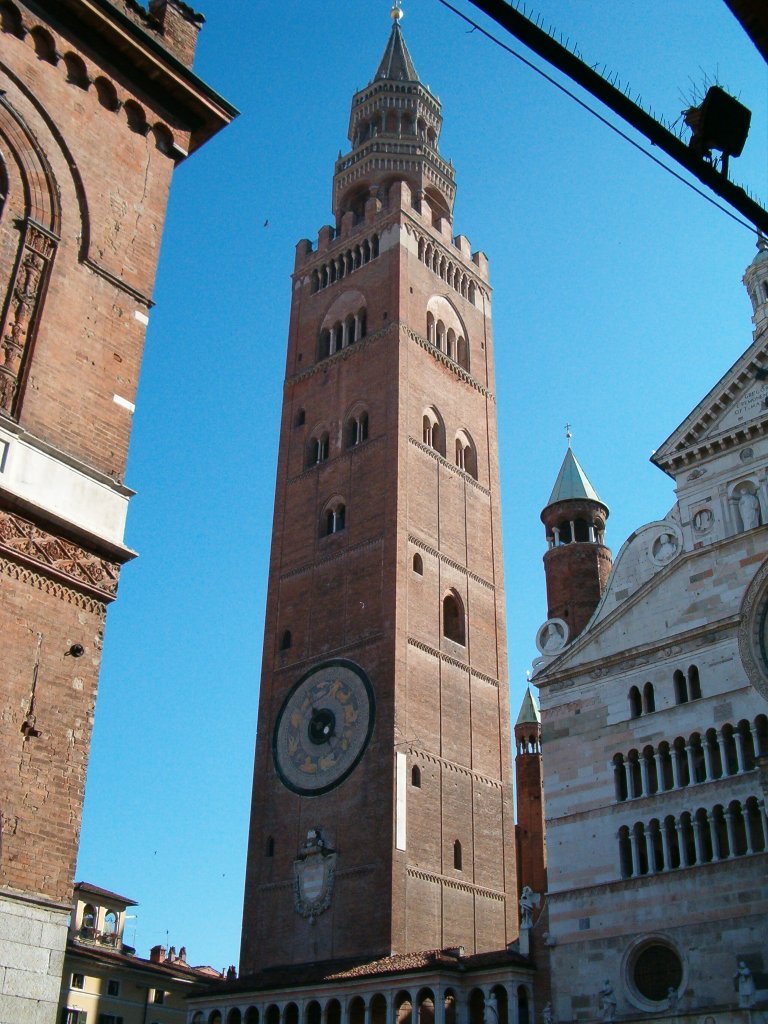
Torrazzo di Cremona is the bell tower of the Cathedral, 112.54 metres high: with its 502 steps, it is Italy’s tallest brick tower. On the fourth floor is an astronomical clock from 1583–1588, with an 8.20-metre dial and hands that indicate lunar phases, solstices and eclipses. The climb leads to a terrace with a 360° panorama over Cremona, the Po and, on clear days, as far as the Alps.
– Vertical Museum: four rooms on the dial, mechanism, time and astronomy.
– 502 steps: a climb between two towers, one inside the other.
– Astronomical clock: original mechanism wound by hand every day.
– Combined ticket: € 10.00 with the Baptistery and Diocesan Museum.


Events nearby


Copertina itinerario Torrazzo di Cremona: Italy's tallest bell tower
Torrazzo di Cremona: 112.7 metres, 502 steps and the astronomical clock of 1583. From the terrace, views over Cremona, the Po and the Alps; combined ticket with the Baptistery and Diocesan Museum.

Good to know


Cremona’s Torrazzo: Italy’s Tallest Bell Tower

The Torrazzo doesn’t go unnoticed. In Piazza del Comune, next to the Cathedral, this red-brick tower rises 112.7 metres and has dominated the city for centuries. It is the tallest brick tower in Italy and one of the tallest in Europe, but what strikes you is the feeling of ancient solidity: brick upon brick, with no frills. The structure is a double shell, one tower inside another, connected by a staircase of 502 steps. I admit that seeing it for the first time feels strange, almost out of proportion next to the low houses of the centre. And then there’s the astronomical clock on the fourth floor, watching you from above with its mysterious symbols. It is the symbol of Cremona, full stop. Anyone who comes to the city for violin making or torrone will still find it in front of them, and can hardly resist the urge to climb.

Historical Background

The construction began around 1230 and was completed in 1309, in four phases. Tradition holds that a first building was erected in 754, but the current structure is later: the lower part, Romanesque with Guelph battlements, probably dates to 1267, while the octagonal drums of the garland were completed by 1305. A plaque at the base gives the height as 250 braccia and two once, about 111 metres according to the ancient Cremonese system. Over time the tower has served several roles: bell tower, clock tower and even a defensive watchtower. Archaeological excavations in the 1980s brought to light underlying structures, possibly linked to an ancient burial area or Roman remains. Finally, the key moments:

  • 754 – first building according to tradition
  • 1230 – work begins on the current tower
  • 1267 – lower Romanesque section
  • 1305 – octagonal drums of the garland
  • 1309 – completion with the marble spire
  • 1583-1588 – astronomical clock by the Divizioli
  • 1744 – casting of the seven bells
  • 2018 – opening of the Vertical Museum

The astronomical clock and the Vertical Museum

On the fourth floor is the astronomical clock, built between 1583 and 1588 by Francesco and Giovan Battista Divizioli, replacing an older one and following the Gregorian calendar reform. The dial, one of the largest in the world, has a diameter of 8.20 metres, with an 80 cm wide frame in embossed copper, and depicts the celestial vault with the zodiac constellations. Five hands indicate lunar phases, solstices and equinoxes; one, shaped like a dragon, marks eclipses. The mechanism is still entirely mechanical and must be wound by hand every day. The current dial is a 1970 repainting. Since November 2018, the Vertical Museum, in four rooms, recounts the measurement of time, with the Foucault Pendulum and the reconstruction of Janello Torriani’s Artificio di Toledo.

502 Steps and a 360° View

The entrance is beneath the Cathedral portico. You climb through the gap between the two towers: 502 steps, some stone, some brick, with narrow passages and a few bends. It isn’t a stroll, but you don’t need to be an athlete. I found it tough but doable, with a few stops to catch my breath. At the top, the final terrace offers a 360° panorama over Cremona, the Po River and, on clear days, as far as the Alps. It’s truly worth the effort. Also curious is the sundial on the facade, a scientific detail few notice when looking at the tower from the square. The bell chamber, with its seven bells cast in 1744 by Bartolomeo Bozzi and the hour bell from 1581, is another piece you discover as you climb.

Why Visit It

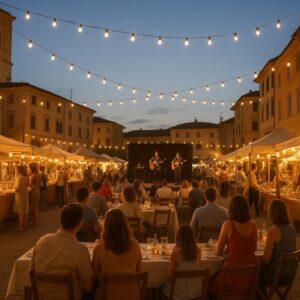
Three concrete reasons. First: it is the tallest brick bell tower in Italy and, among towers over 100 metres, the oldest (1309): a record that makes the climb worthwhile. Second: the astronomical clock and the Vertical Museum add a scientific and multimedia dimension, not just a panoramic one. Third: the single €10 ticket also includes the Baptistery and the Diocesan Museum, so in one go you see the monumental heart of Cremona. I would add that the tower serves as a backdrop for city events, such as the evening of the Tanta Robba Festival in September 2025, which brought together over two thousand people in the square. In short, it is not just a view: it is a piece of Cremonese history you can touch with your hands.

When to Climb

The best time is early morning, as soon as it opens, when the light is clearest and there are fewer people on the steps. If you’re looking for the best view, aim for a clear day after rain: the washed air makes the Alps visible on the horizon. Late afternoon is beautiful too, with the low sun warming the bricks and the city lighting up. I’d avoid the middle hours of summer instead, when the heat makes the climb more tiring. In winter, on clear days, the view over the plain is astonishing. The climb is long and demanding: take the time you need, without rushing.

Nearby: what to pair it with

From the square, continue on foot. The Baptistery, with its octagonal brick plan, is just a few steps away and is included in the combined ticket, along with the Diocesan Museum. Also in Piazza del Comune are the Cathedral and the Town Hall. Then there is violin-making Cremona: the city is famous for its violin tradition, with Stradivari and Amati, and the museums dedicated to instrument making are worth a detour. If you have time, a stroll down to the Po is a fine way to round off the day. No need to take the car: the center is easily explored on foot.

Itineraries nearby


šŸ’” Did You Know…?

Did you know the clock is wound by hand every day? Tradition holds that a first tower existed as early as 754, but the current Torrazzo was completed in 1309. At the base, a plaque gives its height as 250 braccia and two once, according to the old Cremonese system. At the top, the ball and cross date back to the 17th century.