
🧭 What to Expect
- Ideal for: history and wine enthusiasts
- Highlights: medieval towers, cathedral, food and wine
- Don't miss: Torre Troyana and Palio di Asti
- Best time to visit: September for the Douja d'Or
Events nearby
The city of Asti is a gem of Piedmont, famous for its sparkling wine and medieval towers. Wandering through the historic center, you'll come across the majestic Cathedral of Santa Maria Assunta, the Baptistery of San Pietro, and the Torre Troyana, a symbol of the city. Don't miss the Museo del Risorgimento and the Crypt of Sant'Anastasio. Asti is also an ideal destination for food lovers: try the taglierini with truffle and local cheeses. With its lively atmosphere and numerous events, such as the Palio di Asti, this city offers an authentic experience. Discover its historical heritage and food and wine traditions on an unforgettable weekend.
Overview
- Cathedral of Santa Maria Assunta in Asti: Gothic Grandeur
- Torre Troyana: The Clock Tower
- San Pietro Baptistery: Romanesque & History
- What to See at the Teatro Alfieri: History, Architecture, and Performances
- Museum of the Risorgimento: Relics and Air Raid Shelters
- Crypt and Museum of Sant'Anastasio: A Journey into the Bowels of Asti
- Crypt and Museum of Sant'Anastasio: A Journey into the Bowels of Asti
- Domus Romana del Varrone: A Rare Roman Jewel in Asti
- Bishop's Seminary Palace: Baroque and Hidden Treasures
- San Giovanni Diocesan Museum: A Treasure Chest of Art and History
- Archaeological and Paleontological Museum: A Dive into the Pliocene Sea
- Red Tower: Asti's Oldest Symbol
- Torre Solaro: A Gothic Jewel Among the Towers of Asti
- Torre De Regibus: A Gothic Octagonal Jewel
- Comentina Tower: Asti's Second Tallest Tower
- Natta Tower: The Stone Sentinel of the Natta Family
Itineraries nearby

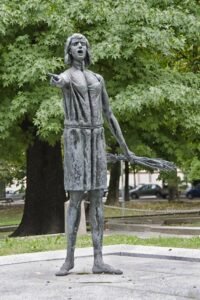
Cathedral of Santa Maria Assunta in Asti: Gothic Grandeur
- Go to the page: Cathedral of Santa Maria Assunta: Frescoes of the Last Judgment and Romanesque Bell Tower in Asti
- Piazza Cattedrale, Asti (AT)
- Open in Google Maps
- View on Google Images
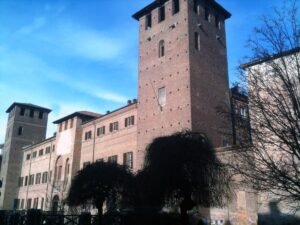
 If there's one monument that embodies the history and art of Asti, it's the Cathedral of Santa Maria Assunta, also known as the Duomo. It's a giant of Piedmontese Gothic: 82 meters in length and 24 in height, making it one of the largest churches in Piedmont. Stepping inside leaves you breathless: three naves, pointed arches, and frescoed vaults telling sacred stories. The exterior facade is a riot of brick and stone, with three rose windows and a side portal called 'dei Pelletta', in flamboyant Gothic style, adorned with 15th-century statues of saints. Inside, the true treasures are the artworks: the 'Madonna del banchiere' by Gandolfino da Roreto (1516), with the kneeling donor, and the sculptural group of the Lamentation over the Dead Christ in polychrome terracotta. Don't miss the Romanesque bell tower from 1266, originally seven stories high, and the 12th-century floor mosaic depicting the rivers of Paradise. The atmosphere is intimate, despite the size. Admission is free and you can visit daily from 8:30 AM to 12:00 PM and from 3:00 PM to 5:30 PM. A traveler's tip: look up at the octagonal tiburium and let yourself be amazed by the 18th-century frescoes by Carlo Innocenzo Carloni. It's a place that speaks of faith, power, and beauty, all in one.
Torre Troyana: The Clock Tower
- Go to the page: Troyana Tower of Asti: Climb 199 Steps for a 360° View of the Historic Center and Monferrato
- Piazza Medici, Asti (AT)
- https://www.comune.asti.it/pagina806_torre-troiana.html
- Open in Google Maps
- View on Google Images
- info@fondazioneastimusei.it
- +39 0141 399 489
 If there is a tower that tells the story of Asti, it's the Torre Troyana. At 44 meters, it is the tallest of the city's surviving medieval towers. Each step on its 199 wooden stairs brings you closer to a panorama that embraces all of the Asti area. Built in the 13th century by the Troya family – wealthy bankers with business across half of Europe – this tower was meant to show power. And it succeeded: it surpassed even the towers of rival families in height, despite prohibitions. Strolling through Piazza Medici, you can't miss its slender profile, with Gothic mullioned windows and the triple crown of brick and sandstone arches, typical of the Asti style. Climbing, the effort is rewarded: from the top, the view spans roofs, hills, and vineyards. And then there's the bell: cast in 1531, it's one of the oldest in Piedmont still used to mark the hours. Do you hear its chime? It's the same that for centuries has marked city life, announcing the opening of schools or, in more remote times, public punishments. Today the tower is part of the Smarticket circuit: with a single ticket you can also visit Palazzo Mazzetti, the Crypt of Sant'Anastasio, and other treasures. Attention: the tower is open daily from 10:00 to 19:00, but only until October 31st. In winter it closes for safety. So, if you pass through Asti, don't miss the chance to climb. It's one of those experiences that make you feel time passing – literally.
San Pietro Baptistery: Romanesque & History
- Corso Vittorio Alfieri 2, Asti (AT)
- https://www.comune.asti.it/pagina796_san-pietro-in-consavia.html
- Open in Google Maps
- View on Google Images
- nfo@fondazioneastimusei.it
- +39 0141 399489
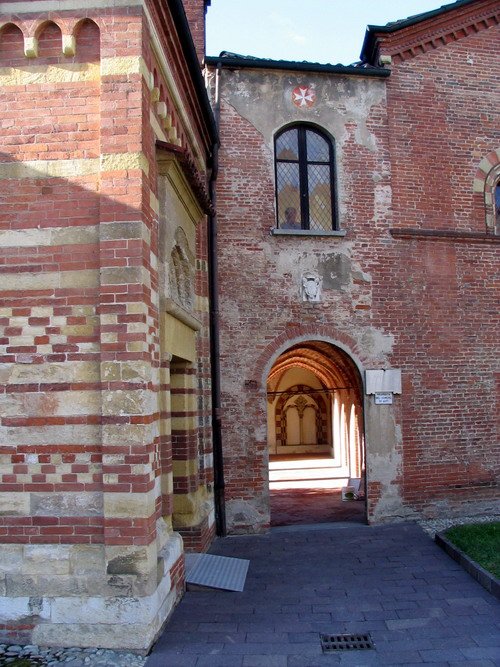 If you visit Asti, you can't miss the San Pietro Baptistery, a complex that holds centuries of history. The heart is the Rotunda of the Holy Sepulchre, built between 1100 and 1130 in brick and sandstone. Inside, eight columns in terracotta and tuff support round arches and an octagonal dome, creating an intimate atmosphere. The architraves are decorated with zoomorphic friezes from the 12th century: a detail that struck me. Next to it, the Valperga Chapel (15th century) amazes with its rich terracotta friezes on the windows, featuring animal heads and floral motifs. The cloister and the prior's house complete the picture. Today part of the complex houses the Archaeological Museum (closed for restoration). Is the visit free? Actually, to access all sites, it's worth getting the Smarticket (full price €10, reduced €8), valid for 7 days for six museums, including this one. Opening hours: Tuesday to Sunday, 10 AM-1 PM and 3 PM-6 PM (until 7 PM in summer). It is located at Corso Vittorio Alfieri, 2, easily reachable on foot from the center. A place that speaks of Asti's past, between Knights Hospitaller and ancient traditions.
What to See at the Teatro Alfieri: History, Architecture, and Performances
- Via Carlo Leone Grandi, Asti (AT)
- Open in Google Maps
- View on Google Images
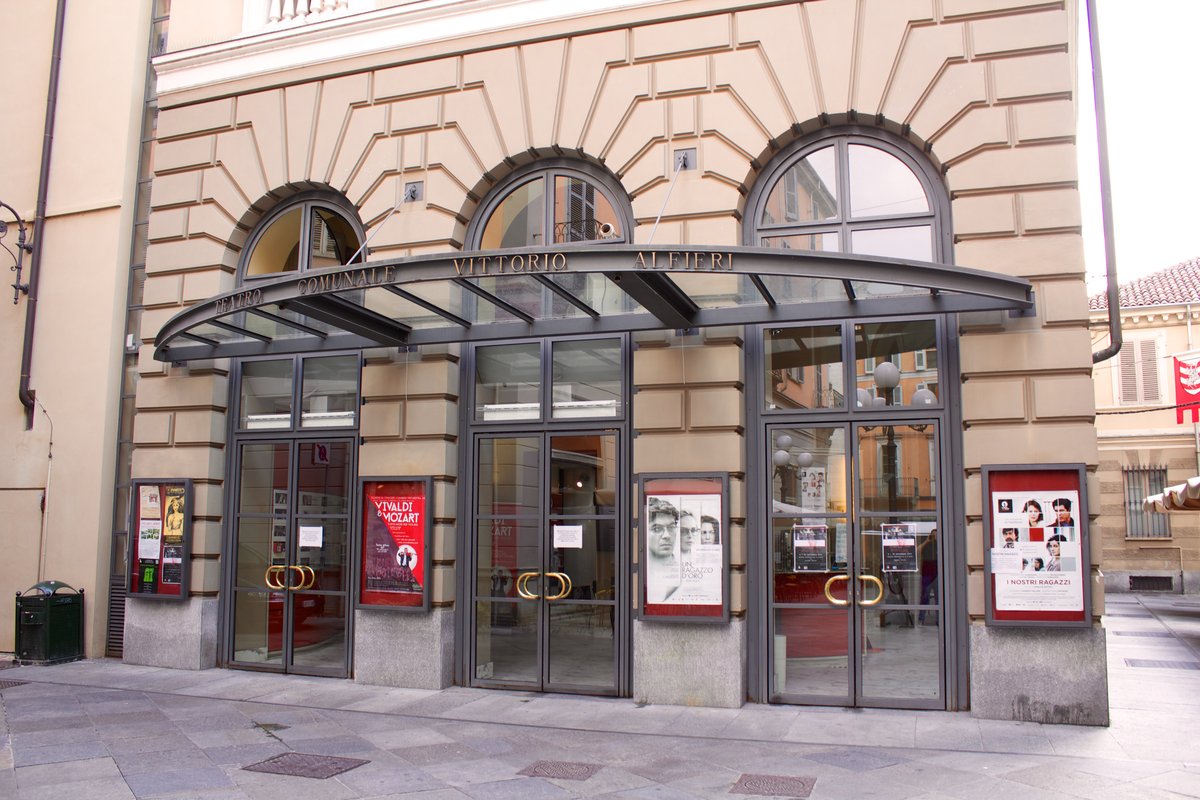 If you think Asti is just wine and medieval towers, let me take you to the Teatro Alfieri. It is the city's main theater, right in the center, a stone's throw from Piazza Alfieri. Inaugurated on October 6, 1860 with Rossini's *Mosè*, it was commissioned by a group of 97 shareholders led by banker Zaccaria Ottolenghi. It was designed by engineer Domenico Svanascini, inspired by the Teatro Carlo Felice in Genoa: a horseshoe layout, with 103 boxes on four tiers and a gallery, seating over 2,000 spectators. Inside, the foyer is embellished with frescoes by Costantino Sereno, while the ceiling and curtain are works by Francesco Gonin – the curtain depicts the apotheosis of Vittorio Alfieri, the writer to whom the theater is dedicated. In 1911, engineer Antonio Vandone revolutionized the structure: he eliminated the top tier of boxes to create a gallery, modified the other tiers, and expanded the foyer, improving acoustics by adding the 'orchestra pit'. The reopening took place on October 26, 1912 with Mascagni's *Isabeau*. After being used for a long time as a cinema and dance hall, the theater fell into decline, but from 1979 to 2002 it underwent a major restoration. Today it shines again: it seats about 700 between the stalls, ground-floor boxes, upper boxes, and gallery, and has an orchestra pit. It hosts a rich season of drama, music, and opera – I saw in the programming *La Traviata* and even gospel concerts. If you want to visit, the box office is at Via al Teatro 2, open Tuesdays and Thursdays from 10 am to 5 pm, and on performance days also in the evening. A tip: check the website www.teatroalfieriasti.it for current events. It's a gem truly worth a stop.
Museum of the Risorgimento: Relics and Air Raid Shelters
- Go to the page: Asti's Risorgimento Museum: Original 1821 Flag and Astigian Memorabilia
- Corso Vittorio Alfieri 350, Asti (AT)
- https://www.comune.asti.it/pagina948_museo-del-risorgimento.html
- Open in Google Maps
- View on Google Images
- musei@comune.asti.it
- +39 0141 399555
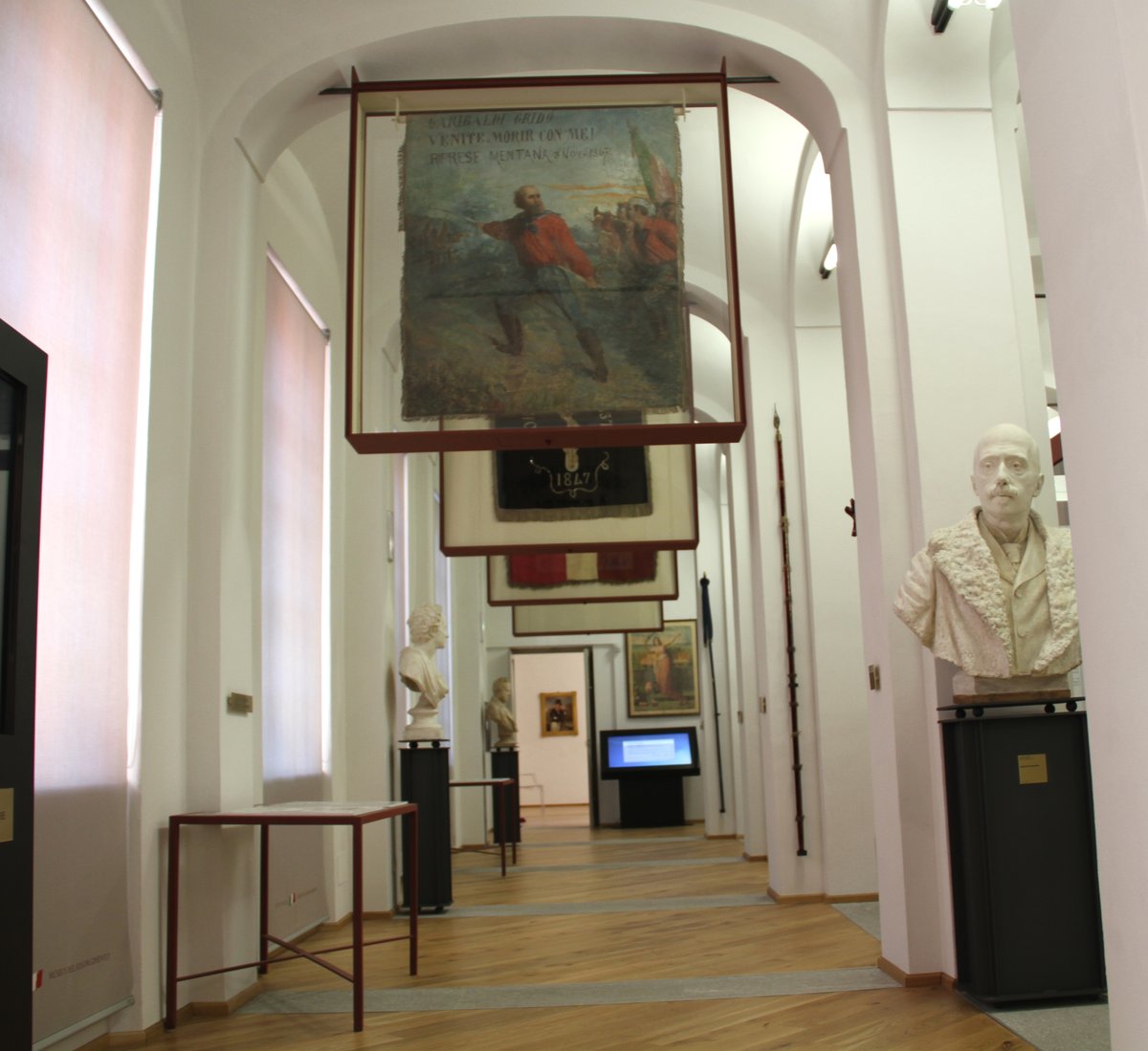 If you're passing through Asti, don't miss the Museum of the Risorgimento at Palazzo Ottolenghi (Corso Alfieri 350). This place tells the story of Italian unification through authentic artifacts: paintings, flags, weapons, and coins dating from 1797 (the Asti Republic) to 1870. The collection originated from donations by local families and the patronage of Count Leonetto Ottolenghi, who in 1898 commissioned portraits and battle scenes from the best painters. Here you'll find works by Paolo Arri (Cavour, Garibaldi, Brofferio) and by Luigi Morgari, Raffaele Pontremoli, and Felice Cerruti Bauduc for war scenes. Among the most evocative relics: the flag of Garibaldi's veterans with the inscription “Garibaldi shouted: come die with me. Mentana, November 3, 1867”, Major Orazio Dogliotti's uniform, an original red shirt from 1866, and Vincenzo Gioberti's travel case. Going down to the basement, visit the World War II air raid shelter – with a 20-minute projection – and the rooms dedicated to both world wars. Note: the museum is currently closed for restoration (info at visit.asti.it), but once it reopens, it's worth a stop. Admission is free, and the route is accessible to the disabled with tactile and multimedia stations. A journey through memory, amidst banners and cannons, that will make you feel the heart of Risorgimento Italy.
Crypt and Museum of Sant'Anastasio: A Journey into the Bowels of Asti
- Go to the page: Crypt and Museum of Sant'Anastasio: History and Archaeology in Asti
- Corso Vittorio Alfieri 365, Asti (AT)
- https://www.comune.asti.it/pagina793_cripta-e-museo-di-santanastasio.html
- Open in Google Maps
- View on Google Images
- info@fondazioneastimusei.it
- +39 0141 437454
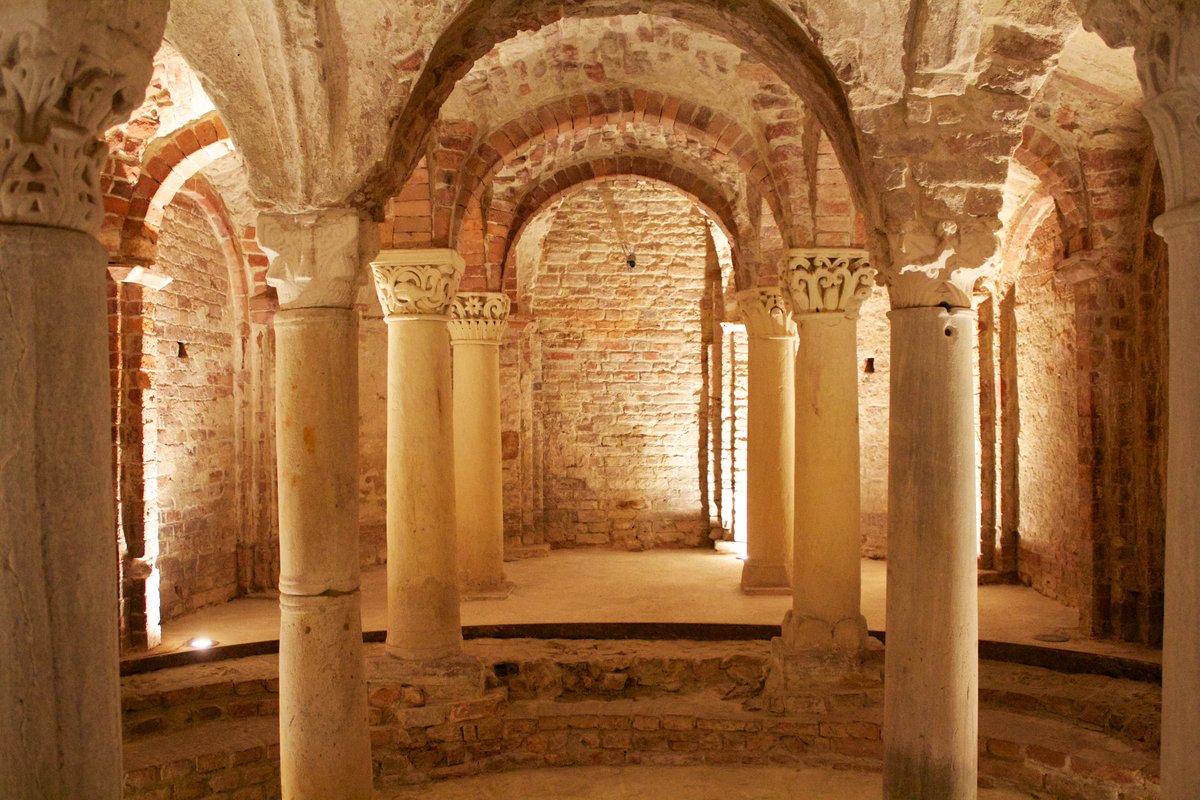 The Crypt and Museum of Sant'Anastasio is one of those places you don't expect. It's located on Corso Alfieri, just a stone's throw from the Duomo, but to visit it you have to descend under the building of the Liceo Classico. Yes, because in 1907, when they demolished the ancient church to build the school, an early medieval crypt came to light that has remained intact. Today it is the heart of a small archaeological museum that tells over a thousand years of Asti's history.
The crypt has a basilica plan, with three naves and cross vaults. The oldest part, from the 11th century, strikes you with its heterogeneous columns: some are recovered from Roman buildings, others made of sandstone specifically. Among the capitals, that of the first northern column is early medieval (first half of the 8th century) with engravings and Greek crosses – a rare beauty. Walking among the naves, you breathe an atmosphere of silence and sacredness.
Around the crypt, the museum displays stone artifacts from the 7th to the 16th century. In the west area you can see the slabs of the Roman forum of Hasta (1st century AD) and Lombard tombs from the 7th-8th century. In the east area, Romanesque capitals from the 12th-century church, decorated with vines, animals, and leaves, along with coats of arms from noble palaces. Also worth noting is the altar frontal from San Pietro in Consavia.
The museum is open every day from 10 am to 7 pm (last entry at 6 pm). Full ticket costs 10 euros, reduced 8. For info: 0141 437454. In 2022 it recorded over 9,500 visitors, but despite this it is still a little-known gem. If you pass through Asti, don't miss this dive into the past: it will feel like entering a time capsule.
Crypt and Museum of Sant'Anastasio: A Journey into the Bowels of Asti
- Go to the page: Crypt of Sant'Anastasio Asti: Romanesque Columns and Medieval Lombard Artifacts
- Corso Vittorio Alfieri 365, Asti (AT)
- https://www.comune.asti.it/pagina793_cripta-e-museo-di-santanastasio.html
- Open in Google Maps
- View on Google Images
- info@fondazioneastimusei.it
- +39 0141 437454
The Crypt and Museum of Sant'Anastasio is one of those places you don't expect. It's located on Corso Alfieri, just a stone's throw from the Duomo, but to visit it you have to descend under the building of the Liceo Classico. Yes, because in 1907, when they demolished the ancient church to build the school, an early medieval crypt came to light that has remained intact. Today it is the heart of a small archaeological museum that tells over a thousand years of Asti's history.The crypt has a basilica plan, with three naves and cross vaults. The oldest part, from the 11th century, strikes you with its heterogeneous columns: some are recovered from Roman buildings, others made of sandstone specifically. Among the capitals, that of the first northern column is early medieval (first half of the 8th century) with engravings and Greek crosses – a rare beauty. Walking among the naves, you breathe an atmosphere of silence and sacredness.
Around the crypt, the museum displays stone artifacts from the 7th to the 16th century. In the west area you can see the slabs of the Roman forum of Hasta (1st century AD) and Lombard tombs from the 7th-8th century. In the east area, Romanesque capitals from the 12th-century church, decorated with vines, animals, and leaves, along with coats of arms from noble palaces. Also worth noting is the altar frontal from San Pietro in Consavia.
The museum is open every day from 10 am to 7 pm (last entry at 6 pm). Full ticket costs 10 euros, reduced 8. For info: 0141 437454. In 2022 it recorded over 9,500 visitors, but despite this it is still a little-known gem. If you pass through Asti, don't miss this dive into the past: it will feel like entering a time capsule.
Domus Romana del Varrone: A Rare Roman Jewel in Asti
- Via Varrone 30, Asti (AT)
- https://www.fondazioneastimusei.it/domus-romana/
- Open in Google Maps
- View on Google Images
- info@fondazioneastimusei.it
- +39 0141 530403
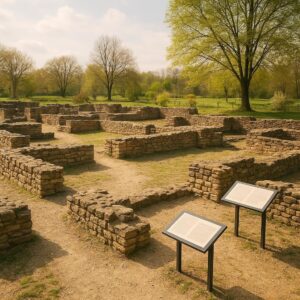
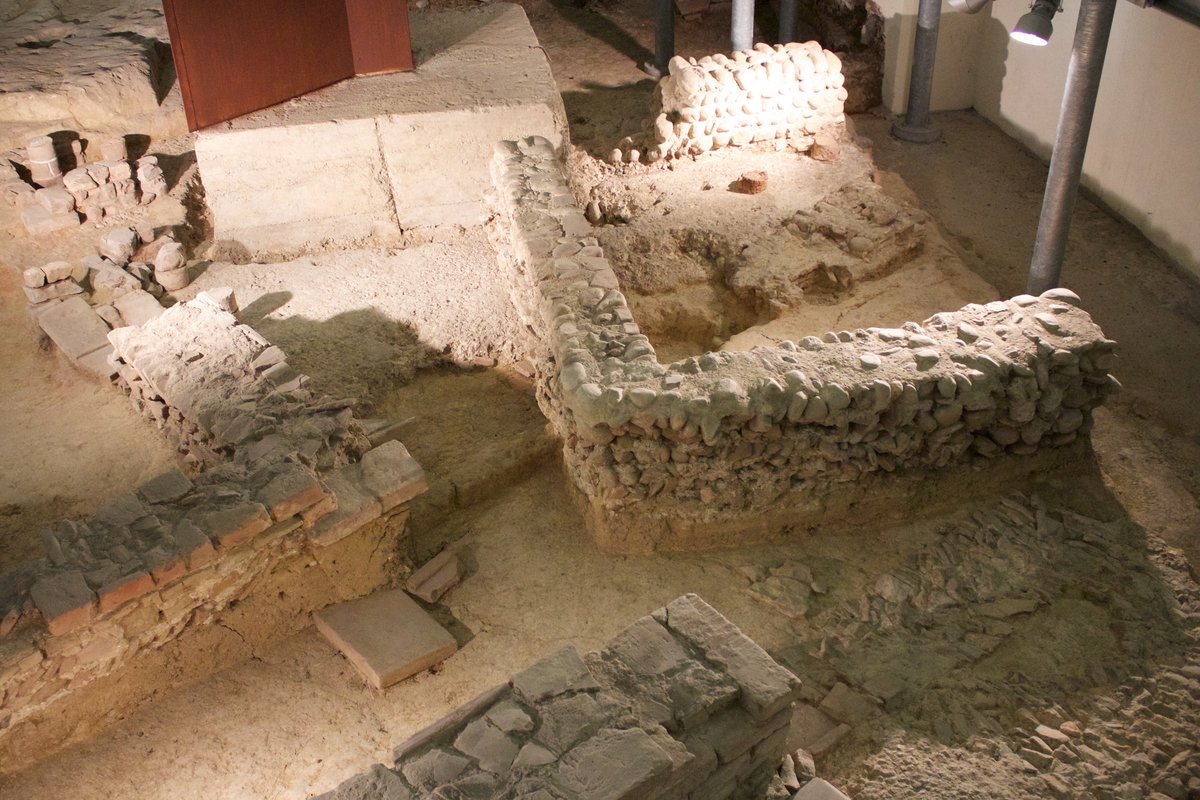 In the heart of Asti, at via del Varrone 30, lies an exceptional archaeological treasure: the Domus Romana del Varrone. Dating back to the second half of the 1st century AD, this wealthy patrician home is the only Roman domus open to visitors in Piedmont. Discovered beneath a modern building, the domus offers a fascinating glimpse into life in ancient Hasta. The highlight is the triclinium mosaic (dining room), a rare 3×1.70 meter carpet of black and white tesserae with inserts of colored marbles: serpentine, green, Numidian yellow. The pattern, unique in the region, depicts fish, dolphins, and ivy branches, framed by a braid and herringbone motif. But there's more: you can also see the brick pillars of the hypocaust, the ancient underfloor heating system, and fragments of painted plaster. The site, managed by the Fondazione Asti Musei, is open daily from 10 am to 7 pm (last entry at 6 pm). Full ticket €5, reduced €3. I recommend combining the visit with the nearby Torre Rossa and the Museo di Sant’Anastasio for a complete immersion in Roman Asti. A place where you can touch two thousand years of history.
Bishop's Seminary Palace: Baroque and Hidden Treasures
- Piazza Catena, Asti (AT)
- Open in Google Maps
- View on Google Images
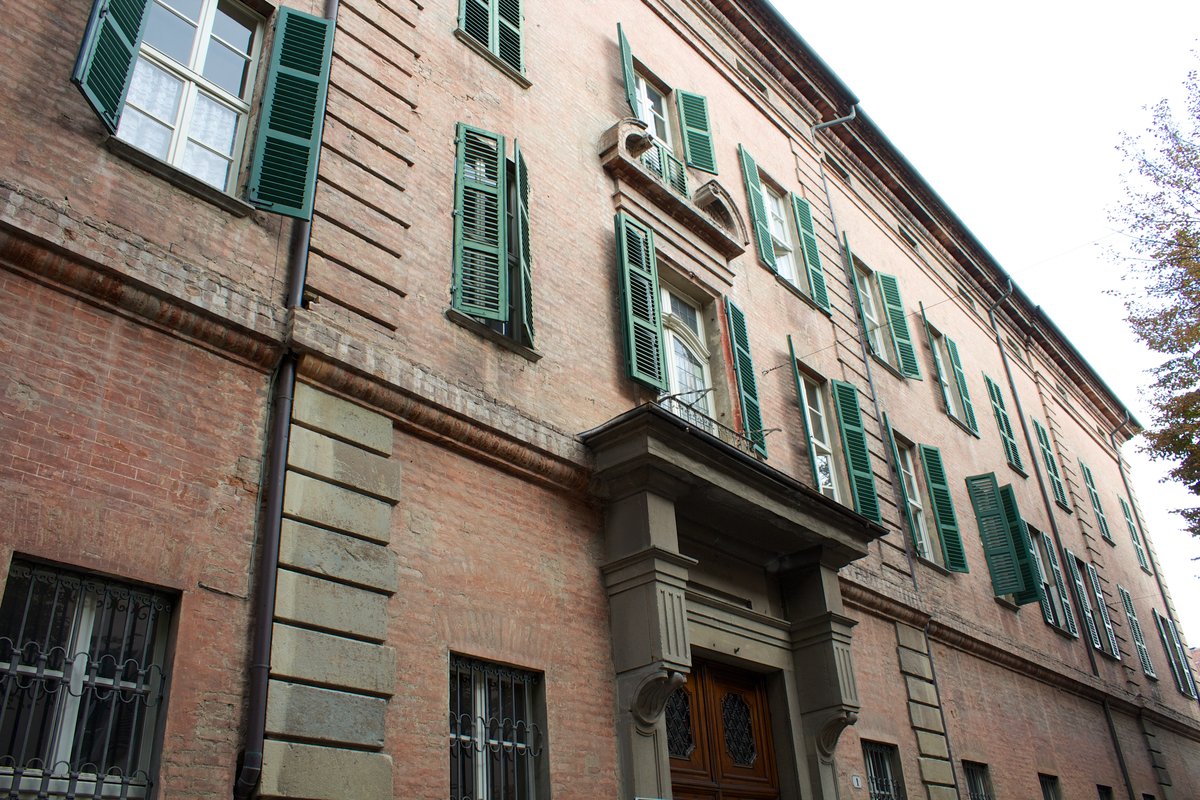 In the heart of Asti, on Piazzetta del Seminario, stands the Palazzo del Seminario Vescovile, an imposing Baroque building designed by royal architect Benedetto Alfieri in 1762. The austere and rigorous façade gives no hint of the riches within: a porticoed courtyard, an 18th-century staircase with a perspective effect, and an elliptical refectory. Commissioned by Bishop Paolo Maurizio Caissotti, work continued until 1775 but, due to lack of funds, the building remained unfinished – only three of the four planned wings were completed. Today, the palace still houses the seminary, but public access is limited: only the Seminary Library is open to visitors, by appointment. Founded in 1730, it holds manuscripts, rare books, and one of Piedmont's most important book collections, specializing in theology and philosophy. Inside there are also valuable paintings, such as Gandolfino da Roreto’s “Nativity with Saints Bartholomew and Benedict” and Jacobino and Giovanni Longo’s “Adoration of the Magi”, unfortunately not accessible to the public. During the French occupation in 1798, the building was used for military purposes and the seminary temporarily closed. The poet Silvio Pellico, who visited the site, dedicated some verses to the clerics. If you are passionate about rare books or Baroque architecture, it is worth arranging a visit to the library: a quiet corner where time seems to have stood still.
San Giovanni Diocesan Museum: A Treasure Chest of Art and History
- Via Giulio Natta 36, Asti (AT)
- http://museo.sicdat.it
- Open in Google Maps
- View on Google Images
- museo@sicdat.it
- +39 351 707 7031
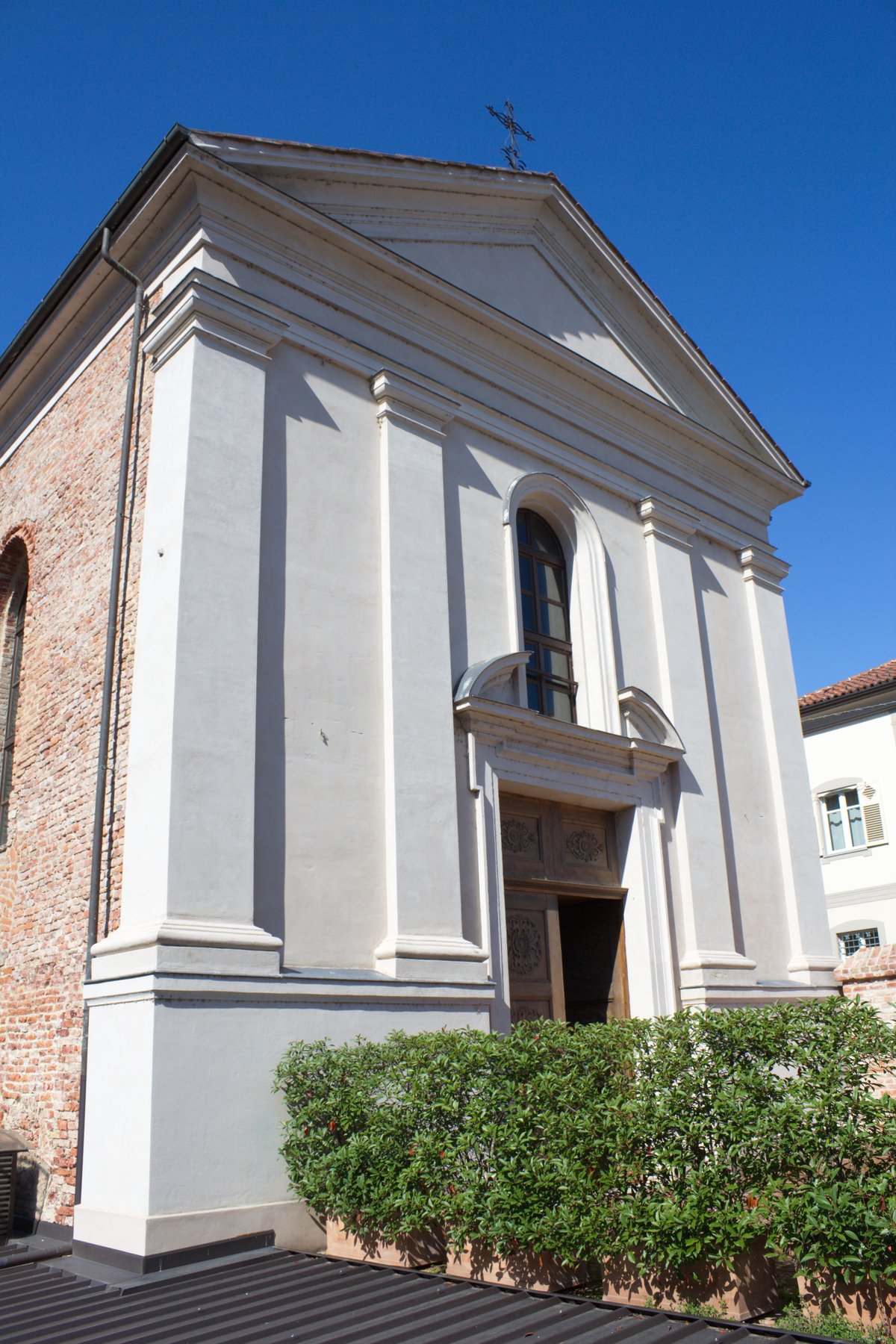 In the heart of Asti, among medieval towers and the scent of wine, lies a hidden gem few know: the San Giovanni Diocesan Museum. Housed in the ancient church of San Giovanni, considered the city's first cathedral, this museum is a dive into a distant past. Opened in 2010, it gathers the artistic heritage of the diocese and displays it in an environment that is itself an artifact. The structure has early Christian origins: beneath your feet, an 8th-century crypt with columns of Egyptian red porphyry and early medieval capitals will transport you to another era. And then there's the highlight: the wooden choir of Baldino da Surso, dated 1477. Thirty-six seats once adorned the cathedral's presbytery; today, twenty-one remain, but their late Gothic beauty is intact. The carved backrests depict evangelists and doctors of the Church, with details revealing the hand of a master and his northern apprentice. Don't miss the headless statue of John the Baptist in sandstone, decapitated by time but full of charm, and the Gothic monstrance of Materniganus de Filipis from 1447. The museum is still being completed, but already it offers an exciting journey among tombstones, frescoes, and liturgical objects. Admission is free with a suggested donation, and on Friday afternoons the atmosphere is almost intimate. A tip: take your time to observe the crypt, where silence and stones tell centuries of faith.
Archaeological and Paleontological Museum: A Dive into the Pliocene Sea
- Corso Vittorio Alfieri 2, Asti (AT)
- https://www.comune.asti.it/pagina866_museo-archeologico.html
- Open in Google Maps
- View on Google Images
- info@fondazioneastimusei.it
- +39 0141 530403
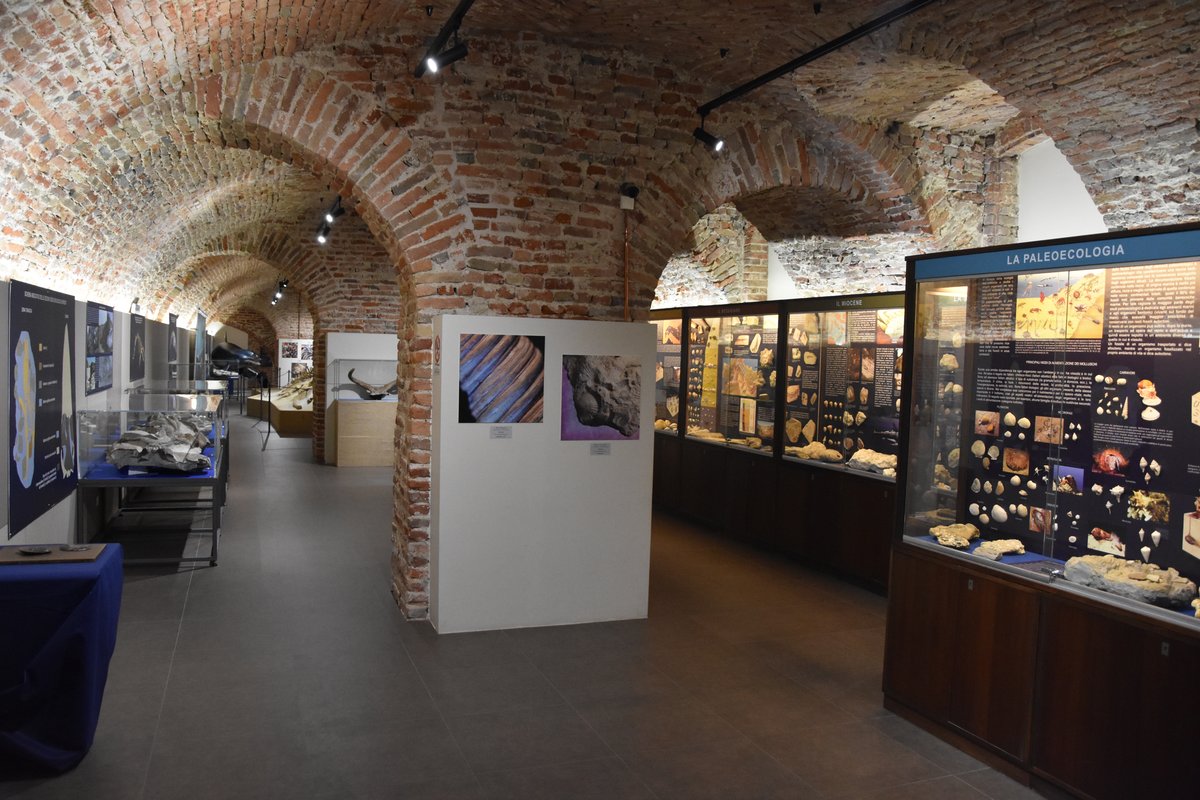 If you think Asti is just wine and towers, you're way off. Beneath the Palazzo del Michelerio, a 16th-century building that's seen it all (monastery, orphanage, until 1971), hides one of Piedmont's most surprising museums: the Territorial Paleontological Museum of Asti. The name's a mouthful, but the visit is straightforward: head to the basement and you're catapulted back 25 million years, when the entire Po Valley was a tropical sea. And here, honestly, the star attraction is the fossil cetaceans. The collection is considered the most important in Italy and Europe: baleen whales, dolphins, and even an 11-meter sperm whale, the Leviathan of Vigliano d'Asti, displayed in the former Church of Gesù (with 17th-century frescoes, by the way). The tour is split in two: first, a general section with fossils of mollusks, corals, and sharks (the reconstruction of the Megalodon jaw at the entrance is a must-see), then the cetacean gallery. Highlights include the Whale of San Marzanotto (a unique specimen still being studied) and the Dolphin of Settime, a species new to science. There's also a small prehistoric aquarium reconstructing Pliocene seabeds. Tickets cost €7, and a guided tour is highly recommended – the paleontologists are passionate and share anecdotes the signs don't. And if you're with kids, the educational workshops are a blast: they can touch real fossils and make casts. In short, a museum you don't expect, just like Asti.
Red Tower: Asti's Oldest Symbol
- Corso Vittorio Alfieri, Asti (AT)
- Open in Google Maps
- View on Google Images
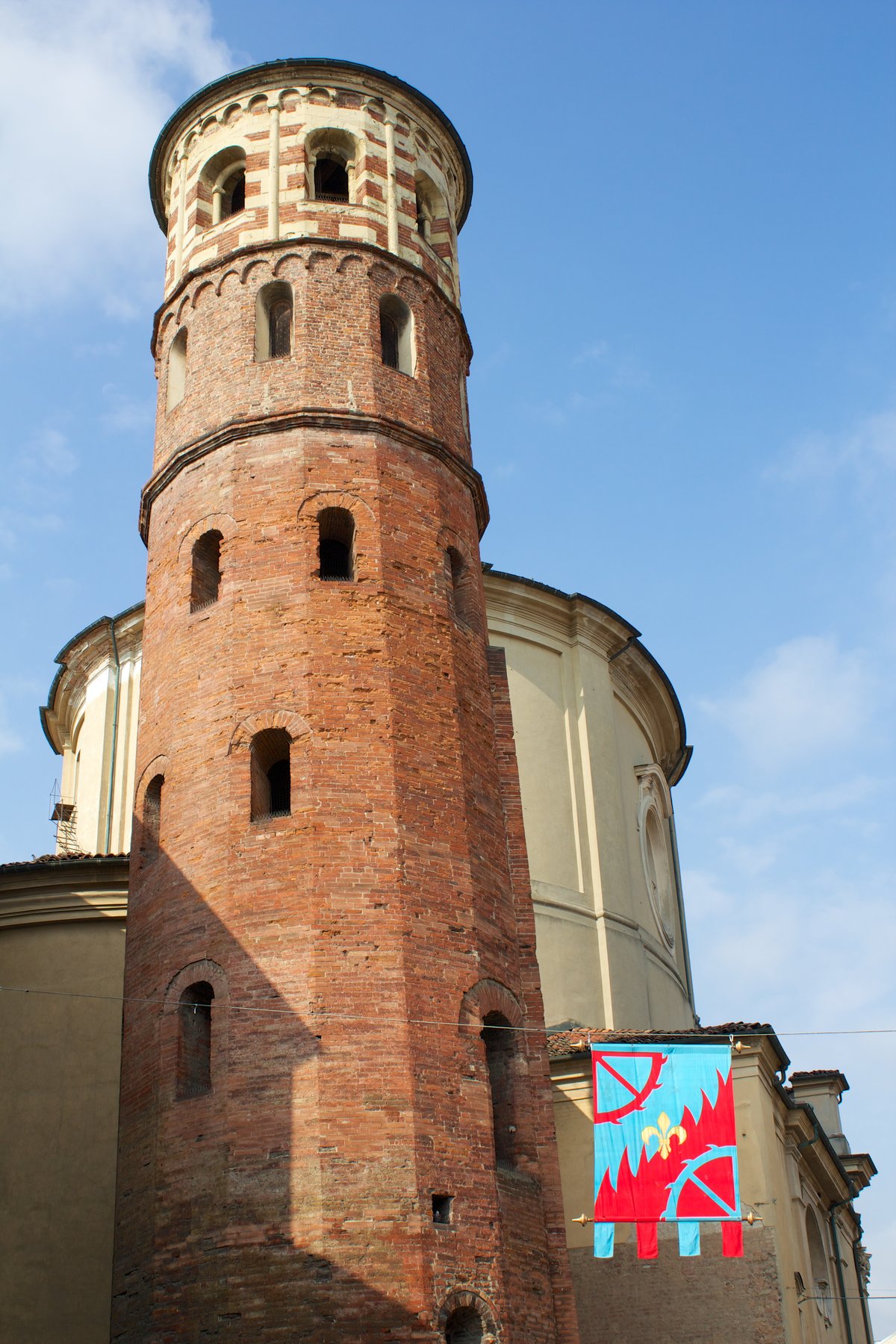 While strolling along Corso Vittorio Alfieri, you can't miss the Red Tower, one of Asti's oldest monuments. Its history began two thousand years ago, when the Romans founded Hasta: the lower, 16-sided section dates to the 1st century AD and was likely one of the towers of the western city gate. In the 12th century, it was raised with a cylindrical structure of brick and sandstone, typical of Asti's Romanesque bichrome style, and turned into a bell tower for the church of San Secondo (now Santa Caterina). The name? Either from the De Rubeis family or the red color of the bricks. Legend has it that Saint Second was imprisoned here before his martyrdom: a statue of the saint, once in a now-sealed underground cell, can be seen inside. Too bad the tower is not open to the public (owned by the Order of Saints Maurice and Lazarus), but it's worth admiring from the outside. In the 1930s, adjacent houses were demolished to highlight it, and the resulting small square was meant to host a statue of Augustus, never built. Fun fact: next to it, at number 432, a miniature of the tower sits in an iron case, perfect for a selfie. A gem blending eras and stories, unmissable for history lovers.
Torre Solaro: A Gothic Jewel Among the Towers of Asti
- Via Giosuè Carducci, Asti (AT)
- Open in Google Maps
- View on Google Images
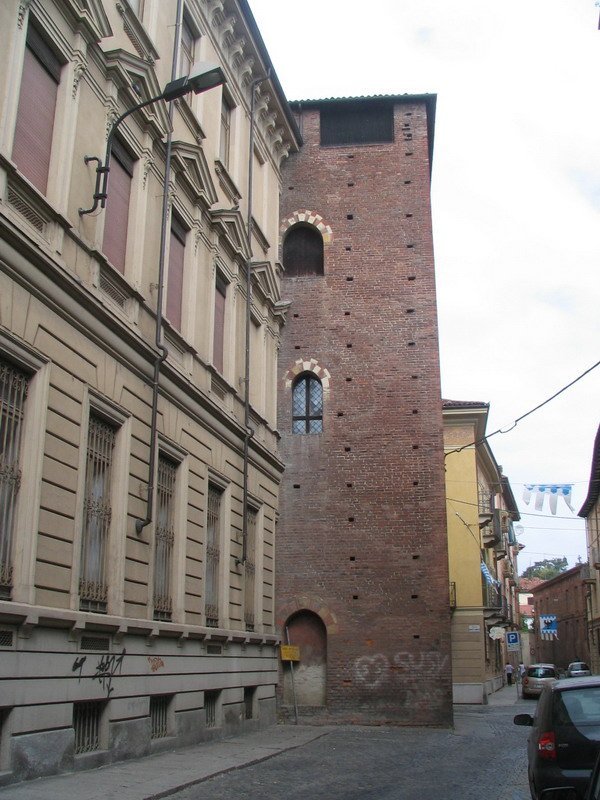 If you stroll through the Cattedrale district of Asti, at the corner of via Carducci and via Giobert, you'll find yourself facing a piece of medieval history: Torre Solaro, one of the so-called 'giant towers' of the second period. Built in the second half of the 13th century in Gothic style, today it is shorter than the original – like many Asti towers – but its square bulk of 8.10 meters per side still lets you imagine its original grandeur. The tower is traditionally attributed to the powerful Guelph family of the Solaro, but historian Niccola Gabiani was mistaken: in reality, in the 16th century it belonged to the Ponte family. In short, a historical mystery that makes it all the more fascinating.
Architecturally, the two mullioned windows with pointed arches on the upper floors stand out, unusual for Asti's art of the time: they are probably the result of the 'reconstructive' restoration of 1932. The rest of the shaft is smooth, with simple single-light windows. Unfortunately, the tower is currently not open to the inside, but it is worth admiring from the outside, perhaps at sunset when light plays on its forms. A tip from a curious traveler: look up and try to imagine its original height, before the cutting – it was one of those towers that challenged the sky.
Torre De Regibus: A Gothic Octagonal Jewel
- Via Roero, Asti (AT)
- Open in Google Maps
- View on Google Images
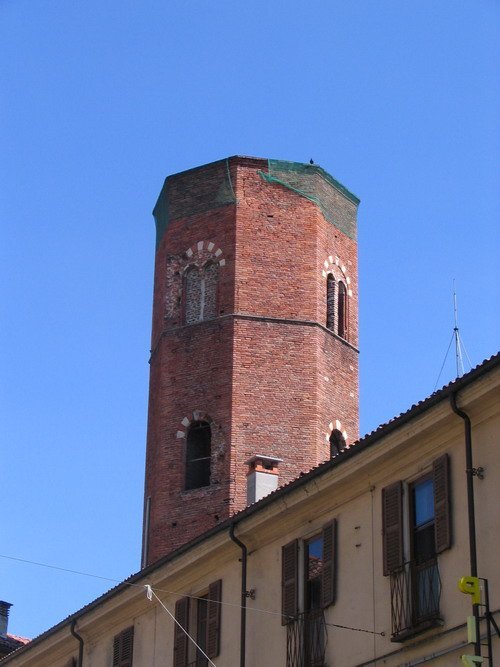 As you wander through Asti and look up, you can't miss the Torre De Regibus at the corner of Via Roero and Corso Alfieri. It is the city's only octagonal tower, a small Gothic gem dating back to the 13th century. Originally rising nine stories to 39 meters, today only six remain, reaching about 27 meters. The three lost floors, with their mullioned windows and Ghibelline battlements, were demolished in the 1700s. The name comes from the De Regibus family (later Italianized to Re), a Ghibelline lineage of merchants and moneylenders active between Metz, Lorraine, and Piedmont. The tower was part of a defensive complex of three towers: you can still see the shorter Torre Quartero, while the third has disappeared. The area is traditionally called the "corner of the three kings". Unfortunately, the tower is not open to visitors, but its silhouette is clearly visible from the street, offering a striking sight. If you're a fan of medieval history, pause for a moment to observe the sandstone details and imagine the glory days of the Re family. For me, it's one of those places that speaks of Asti's most ancient soul without uttering a word.
Comentina Tower: Asti's Second Tallest Tower
- Corso Vittorio Alfieri, Asti (AT)
- Open in Google Maps
- View on Google Images
 Strolling through Piazza Roma, you can't miss the Comentina Tower, soaring 38.55 meters at the corner with Corso Alfieri. It's the second tallest civil tower in the city, but to me it's the most fascinating: a smooth shaft in Piedmontese Gothic style, dotted with lancet windows, and at the top a double row of brick and sandstone arches framing a Ghibelline swallowtail battlement. Built in the second half of the 13th century, it's the only medieval tower in Asti to have preserved its original height. For centuries it was called San Bernardino Tower, as it served as the bell tower for the adjacent church, demolished in 1897 to make way for the Neo-Gothic palace that now incorporates it. It's a shame you can't visit: it would be wonderful to climb up there and enjoy the view. But even from the ground, the tower tells stories. For a long time, the Palio di Asti started here, run 'alla lunga' along the Contrada Maestra. Today it's private property, but it remains a symbol of the city, a direct link to Asti's medieval past. If you pass by, stop for a moment and look at it: it almost seems to speak to you.
Natta Tower: The Stone Sentinel of the Natta Family
- Via Milliavacca, Asti (AT)
- Open in Google Maps
- View on Google Images
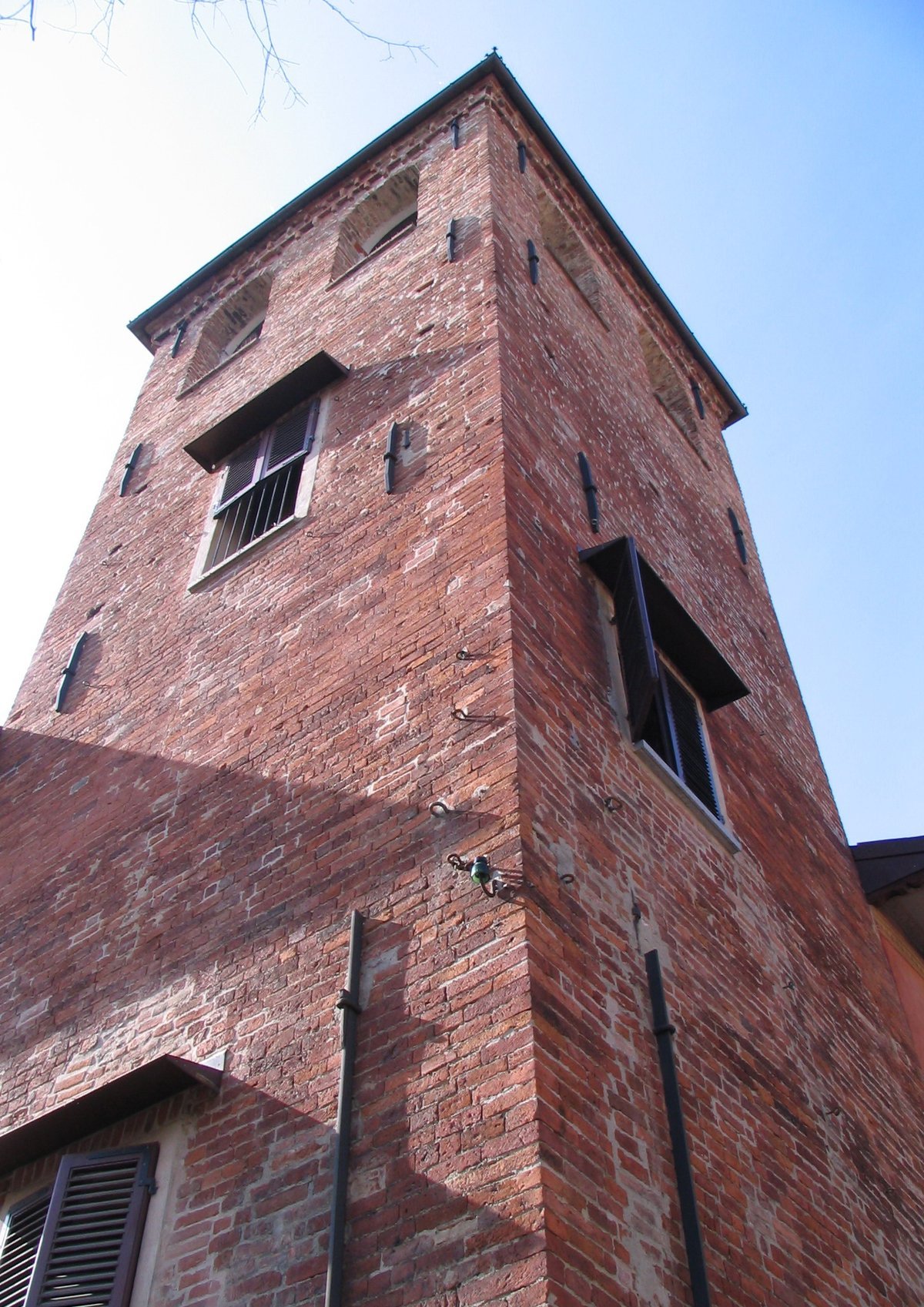 If you stroll down Via Natta, at the corner with Via Milliavacca, you’ll come across a tower that seems to have stepped out of another era. It’s the Natta Tower, built at the end of the 12th century – though some historians claim it’s even older. With its square base, 5 meters per side, and the distinctive double band of drop-shaped friezes, it’s a perfect example of Asti’s Gothic architecture. Once it stood taller, but it was lopped off at some unknown point. Today, leaning against the Natta family’s palaces, it forms a solid fortified house that makes you imagine power struggles and noble life.
The tower isn’t open to visitors – too bad, because climbing those stairs would have been epic. But you can admire its details from the outside: the doorway on Via Natta is a Renaissance remake, while the one on Via Milliavacca is Gothic, with alternating white and red blocks, typical of Asti’s medieval style. The palace facade, meanwhile, is decorated with a 19th-century trompe-l’œil, a whimsical touch that adds a near-theatrical flair.
The Natta family, who lived here, has a mythical history: they were said to descend from Numa Pompilius, the second king of Rome. More concretely, the scion Enrietto Natta (died in 1485) owned lands throughout the area, giving his name to Valle Natta. In short, Natta Tower is not just a monument: it’s the heart of a neighborhood that tells centuries of Asti’s story, steeped in wine, power, and red bricks.