National Archaeological Museum of Florence: Chimera of Arezzo and Egyptian Mummies in a Renaissance Palace

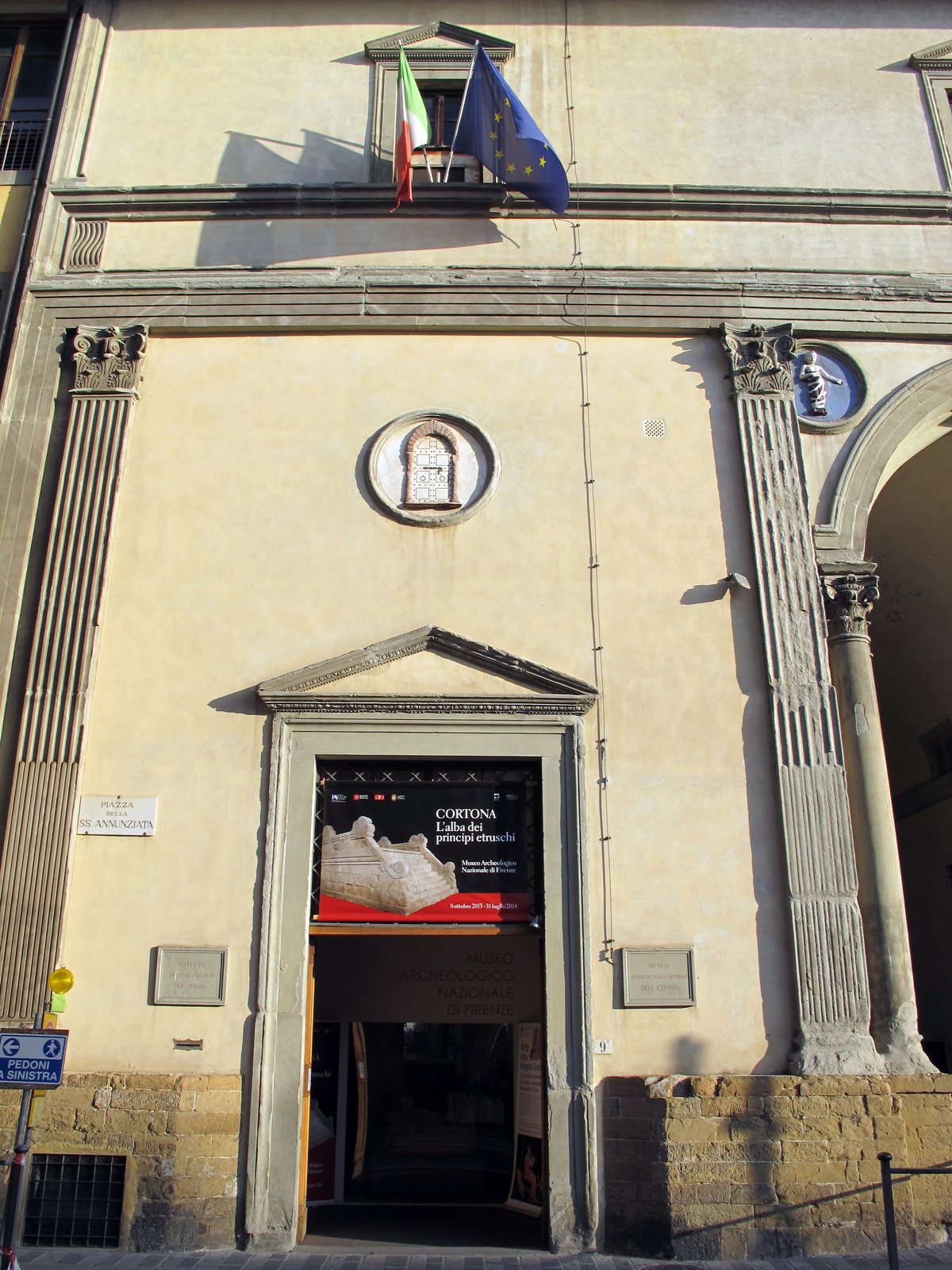
The National Archaeological Museum of Florence, located just steps from Piazza Santissima Annunziata, welcomes you to a Renaissance palace with the world’s most important collection of Etruscan art, an Egyptian section rich with mummies and sarcophagi, and Roman and Greek artifacts. The intimate and quiet atmosphere allows you to observe the masterpieces calmly, away from the crowds of more famous museums.

  • The Chimera of Arezzo, a 4th-century BC Etruscan bronze restored by Benvenuto Cellini
  • The Egyptian collection with mummies, painted sarcophagi, and everyday objects
  • The Orator and Etruscan alabaster cinerary urns from Volterra
  • The Renaissance palace in the heart of the historic center, near Piazza Santissima Annunziata


Events nearby

Copertina itinerario National Archaeological Museum of Florence: Chimera of Arezzo and Egyptian Mummies in a Renaissance Palace
In the historic center of Florence, the National Archaeological Museum houses the world’s most important collection of Etruscan art, featuring the Chimera of Arezzo, the Orator, Egyptian sarcophagi, and Roman artifacts within a Renaissance palace.

Good to know


Introduction

In the heart of Florence, just steps away from the lively Piazza Santissima Annunziata, the National Archaeological Museum welcomes you into a Renaissance palace that is already a journey through time. It’s not just a museum, but a true treasure chest housing Etruscan, Egyptian, and Roman artifacts, collected over centuries of passionate collecting. Upon entering, you immediately feel immersed in an atmosphere rich with history, where each room tells ancient stories through everyday objects and extraordinary artworks. Perfect for archaeology enthusiasts but also for families, it offers an accessible and engaging experience, away from the crowds of more famous museums. Here, the past comes to life in a tangible way, with exhibits ranging from Etruscan urns from Chiusi to Egyptian mummies, creating a fascinating journey through distant civilizations.

Historical Background

The museum was officially established in 1870 through the merging of the archaeological collections of the Medici and Lorraine dynasties, two families that shaped Florence. The Medici, in particular, began collecting Etruscan artifacts as early as the 16th century, with pieces from excavations in Tuscany. In the 18th century, the Lorraine family enriched the collection with significant acquisitions, such as Etruscan and Roman bronzes. A key moment was the arrival of the Egyptian Collection in 1828, one of the most important in Italy after Turin’s. Today, the museum continues to grow with artifacts from local excavations, maintaining a strong connection with the Tuscan region.

  • 1560-1737: The Medici collect Etruscan and Roman artifacts
  • 1828: Acquisition of the Egyptian Collection
  • 1870: Official founding of the museum
  • Today: Renewed exhibitions and educational activities

The Etruscan Masterpieces

The Etruscan section is the heart of the museum, with artifacts that will leave you in awe. Don’t miss the Chimera of Arezzo, a 4th-century B.C. bronze discovered in 1553, depicting a mythological creature with a lion’s body, a goat’s head, and a serpent’s tail. It’s a work of rare beauty, restored by Benvenuto Cellini. Then, admire the alabaster cinerary urns from Volterra, with scenes of daily life meticulously carved. These artifacts, from sites like Chiusi and Fiesole, showcase the art and culture of the Etruscans, a civilization that dominated ancient Tuscany. The room dedicated to small bronzes, with votive statuettes and utensils, helps you understand how skilled these artisans were.

The Charm of Egypt

You might not expect it in Florence, but here you’ll find one of the richest Egyptian collections in Italy. The section, organized into thematic rooms, includes sarcophagi, mummies, amulets, and statuettes of the gods. Don’t miss the Mummy of a Young Woman, with its painted sarcophagus, which transports you directly into the funeral rituals of ancient Egypt. There are also stelae with hieroglyphs and everyday objects, such as vases and jewelry, that tell the story of a distant yet fascinating civilization. This collection, which arrived mainly thanks to nineteenth-century expeditions, is perfect for those who want to delve into Egyptology without having to travel all the way to Cairo.

Why Visit It

Visiting this museum offers three concrete advantages. First, it’s less crowded than the Uffizi or Accademia, so you can enjoy the artworks at your own pace without exhausting queues. Second, it features a varied itinerary spanning from the Etruscans to the Egyptians, ideal for history lovers who want to avoid monotony. Third, it has an affordable ticket (often included in city passes) and family-friendly activities, such as children’s workshops on Roman artifacts. Additionally, its central location allows you to combine the visit with other nearby historical sites, making it a smart stop on a Florentine itinerary.

When to Go

The best time to visit the museum is on weekday mornings, when crowds are smaller and you can explore the rooms in peace. Avoid summer weekends, which can attract more tourists. In winter, the atmosphere is particularly evocative, with natural light filtering through the palace windows, creating plays of shadows on the artifacts. If you prefer a more intimate experience, try going in the early afternoon hours, when the museum is often quieter and you can focus on the details of the works without distractions.

In the Surroundings

After your visit, explore Piazza Santissima Annunziata, one of Florence’s most harmonious Renaissance squares, with its portico and basilica. A short walk away, reach the Museo di San Marco, where you can admire frescoes by Fra Angelico in an ancient Dominican convent. Both sites complement the historical-artistic theme, offering a glimpse of Florence beyond the usual tourist routes.

Itineraries nearby


💡 Did You Know…?

Not everyone knows that the museum houses the Sarcophagus of the Amazons, an Etruscan masterpiece from the 4th century BC discovered in Tarquinia, with battle scenes so detailed they seem alive. Another ultra-realistic detail: in the Egyptian section, you can admire the sarcophagus lid with the gilded face of a woman, perfectly preserved despite the millennia, which seems to look at you even today. These pieces, along with the famous Chimera, make the visit a unique experience, like flipping through a three-dimensional history book.