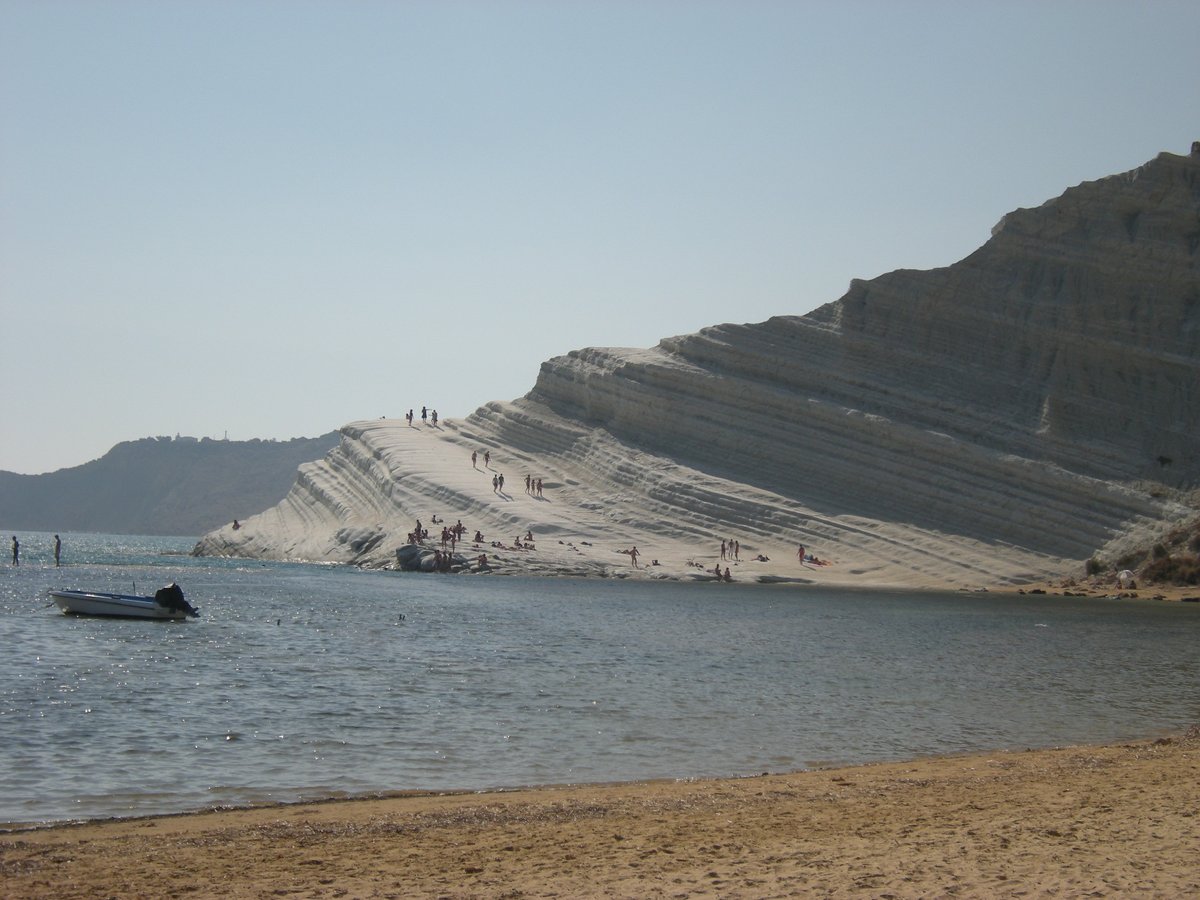
Scala dei Turchi is a unique geological formation of white marl with terraced steps overlooking the sea, featuring free access and breathtaking views of the Agrigento coast. Located at Punta Grande near Realmonte, it offers a multisensory experience among smooth rock, crystal-clear water, and tales of Saracen pirates.
- White marl cliff with terraced steps, free access and no tickets required
- Unique views of the Agrigento coast and the golden beaches of Realmonte
- Crystal-clear water perfect for snorkeling with rocky seabeds
- Proximity to the Valley of the Temples in Agrigento and other local attractions
Introduction
The first time you see the Scala dei Turchi, you’re left speechless. It’s not just a cliff: it’s a natural sculpture of white marl that descends in steps toward the sea, like a giant staircase carved by wind and water. At Punta Grande, between Realmonte and Porto Empedocle, this geological spectacle strikes you with the contrast between the dazzling white of the rock and the intense blue of the Mediterranean. Walking on it is a unique tactile experience—the marl is smooth, almost velvety underfoot, and when the sun illuminates it, it feels like being on another planet. Access is free, without tickets or gates, and this makes everything more authentic. Personally, that pure white against the sky reminded me why it’s worth traveling: to find places that don’t seem real.
Historical Background
The name ‘Scala dei Turchi’ dates back to the time of Saracen raids, when Ottoman pirates used this stepped cliff as a natural landing point for their raids along the Sicilian coast. There are no precise dates, but between the 16th and 18th centuries these waters were dangerous. Locals recount that pirates hid their boats here, taking advantage of the cliff’s amphitheater-like shape. Interestingly, in 2007 it was proposed as a UNESCO World Heritage site—though it has not yet been added to the list, it remains a unique geological symbol in Italy. Its formation dates back millions of years, when this was a seabed rich in microfossils that gave rise to the marl. Today it is protected as a natural monument, but without too many fences: you can still breathe that air of freedom that perhaps attracted the pirates of old.
- 16th–18th centuries: used as a landing point by Ottoman pirates
- 2007: proposed as a UNESCO site
- Today: regional natural monument
The climb and the views
Reaching the Scala dei Turchi is straightforward but requires a bit of attention. You park along State Road 115 and walk down via a dirt path—nothing too challenging, but it’s best to wear comfortable shoes because the descent to the sea can be slippery. Once you arrive, the temptation is to rush straight into the water, but I recommend pausing first at the top. From there, the view is breathtaking: on one side, you can see the entire Agrigento coastline stretching toward Sciacca, and on the other, the famous golden sand beaches of Realmonte. What’s special? The marl reflects light in an incredible way, especially at sunset when everything turns shades of pink and orange. Descending the natural steps is like a game: some are high, others gentler, and between breaks, you might find yourself searching for fossil shells embedded in the rock. I found a perfect one—it felt like a little treasure.
The Sea and the Beach
Swimming at Scala dei Turchi is unlike a typical beach experience. The water is crystal clear, but beneath lie rocks and rapidly changing depths—perfect for snorkeling, though caution is needed due to currents. The unique aspect is the choice: you can dive directly from the lower steps or head to the small mixed sand-and-gravel beach that forms at the base, where the water is often calmer. The sea color shifts from turquoise to emerald, depending on how light hits the white marl seabed. Something rarely mentioned: if you go early in the morning, especially on weekdays, you might find it nearly deserted. I visited on a Tuesday in June and only two local fishermen were there. They mentioned that sea turtles are sometimes spotted, though I didn’t see any myself. A tip: bring a beach towel, as lying directly on the marl can get a bit hard after a while.
Why Visit
Three concrete reasons not to miss the Scala dei Turchi. First: it’s one of the few places in Italy where you can walk on such a unique geological formation without paying an entrance fee or following set paths. Second: the chromatic contrast between the white rock and the blue sea creates incredible photographs at any time of day—even with a smartphone, the results are stunning. Third: it’s a multisensory experience. You don’t just see it; you feel the smooth texture of the marl under your feet, smell the salty air mixed with earth, and when the wind blows strong from the sea, it feels like being on a ship. For me, the added value is precisely this freedom: no signs telling you where to go, you can explore every nook and cranny at your leisure. Of course, don’t expect tourist services—here, everything is wild and authentic, and perhaps that’s for the best.
When to Go
The best time? Definitely late afternoon, especially in spring or early autumn. In summer, it’s extremely hot, and the blazing sun on the white marl can be blinding—plus it makes the rock scorching. Instead, around 5:00 PM, the light softens, colors intensify, and the temperature is perfect for a swim. I’ve noticed that during these hours, the wind often dies down, and the sea becomes as flat as a table. In winter, it’s atmospheric but not recommended for swimming: waves can be high, and the descent can be dangerous if wet. A tip: check the lunar phases. On full moon days, if you stay until dusk, the spectacle is double: the white cliff seems to glow in the moonlight. Personally, I’ve been there in May and September, and I preferred September: fewer people, water still warm, and the sunsets are incredibly long.
In the Surrounding Area
After visiting the Scala dei Turchi, it’s worth exploring two nearby spots that complete the experience. Just a few minutes’ drive away is Realmonte Beach, with its fine golden sand – perfect for more comfortable relaxation after climbing the marlstone. A bit further east, don’t miss the Valley of the Temples in Agrigento: it might seem obvious, but seeing the Greek temples at sunset after a day at the beach is a historical contrast that only this area can offer. If you enjoy seafood, in nearby villages like Porto Empedocle you’ll find trattorias serving fresh fish at fair prices – try the mussels marinara, they’re a local specialty. Another gem: the Realmonte salt pans, where artisanal sea salt is still produced. It’s not a crowded tourist destination, but if you pass by in the morning you’ll see the salt mounds sparkling in the sun, another white different from that of the Scala.