
🧭 What to Expect
- Ideal for a weekend of culture and relaxation in Val di Noto, with UNESCO Baroque Heritage and valley panoramas.
- Highlights include the San Giorgio Cathedral in Ragusa Ibla, the San Giovanni Battista Cathedral, and the Ibleo Garden.
- Discover Donnafugata Castle with its maze and the Ibleo Archaeological Museum with artifacts from ancient Kamarina.
- Explore Baroque churches like Santa Maria dell'Itria and San Giuseppe, and historical palaces like Palazzo Battaglia.
- Take advantage of the interactive map to navigate the 15 stops, from watchtowers to Grotta delle Trabacche.
Events nearby

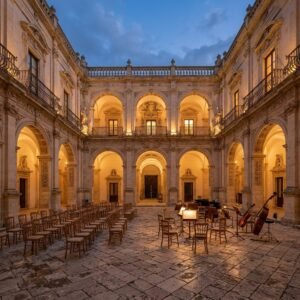
The City of Ragusa welcomes you with its charm divided between Upper Ragusa and Ragusa Ibla, connected by stairways and alleyways that seem lifted from a painting. Here, Sicilian Baroque reaches incredible heights, with churches and palaces recounting centuries of history, from the reconstruction after the 1693 earthquake to local traditions. Don't miss the Cathedral of San Giorgio in Ibla, an architectural masterpiece, and the Giardino Ibleo, where you can relax with views over the valley. Strolling through the streets of Ibla means discovering hidden corners, like the Church of Santa Maria dell'Itria with its colorful dome, and breathing in an authentic atmosphere, far from tourist crowds. For archaeology enthusiasts, the Iblean Archaeological Museum offers artifacts ranging from prehistory to the Greek era, while Donnafugata Castle, just outside the city, adds a touch of mystery with its rooms and labyrinth. The City of Ragusa is perfect for a weekend discovering art and culture, with the opportunity to taste typical products like the famous Modica chocolate or local cheeses in the town's restaurants. It's recommended to visit in spring or autumn when the climate is mild and the sunset light makes everything even more magical.
Overview
- St. George's Cathedral
- Cathedral of Saint John the Baptist
- Donnafugata Castle
- Iblean Archaeological Museum
- Ibleo Garden
- Church of Santa Maria dell'Itria
- Church of San Giuseppe
- Church of San Francesco all'Immacolata
- Battaglia Palace
- Kamarina: A Dive into Antiquity Between Sea and History
- Cabrera Tower
- Villa Margherita
- Church of Santa Maria delle Scale
- Torre Vigliena: The Panoramic Balcony Overlooking Ragusa Ibla
- Grotta delle Trabacche
Itineraries nearby


St. George's Cathedral
- Go to the page: Duomo di San Giorgio in Ragusa Ibla: Baroque Convex Facade and Illusory Dome
- Via Capitano Bocchieri, Ragusa (RG)
- Open in Google Maps
- View on Google Images
 When you arrive in Ragusa Ibla, St. George's Cathedral is impossible to miss. It stands at the top of a monumental staircase, almost as if watching over the entire Baroque quarter. The first thing that strikes you is the facade: a riot of twisted columns, statues, and decorations that seem to dance in the sunlight. The architect Rosario Gagliardi designed it in the 18th century, and his mastery is evident throughout. Inside, the effect is even more surprising: the Latin cross plan with three naves creates a spacious and luminous interior. The gilded stuccoes, frescoes in the dome, and side altars are a concentrated display of Sicilian Baroque art. Personally, I got lost admiring the polychrome majolica floor, with its geometric patterns that look like precious carpets. Don't miss the Chapel of the Blessed Sacrament, which houses a reliquary containing the remains of St. George: a detail many overlook, yet it speaks of centuries of devotion. The church is still active, so you might witness a service or a wedding—I happened upon a ceremony, and the atmosphere was magical. If you're up for it, the bell tower offers a spectacular view of Ragusa Ibla and the Iblean hills, though it's not always accessible. A tip? Go at sunset: the limestone stone turns golden, and the shadows accentuate every curl of the facade. It's one of those places that makes you understand why Sicilian Baroque is a UNESCO World Heritage site.
Cathedral of Saint John the Baptist
 If Ragusa Ibla wins you over with its more intimate and enclosed Baroque, climbing towards Ragusa Superiore holds another surprise: the Cathedral of Saint John the Baptist. It is the symbol of the city rebuilt after the 1693 earthquake, and you can tell immediately from its scenic grandeur. It doesn't hide; on the contrary, it dominates Piazza San Giovanni with its three-tiered façade, rich in statues and decorations. What strikes you, perhaps more than the façade itself, is the approach. To reach it, you ascend a monumental staircase that amplifies the sense of majesty, a theatrical effect typical of Sicilian Baroque that reaches its peak here. Upon entering, the eye immediately goes to the dome, over 50 meters high and visible from various points in the city. The interior is in the shape of a Latin cross, bright, with wide naves. There are significant works of art, such as the sculptural group of the Madonna della Lettera, but what I especially enjoyed was observing the details of the capitals and the stuccoes. There is an overall harmony, perhaps less charged with pathos compared to the Duomo of San Giorgio in Ibla, but equally powerful. A piece of advice? Visit it on a sunny afternoon: the light filtering through the windows and illuminating the central nave is magical. Pay attention to mass times if you want to visit it calmly, because during services, tourist access is limited. It is a fundamental stop to understand the dual soul of Ragusa: the older one of Ibla and the reborn, ambitious, and grandiose one, represented precisely by this cathedral.
Donnafugata Castle
- Go to the page: Donnafugata Castle: A Neo-Gothic Residence with a Maze and Hall of Mirrors
- Vialetto Corrado Arezzo de Spuches, Ragusa (RG)
- Open in Google Maps
- View on Google Images
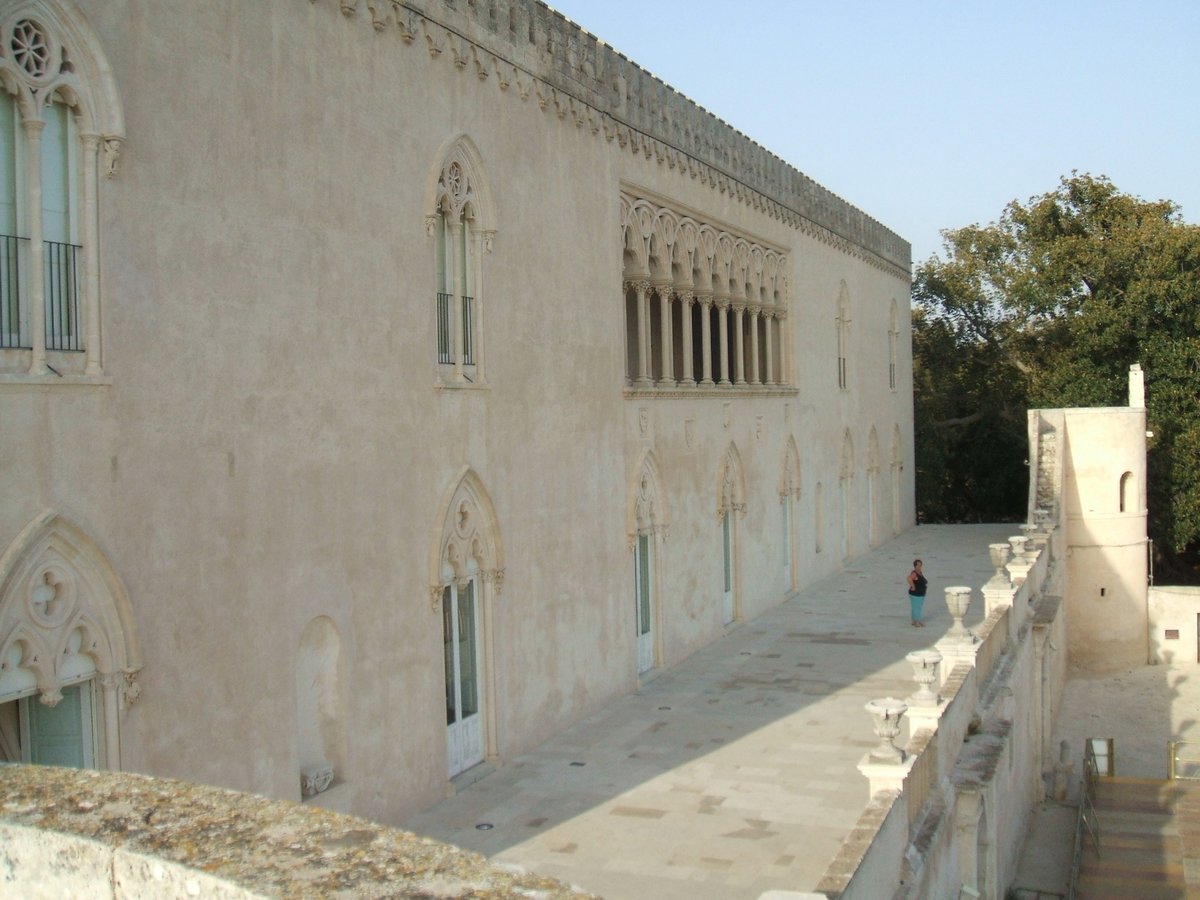 Just a few kilometers from Ragusa, Donnafugata Castle emerges from the countryside like a surprise. It's not a medieval castle, but an elegant Neo-Gothic palace built in the 19th century by the Arezzo de Spuches family. The atmosphere here differs from the Baroque style of Ragusa Ibla: it feels almost like stepping into a fairy tale, with its crenellated towers and pointed arch windows. The tour takes you through over 120 rooms, though not all are accessible. The most interesting ones? The Hall of Mirrors, with its crystal chandeliers, and the Baron's bedroom, which still retains its original furnishings. Then there's the white stone labyrinth in the park – one of the few in Sicily – which is great fun for both adults and children. The name "Donnafugata" means "fugitive woman" and is linked to a local legend about an Arab princess who sought refuge here. Personally, I find the charm of the place lies precisely in this mix: the somewhat theatrical elegance of the architecture, the well-preserved interior details, and that air of mystery that lingers in the park. Note: the castle is often used for private events, so always check the opening hours before visiting. It's worth dedicating a couple of hours to explore the interiors leisurely and to get lost (literally) in the labyrinth.
Iblean Archaeological Museum
- Go to the page: Iblean Archaeological Museum Ragusa: Artifacts from Kamarina and Millennial Iblean History
- Via Natalelli, Ragusa (RG)
- https://www.regione.sicilia.it/beniculturali/dirbenicult/database/page_musei/pagina_musei.asp?ID=28&IdSito=67&IdC=&IdS=&IdAS=
- Open in Google Maps
- View on Google Images
- +39 0932 622963
 If you think Ragusa is all about Baroque, the Iblean Archaeological Museum will change your mind. Housed in an 18th-century palace on Via Natalelli, just steps from the city center, this museum is a window into a much more distant past. What struck me immediately is its atmosphere: it's not one of those vast, sprawling museums, but an intimate space where every artifact seems to tell a story. The collection is organized chronologically, starting from the Neolithic period up to the late Roman era, guiding you step by step through the civilizations that inhabited these lands. Don't expect just vases and coins—though there are some beautiful ones, especially those of local production. There are statuettes, stone and bronze tools, and even a section dedicated to necropolises with burial goods that vividly illustrate the rituals of the time. One of the highlights is the collection of artifacts from ancient Kamarina, the Greek colony on the coast. Seeing those painted ceramics up close, sometimes still with traces of color, almost makes you feel the sea breeze that has accompanied them for centuries. Personally, I really appreciated the clear labels and reconstructions that help understand the context without being overly technical. It's a museum you can visit in about an hour, maybe a bit longer if you get lost in the details like I did. Perfect for a cultural break between one Baroque church and another, especially if you're traveling with a curiosity for the deeper roots of this corner of Sicily. Some might find the setup a bit dated, but in my opinion, that gives it character, as if time has stood still here to better preserve its stories.
Ibleo Garden
- Go to the page: Ibleo Garden: Panoramic View of Ragusa Ibla and Historic Churches
- Ragusa (RG)
- Open in Google Maps
- View on Google Images
 After exploring the Baroque churches of Ragusa Ibla, the Ibleo Garden is a pleasant surprise. It's not just a park, but a true green lung that suddenly opens up among the eighteenth-century buildings. You can reach it from Corso XXV Aprile, and admission is free, which is not a given in many tourist spots. As soon as you cross the threshold, the atmosphere changes: the noise of traffic fades, replaced by the rustle of leaves and birdsong. The garden was created in the nineteenth century on an ancient orchard of the Capuchin friars, and you can still feel that air of tranquility. What stands out are the tree-lined avenues, perfect for a relaxing stroll, with stone benches where you can sit and watch life slowly pass by. Don't expect spectacular attractions: its beauty lies precisely in its simplicity. There are well-kept flower beds, ancient trees (some truly imposing), and, in some spots, panoramic views of the valley below that offer unexpected glimpses of the Iblean countryside. Personally, I like to think of this place as a necessary break. After so much elaborate architecture, here you can simply stop, perhaps with an ice cream bought just outside, and enjoy a moment of quiet. It's frequented by locals reading the newspaper, mothers with children, elderly couples chatting: in short, an authentic corner of the city. Note: there are no kiosks or bars inside, so bring water with you, especially in summer. It's a place that works in every season, but in spring, when the plants are in bloom, it's particularly charming.
Church of Santa Maria dell'Itria
- Go to the page: Church of Santa Maria dell'Itria in Ragusa: Concave Baroque Facade and Bell Tower with Colored Majolica Tiles
- Salita Commendatore, Ragusa (RG)
- Open in Google Maps
- View on Google Images
 If you're looking for a peaceful corner away from the busiest tourist routes, the Church of Santa Maria dell'Itria is the perfect spot. It's located in a quiet, almost hidden little square on Via Capodieci, welcoming you with a Baroque facade that may not be the most lavish in Ragusa Ibla, but has its own discreet and authentic charm. What immediately catches the eye, in my opinion, is the bell tower covered in colorful majolica tiles, a unique detail that shines in the sun and almost seems like an Eastern touch amidst Sicilian Baroque. Inside, the atmosphere is intimate and invites you to pause for a moment. The main altar, made of polychrome marble, is a true highlight, with inlays and decorations that deserve a closer look. Don't expect an interior overflowing with frescoes like in other churches of the Val di Noto: here, elegance lies in simplicity. A little-known fact: the church was linked to the Knights of Malta, which explains some of the decorations and symbols you can spot. The visit is quick, but it's worth it just for that distinctive bell tower and the feeling of discovering a place still largely untouched. Personally, I like to think of it as Ibla's best-kept secret, perfect for a moment of reflection after walking through the main streets.
Church of San Giuseppe
- Go to the page: Church of San Giuseppe Ragusa: Baroque Convex Facade and Gilded Interiors
- Corso Venticinque Aprile, Ragusa (RG)
- Open in Google Maps
- View on Google Images
 If you think you've seen all the Baroque wonders of Ragusa Ibla, think again. The Church of San Giuseppe often escapes the most popular routes, yet it absolutely deserves a visit. Located on Via del Mercato, a side street that seems to lead you away from the tourist bustle, you'll immediately understand why it's special when you see it. The façade is a masterpiece of symmetry and movement typical of late Sicilian Baroque, with those sinuous curves that seem to dance in the sunlight. Upon entering, the atmosphere changes completely: here reigns an almost sacred silence, broken only by footsteps on the stone floor. The interior is smaller than that of the Cathedral of San Giorgio, but in my opinion, it's precisely this intimacy that makes it special. The stuccoes are incredibly detailed—I spent minutes observing the cherubs and festoons decorating the walls; they seem alive. The main altar is dedicated to San Giuseppe, of course, with a statue depicting him with the Child Jesus. One thing that struck me is the quality of light filtering through the side windows, creating chiaroscuro effects on the golden stuccoes that change with the time of day. Don't expect the usual monumental church: here you can still breathe the air of a lived-in place of worship, where the people of Ragusa come to pray. If you visit Ragusa Ibla, don't limit yourself to the main attractions—take twenty minutes for this church, perhaps in the afternoon when the light is warmer. In my opinion, it's worth it even just for that cozy atmosphere you rarely find in more crowded places.
Church of San Francesco all'Immacolata
- Go to the page: Church of San Francesco all'Immacolata: Baroque Frescoes and 18th-Century Organ in Ragusa Ibla
- Discesa Peschiera, Ragusa (RG)
- Open in Google Maps
- View on Google Images
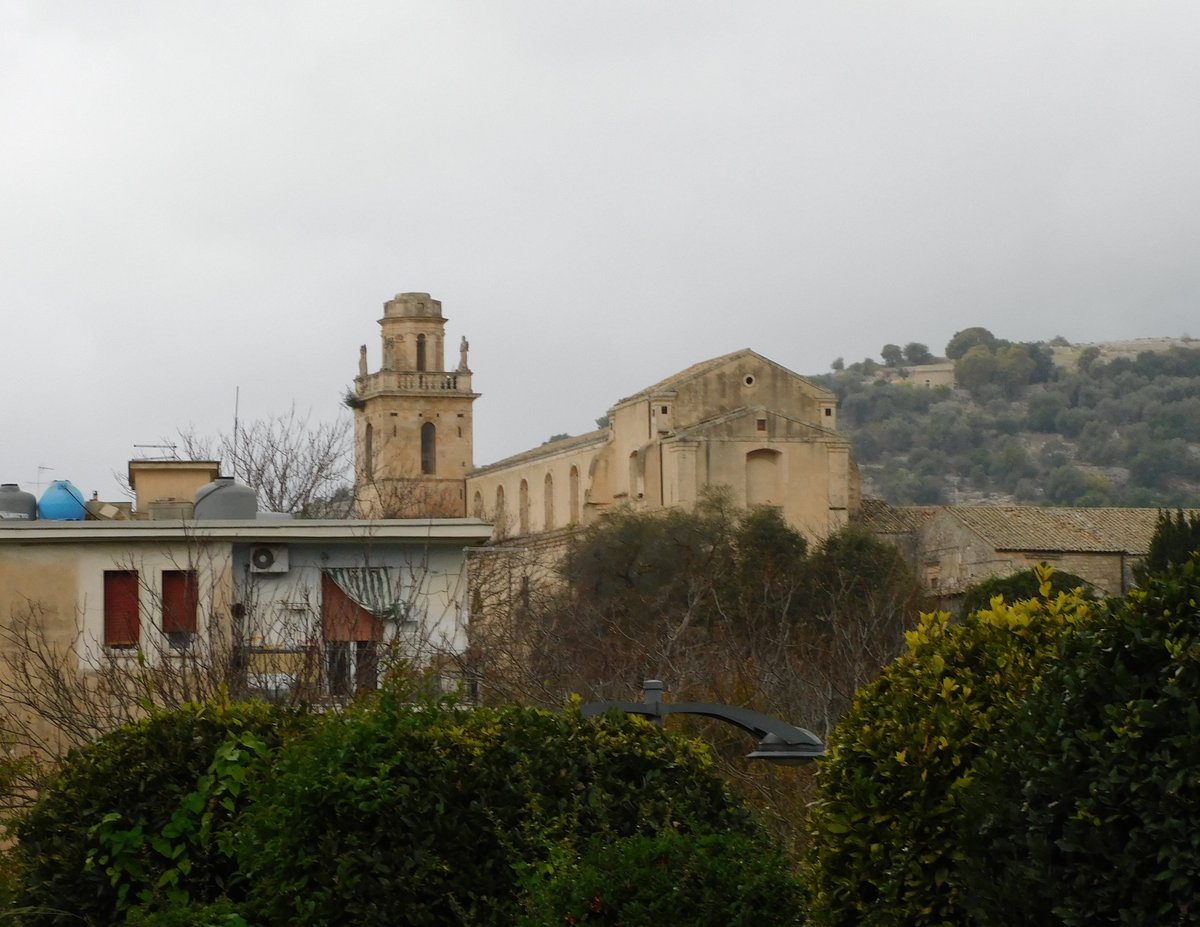 If you think you've seen all the Baroque wonders of Ragusa Ibla, think again. The Church of San Francesco all'Immacolata is one of those surprises that makes you slow down, almost by chance, as you wander through the alleyways. It's not the most famous, and perhaps that's why I find it even more authentic. It stands on a side staircase, slightly set back from the bustling Corso XXV Aprile, making it an oasis of tranquility. The façade is a masterpiece of sober eighteenth-century elegance, with its central portal framed by twisted columns that seem to dance. Upon entering, the atmosphere changes completely: the interior has a single nave, bright and intimate. What immediately catches the eye are the white and gold stuccoes decorating the walls and vaults – works by local artists who left their mark. They're not as exuberant as those in other Iblean churches, but they have a delicacy that invites you to linger. Look closely at the vault above the main altar: there are frescoes depicting Franciscan stories, slightly faded by time but still expressive. One thing I particularly like is the permanent nativity scene kept in a side chapel. It's not grandiose; it's made of traditional terracotta figurines and has that artisanal flavor that's hard to find nowadays. The church is often open during the day, especially in the central hours, but don't take the opening times for granted – sometimes you'll find it closed, other times wide open. It's worth trying. If you're passionate about architecture or simply seeking a moment of peace away from the more beaten paths, this church is a stop I recommend without hesitation. There are no crowds, no tickets to buy, just silence and beauty.
Battaglia Palace
- Go to the page: Battaglia Palace in Ragusa: Balcony with Carved Lions and 18th-Century Baroque Architecture
- Via Chiaramonte, Ragusa (RG)
- Open in Google Maps
- View on Google Images
 While strolling through Ragusa Ibla, perhaps after admiring the Cathedral of San Giorgio, keep your eyes peeled for Battaglia Palace. It's one of those palaces you might almost brush past without noticing, nestled as it is among the historic center's buildings, but once you spot it, it stops you in your tracks. The façade, made of local limestone, has a restrained elegance typical of Iblean Baroque, with that golden hue that comes alive at sunset. What I love about this palace is that it's not just a façade to photograph: it's still a private residence, which gives it a lived-in, authentic atmosphere. Don't expect a museum open to the public—often the gates are closed—but that's precisely what adds a touch of mystery. The architectural details, like the carved corbels beneath the balconies and the entrance portal, deserve a pause. Sometimes I wonder what it would be like to live there, with those high-ceilinged rooms and windows overlooking the rooftops of Ibla. It's a piece of living history, an example of how Baroque architecture here isn't just monumental but also domestic, integrated into daily life. If you're lucky, you might see a light on inside, a sign that the palace still breathes.
Kamarina: A Dive into Antiquity Between Sea and History
- Go to the page: Kamarina: Greek ruins overlooking a sandy beach in Ragusa
- Strada provinciale Cammarana-Scoglitti (litoranea), Ragusa (RG)
- Open in Google Maps
- View on Google Images
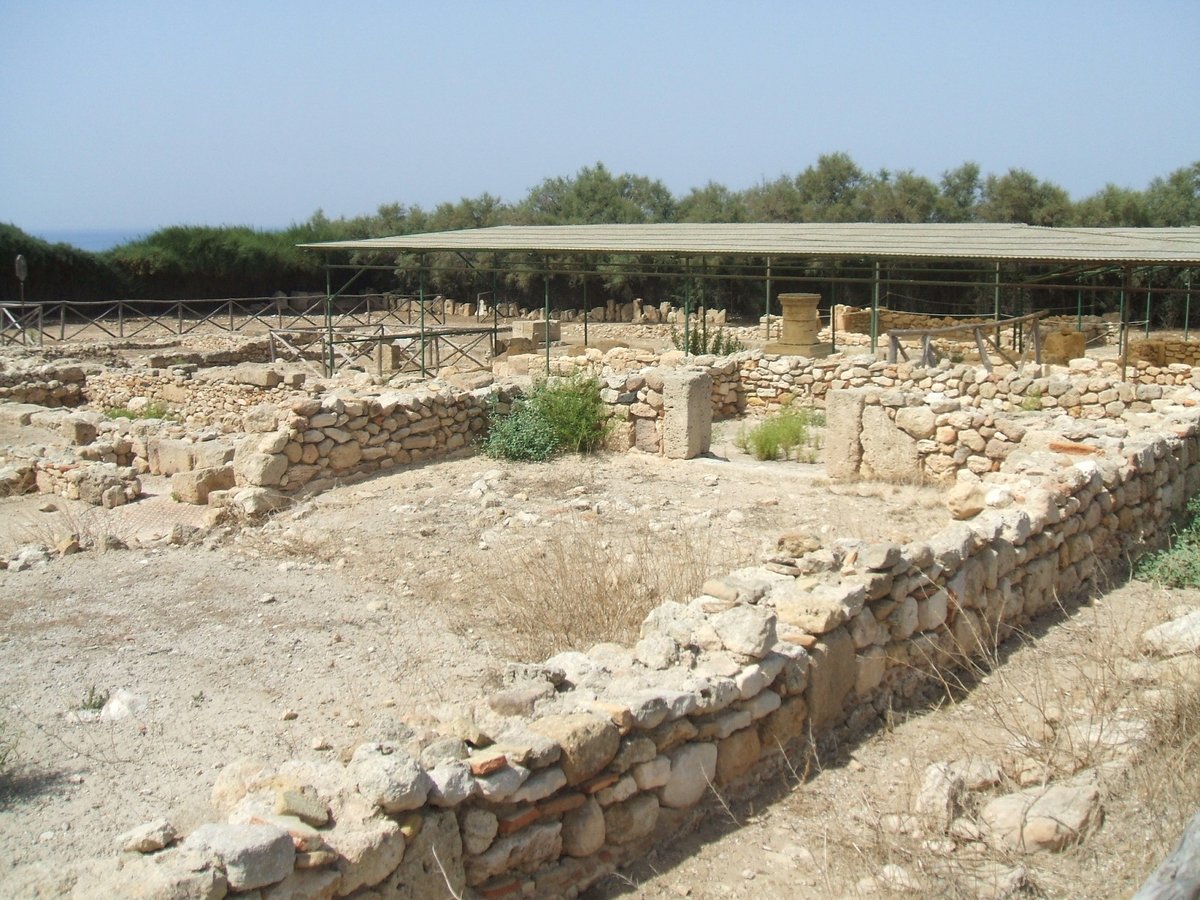 If you think Ragusa is all about Baroque, get ready for a surprise. Just a few kilometers from the city, Kamarina catapults you back 2,500 years, to an era when Greeks founded colonies along these shores. The archaeological site sits on a low hill overlooking the sea, and upon arrival, it's clear why the ancients chose this very spot: the view of the Mediterranean is breathtaking, with the island of Malta sometimes visible on the horizon. Don't expect a perfectly preserved monumental complex like Pompeii; here, the atmosphere is more rustic, almost wild. You'll walk among the remains of walls, houses, and the Temple of Athena, with the wind carrying the scent of Mediterranean scrub. What strikes you is the sense of discovery, as if you were among the first to tread on these stones. Personally, I lost myself observing the details of the remaining mosaics, some surprisingly vivid. The attached museum, small but well-curated, helps contextualize the artifacts: ceramics, coins, everyday objects that tell of a distant life. I recommend visiting at sunset, when golden light envelops everything and the sound of the waves becomes the perfect soundtrack. Note: the site is outdoors and not always shaded, so bring water and a hat. For me, Kamarina is a place that blends history and nature in a unique way, far from the crowds of more beaten paths.
Cabrera Tower
- Go to the page: Torre Cabrera Ragusa: 16th-Century Fortress with 360° Mediterranean Views
- Via Icnusa, Ragusa (RG)
- Open in Google Maps
- View on Google Images
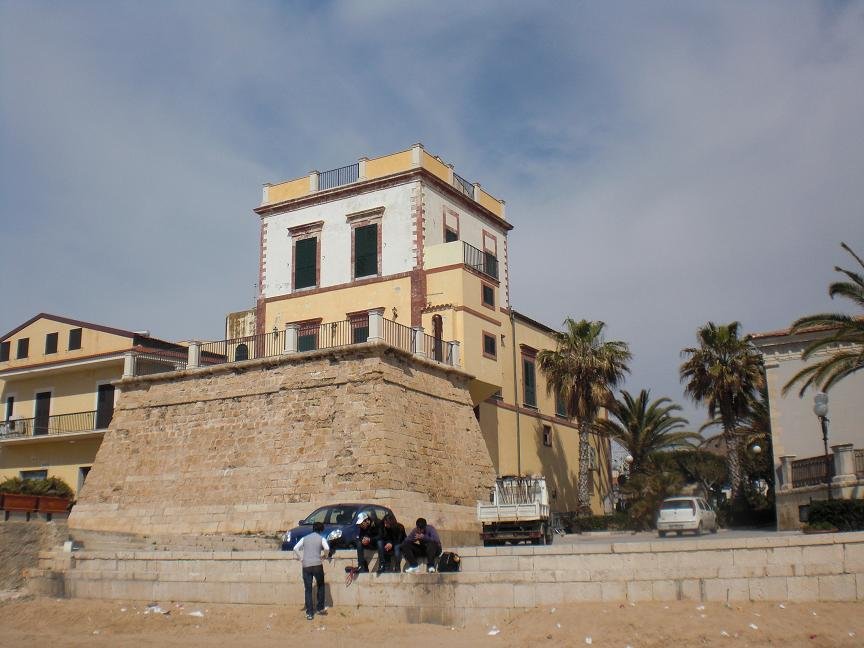 If you're looking for a different perspective on Ragusa, Cabrera Tower is an unmissable stop. Don't expect a Baroque monument like those in Ibla; here we're in another era. This watchtower dates back to the fifteenth century, commissioned by the Cabrera family, Counts of Modica, to monitor the coast against pirate raids. The location is spectacular: it overlooks the Mediterranean directly, with a view stretching from the coast all the way to Marina di Ragusa. The feeling is like being on a balcony suspended between sky and sea. The structure is massive, built from local limestone, and has that somewhat rugged charm of military constructions. Inside, climbing the spiral staircase (watch out, the steps are steep!), you reach the top. From there, the panorama is breathtaking and immediately makes you understand why this spot was chosen: you can see everything. Today it's well restored and visitable, though opening hours can sometimes vary—better to check in advance. Personally, I like to imagine what life must have been like for the sentinels stationed here, with their eyes fixed on the horizon. It's a place of silence and wind, perfect for a contemplative break away from the crowds of Ibla. One detail I adore? The sunset light that paints it gold is simply magical.
Villa Margherita
 After exploring the Baroque churches of Ragusa Ibla, I felt like seeing some greenery. That's when I stumbled upon Villa Margherita, the city's most important public garden. It's not just a park, but a true green lung that makes you forget you're in the urban center. The main entrance on Via Roma is imposing, with that wrought-iron gate that seems to invite you into another world. As soon as you cross the threshold, the first thing that strikes you are the majestic palm trees soaring toward the sky—some are over a century old, they say. Walking along the paved avenues, I noticed that every corner has its own personality: there are geometric flowerbeds with colorful blooms, shaded areas perfect for a break, and even a small open-air theater that hosts performances in the summer. What I particularly liked was how the people of Ragusa use this space. Early in the morning, retirees chat on the benches; in the afternoon, families with children run on the grass; in the evening, couples stroll under the lampposts. I discovered that the park was created at the end of the 19th century and is named after Queen Margherita of Savoy. It's not huge, but it's meticulously maintained—you can see the gardeners put passion into it. Among the Mediterranean plants, there are also exotic species, and the scent of orange blossoms in spring must be incredible. I recommend looking for the central fountain, a classic meeting point with its water jets. For me, it was the ideal place to take a break between visits, perhaps sitting on a bench with an ice cream in hand. Of course, don't expect any spectacular attraction—the beauty of Villa Margherita lies precisely in its normality, in being a place of daily life that nonetheless has a discreet elegance. Perhaps that's why it stayed in my heart.
Church of Santa Maria delle Scale
- Go to the page: Church of Santa Maria delle Scale: Iconic View Over the Baroque Roofs of Ragusa Ibla
- Via Santa Maria delle Scale, Ragusa (RG)
- Open in Google Maps
- View on Google Images
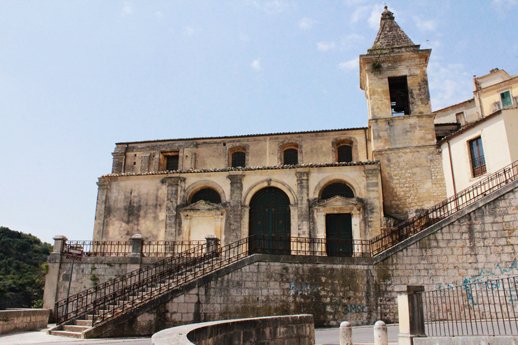 If you arrive in Ragusa, you cannot miss the Church of Santa Maria delle Scale. It is not just a place of worship, but a true strategic observation point that offers one of the most iconic views of the city. The church is located right on the edge of the hill that separates Ragusa Superiore from Ragusa Ibla, and from here the gaze spans over the Baroque rooftops and intricate alleyways of the historic district. The location is not accidental: in ancient times, the only road connecting the two parts of the city passed here—a steep and evocative staircase from which the church takes its name. The building you see today is the result of a reconstruction after the 1693 earthquake, but it retains traces of the original Norman structure, such as the side portal in Chiaramonte Gothic style. Inside, the interior is simple and intimate, with a single nave and some faded frescoes that tell stories of devotion. Personally, I am struck by the contrast between the sobriety of the interiors and the grandeur of the panorama that opens just outside. Visitors often stop on the churchyard to take photos, but it is worth lingering inside as well, perhaps for a moment of quiet away from the tourist bustle of Ibla. A detail that few notice? The bell tower, stout and massive, which almost seems like a guard bastion over the valley. If you pass by here at sunset, with the light caressing the limestone stones of the Baroque buildings, you understand why this spot is so beloved by photographers and attentive travelers.
Torre Vigliena: The Panoramic Balcony Overlooking Ragusa Ibla
- Via Euridice, Ragusa (RG)
- Open in Google Maps
- View on Google Images
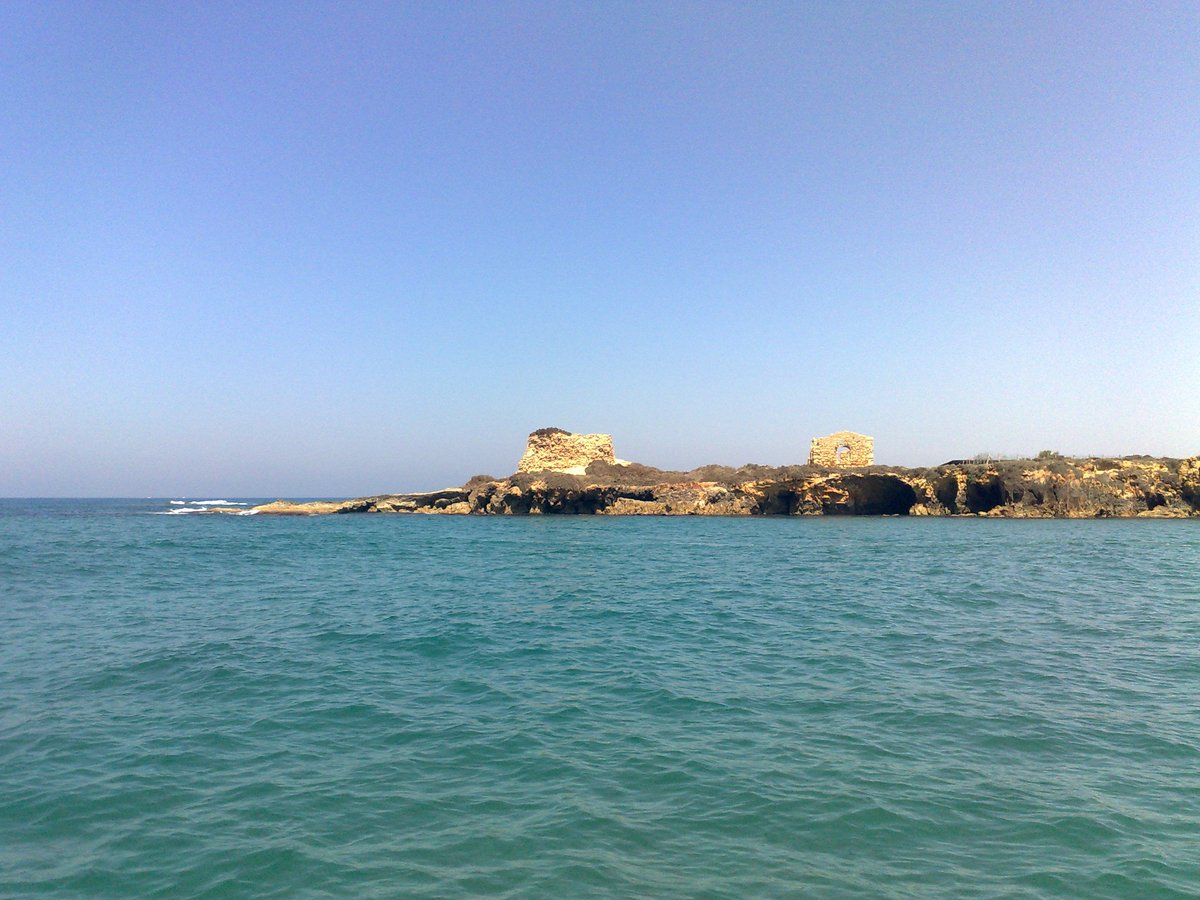 If you're looking for the perfect vantage point to take in Ragusa Ibla at a glance, Torre Vigliena is the answer. It's not one of the most famous attractions, and perhaps that's why I find it even more fascinating. This is an 18th-century tower, built in 1760, that rises on a rocky spur right at the entrance to the Baroque quarter. Its original function was as a lookout, but today it's a free natural balcony over the city. The climb to reach it is short but steep, starting from a side staircase near the Giardino Ibleo. When you reach the top, a unique spectacle unfolds before you: the expanse of Ragusa Ibla's rooftops, with the Duomo di San Giorgio dominating the scene. It's the ideal perspective to understand the geometry of Sicilian Baroque—that succession of domes, bell towers, and terraces that seem carved from the pale stone. The tower itself is simple, almost bare, but it's the context that makes it special. I recommend going at sunset, when the warm light caresses the building façades and the atmosphere becomes magical. Note: there are no very high railings, so if you're with small children, keep an eye on them. It's a place to stop, breathe, and let the view speak for itself, without hurry. Personally, I return every time I visit Ragusa: it's my favorite spot for a moment of quiet and beauty.
Grotta delle Trabacche
- Strada provinciale Beddio-Tresauro-Piombo, Ragusa (RG)
- Open in Google Maps
- View on Google Images
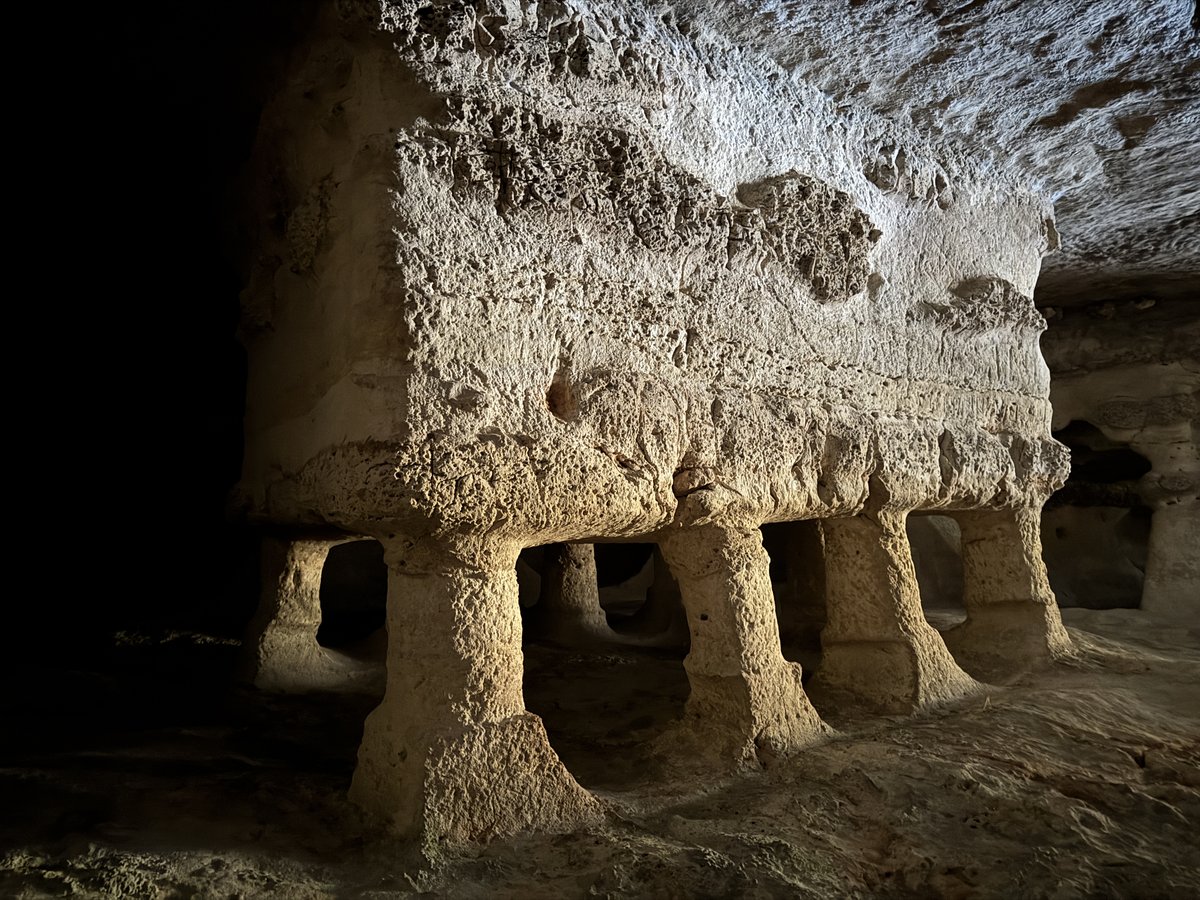 If you think Ragusa is only about Baroque, the Grotta delle Trabacche will make you think again. This archaeological site, often overlooked by the more frequented tourist circuits, is a fascinating testament to a much more ancient past. It is an artificial rock-cut tomb carved into the limestone, dating back to the Early Bronze Age. What struck me upon arrival is its location: it's not a cave hidden in a forest, but opens onto a panoramic slope with a sweeping view over the Iblean countryside. The entrance, somewhat concealed by spontaneous vegetation, is a low opening that almost makes you stoop to enter another world. Inside, the burial chamber is small and intimate. There are no elaborate decorations, but the feeling of being in a sacred place from three thousand years ago is palpable. The structure is clearly artificial, with smoothed walls and a regular shape that betrays human intervention. Unfortunately, as often happens with such sites, it was looted in the past, so no artifacts are found on-site. But this does not detract from its charm. The visit is quick but intense. I recommend combining it with a walk in the surrounding area, perhaps to appreciate the rural landscape that surrounds it. It's a place for those seeking something authentic, away from the crowds, and wanting to add a piece of historical depth to their journey in the Ragusa region. Bring a flashlight, as there is no internal lighting, and watch your step, as the ground can be slippery.