Malatesta Palace Fano: Frescoed Courtyard and Sea-View Loggia

The Malatesta Palace in Fano, built in the 15th century at the behest of Sigismondo Pandolfo Malatesta, is a fine example of Renaissance architecture in the Marche region. Now housing municipal offices, parts of the building are open to visitors, allowing them to admire original features and its strategic location in the historic center.

  • Porticoed courtyard with Istrian stone columns and vibrant Renaissance frescoes
  • Panoramic loggia offering glimpses of the Adriatic Sea and Fano’s harbor
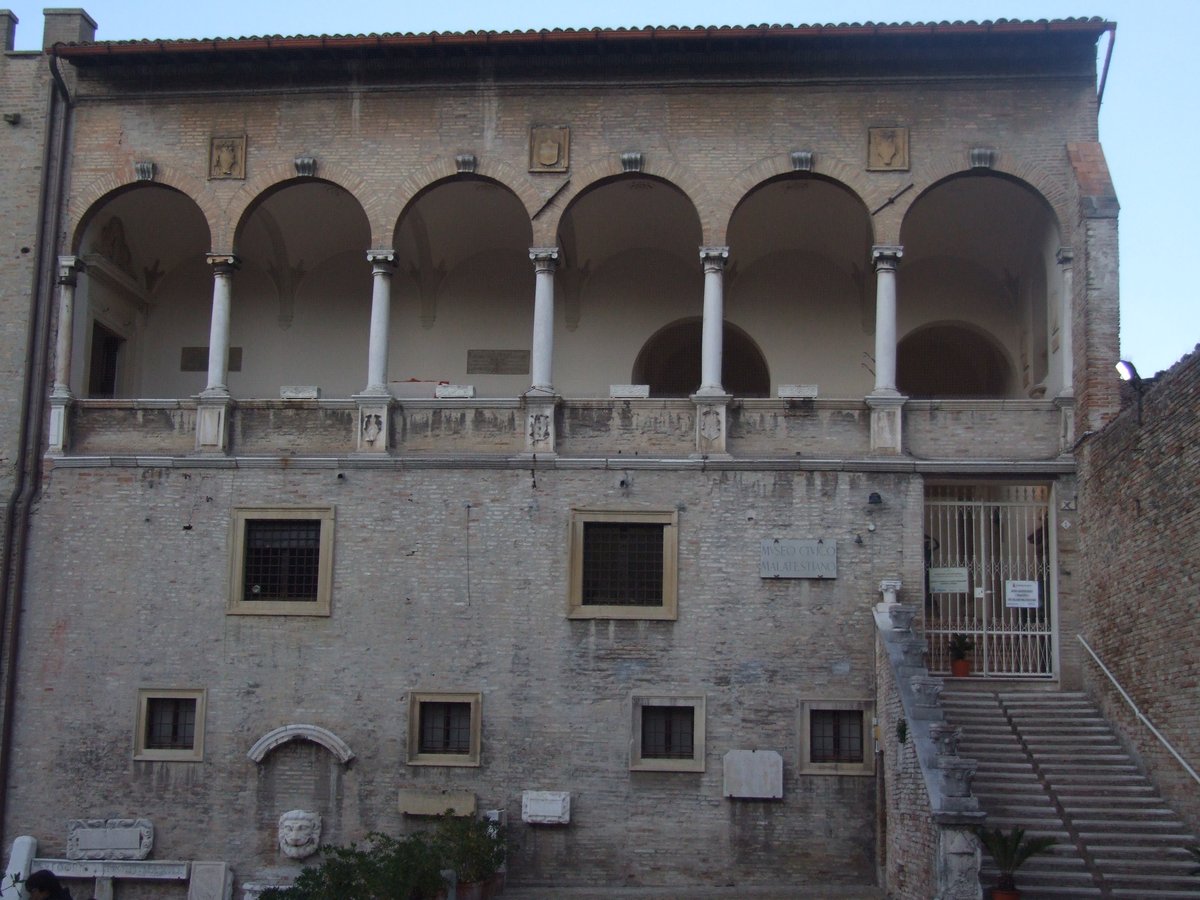
  • Original biforate windows and a facade of red brick with elegant simplicity
  • Location just steps from the Arch of Augustus and the Basilica of Santa Maria Nuova

Copertina itinerario Malatesta Palace Fano: Frescoed Courtyard and Sea-View Loggia
A 15th-century Renaissance palace with a frescoed porticoed courtyard and a loggia offering glimpses of the Adriatic Sea. Accessible to visitors in Fano’s historic center.

Good to know


Introduction

Have you ever walked into a palace and immediately felt at home? I have, at the Malatesta Palace in Fano. It’s not just a historic building; it’s an experience that envelops you. As soon as you cross the threshold, the frescoed courtyard takes your breath away: vibrant colors, mythological scenes that seem to speak. And then there’s that loggia opening onto the Adriatic Sea, with a view that makes you forget time. This isn’t a dusty museum, but a living place where Renaissance history still breathes. Strolling through its halls, I felt like a guest of the Malatesta family, not a tourist. If you love architecture that tells stories, this place is for you. It’s one of those hidden gems that make a trip to the Marche region special, away from the crowds of more popular spots.

Historical Notes

The Malatesta Palace has a history that reads like a novel. It was built in the second half of the 15th century at the behest of Sigismondo Pandolfo Malatesta, that lord of Rimini known for his artistic and military passions. It was not just a residence, but a symbol of power and culture, designed to impress allies and rivals alike. Over time, it has seen popes, nobles, and even periods of decline, until it became the town hall. What strikes you is how, despite the centuries, it maintains an authentic atmosphere. Perhaps because Fano, with its strategic location, has always attracted influential figures. The timeline helps understand the key stages:

  • 1450-1460: Construction commissioned by Sigismondo Pandolfo Malatesta
  • Subsequent centuries: Used as a noble residence and administrative seat
  • Today: Hosts cultural events and public visits, with restorations preserving its originality

It’s not just a date on a plaque, but a story you can almost touch.

The Courtyard: A Masterpiece to Savor Slowly

If there’s one corner of the palace that stole my heart, it’s the courtyard. It’s not just an open space; it’s an open-air gallery brimming with Renaissance frescoes. The colors are surprisingly vivid despite the passage of time: deep blues, warm reds, and golds that shimmer in the sunlight. They depict mythological and allegorical scenes, perhaps inspired by the classical culture so beloved by the Malatesta family. As I walked around, I noticed details like the decorations on the columns, which seem to tell tales of love and power. This isn’t a place to snap a photo and move on; it invites you to sit on a bench (if there is one) and lose yourself in the details. I’ve read that some frescoes might be the work of artists from Piero della Francesca’s school, though I’m not certain—in any case, the effect is magical. It’s a rare example of how art can transform an everyday space into something sublime, without needing grand explanations.

The Panoramic Loggia: Where the Sea Meets History

After the courtyard, ascend to the loggia and prepare for a spectacle. This is not just a terrace, but a balcony suspended between the Renaissance and the Adriatic. The view stretches over the port of Fano, with boats gently rocking, and fades toward the sea horizon. On clear days, you can glimpse the coasts of Romagna. What I love is how the Renaissance architecture – with its elegant arches and harmonious proportions – engages in a dialogue with the natural landscape. I’ve wondered if the Malatesta family, centuries ago, gazed at this same sea while pondering their domains. Today, it’s a perfect spot for a contemplative pause, away from the city’s noise. Be cautious, though: it can be windy at times, so better hold onto your hat! It’s one of those places that makes you understand why Fano is called the ‘City of Fortune’ – here, fortune is the chance to savor so much beauty in a single glance.

Why Visit It

Why dedicate time to the Malatesta Palace? First, to experience authentic Marche Renaissance, away from the usual crowded tourist circuits. Then, because it offers a unique combination: art (with those frescoes that seem freshly painted) and panorama (that sea view that stays with you). Finally, it’s an accessible and intimate place where you don’t feel overwhelmed, but involved. Personally, I found it more intimate than many famous palaces – almost like discovering a secret shared with few. If you’re a history enthusiast, here you touch the past firsthand; if you love architecture, you admire ingenious solutions like the loggia; if you seek emotions, the courtyard gives you a dreamlike atmosphere. In short, it’s a stop that enriches any trip to Fano, without requiring hours of visit.

When to Go

The best time? I recommend visiting the palace in the late afternoon, especially in spring or early autumn. Why? The slanting sunlight enhances the frescoes in the courtyard, offering warm hues you might miss during the day. Plus, during these seasons, the weather is mild and crowds are minimal—I found only a few visitors, which allowed me to enjoy the loggia in peace. In summer, it can get hot, but the sea breeze from the loggia provides some relief. Avoid the midday hours when the sun is too strong and risks flattening the colors. If it happens, a cloudy day isn’t bad: the frescoes seem more mysterious, and the sea view has a melancholic atmosphere. In winter, check the opening hours as they might be reduced, but the cozy atmosphere has its charm.

In the Surroundings

After visiting the palace, don’t limit yourself to Fano’s city center. Just a short walk away, you’ll find the Rocca Malatestiana, an imposing fortress that completes the story of the Malatesta family’s power. Climbing its walls offers another perspective on the city and the sea. If you love art, make a quick stop at the Archaeological Museum and Art Gallery, where you can see Roman artifacts and paintings that contextualize local history. For a lighter experience, take a stroll along the Passeggiata del Lisippo, a tree-lined seafront promenade perfect for a relaxing break, perhaps with an ice cream in hand. All these attractions are within walking distance, no car needed, allowing you to savor Fano beyond its most famous monuments. Personally, I appreciated the contrast between the solemnity of the palace and the liveliness of the seafront – two sides of the same coin.

💡 Did You Know…?

A little-known curiosity: in the palace courtyard, there is a well decorated with the Malatesta coat of arms, the famous crowned elephant, symbolizing strength and wisdom. According to local tradition, Sigismondo Malatesta had a secret staircase built that connected the private apartments to the city walls, used for quick escapes in case of danger. During restoration work, traces of 15th-century frescoes depicting typical Renaissance mythological scenes were uncovered beneath the plaster.