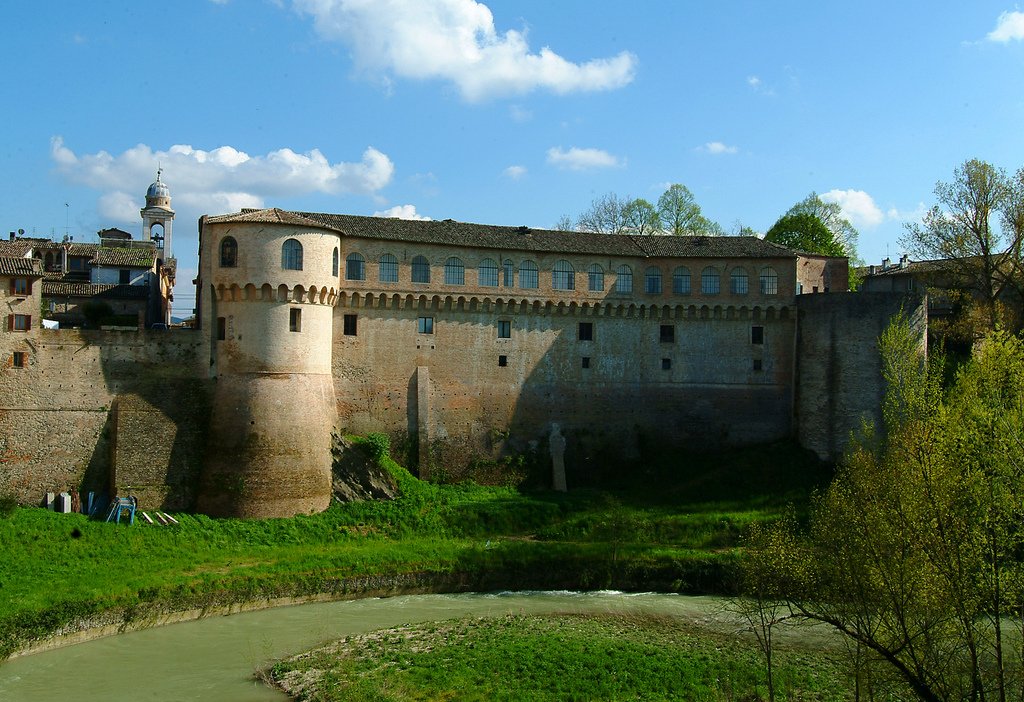
The Ducal Palace of Urbania offers an authentic experience of the Marche Renaissance without tourist crowds. It houses the Municipal Library with 15th-century illuminated manuscripts and incunabula, plus frescoed courtyards and historic rooms. The central location on Piazza San Cristoforo allows combining the visit with the town of Urbania.
- Historic library with over 20,000 volumes, rare manuscripts and incunabula
- Courtyard of Honour with frescoed loggia and carved sandstone columns
- Hall of Emperors with marble busts and ancient maps of the Duchy of Urbino
- Often free admission or symbolic cost, rarely with queues
Introduction
The Ducal Palace of Urbania is not just a palace; it’s an experience that immediately makes you feel part of history. As soon as you enter, you’re greeted by an authentic Renaissance atmosphere, far from tourist crowds. The inner courtyards, with their well-preserved frescoes, transport you to an era of elegance and power. It’s not a cold museum but a residence that still breathes, thanks to the historic library housing rare manuscripts. Personally, I was struck by how every detail, from ceilings to floors, tells a different story. If you’re looking for a place where art and daily life blend, this is the right spot. The visual impact is strong, especially when afternoon light filters through ancient windows, illuminating the colors of the frescoes. A feeling that stays with you.
Historical Overview
The palace has a rich and layered history. Originally a medieval fortress, it was transformed into a ducal residence by the Dukes of Urbino in the 15th century.
Federico da Montefeltro and his son Guidobaldo turned it into a cultural hub, attracting artists and scholars. In 1636, it came under the control of the Della Rovere family, who added further embellishments. During the 19th century, it served various purposes, including as a school and public offices, before being restored and opened to the public as a museum. Today, it houses the Municipal Library with over 20,000 volumes, including incunabula and illuminated manuscripts. Its evolution reflects the events of the region, from a military stronghold to a symbol of cultural rebirth. It is not just a building, but a silent witness to centuries of change.
- 14th century: Construction as a medieval fortress
- 15th century: Transformation into a ducal residence under the Montefeltro family
- 1636: Transfer to the Della Rovere family
- 19th century: Use as a school and offices
- Today: Museum and library open to the public
The Frescoed Courtyards
One of the palace’s highlights is its inner courtyards, which look like they’ve stepped out of a Renaissance painting. The Courtyard of Honour, in particular, is a masterpiece of architectural balance, with superimposed loggias and frescoes depicting mythological and historical scenes. The details are incredible: take a close look at the sandstone columns, carved with floral motifs, and the coffered ceilings that still show traces of gilding. During my visit, I noticed how the light changes throughout the day, creating plays of shadow that enhance the colours of the frescoes. It’s not a place to rush through; it invites you to pause, perhaps on a bench, to soak in the atmosphere. Sometimes, if you’re lucky, you might catch small events or temporary exhibitions set up here, adding a contemporary touch without disrupting the historical setting. A tip? Bring a camera, because every corner is photogenic.
The Historical Library
The palace library is a true gem, often overlooked by hurried visitors. It is not merely a collection of books, but a place where the passion for knowledge can be felt. It houses illuminated manuscripts from the fifteenth century, some linked to the Urbino school, and incunabula that seem to have stepped out of a novel. During my exploration, I was able to admire up close (protected by glass cases, of course) volumes with leather bindings and pages yellowed by time. The atmosphere is quiet, almost sacred, with dark wooden shelves reaching up to the ceiling. Sometimes, I wonder how they managed to preserve everything so well through the centuries. If you are a history or antique book enthusiast, this section deserves a long stop. Be aware, however: it is not always open to the public without prior notice, so check the opening hours or book a guided tour. It is an experience that makes you feel part of a living cultural tradition.
Why Visit It
Visiting the Ducal Palace of Urbania is worthwhile for at least three concrete reasons. First, it offers an authentic and uncrowded experience, far from mass tourism: you can enjoy the spaces calmly, without endless queues. Second, the combination of Renaissance architecture and a historic library is unique in the area: you won’t find many places where art and knowledge coexist so harmoniously. Third, the preserved details, such as the frescoes in the courtyards or the original floors, give you a real idea of how the nobility of the time lived, without the need for fake reconstructions. Additionally, there are often temporary exhibitions or cultural events that enrich the visit, making it different each time. Personally, I found it ideal for a day trip, perhaps combined with a stroll through the village of Urbania. It’s not a place to ‘tick off’ quickly, but to savor.
When to go
The best time to visit the palace? In the late afternoon of autumn, when the warm sunlight enhances the colors of the frescoes and creates evocative atmospheres in the courtyards. In summer, it can be hot, but the interior rooms are cool and offer shelter. In spring, the surrounding gardens (if accessible) begin to bloom, adding a touch of greenery to the visit. Avoid days of heavy rain, because part of the charm lies in the natural light entering through the windows. During the Christmas holidays, the palace is sometimes decorated with traditional ornaments, offering a special atmosphere. There is no wrong season, but in my opinion, autumn with its warm colors truly highlights the beauty of the place. If you can, go on weekdays to avoid the few organized weekend groups.
In the Surroundings
To enrich your visit, I recommend two nearby and authentic experiences. First, the Museum of Sharecropping History in Urbania, which tells the story of peasant life in the Marche region with authentic artifacts and personal stories: it’s an excellent complement to understand the historical context of the area. Second, a walk along the Metauro River, which flows nearby, where you can find quiet spots for a picnic or simply to relax immersed in nature. If you have time, the village of Urbania itself is worth a stroll, with its cobblestone streets and artisan workshops. These aren’t distant places, but they allow you to create a Renaissance and rural-themed itinerary without having to rush. Personally, I appreciated the contrast between the nobility of the palace and the simplicity of sharecropping: two sides of the same historical coin.