Firmafede Fortress: Renaissance fortress with towers, moat, and views over Lunigiana

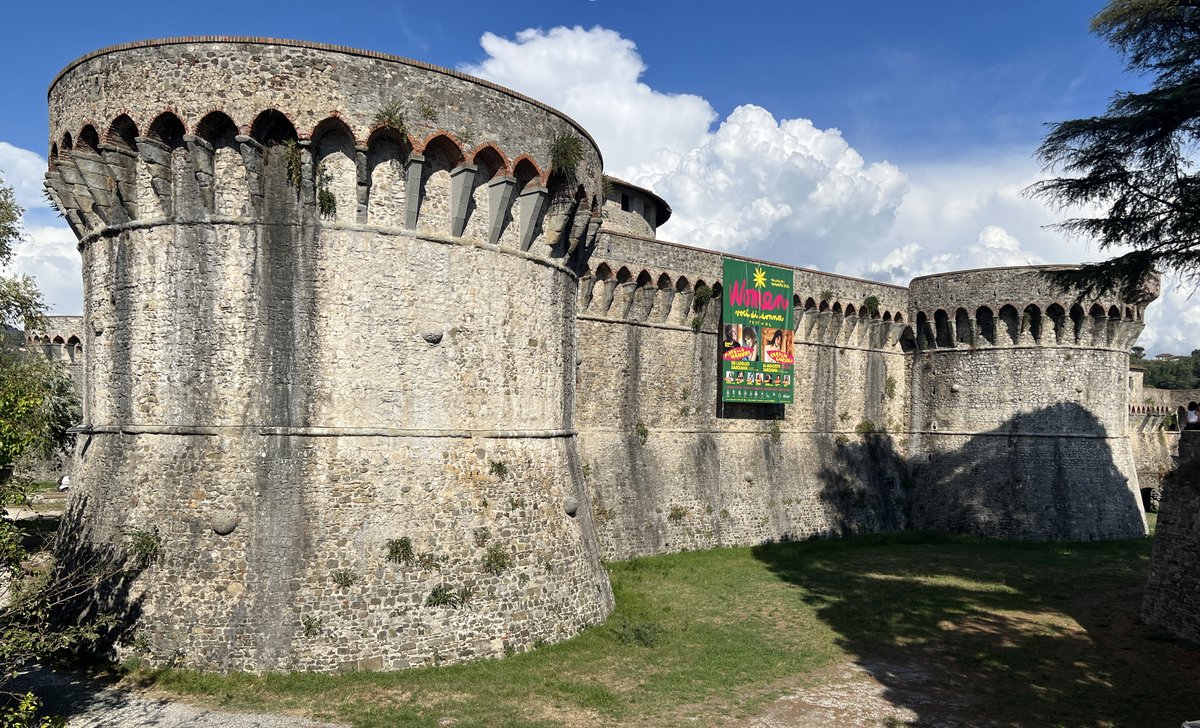
Firmafede Fortress dominates Sarzana with massive 15th-century walls, perfectly preserved and integrated into the historic center. The visit route is well-marked and accessible, with exhibition halls and panoramic viewpoints.

  • Renaissance military architecture with imposing towers and dry moat
  • Breathtaking 360° views of the city and Magra Valley
  • Simple visit route with courtyards, walkways, and exhibition halls
  • Strategic location in Sarzana’s historic center, near shops and local establishments
Copertina itinerario Firmafede Fortress: Renaissance fortress with towers, moat, and views over Lunigiana
Perfectly preserved 15th-century Genoese medieval fortress in Sarzana. Accessible route with courtyards, rampart walkways, exhibition halls, and 360° views of the city and Magra Valley. Ideal for day trips.

Good to know


Introduction

Upon arriving in Sarzana, Fortezza Firmafede greets you with a grandeur that almost makes you forget you’re in the historic center. It’s not just a castle, but a living piece of history that dominates the Lunigiana landscape. I was immediately struck by how it integrates perfectly with the colorful houses of the village, creating a contrast between the severity of its walls and the vibrancy of daily life. Climbing onto its terraces, the view stretches from the Apuan Alps all the way to the sea—a sight that alone makes the visit worthwhile. The feeling is of being in a place of passage, where for centuries stories of wars, trade, and pilgrims along the Via Francigena have intersected.

Historical Overview

Its history is a tapestry of power struggles between Genoa, Florence, and local lordships. The original fortress dates back to 1249, commissioned by the Pisan Gherardinghi family, but what we see today is largely the result of the Genoese reconstruction in 1487, after Sarzana came under the Republic’s control. Lorenzo the Magnificent himself ordered its reinforcement, fearing French incursions. Over the centuries, it has frequently changed roles: from a military stronghold to a prison, up to the recent restoration that returned it to the city. Every stone tells a story—I like to imagine the soldiers on guard along the walls, keeping watch over the Magra Valley.

  • 1249: First construction commissioned by the Gherardinghi
  • 1487: Genoese reconstruction after the city’s conquest
  • 16th century: Expansions under Florentine rule
  • 19th-20th century: Used as a prison
  • 2000s: Restoration and opening to the public

The Visiting Route

What I appreciate about this fortress is that you never feel lost. The route is well-marked and accessible, with panels that explain things without being overwhelming. It starts from the main courtyard, where concerts or shows are often held in summer—the acoustics within those walls are incredible. Then you gradually ascend through walkways, spiral staircases that seem straight out of a movie, up to the upper terraces. The weapons room displays reproductions of crossbows and armor, but it’s the original firing positions along the walls that really made me understand how the defense worked. Watch out for the stairs: some are steep, but it’s worth it to reach the top.

Vistas and Hidden Details

While everyone rushes to the highest viewpoint, I recommend pausing to observe the details. The perfectly preserved cross-shaped loopholes for arquebuses show how advanced military engineering was at the time. On clear days, from the main tower, you can clearly distinguish the marble quarries of Carrara and, in the distance, the profile of the Cinque Terre. But my favorite spot is the northern walkway, where the afternoon sun creates plays of light on the stones. Here, I noticed graffiti left over the centuries by prisoners and soldiers—tiny marks that make history personal. The vegetation growing between the walls, resilient and tenacious, completes the picture.

Why Visit It

Three concrete reasons: first, it offers a unique perspective on Lunigiana that you won’t find anywhere else, with a 360-degree view that perfectly explains the geography of the area. Second, it’s a rare example of a medieval fortress perfectly integrated into a residential center—you never feel isolated, but rather part of the village life. Third, the visit is surprisingly comprehensive: not just walls and towers, but well-maintained interior spaces where they often organize temporary exhibitions related to local history. For families with children, there’s enough space to run safely in the main courtyard.

When to Go

My advice? Late spring or early autumn, in the late afternoon hours. During these seasons, the light is golden and warm, perfect for photographing the walls and the panorama. In summer, it can get very hot on the exposed terraces, while in winter, the valley wind can be biting. I once visited on a late September day, with that intense blue sky typical of Liguria, and it was magical to see the first leaves turning color as the sun set behind the Apuan Alps. Avoid the peak August weekends if you don’t like crowds—though, I must say, the fortress is so spacious that it never feels too crowded.

In the Surroundings

Leaving the fortress, lose yourself in the historic center of Sarzana, a labyrinth of alleys where artisan workshops and traditional eateries alternate. The Cathedral of Santa Maria Assunta, with its black-and-white striped facade, houses precious relics and an intimate atmosphere. Just outside the city, the Pieve di Sant’Andrea in San Lazzaro is worth a stop—one of the oldest Romanesque churches in Lunigiana, nestled in the countryside. If you have time, the Sarzana Diocesan Museum completes the picture with artifacts that tell the religious history of the area.

Itineraries nearby


💡 Did You Know…?

The Firmafede Fortress owes its name to an ancient legend: it’s said that here, in 1408, the commander Paolo Guinigi made his soldiers swear loyalty (‘firma fede’). Today, climbing the towers, you can still see the holes of the original cannons and, with a bit of luck, the remains of frescoes in the internal chapel. A detail few notice: the walls show different construction phases, with stones of varying colors testifying to the rebuilds after the 1487 siege. The view from the main tower embraces all of Sarzana down to the sea, making clear why this point was strategically crucial.