
Castello Brina in Sarzana is an authentic medieval fortress built between the 12th and 13th centuries, part of the Republic of Genoa’s defensive system. It overlooks the Magra Valley from its strategic hilltop position, offering a direct historical experience without museums or elaborate displays.
- Sandstone walls that tell centuries of battles and medieval rule
- Spectacular 360-degree view over Lunigiana and the Apuan Alps from the main tower
- Authentic, timeless atmosphere with narrow staircases and original patrol walkways
- Free access and opportunity for intimate exploration away from tourist crowds
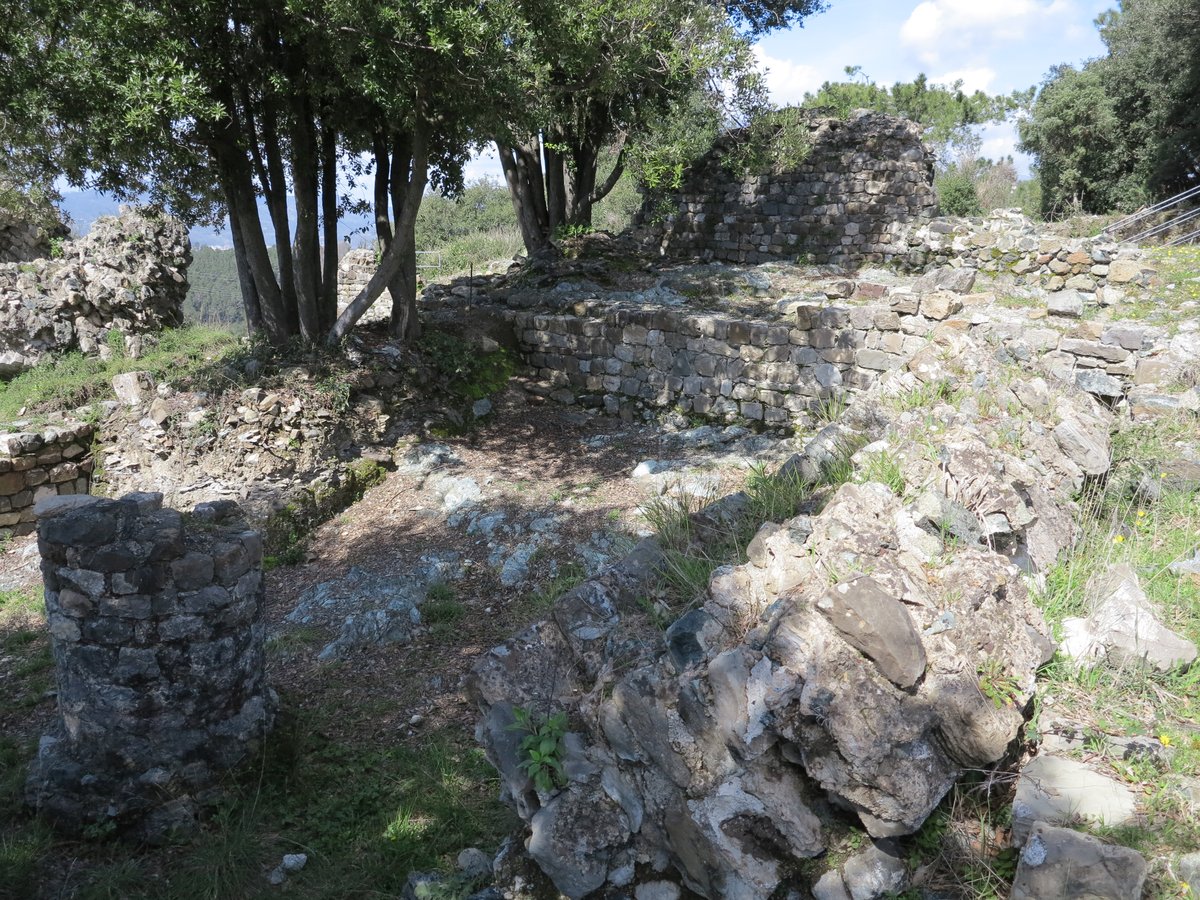
12th-century fortress with sandstone walls, patrol walkways, and spectacular views of Lunigiana and the Apuan Alps. Free access, authentic atmosphere without modern installations.
- Via Falcinello, La Spezia (SP)
- Open in Google Maps
- View on Google Images Castello Brina a La Spezia
Good to know
Introduction
Castello Brina in Sarzana isn’t just a medieval fortress—it’s a breathtaking sight that leaves you speechless. As soon as you see it perched on the hill, you immediately understand why this place is special. Its imposing bulk dominates the Lunigiana plain, and when you arrive, you feel catapulted into another era. It’s not one of those perfectly restored castles that seem fake; on the contrary, authenticity breathes here. The stones tell stories, the narrow passages make you imagine soldiers running along the walls, and the view from the top is simply spectacular. Personally, I like to think it has remained so genuine precisely because it’s less known than other tourist sites. If you’re looking for a place where history can be touched and the panoramas steal your heart, Castello Brina is the right choice. Don’t expect museums or modern installations: here, those who love the essential, the real, the direct contact with the past are rewarded.
Historical Overview
The history of Castello Brina is a tapestry of power and defense dating back to the Middle Ages. Likely built in the 12th century, it was part of the Malaspina family’s fortification system, which controlled this strategic area between Liguria and Tuscany. It was not merely a noble residence but a true military stronghold, positioned to oversee communication routes toward the coast and inland. Over the centuries, it witnessed various dominations, from the Genoese to the Florentines, each leaving its mark. What stands out is how, despite battles and time, the main structure has remained remarkably intact. The thick walls, watchtowers, and walkways all speak of an era where strength mattered more than aesthetics. An interesting fact? Some documents refer to it as “Castrum Brinae,” a name possibly derived from an ancient Roman settlement.
- 12th century: probable construction by the Malaspina family
- Middle Ages: key role in conflicts among local lordships
- Modern era: transition under various dominations, with minimal modifications
- Today: cultural heritage site open to the public, preserved in its original appearance
Exploring the Walls and Panoramas
The true magic of Castello Brina lies in exploring it slowly, almost on tiptoe. I always start from the outer walls: walking along the perimeter gives you a clear sense of how impregnable this fortress was. The stones are irregular, worn by time, and in some spots you can still see the arrow slits from which archers shot their arrows. Then you climb to the highest part, where the view opens up 360 degrees. From up there, the Lunigiana stretches out like a green carpet dotted with villages, with the Apuan Alps in the background that, on clear days, seem so close you could touch them. I always stop for a few minutes in silence: it’s one of those panoramas that make you forget your phone and the rest of the world. Be careful, though: the passages can be narrow and a bit steep, so comfortable shoes are a must. And if you’re a bit lucky, you might encounter some foxes or falcons nesting in the wilder areas around the castle. The highlight is undoubtedly the climb to the main tower, from which the gaze stretches all the way to the sea on the clearest days.
A Timeless Atmosphere
What struck me most about Castello Brina is its suspended, almost timeless atmosphere. There are no shiny ticket offices or audio guides, just the wind through the stones and the sound of your footsteps. Visiting it, I had the impression of being one of the few to discover it, as if it were a well-kept secret by the inhabitants of Sarzana. The surrounding vegetation, with centuries-old oaks and broom bushes, contributes to creating a wild and romantic air. Sometimes, on foggy days, the castle emerges from the mist like a ghost, offering movie-like scenes. And then there’s the silence: rare, precious, broken only by birdsong or the rustle of leaves. It’s the ideal place for those who want to disconnect from daily frenzy and immerse themselves in an authentic experience. Personally, I find it perfect for a solitary visit or with a few friends, without haste. Here you don’t come to see, but to feel: history, nature, peace. A tip? Sit on one of the ramparts and let the place speak to you.
Why Visit It
Visiting Castello Brina is worthwhile for at least three concrete reasons. First, historical authenticity: unlike many overly restored castles, everything here has remained as it was, with imperfections that make the place genuine and fascinating. Second, the views: from the top, you can enjoy a breathtaking panorama of Lunigiana and the Apuan Alps, a natural spectacle that alone justifies the climb. Third, the possibility of an intimate and less touristy experience: not being among the most popular destinations, you can explore it at your own pace, without crowds or queues. Plus, it’s free, making it accessible to everyone. For me, it’s ideal for those seeking something different from the usual itineraries, a corner of Liguria where history and nature blend spontaneously.
When to Go
The best time to visit Castello Brina? Definitely in the late afternoon, especially in spring or autumn. During these seasons, the light is warm and low, enhancing the colors of the stones and the landscape. In summer, avoid the midday hours because it can get very hot, and the intense sun makes the climb less pleasant. In winter, on the other hand, clear days after a snowfall create magical atmospheres, with snow-capped mountains in the background. Personally, I prefer autumn: the air is crisp, the leaves begin to change color, and there’s that melancholy that pairs well with the castle’s ambiance. Once, I went at dawn, and seeing the sun rise behind the Apuan Alps was an unforgettable experience, even if a bit chilly. In general, aim for the quieter hours, when you can have the place almost to yourself.
In the Surroundings
After Castello Brina, it’s worth exploring Sarzana, the medieval village at its feet. The historic center is a jewel of cobblestone alleys, noble palaces, and artisan workshops, perfect for a relaxing stroll. Don’t miss the Cathedral of Santa Maria Assunta, with its facade made of white Carrara marble, and the Fortezza di Sarzanello, another imposing military structure that completes the area’s defensive system. If you enjoy good taste, stop at one of the local wine bars to sample wines from Lunigiana, such as Vermentino or Colli di Luni DOC. Another idea? Head to Lerici on the coast for a contrast between mountain and sea: the fishing village with its castle overlooking the Gulf of Poets is enchanting, and you can enjoy a plate of spaghetti with seafood while watching the boats sway. Sarzana and Lerici offer two different faces of the province of La Spezia, both rich in history and character.
Itineraries nearby

💡 Did You Know…?
An ultra-realistic curiosity: Castello Brina is known among enthusiasts for its still-visible medieval cistern system, which ensured water supply during sieges. Additionally, according to local sources, during restorations, 16th-century graffiti left by guards emerged, with symbols and dates carved into the walls. If you explore carefully, you might discover them in the less-traveled areas, adding a touch of personal discovery to your visit.