Introduction
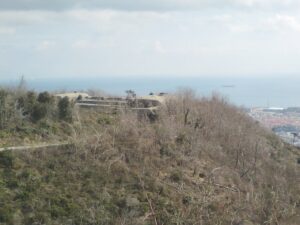
The Castle of Cosseria is not just a ruin; it’s a privileged vantage point that makes you feel like the master of the Alta Val Bormida. Arriving from the village, after a short uphill walk, its 12th-century square tower suddenly appears, solitary and majestic. The sensation is that of discovering a well-kept secret. From up there, the view spans 360 degrees: you embrace the gentle Ligurian ridges and, with a bit of luck on clear days, you can glimpse the trails of the Alta Via dei Monti Liguri winding in the distance. It’s not a sterile museum, but a place where history can be touched firsthand, among the worn stones and the constant blowing wind.
Historical Notes
Its history is a tapestry of medieval power and epochal clashes. Built as an outpost of the Marchesi Del Carretto in the 12th century, the castle controlled communication routes towards Piedmont. Its most famous moment, however, came in 1796, during Napoleon Bonaparte’s Italian Campaign. A fierce battle was fought here between French and Austro-Piedmontese forces. Wandering among the ruins, one can still see the marks of conflict on the walls. Then came decline: abandoned, it became a quarry for stone used in local houses. Today, after consolidation work, it stands as a monument that tells centuries of history through a few evocative ruins.
- 12th century: Construction of the square tower by the Marchesi Del Carretto.
- 1796: Battle of Cosseria, a crucial episode of the Napoleonic Wars.
- 19th-20th centuries: Abandonment and partial dismantling.
- 2000s: Consolidation and enhancement works as a public heritage site.
The Tower and Its Gaze
The square tower is the heart of the site. Climbing the few remaining steps (be careful, there are no safety barriers) to its base offers a special thrill. From here, the view is truly unique. To the south, the gaze stretches toward the Ligurian coast, even if distant; to the north, it plunges into the inland valleys, where the Apennines grow rugged. It’s the perfect spot to orient yourself with the Alta Via trail map. Personally, I like to imagine medieval lookouts scanning the horizon from this very point. Today, instead of helmets, there are the hats of trekkers passing on the trail below. Sometimes, their voices drift up from the woods—a modern call from an ancient crossroads.
Among the Ruins of the Battle
Don’t just look at the tower. Wander among the scattered remains of the walls and low structures. With a bit of attention, you’ll notice differences in the stones: some are original, others show signs of reconstructions or cannonball impacts from 1796. There’s a corner, towards the east, where the wall is particularly jagged—who knows if that’s where the assault concentrated. You won’t find detailed explanatory panels, and perhaps that’s for the best: it forces you to observe, to search with your eyes. Grass grows between the stones, and in summer, thistles bloom. It’s a powerful contrast between the violence of history and the stubborn peace of nature reclaiming everything. You can’t help but think about how much history has passed through these stones, without the need for captions.
Why Visit It
For at least three concrete reasons. First: it’s a free, always-open panoramic balcony on the Alta Via dei Monti Liguri, perfect for getting a sense of the territory before a trek or simply for a contemplative break. Second: it offers a tangible history lesson, where the medieval and Napoleonic eras overlap within a few square meters; it’s not a reconstruction, it’s the original worn by time. Third: the approach walk from the village of Cosseria is short but immersive, immediately disconnecting you from the asphalt road and preparing you for the atmosphere of the place. It’s a complete experience, not just a postcard photo.
When to Go
The magical moment? A late autumn afternoon, when the air is crisp and clear. The colors of the valley woods turn warm, and the low-angled sunlight highlights every contour of the stones and distant mountains. In summer, it can get very hot on the bare hill, while in spring the green is explosive but sometimes haze obscures the wider views. In winter, with fog, it becomes a mysterious and almost eerie place, but the vistas are limited. Autumn, in my opinion, is the perfect compromise: beauty, visibility, and that melancholic atmosphere that suits a ruin.
In the Surroundings
The castle visit pairs perfectly with a themed experience. Not far away, in Millesimo, you’ll find the Gaietta Bridge, an ancient Roman-Gothic bridge over the Bormida River, ideal for another dive into the past. Alternatively, if you wish to continue with the ‘historic routes’ theme, you can walk a section of the Alta Via dei Monti Liguri near Monte Settepani, where the views become even more expansive. Both options enrich the context without straying from the area’s spirit of discovery.