Castel Gavone in Finale Ligure: The Fortress of the Marchesi del Carretto

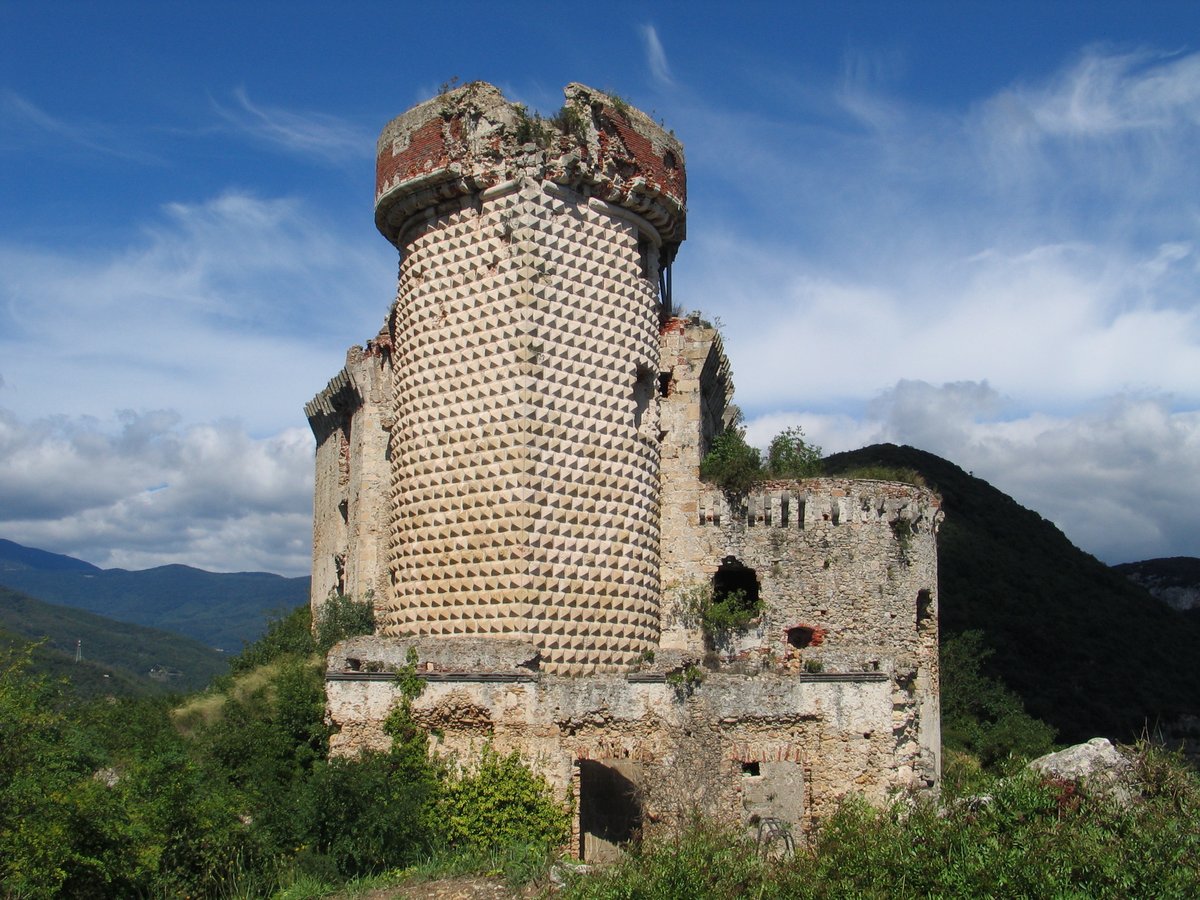
Castel Gavone is the symbol of Finale Ligure, an imposing medieval fortress that tells centuries of Ligurian history. Perched on the hill, it is reached with a short walk from the center and offers breathtaking views. The cylindrical tower is the most photographed point, but the entire complex deserves exploration. The well-preserved walls allow you to walk along the defensive perimeter. Access is free and open all year round. The view over the Gulf of Finale is a natural spectacle not to be missed.
Copertina itinerario Castel Gavone in Finale Ligure: The Fortress of the Marchesi del Carretto
Castel Gavone overlooks Finale Ligure with its cylindrical tower and well-preserved walls. Accessible on foot from the town center, it offers panoramic views of the gulf and a dive into Ligurian medieval history.

Good to know


Introduction

Castel Gavone is not just a castle; it’s a breathtaking sight that leaves you speechless. You arrive in Finale Ligure, perhaps after a day at the beach, and there it stands on the hilltop, its distinctive cylindrical tower soaring above. It almost seems like a stone giant watching over the village and the sea. The best part? It’s reachable on foot with a thirty-minute walk from the town center, a path through olive groves that sets the mood. When you reach the top, you immediately understand why the Marchesi del Carretto chose this spot: the view stretches across the entire Gulf of Finale, from the rocks of Capo Noli to the first houses of the town. It’s not a crumbling ruin; the walls are surprisingly intact, and wandering through the remains of rooms and courtyards makes you feel a bit like an explorer. I visited on a somewhat cloudy day, and I must say that gray sky gave the place an even more mysterious and medieval atmosphere.

Historical Notes

The history of Castel Gavone is closely tied to that of the powerful Del Carretto family, who ruled the Marquisate of Finale for centuries. The fortress as we see it today began to take shape in the 12th century, but its peak of splendor came between the 1400s and 1500s, when it became both a noble residence and a defensive stronghold. Unfortunately, its end was rather dramatic: in 1713, after the territory passed to the Republic of Genoa, the castle was mined and partially destroyed to prevent it from being reused by potential enemies. What remains today is the result of some consolidation and restoration work, but the soul of the place is intact. Walking through, you can still see traces of different eras, from arrow slits for archers to the wider, decorated windows of the Renaissance period.

  • 12th century: First fortifications on the hill.
  • 14th-15th centuries: Development as the residence of the Del Carretto Marquises.
  • 1713: Partial destruction by order of the Republic of Genoa.
  • 20th-21st centuries: Consolidation and enhancement works.

The Diamond Tower and Its Secrets

The true icon of Castel Gavone is undoubtedly the Diamond Tower, that massive cylindrical structure that stands out against the sky. The name is no coincidence: as you approach, you’ll see that the external masonry is made of stone blocks cut into diamond-point shapes, a rare and highly effective architectural detail. Climbing to its summit, reachable via an internal staircase, is an experience I recommend. It’s not strenuous, and the reward is a breathtaking 360-degree panorama: on one side, the intense blue of the Ligurian Sea; on the other, the inland dotted with olive groves and the first foothills of the Ligurian Alps. From the tower, one could oversee all access to the village and the port below. Standing up there, I wondered what life must have been like for the sentries of old, with that wind that never stops blowing. A tip: bring a light jacket even in summer, because there’s always a bit of a breeze at the top.

Walking through the walls and imagining court life

Castel Gavone is not just the tower. It’s worth getting lost among the remains of its walls and rooms. You can still clearly distinguish the keep area, the cisterns for rainwater collection (essential during sieges), and the foundations of what must have been the reception halls. In one of these, looking at the remains of a monumental fireplace, I tried to imagine the banquets and parties of the Del Carretto family. The castle, in its golden age, was not just a military outpost but a true center of power and culture. Today, among those stones, clumps of helichrysum and capers grow, their yellow flowers adding a touch of color. It’s a place that invites slowness: sit on a low wall, listen to the wind and the distant sound of the sea, and for a moment, time truly seems to have stopped in the Middle Ages.

Why Visit It

For at least three very concrete reasons. First: it’s a free, accessible natural viewpoint for everyone. The view it offers is worth the walk alone. Second: it provides an authentic dive into local history, away from the spotlight of major monuments, telling the stories of a family that shaped this territory. Third: it’s a complete experience. It combines a pleasant hike through Mediterranean scrubland, the discovery of interesting military architecture, and that sense of discovery when exploring a place rich with stories. Plus, being less known compared to other Ligurian fortresses, you often have it almost all to yourself, making it even more special.

When to Go

The best time? Definitely late afternoon, especially during the shoulder seasons. The setting sun over the sea casts a golden glow on the castle stones, making the view even more spectacular. In summer, visiting at sunset allows you to avoid the hottest hours for the climb. In winter, on clear days, the air is so crisp that you can distinctly see the Corsican coastline on the horizon. It’s best to avoid days with strong mistral winds, as up there the wind can be quite intense. A personal experience: I visited in October, with warm but not muggy sunshine, and it was perfect for enjoying the view at a leisurely pace.

In the Surroundings

After descending from the castle, don’t miss a stroll through the medieval village of Finalborgo, with its porticoed streets, ochre-colored palaces, and churches rich in artworks. It feels like stepping into another era. For a completely different yet equally characteristic experience, take a short trip to the Toirano Caves, just a few kilometers away. This is a complex of karst cavities where prehistoric human footprints and remains of animals from the Ice Age have been found. The contrast between the ‘surface’ history of the castle and the ‘underground’ history of the caves is fascinating.

💡 Did You Know…?

Legend has it that the cylindrical tower of Castel Gavone was built in a single night by the devil, to help the Marchesi del Carretto defend themselves from enemies. In reality, it was erected in the 15th century as a symbol of power, but the myth makes the visit even more evocative. During excavations, artifacts were found that testify to daily life in the castle, such as ceramics and coins.