Introduction
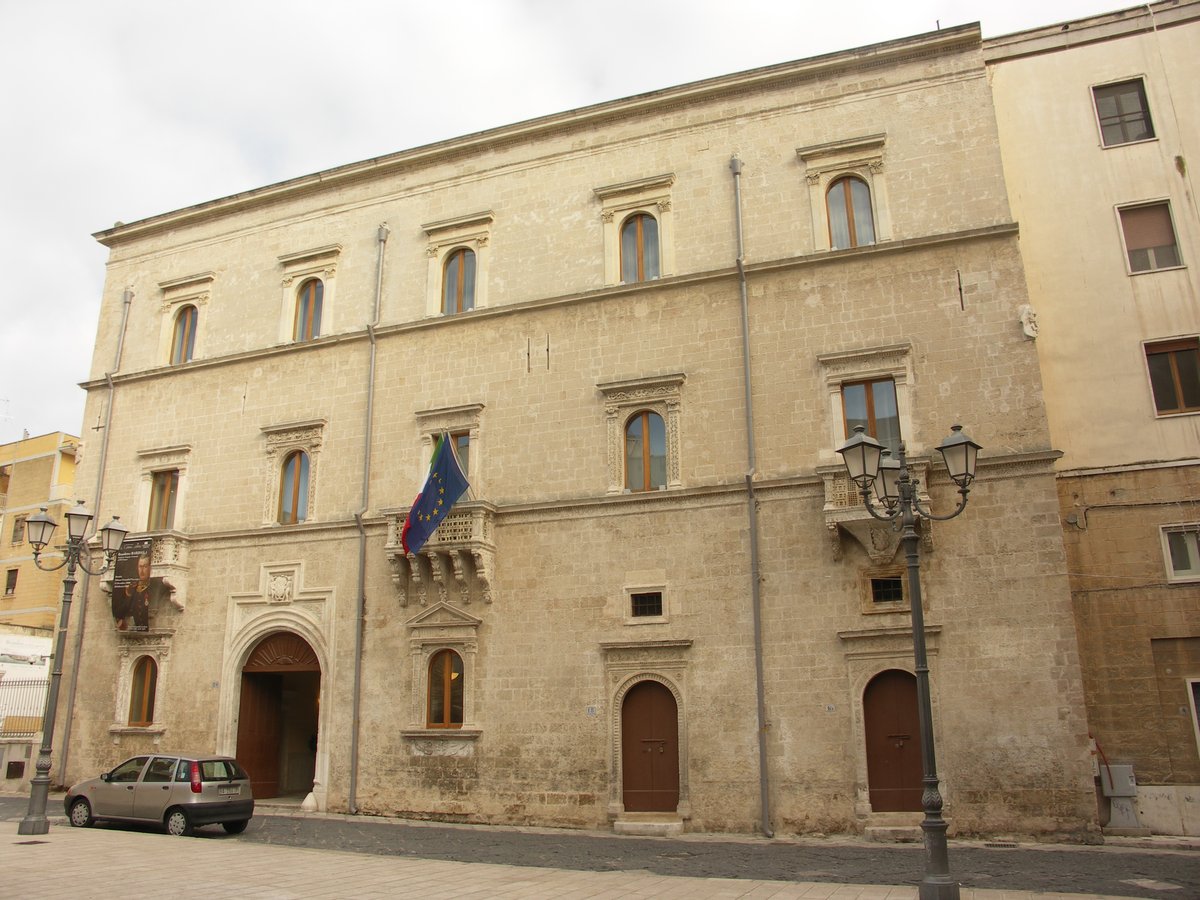
Entering Palazzo Granafei-Nervegna is like diving into the history of Brindisi, between the Renaissance and Roman artifacts. The palace, with its elegant facade and Latin aphorisms, holds surprises such as the mosaics of a 2nd-century domus and the original capital of the Roman columns. And the best part? Entry is free, and the tourist office staff are extremely helpful. An unexpected gem in the historic center.
Historical Notes
The palace was built in
1565 by Nicolò Granafei, a family originally from Constantinople that moved to Brindisi in 1508. In 1862 it passed to the Nervegna family, then in 1930 to the Municipality, which used it as a courthouse until 1976. After years of neglect, it was restored and reopened in 2008. Here is the timeline of key moments:
- 1565 – Construction of the palace by Nicolò Granafei
- 18 January 1862 – Sale to the Nervegna brothers for 5,000 ducats
- 1930 – Acquired by the Municipality of Brindisi and converted into a courthouse
- 1976 – End of its judicial function
- 29 March 2008 – Reopening to the public after restoration
Roman Art and Mosaics
Literally under your feet lies a Roman domus from the 2nd century AD. During restorations, incredible mosaic floors were uncovered: a polychrome mosaic with eight-rhombus stars and another with a grid of octagons featuring a central emblem. That’s not all: in the Hall of the Column (former courtroom), the capital, pulvinus, and the last drum of the Roman column of Brindisi are displayed—original works from the imperial era. A corner that smells of ancient history.
Exhibitions and Testefiorite Library
The palace is not just about history: the upper floor hosts rotating temporary exhibitions of high quality (like the recent ‘The Legacy of the 20th Century’ featuring de Chirico and Fontana, always free). There’s also the Testefiorite Community Library, a multimedia space for children and families, with books, computers, and activities. A mix of high culture and services for everyone, making the palace lively and frequented even by Brindisi locals.
Why Visit
Three good reasons. First: entry is free and you can wander at your leisure, even for half an hour. Second: seeing the Roman mosaics and column capitals is a unique experience in Brindisi. Third: the building is an active cultural center, with ever-changing exhibitions and staff who can give you great tips about the rest of the city (ask for Annarita, Simone, or Luigi). It’s not a dusty museum, but a living place.
When to Visit
The palace is open every day from 8 AM to 8 PM, so it’s easy to fit into your schedule. My advice? Go early in the morning, right when it opens: the light streaming through the decorated windows illuminates the mosaics in a special way. Or in the late afternoon, when Brindisi’s city center empties out and you can enjoy the visit in peace, perhaps after a walk along the waterfront. Avoid midday hours during peak tourist season.
Nearby
From the palace, just steps away, don’t miss the Basilica of San Giovanni Battista al Sepolcro, a circular temple with medieval frescoes. Then head to the Brindisi Seafront with its Roman columns (the very ones whose capital you saw at the palace!). These two sights enrich your visit without the need for transportation: everything is walkable in the historic center. Perfect for a light day between art and sea.