Elea-Velia: The Archaeological Site in Ascea Where Philosophy and History Converge

Elea-Velia, in Ascea, Salerno province, is an archaeological site that narrates the history of the ancient Magna Graecia city, founded in the 6th century BC and famous for the Eleatic philosophical school of Parmenides and Zeno. The visit unfolds between the acropolis, the urban area, and the thermal baths, offering a journey through time among well-preserved artifacts and views of the Tyrrhenian Sea. – Discover the Porta Rosa, Italy’s oldest example of a perfectly preserved round arch. – Walk along the ancient sacred road that connected the acropolis to the lower city, with sea views. – Visit the Roman thermal area, with visible mosaics and heating systems. – Admire the artifacts in the small on-site museum, displaying statues, ceramics, and inscriptions.

Copertina itinerario Elea-Velia: The Archaeological Site in Ascea Where Philosophy and History Converge
The Elea-Velia archaeological site in Ascea, Salerno province, preserves traces of the ancient Magna Graecia city, renowned for the Eleatic philosophical school. Explore the acropolis, the Porta Rosa, and the thermal area.

Good to know


Introduction

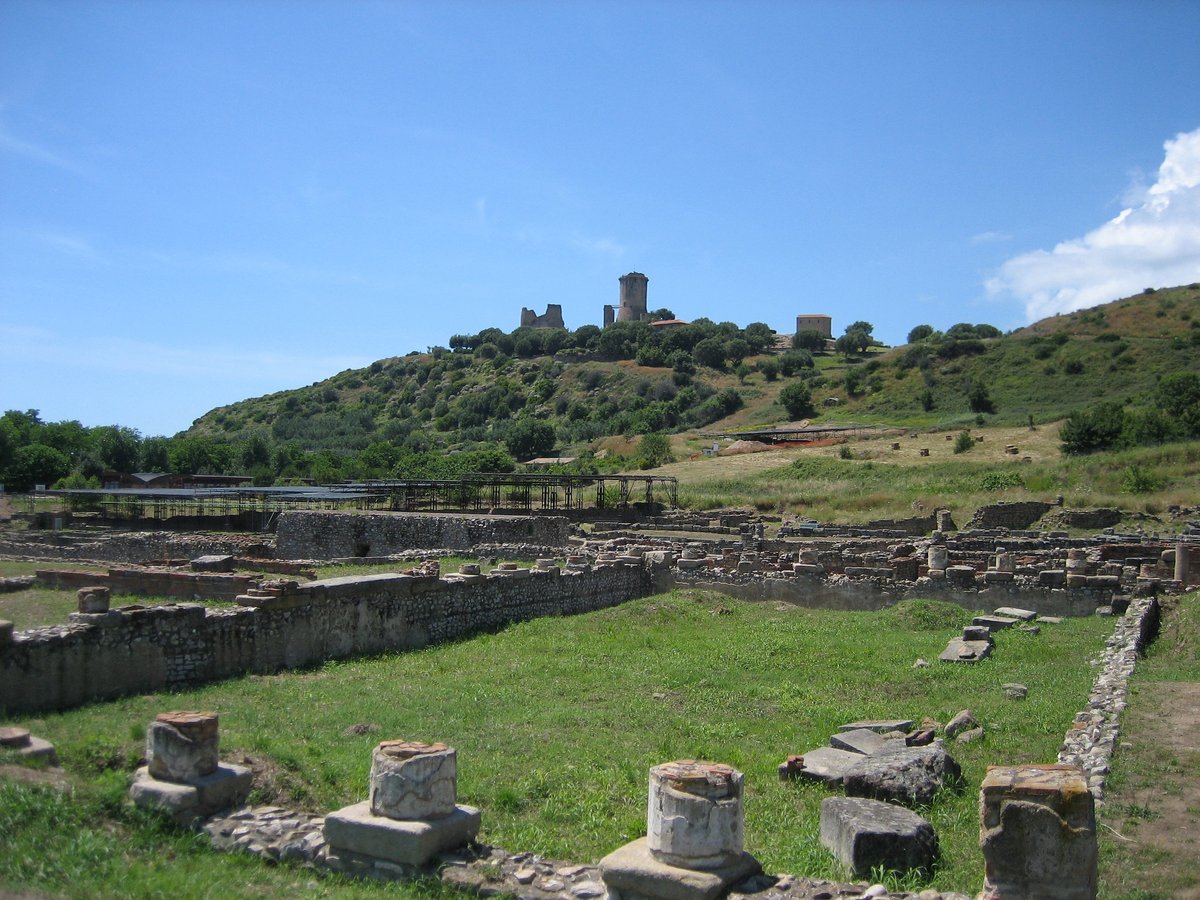
Arriving at Elea-Velia is like taking a leap back in time, but without the feeling of being in a dusty museum. The archaeological site of Ascea welcomes you with an atmosphere that surprisingly blends history and nature. Walking among the remains of the ancient city of Magna Graecia, you can still breathe that air of philosophy and inquiry that was born here with the Eleatic school. It’s not just a collection of stones: it’s a place where you can almost hear the discussions of Parmenides and Zeno while observing the sea lapping the Cilento coast. The view from the acropolis, with the Tyrrhenian Sea stretching to infinity, is one of those moments that make you forget the present. Personally, I was struck by how the site is perfectly integrated into the landscape, without intrusive fences, almost as if the ancient city were still alive among the olive trees and Mediterranean scrub.

Historical Overview

Elea-Velia is not just an archaeological site; it is a fundamental chapter in the history of Western thought. Founded in 540 BC by Greek colonists fleeing Ionia, it quickly became an important center of Magna Graecia, renowned above all for the Eleatic school of philosophy. Here, Parmenides and his pupil Zeno developed their theories on being and motion, which scholars still debate today. The city experienced periods of splendor under the Romans, who called it Velia, before gradually declining in the Middle Ages due to Saracen raids and the marshification of the area. What we see today is the result of ongoing excavations that continue to reveal new details, such as recent discoveries in the thermal area that show how advanced the hydraulic engineering of the time was.

  • 540 BC: Foundation of Elea by Greek colonists
  • 5th century BC: Birth and development of the Eleatic philosophical school
  • 88 BC: Velia becomes a Roman municipium
  • Middle Ages: Gradual abandonment due to raids and malaria
  • 1962: Start of systematic archaeological excavations

The Pink Gate and Its Mystery

Among all the wonders of Elea-Velia, the Pink Gate is the one that made me reflect the most. It’s not just a well-preserved monument: it’s an architectural enigma that scholars continue to study. This 4th-century BC gate, perfectly intact in its arched structure, connects the two districts of the city separated by a valley. Walking through it today gives you the strange sensation of being suspended between two worlds. What few notice are the marks of cart wheels still visible on the base, concrete testimony of the daily life that flowed here. I’ve wondered many times why the builders chose precisely this spot, so exposed to the winds, to erect such an imposing work. Perhaps to demonstrate their engineering mastery, or perhaps for symbolic reasons that elude us today. The view that opens from the gate towards the sea is one of those panoramas that deserve a longer pause than expected.

The Baths and Daily Life

If the Porta Rosa speaks of architectural grandeur, the thermal area tells the story of the everyday life of the ancient Eleans. Visiting these baths is not like seeing the more famous ones in Rome or Pompeii: here there’s a more intimate, almost domestic atmosphere. The various rooms are clearly distinguishable—the calidarium, tepidarium, frigidarium—and you can still see the heating systems of the hypocaust, which demonstrate surprisingly advanced technology. What struck me are the small details: the pools of different sizes, probably for different uses, and the remains of mosaics that must have decorated the spaces. Walking among these ruins, you can almost imagine the citizens of Velia discussing philosophy while relaxing here, blending leisure and thought in a way we seem to have forgotten today. It’s a corner of the site that hurried visitors often overlook, but it offers an authentic glimpse into ancient life.

Why Visit It

Elea-Velia is worth a visit for at least three concrete reasons. First: it’s one of those UNESCO sites that doesn’t suffer from overcrowding, so you can enjoy it at your own pace, without endless queues or noisy groups. Second: it offers a unique perspective on ancient philosophy – it’s not just about admiring ruins, but understanding where and how ideas that shaped Western thought were born. Third: the location is spectacular, with the sea on one side and the Cilento hills on the other, creating a landscape setting that alone makes the trip worthwhile. Plus, unlike other more famous archaeological sites, here you can truly touch history without intrusive barriers, almost as if you were an archaeologist discovering a hidden treasure.

When to Go

The best time to visit Elea-Velia? Definitely late spring or early autumn. During these periods, the light is particularly beautiful, especially in the late afternoon when the low sun enhances the textures of the ancient stones. In summer, it gets very hot and there aren’t many trees for shade, so if you go in July or August, it’s better to visit early in the morning or around closing time. I’ve noticed that after a light rain, the site takes on a special charm: the stones darken and the colors of the surrounding vegetation become more intense. I’d avoid windy days because the site is quite exposed and can become uncomfortable. A personal tip: if you can, go on a weekday when there are fewer people and you can enjoy the silence that envelops these ruins.

In the Surroundings

After exploring Elea-Velia, it’s worth dedicating some time to the Cilento National Park that surrounds the archaeological area. The trails starting near the site lead you through pristine Mediterranean nature, with breathtaking views of the coastline. Another thematically related experience is visiting the Archaeological Museum of Paestum, where many artifacts from Velia are preserved and where you can delve deeper into the history of Magna Graecia in this region. If you’re looking for a contrast with antiquity, the medieval village of Castellabate offers a completely different atmosphere, with its characteristic alleys and sea views that remind you you’re still in one of the most beautiful stretches of the Campanian coast.

Itineraries nearby


💡 Did You Know…?

During the visit, look for traces of the ancient harbor, now submerged by the sea: on calm days, stone blocks can still be glimpsed on the seabed. According to legend, Parmenides taught philosophy while walking along the sacred road, discussing with his students in the shade of olive trees. A little-known detail: systematic excavations of the site only began in the 1960s, but as early as the 1700s, Grand Tour travelers like Goethe mentioned it in their diaries, captivated by its atmosphere suspended between land and sea.