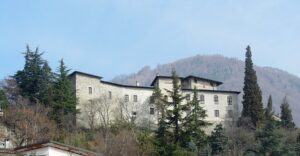
Brescia Castle, also known as the Falcone d’Italia (Hawk of Italy), dominates the city from Colle Cidneo. It is a fortified complex combining history, culture, and nature, with free access to the outdoor area. Inside you will find two unmissable museums: the Luigi Marzoli Arms Museum and the Risorgimento Museum, as well as one of the oldest urban vineyards in Europe.
Key points:
– Visconteo Keep with frescoes and a collection of medieval weapons
– Risorgimento Museum with an interactive exhibition on the Ten Days
– Pusterla Vineyard recognized by Slow Food
– Underground tour with the Brescian Speleological Association
Evocative Introduction
Perched atop Cidneo Hill, Brescia Castle is one of the most imposing fortresses in Europe. It’s not just a pile of ancient stones: here you breathe history, but also life. Among Venetian bastions, Visconti towers, and an urban vineyard, the castle has become the favorite park of the locals. I climb up Contrada Sant’Urbano and already from Piazzetta Tito Speri you can sense the sheer size of the Falcone d’Italia. Entering inside is like diving into an open-air history book, with the city stretching out at its feet.
Evocative Introduction
Perched atop Cidneo Hill, Brescia Castle is one of the most imposing fortresses in Europe. It’s not just a pile of ancient stones: here you breathe history, but also life. Among Venetian bastions, Visconti towers, and an urban vineyard, the castle has become the favorite park of the locals. I climb up Contrada Sant’Urbano and already from Piazzetta Tito Speri you can sense the sheer size of the Falcone d’Italia. Entering inside is like diving into an open-air history book, with the city stretching out at its feet.
Historical Overview
The hill was already sacred in Roman times, housing a temple. Then, in the 13th century, the Visconti built the Mastio (keep) there. From 1426, the Venetians reinforced the defenses with bastions and a monumental portal bearing the Lion of Saint Mark. In 1849, the castle was at the heart of the Ten Days of Brescia, when the city rose up against the Austrians. After the unification of Italy, it became a public park. Today, it is an open-air museum.
Historical Overview
The hill was already sacred in Roman times, housing a temple. Then, in the 13th century, the Visconti built the Mastio (keep) there. From 1426, the Venetians reinforced the defenses with bastions and a monumental portal bearing the Lion of Saint Mark. In 1849, the castle was at the heart of the Ten Days of Brescia, when the city rose up against the Austrians. After the unification of Italy, it became a public park. Today, it is an open-air museum.
Museums and Collections
Inside the Visconti Keep is the Luigi Marzoli Arms Museum: one of the richest European collections of ancient armor and weapons. A journey into the Middle Ages among helmets, swords, and crossbows. Not far away, in the Grand Mile, the Leonessa d’Italia Risorgimento Museum tells the story of the Italian unification with 100 artifacts and digital installations. For children, there is an app-game with Geronimo Stilton. And for train enthusiasts, the Number 1 Locomotive from 1909 stands tall in the square.
Museums and Collections
Inside the Visconti Keep is the Luigi Marzoli Arms Museum: one of the richest European collections of ancient armor and weapons. A journey into the Middle Ages among helmets, swords, and crossbows. Not far away, in the Grand Mile, the Leonessa d’Italia Risorgimento Museum tells the story of the Italian unification with 100 artifacts and digital installations. For children, there is an app-game with Geronimo Stilton. And for train enthusiasts, the Number 1 Locomotive from 1909 stands tall in the square.
The Vineyard Within the Walls
On the slopes of the castle, hidden among the fortifications, lies Vigneto Pusterla: one of Europe’s oldest urban vineyards, recognized by Slow Food. It produces a wine that tastes of history. Walking among the rows as the city stretches out below is a unique experience. Volunteers tend the vines, and you can purchase wine, grappa, and jams right on site. A slice of countryside within the fortress.
The Vineyard Within the Walls
On the slopes of the castle, hidden among the fortifications, lies Vigneto Pusterla: one of Europe’s oldest urban vineyards, recognized by Slow Food. It produces a wine that tastes of history. Walking among the rows as the city stretches out below is a unique experience. Volunteers tend the vines, and you can purchase wine, grappa, and jams right on site. A slice of countryside within the fortress.
Why visit it
Three reasons. First: it’s free. The castle area is always open and you can enjoy the panoramic view without spending a euro. Second: the museums are top-notch, with unique pieces like the Marzoli armor. Third: the urban vineyard makes it different from all other Italian fortresses. And if you come on the first weekend of June, there is the Medieval Festival with costumed reenactments. Not bad, right?
Why visit it
Three reasons. First: it’s free. The castle area is always open and you can enjoy the panoramic view without spending a euro. Second: the museums are top-notch, with unique pieces like the Marzoli armor. Third: the urban vineyard makes it different from all other Italian fortresses. And if you come on the first weekend of June, there is the Medieval Festival with costumed reenactments. Not bad, right?
When to Go
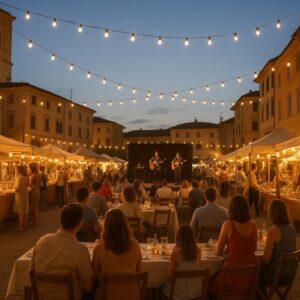
The beauty of the castle is that it changes character with the time of day. Early in the morning, it’s quiet and nearly empty, perfect for a walk among the towers. At sunset, the warm light illuminates the walls and the view stretches across the hills to the Alps. In summer, the evenings are cool, ideal for an aperitivo on the square. Avoid weekends if you seek peace—the locals love it here.
When to Go
The beauty of the castle is that it changes character with the time of day. Early in the morning, it’s quiet and nearly empty, perfect for a walk among the towers. At sunset, the warm light illuminates the walls and the view stretches across the hills to the Alps. In summer, the evenings are cool, ideal for an aperitivo on the square. Avoid weekends if you seek peace—the locals love it here.
In the Vicinity
Descend from the hill and visit the Brixia Roman Archaeological Park (a 5-minute walk): the Capitolium and the Winged Victory await you. Just steps away is the Santa Giulia Museum, a UNESCO World Heritage site that preserves the city’s history from prehistory to the Renaissance. If you prefer art, the Tosio Martinengo Art Gallery is nearby. All these sites pair perfectly with a day at the castle.
In the Vicinity
Descend from the hill and visit the Brixia Roman Archaeological Park (a 5-minute walk): the Capitolium and the Winged Victory await you. Just steps away is the Santa Giulia Museum, a UNESCO World Heritage site that preserves the city’s history from prehistory to the Renaissance. If you prefer art, the Tosio Martinengo Art Gallery is nearby. All these sites pair perfectly with a day at the castle.