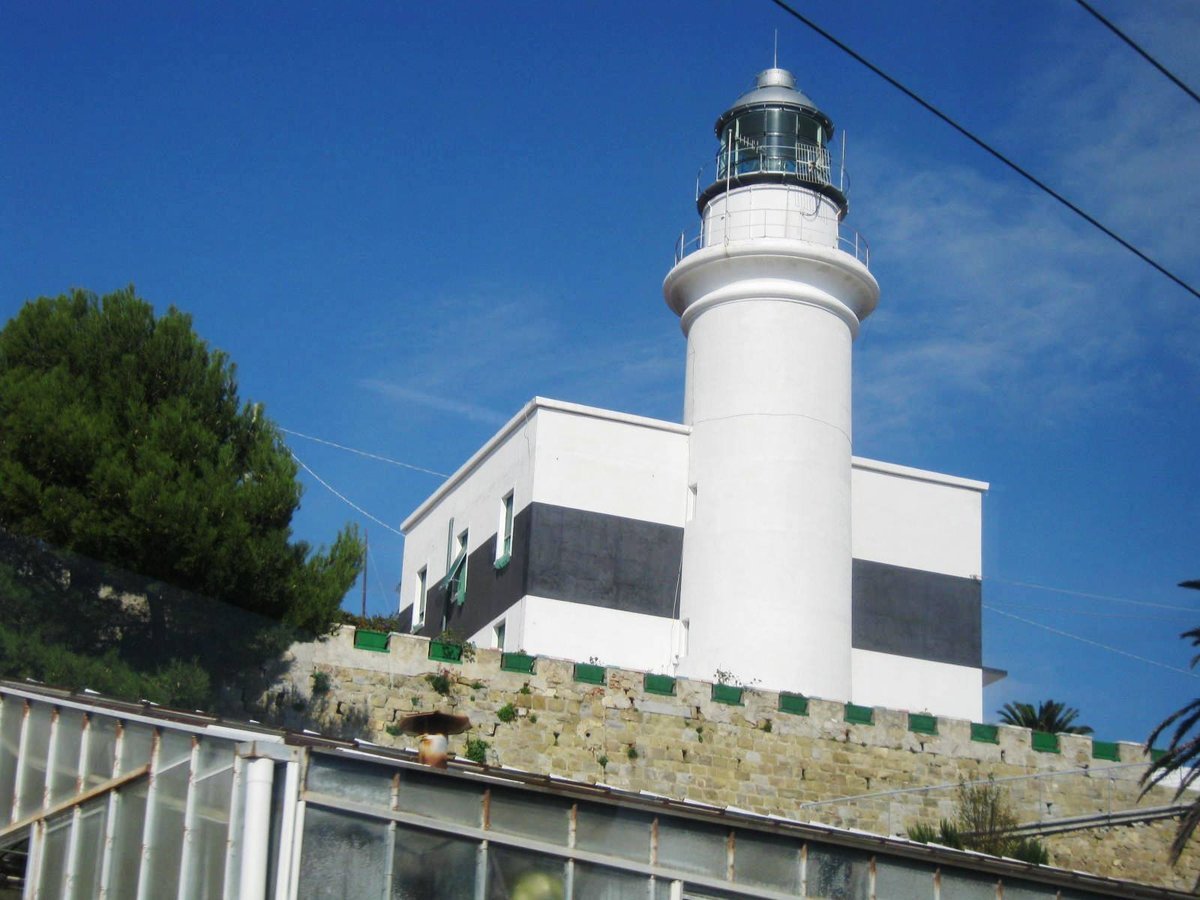
Cape dell’Arma Lighthouse, erected in 1912 and rebuilt in 1948 after wartime destruction, is the first Ligurian lighthouse from the French border. Standing 15 meters tall, its white tower with a black band dominates Cape Verde promontory, offering spectacular views of the Ligurian Sea. While the interior is not open to visitors, the scenic setting and the lighthouse’s history make it a fascinating destination.
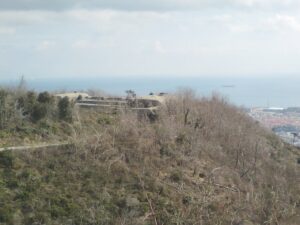
Panorama: From the surrounding area, enjoy a sweeping view of the Riviera dei Fiori, from the French border to Sanremo.
History: Built by the Royal Italian Navy in 1912, destroyed by the Germans, and rebuilt in 1948.
Photography: The contrast of white, black, and the blue sea provides a perfect backdrop for unforgettable shots.
Symbol: With a range of 24 nautical miles, it is a navigational landmark and an icon of the coast.
An Evocative Introduction
Perched on the tip of the Capo Verde promontory, the Capo dell’Arma Lighthouse is the first lighthouse along the Ligurian coast from the French border. Standing 15 meters tall with a range of 24 nautical miles, it dominates the stretch of sea between Sanremo and Bussana. The white tower with a black band is an icon of the Riviera dei Fiori. Arriving here means enjoying breathtaking views: on one side the deep blue of the Ligurian Sea, on the other the terraced hillsides cultivated with olive trees. The sound of the waves and the salty wind accompany the visit, making this place unique for those seeking beauty and history.
An Evocative Introduction
Perched on the tip of the Capo Verde promontory, the Capo dell’Arma Lighthouse is the first lighthouse along the Ligurian coast from the French border. Standing 15 meters tall with a range of 24 nautical miles, it dominates the stretch of sea between Sanremo and Bussana. The white tower with a black band is an icon of the Riviera dei Fiori. Arriving here means enjoying breathtaking views: on one side the deep blue of the Ligurian Sea, on the other the terraced hillsides cultivated with olive trees. The sound of the waves and the salty wind accompany the visit, making this place unique for those seeking beauty and history.
Historical Background
The history of the Capo dell’Arma Lighthouse begins in 1912, when the Civil Engineering Corps built it on behalf of the Royal Navy to illuminate the border sea area. In 1936 it was electrified, but World War II sealed its fate: in 1945, retreating German troops completely destroyed it. The Italian Navy promptly rebuilt it, and work finished in 1948. Since then, the lighthouse is automatic and managed by the Lighthouse Zone Command of La Spezia. A story of resilience, nestled between the waves and the sky of Liguria.
- 1912: Construction of the original lighthouse
- 1936: Electrification
- 1945: Destruction during the war
- 1948: Reconstruction and reactivation
Historical Background
The history of the Capo dell’Arma Lighthouse begins in 1912, when the Civil Engineering Corps built it on behalf of the Royal Navy to illuminate the border sea area. In 1936 it was electrified, but World War II sealed its fate: in 1945, retreating German troops completely destroyed it. The Italian Navy promptly rebuilt it, and work finished in 1948. Since then, the lighthouse is automatic and managed by the Lighthouse Zone Command of La Spezia. A story of resilience, nestled between the waves and the sky of Liguria.
- 1912: Construction of the original lighthouse
- 1936: Electrification
- 1945: Destruction during the war
- 1948: Reconstruction and reactivation
Architecture and Technical Features
The structure is a white cylindrical tower 15 meters tall, above a two-story service building. A horizontal black band characterizes it, while the lantern, with a metallic gray dome, emits two short white flashes every 15 seconds. Inside, a spiral staircase leads to the terrace and the clock room, from which the lantern is accessed. The lighthouse is automated and equipped with an automatic identification system. The focal height is 50 meters above sea level, ensuring visibility up to 44 km. A gem of maritime engineering, functional and fascinating.
Architecture and Technical Features
The structure is a white cylindrical tower 15 meters tall, above a two-story service building. A horizontal black band characterizes it, while the lantern, with a metallic gray dome, emits two short white flashes every 15 seconds. Inside, a spiral staircase leads to the terrace and the clock room, from which the lantern is accessed. The lighthouse is automated and equipped with an automatic identification system. The focal height is 50 meters above sea level, ensuring visibility up to 44 km. A gem of maritime engineering, functional and fascinating.
A Lighthouse That Has Seen History
More than just a navigational aid, the Capo dell’Arma Lighthouse is a silent witness to crucial events. Built to mark the Italian-French maritime border, it saw merchant and military ships pass by. Its destruction during the German retreat and subsequent reconstruction tell the story of Liguria’s resilience. Strolling nearby, I imagine the lighthouses watching over the coast in wartime. Today, with its automatic light, it continues to guide sailors, but also offers visitors a dive into local history, among tales of smugglers and fishermen.
A Lighthouse That Has Seen History
More than just a navigational aid, the Capo dell’Arma Lighthouse is a silent witness to crucial events. Built to mark the Italian-French maritime border, it saw merchant and military ships pass by. Its destruction during the German retreat and subsequent reconstruction tell the story of Liguria’s resilience. Strolling nearby, I imagine the lighthouses watching over the coast in wartime. Today, with its automatic light, it continues to guide sailors, but also offers visitors a dive into local history, among tales of smugglers and fishermen.
Why visit it
1. Unmatched panorama: from the tip of the promontory you can take in the entire Riviera dei Fiori, from Sanremo to Ventimiglia, with the sea changing color with every passing hour. 2. Photography and atmosphere: the lighthouse is a perfect subject, especially at dawn or sunset, when the warm light caresses the white tower. 3. Authentic history: touching a structure that has survived wars and reconstructions offers a unique perspective on Liguria’s past. It is not open to the inside, but the exterior site is free and accessible.
Why visit it
1. Unmatched panorama: from the tip of the promontory you can take in the entire Riviera dei Fiori, from Sanremo to Ventimiglia, with the sea changing color with every passing hour. 2. Photography and atmosphere: the lighthouse is a perfect subject, especially at dawn or sunset, when the warm light caresses the white tower. 3. Authentic history: touching a structure that has survived wars and reconstructions offers a unique perspective on Liguria’s past. It is not open to the inside, but the exterior site is free and accessible.
When to Go
The most magical moment? Undoubtedly late afternoon, when the sun sets behind the lighthouse and tints the sea orange. In spring and autumn the climate is mild and the light soft, ideal for walks. Avoid the central hours of the day in summer if you don’t like the heat. Personally, I found the light in September spectacular: the white lighthouse stands out against the blue sky, and the air is still warm. In winter, with rough seas, the atmosphere becomes wild and romantic.
When to Go
The most magical moment? Undoubtedly late afternoon, when the sun sets behind the lighthouse and tints the sea orange. In spring and autumn the climate is mild and the light soft, ideal for walks. Avoid the central hours of the day in summer if you don’t like the heat. Personally, I found the light in September spectacular: the white lighthouse stands out against the blue sky, and the air is still warm. In winter, with rough seas, the atmosphere becomes wild and romantic.
Nearby
After the visit, take a break at Bussana Vecchia, the village abandoned after the 1887 earthquake and now reborn as an enclave of artists and craftsmen. Its alleys and workshops offer a dive into a bohemian atmosphere. Alternatively, head to Sanremo for a stroll through the gardens of Villa Nobel or along the Passeggiata dell’Imperatrice. Two destinations that complete the Ligurian experience, blending history, art, and landscapes.
Nearby
After the visit, take a break at Bussana Vecchia, the village abandoned after the 1887 earthquake and now reborn as an enclave of artists and craftsmen. Its alleys and workshops offer a dive into a bohemian atmosphere. Alternatively, head to Sanremo for a stroll through the gardens of Villa Nobel or along the Passeggiata dell’Imperatrice. Two destinations that complete the Ligurian experience, blending history, art, and landscapes.