Introduction
Walking on the Walls of Lucca is like strolling along a green ribbon suspended between history and nature. Nearly 4.2 km of tree-lined avenue embrace the historic center, offering glimpses of towers, bell towers, and gardens. Here time seems to stand still: you are neither inside nor outside the city, but in another dimension made of linden, horse chestnut, and centuries-old plane trees. The walls were never used for war, and today they are the locals’ open-air living room. People come here to run, cycle, read a book, or simply enjoy the view. It’s an experience that uniquely combines relaxation and history.
Introduction
Walking on the Walls of Lucca is like strolling along a green ribbon suspended between history and nature. Nearly 4.2 km of tree-lined avenue embrace the historic center, offering glimpses of towers, bell towers, and gardens. Here time seems to stand still: you are neither inside nor outside the city, but in another dimension made of linden, horse chestnut, and centuries-old plane trees. The walls were never used for war, and today they are the locals’ open-air living room. People come here to run, cycle, read a book, or simply enjoy the view. It’s an experience that uniquely combines relaxation and history.
Historical Overview
The walls you see today are the last of four rings: the
Roman (180 BC), the
medieval (completed in 1270), a 15th-century expansion, and finally the
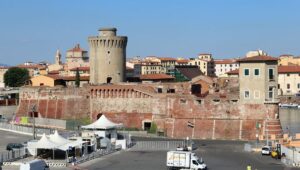
Renaissance built between 1504 and 1650 to defend against the Medici. Designed by architects such as Jacopo Seghizzi and the Flemish Alessandro Farnese, they are a masterpiece of modern fortification. They were never attacked, but in 1812 they saved Lucca from the Serchio flood. In the 19th century, Duchess Maria Luisa of Bourbon turned them into a public promenade. Today they are a beloved urban park.
- 180 BC – Roman walls
- 11th-13th c. – Medieval walls
- 1504-1650 – Renaissance walls
- 1812 – Flood, walls protect the city
- 1818-1820 – Conversion to park
- Today – Public park and event venue
Historical Overview
The walls you see today are the last of four rings: the
Roman (180 BC), the
medieval (completed in 1270), a 15th-century expansion, and finally the
Renaissance built between 1504 and 1650 to defend against the Medici. Designed by architects such as Jacopo Seghizzi and the Flemish Alessandro Farnese, they are a masterpiece of modern fortification. They were never attacked, but in 1812 they saved Lucca from the Serchio flood. In the 19th century, Duchess Maria Luisa of Bourbon turned them into a public promenade. Today they are a beloved urban park.
- 180 BC – Roman walls
- 11th-13th c. – Medieval walls
- 1504-1650 – Renaissance walls
- 1812 – Flood, walls protect the city
- 1818-1820 – Conversion to park
- Today – Public park and event venue
A Stroll Among Bastions and Barracks
Every bastion has its story. Start from Porta Santa Maria and clockwise you find Bastion San Martino, San Pietro, San Salvatore… up to Platform San Frediano. Climb onto Bastion Santa Maria and discover the Caffè delle Mura, a historic kiosk where you can stop for a coffee with a view. Some bastions preserve the barracks, small buildings for the garrison, and underneath extends a network of secret tunnels that once connected ammunition depots. It’s fascinating to think that here 126 cannons were ready, never used. Today those underground spaces host exhibitions and events. Don’t miss the northern section, where remains of the medieval limestone walls are still visible.
A Stroll Among Bastions and Barracks
Every bastion has its story. Start from Porta Santa Maria and clockwise you find Bastion San Martino, San Pietro, San Salvatore… up to Platform San Frediano. Climb onto Bastion Santa Maria and discover the Caffè delle Mura, a historic kiosk where you can stop for a coffee with a view. Some bastions preserve the barracks, small buildings for the garrison, and underneath extends a network of secret tunnels that once connected ammunition depots. It’s fascinating to think that here 126 cannons were ready, never used. Today those underground spaces host exhibitions and events. Don’t miss the northern section, where remains of the medieval limestone walls are still visible.
Green and Relax: Nature on the Walls
The walls are not just history: they are a green lung in the heart of Lucca. The avenue is shaded by ancient trees: lindens, magnolias, planes, red oaks, beeches. In spring the tulip trees fill with yellow flowers, in autumn the foliage tinges everything red and gold. On the sides, the lawns of the ramparts are perfect for a picnic or for lying in the sun. Children run free, dogs play. The walls are also a fitness path: many locals run or bike along them. And there is always a quiet corner to read. An oasis of peace a few steps from the center.
Green and Relax: Nature on the Walls
The walls are not just history: they are a green lung in the heart of Lucca. The avenue is shaded by ancient trees: lindens, magnolias, planes, red oaks, beeches. In spring the tulip trees fill with yellow flowers, in autumn the foliage tinges everything red and gold. On the sides, the lawns of the ramparts are perfect for a picnic or for lying in the sun. Children run free, dogs play. The walls are also a fitness path: many locals run or bike along them. And there is always a quiet corner to read. An oasis of peace a few steps from the center.
Why Visit
Three good reasons: 1. Breathtaking Views: Walking along the 12-meter-high rampart, you get a unique perspective of Lucca’s medieval towers, churches, and rooftops. 2. Unmissable Events: Every summer, the Lucca Summer Festival turns the bastions into an open-air stage (Jamiroquai, Moby, etc.). 3. Free and Accessible: No ticket needed; you can enter from one of the six gates and walk them whenever you want (the gate is open 24h). The walls are also wheelchair accessible thanks to ramps and smooth paths.
Why Visit
Three good reasons: 1. Breathtaking Views: Walking along the 12-meter-high rampart, you get a unique perspective of Lucca’s medieval towers, churches, and rooftops. 2. Unmissable Events: Every summer, the Lucca Summer Festival turns the bastions into an open-air stage (Jamiroquai, Moby, etc.). 3. Free and Accessible: No ticket needed; you can enter from one of the six gates and walk them whenever you want (the gate is open 24h). The walls are also wheelchair accessible thanks to ramps and smooth paths.
When to Go
The best time? At sunset, when the golden light sets the bricks aglow and shadows stretch across the meadows. In summer, it’s cool among the trees, but autumn foliage is also spectacular. If you want to avoid crowds, go early morning or on weekdays. Sunday mornings are full of families and runners – a lively atmosphere. In winter, with the fog, the walls become almost fairy-tale-like. There’s no bad season: each period has its charm.
When to Go
The best time? At sunset, when the golden light sets the bricks aglow and shadows stretch across the meadows. In summer, it’s cool among the trees, but autumn foliage is also spectacular. If you want to avoid crowds, go early morning or on weekdays. Sunday mornings are full of families and runners – a lively atmosphere. In winter, with the fog, the walls become almost fairy-tale-like. There’s no bad season: each period has its charm.
Nearby
Just steps from the walls, enter Piazza dell’Anfiteatro, an elliptical square that preserves the shape of the ancient Roman amphitheater. Walk through one of the four gateways and you’ll find yourself in a unique space, surrounded by cafes and shops. A short distance away, near Porta Elisa, is the Orto Botanico (established in 1819), a peaceful garden with medicinal plants and centuries-old trees. A perfect combination: after your walk along the walls, immerse yourself in the greenery of the garden or enjoy an aperitif in the square.
Nearby
Just steps from the walls, enter Piazza dell’Anfiteatro, an elliptical square that preserves the shape of the ancient Roman amphitheater. Walk through one of the four gateways and you’ll find yourself in a unique space, surrounded by cafes and shops. A short distance away, near Porta Elisa, is the Orto Botanico (established in 1819), a peaceful garden with medicinal plants and centuries-old trees. A perfect combination: after your walk along the walls, immerse yourself in the greenery of the garden or enjoy an aperitif in the square.