Introduction
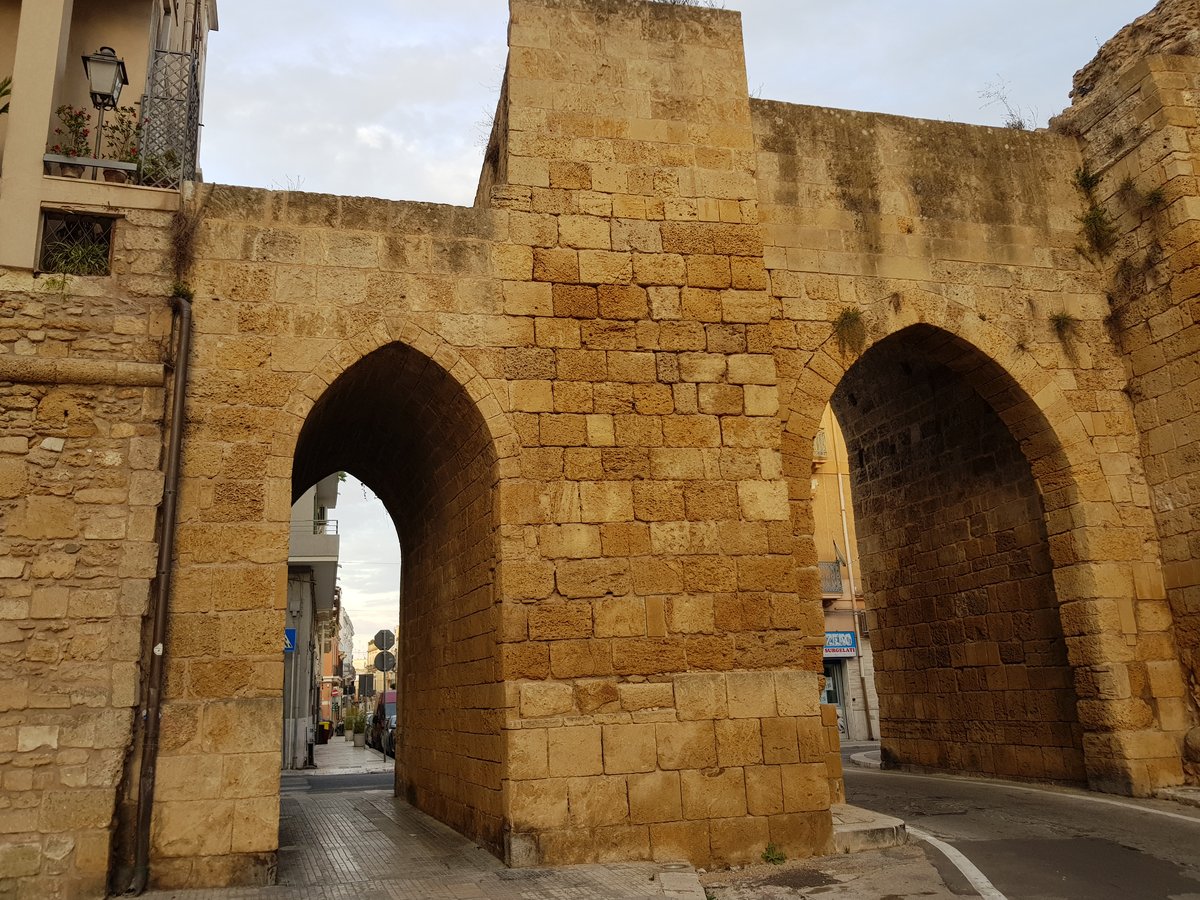
When you think of Brindisi, you might picture a busy port. But hidden among the cars on Via Carmine is a gateway that smells of the Middle Ages. Porta Mesagne is the city’s oldest entrance, with a Gothic arch that Frederick II commissioned in the 13th century. What strikes you is the contrast: on one side, modern traffic; on the other, faded frescoes and traces of a 16th-century bastion. And then there’s the incredible story of how a courageous canon saved it from demolition by standing in front of the workers. A monument that tells centuries of history, but also the love the people of Brindisi have for their roots.
Introduction
When you think of Brindisi, you might picture a busy port. But hidden among the cars on Via Carmine is a gateway that smells of the Middle Ages. Porta Mesagne is the city’s oldest entrance, with a Gothic arch that Frederick II commissioned in the 13th century. What strikes you is the contrast: on one side, modern traffic; on the other, faded frescoes and traces of a 16th-century bastion. And then there’s the incredible story of how a courageous canon saved it from demolition by standing in front of the workers. A monument that tells centuries of history, but also the love the people of Brindisi have for their roots.
Historical Notes
Porta Mesagne has Roman origins, but its current form dates back to 1236 by order of Frederick II of Swabia, who wanted it as a triumphal entrance. The Gothic pointed arch stands nearly 10 meters high. In the Aragonese period (1484) the pentagonal bastion was added, later remodeled by the Spanish in 1551 under Giovan Battista Loffredo. In 1923 fears of collapse led to proposals for demolition, but on October 31, 1925, Canon Pasquale Camassa stopped the workers and saved the gate. In 1930 a small pedestrian passage was opened. Since then, the gate has endured traffic and neglect, and today it is a symbol of the city.
Historical Notes
Porta Mesagne has Roman origins, but its current form dates back to 1236 by order of Frederick II of Swabia, who wanted it as a triumphal entrance. The Gothic pointed arch stands nearly 10 meters high. In the Aragonese period (1484) the pentagonal bastion was added, later remodeled by the Spanish in 1551 under Giovan Battista Loffredo. In 1923 fears of collapse led to proposals for demolition, but on October 31, 1925, Canon Pasquale Camassa stopped the workers and saved the gate. In 1930 a small pedestrian passage was opened. Since then, the gate has endured traffic and neglect, and today it is a symbol of the city.
The Architecture: Gothic, Cannon Ports, and Frescoes
The most striking feature is the pointed arch in Gothic style, with traces of the beam mounts and hinges of the ancient doors. Above the arch, remains of medieval frescoes, perhaps saints, now very faded, can be seen. Next to it, the Spanish pentagonal bastion has three cannon ports and coats of arms of Charles V, the Viceroy of Naples Don Pedro de Toledo, and Giovan Battista Loffredo. Inside the bastion, art exhibitions are held. Below the gate, cars still speed by, but if you look up, you see a piece of history that defies time.
The Architecture: Gothic, Cannon Ports, and Frescoes
The most striking feature is the pointed arch in Gothic style, with traces of the beam mounts and hinges of the ancient doors. Above the arch, remains of medieval frescoes, perhaps saints, now very faded, can be seen. Next to it, the Spanish pentagonal bastion has three cannon ports and coats of arms of Charles V, the Viceroy of Naples Don Pedro de Toledo, and Giovan Battista Loffredo. Inside the bastion, art exhibitions are held. Below the gate, cars still speed by, but if you look up, you see a piece of history that defies time.
The Miraculous Rescue: The Story of Canon Camassa
Summer 1925, a storm damages the gate. The municipal engineer calls for its demolition. The mayor approves. On October 31, workers arrive, but under the arch they find Don Pasquale Camassa, known as ‘Papa Pascalinu’, parish priest and chairman of the Monuments Commission. He physically opposes them, threatens to report them, and sends telegrams to Rome. The workers back down. The controversy reaches the ministry, which orders restoration. Camassa pays for the initial repairs out of his own pocket. The mayor tries again to demolish, but minister Fedele stops him. Thus the gate is saved, and today its story is more fascinating than its architecture.
The Miraculous Rescue: The Story of Canon Camassa
Summer 1925, a storm damages the gate. The municipal engineer calls for its demolition. The mayor approves. On October 31, workers arrive, but under the arch they find Don Pasquale Camassa, known as ‘Papa Pascalinu’, parish priest and chairman of the Monuments Commission. He physically opposes them, threatens to report them, and sends telegrams to Rome. The workers back down. The controversy reaches the ministry, which orders restoration. Camassa pays for the initial repairs out of his own pocket. The mayor tries again to demolish, but minister Fedele stops him. Thus the gate is saved, and today its story is more fascinating than its architecture.
Why Visit It
First: it’s the only surviving medieval gate with a Roman, Swabian, and Spanish past – a layered concentration of history. Second: Camassa’s story is like a movie: one man stopping bulldozers by sheer willpower. Third: the contrast between chaotic traffic and the bastion’s quiet (with temporary exhibitions) makes the visit an authentic experience. It’s a place that speaks of resistance and identity, far from the usual postcards.
Why Visit It
First: it’s the only surviving medieval gate with a Roman, Swabian, and Spanish past – a layered concentration of history. Second: Camassa’s story is like a movie: one man stopping bulldozers by sheer willpower. Third: the contrast between chaotic traffic and the bastion’s quiet (with temporary exhibitions) makes the visit an authentic experience. It’s a place that speaks of resistance and identity, far from the usual postcards.
When to Go
The best time is late afternoon, when the low sun illuminates the frescoes and warms the yellow stone. Avoid peak hours: the traffic under the arch is heavy and distracting. In spring or autumn, with soft light, the gate has an almost mystical atmosphere. If you’re lucky, during exhibitions in the bastion you can enter and see the coats of arms up close.
When to Go
The best time is late afternoon, when the low sun illuminates the frescoes and warms the yellow stone. Avoid peak hours: the traffic under the arch is heavy and distracting. In spring or autumn, with soft light, the gate has an almost mystical atmosphere. If you’re lucky, during exhibitions in the bastion you can enter and see the coats of arms up close.
Nearby
A few steps away, on Via Cristoforo Colombo, you’ll find the Roman decantation basins (2nd century BC), used for settling water. They are another piece of ancient Brindisi. Continuing along the same axis towards the center, you reach Porta Lecce, the other surviving gate. And don’t miss the seafront with the Monument to the Italian Sailor, but that’s another story.
Nearby
A few steps away, on Via Cristoforo Colombo, you’ll find the Roman decantation basins (2nd century BC), used for settling water. They are another piece of ancient Brindisi. Continuing along the same axis towards the center, you reach Porta Lecce, the other surviving gate. And don’t miss the seafront with the Monument to the Italian Sailor, but that’s another story.