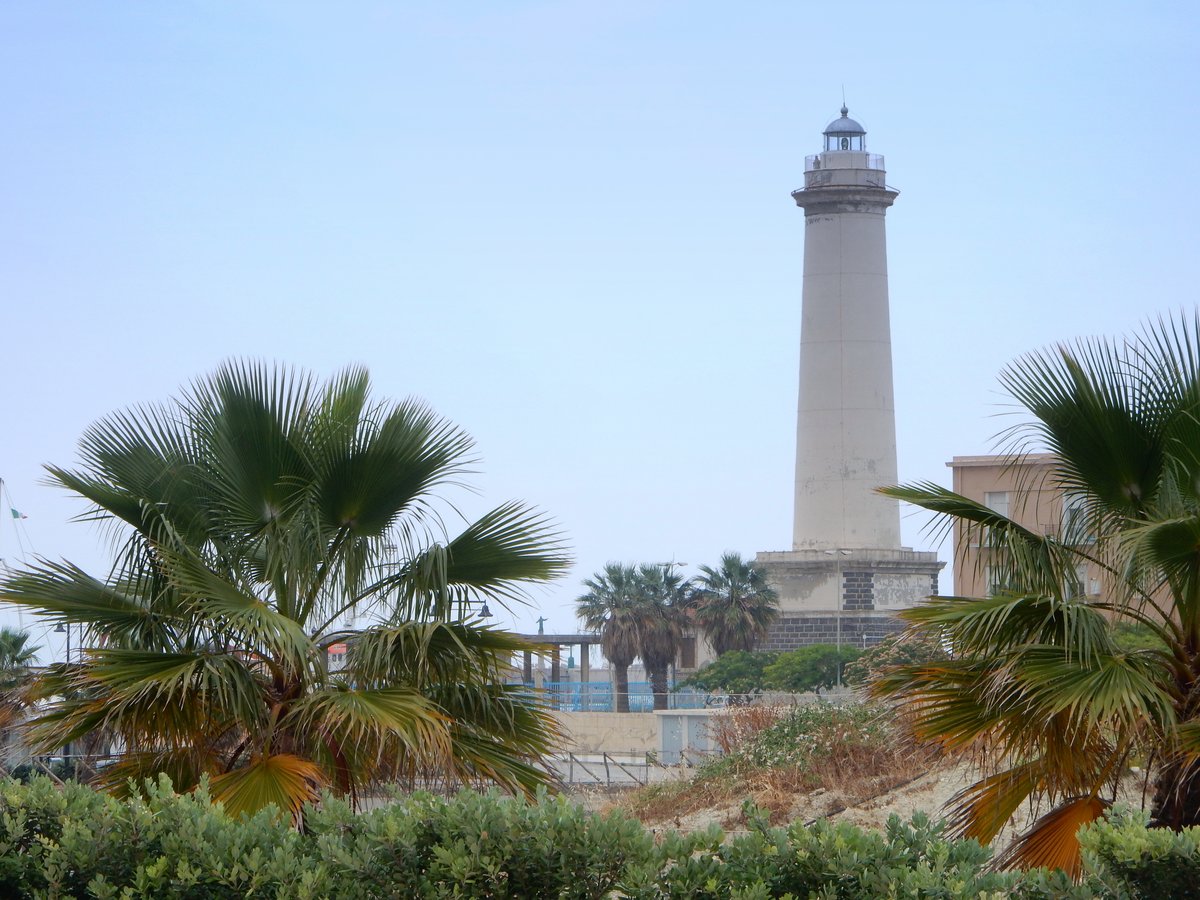
San Giacomo Lighthouse is an icon of Licata, with its 40-meter tower dominating the port. Built in 1895, it is one of the tallest lighthouses in Europe with its base at sea level. Open to the public during special events, it offers a spectacular view of the Mediterranean.
– Record height: 40 meters above sea level, one of the tallest lighthouses in Europe.
– 170 steps: climb the spiral staircase to the panoramic terrace.
– Light visible for 21 miles: the lighthouse is still active with LED technology.
– 19th-century history: designed by Tommaso Cascino and activated in 1895.
Introduction
Have you ever found yourself in front of a place that takes your breath away? The San Giacomo Lighthouse in Licata is one of those. Standing 40 meters tall, with its base touching the sea, it is one of the tallest lighthouses in Europe. It is not just a landmark for ships: climbing its 170 steps offers a breathtaking view of the Mediterranean. A symbol of Sicily truly worth visiting.
Introduction
Have you ever found yourself in front of a place that takes your breath away? The San Giacomo Lighthouse in Licata is one of those. Standing 40 meters tall, with its base touching the sea, it is one of the tallest lighthouses in Europe. It is not just a landmark for ships: climbing its 170 steps offers a breathtaking view of the Mediterranean. A symbol of Sicily truly worth visiting.
Historical Notes
The lighthouse was designed by engineer Tommaso Cascino and built by the company of Pietro Davanteri. Work began after approval by the High Council of Public Works in 1892, but the lighthouse was only activated in 1895, delayed due to the completion of the port. It takes its name from the Castle of San Giacomo, which was demolished between 1870 and 1929 to make way for the commercial port. Today it is an Italian cultural asset, managed by the Navy.
Historical Notes
The lighthouse was designed by engineer Tommaso Cascino and built by the company of Pietro Davanteri. Work began after approval by the High Council of Public Works in 1892, but the lighthouse was only activated in 1895, delayed due to the completion of the port. It takes its name from the Castle of San Giacomo, which was demolished between 1870 and 1929 to make way for the commercial port. Today it is an Italian cultural asset, managed by the Navy.
The Climb and the View
To reach the top, you need to climb a spiral staircase of 170 steps. Don’t worry: the effort is rewarded. From the panoramic terrace, you can embrace the entire Gulf of Licata and, on the clearest days, catch a glimpse of the southern Sicilian coast. The lighthouse light, visible up to 21 nautical miles (about 38 km), now uses LED technology, but retains its timeless charm.
The Climb and the View
To reach the top, you need to climb a spiral staircase of 170 steps. Don’t worry: the effort is rewarded. From the panoramic terrace, you can embrace the entire Gulf of Licata and, on the clearest days, catch a glimpse of the southern Sicilian coast. The lighthouse light, visible up to 21 nautical miles (about 38 km), now uses LED technology, but retains its timeless charm.
Architecture and Technology
The lighthouse is a white cylindrical tower with a cubic base, clad in masonry. It is a rotating optic lighthouse with an LD 3 lantern. What makes it special? It is one of the few lighthouses with its base at sea level, making it unique. The contrast between the ancient 19th-century design and modern LED lights tells the story of the evolution of maritime navigation.
Architecture and Technology
The lighthouse is a white cylindrical tower with a cubic base, clad in masonry. It is a rotating optic lighthouse with an LD 3 lantern. What makes it special? It is one of the few lighthouses with its base at sea level, making it unique. The contrast between the ancient 19th-century design and modern LED lights tells the story of the evolution of maritime navigation.
Why Visit It
Three good reasons: first, the 360-degree panorama of the coast and sea, perfect for breathtaking photos. Second, the fascinating history tied to the lost castle and the port. Third, the chance to visit during special events: the lighthouse opens to the public only on rare dates, making it an exclusive experience. It’s not every day you get to climb such a tall lighthouse!
Why Visit It
Three good reasons: first, the 360-degree panorama of the coast and sea, perfect for breathtaking photos. Second, the fascinating history tied to the lost castle and the port. Third, the chance to visit during special events: the lighthouse opens to the public only on rare dates, making it an exclusive experience. It’s not every day you get to climb such a tall lighthouse!
When to Go
The best time? At sunset, when the sun paints the Mediterranean red and the lighthouse beam begins to shine. The early morning hours also offer a magical atmosphere, with calm seas and few crowds. Avoid cloudy days: visibility is everything. And, if you can, check the dates for special openings—they often coincide with local festivals or events.
When to Go
The best time? At sunset, when the sun paints the Mediterranean red and the lighthouse beam begins to shine. The early morning hours also offer a magical atmosphere, with calm seas and few crowds. Avoid cloudy days: visibility is everything. And, if you can, check the dates for special openings—they often coincide with local festivals or events.
In the Surroundings
Just a short walk from the lighthouse, don’t miss the Marina di Cala del Sole Tourist Port: a modern marina with over 1,500 berths, shops, and pedestrian areas. Perfect for a relaxing stroll. And then, the historic Baroque center of Licata, with its churches and palaces, is worth a visit. A mix of sea and culture that completes the day.
In the Surroundings
Just a short walk from the lighthouse, don’t miss the Marina di Cala del Sole Tourist Port: a modern marina with over 1,500 berths, shops, and pedestrian areas. Perfect for a relaxing stroll. And then, the historic Baroque center of Licata, with its churches and palaces, is worth a visit. A mix of sea and culture that completes the day.