
🧭 What to Expect
- Ideal for: those who love art, history, and city vibes
- Highlight: the combination of UNESCO sites, Renaissance squares, and museums
- Must-see: the Castle, Santa Giulia, and the Capitolium Temple
- Tip: also visit the Tosio Martinengo Art Gallery for masterpieces
Events nearby

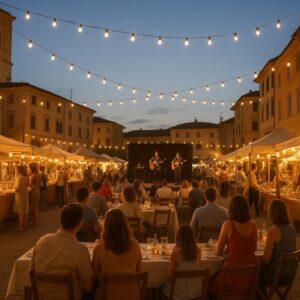

Brescia is a city that surprises: a lively historic center, a medieval castle towering above, and a series of world-class museums. The Brescia Castle offers breathtaking views and houses the Luigi Marzoli Arms Museum. Nearby, the Santa Giulia complex preserves Roman and Lombard remains, a UNESCO site. Strolling through Piazza della Loggia, a Renaissance masterpiece, and Piazza della Vittoria, you can feel the history. Don't miss the Capitolium Temple, whose ruins tell the story of ancient Brixia. Car enthusiasts will find their paradise at the Mille Miglia Museum, while the Teatro Grande is an opera jewel. Brescia is a perfect weekend destination for art, culture, and good food.
Overview
- Brescia Castle: A Fortress That Commands the City
- Brescia Castle: A Fortress That Commands the City
- Santa Giulia Museum: A Dive into Brescia's Past
- Santa Giulia Museum: A Dive into Brescia's Past
- The Capitoline Temple: Heart of Roman Brixia
- Piazza della Loggia: The Renaissance Heart of Brescia
- Teatro Grande: A Historic Gem in the Heart of Brescia
- Clock Tower: Time Dancing in Piazza della Loggia
- Piazza della Vittoria: the Rationalist Heart of Brescia
- Tosio Martinengo Art Gallery: A Renaissance Treasure in Brescia
- Luigi Marzoli Arms Museum: Inside the Visconti Keep
- Brixia Roman Archaeological Park
- Mille Miglia Museum: The Temple of the World's Most Beautiful Race
- Palazzo Broletto: History and Charm in the Heart of Brescia
- Teatro Sociale: History and Rebirth
- Parco delle Cave: An Ex-Industrial Nature Oasis
- Monument to Moretto: A Dive into Brescian Art
Itineraries nearby


Brescia Castle: A Fortress That Commands the City
- Go to the page: Brescia Castle: fortress, museums, and vineyard on Colle Cidneo
- Via del Castello, Brescia (BS)
- Open in Google Maps
- View on Google Images
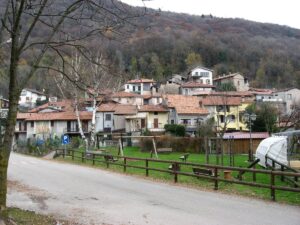
 Perched on Cidneo Hill about 90 meters high, Brescia Castle – nicknamed the Falcon of Italy – is one of the most imposing fortified complexes in Europe (second in size). Its structure tells centuries of dominations: the crenellated walls and the Keep date back to the Visconti (14th century), while the massive bastions and the monumental portal with the winged lion are the work of the Venetians, who ruled the city for four centuries. Two unmissable museums are housed within its walls: the Luigi Marzoli Arms Museum, set up in the ancient Visconti Keep, with armor and weapons from the Middle Ages to the 1600s; and the Risorgimento Museum “Leonessa d’Italia”, which recalls Brescia’s central role in the Ten Days of 1849. It was from these positions that Marshal Haynau bombarded the rebellious city. But the castle isn’t just about history: it’s also a public park where you can stroll, admire the panoramic view over rooftops, the Ronchi hills, and the Alps, and discover curiosities like the locomotive “Number 1” from 1909, called “Prisoner of the Falcon of Italy,” the Roman remains of the oil warehouses, and the Strada del Soccorso, a secret Visconti passage. For kids, there’s also an app-game with Geronimo Stilton. Entry to the castle grounds is free every day from 6 a.m. to 11 p.m. For the museums, you need the Castle ticket (€4 full price). Tip: go up at sunset, the view is picture-perfect.
Brescia Castle: A Fortress That Commands the City
- Go to the page: Brescia Castle: Fortress with Arms Museums, Visconti Towers and Prealps Views
- Via del Castello, Brescia (BS)
- Open in Google Maps
- View on Google Images
Perched on Cidneo Hill about 90 meters high, Brescia Castle – nicknamed the Falcon of Italy – is one of the most imposing fortified complexes in Europe (second in size). Its structure tells centuries of dominations: the crenellated walls and the Keep date back to the Visconti (14th century), while the massive bastions and the monumental portal with the winged lion are the work of the Venetians, who ruled the city for four centuries. Two unmissable museums are housed within its walls: the Luigi Marzoli Arms Museum, set up in the ancient Visconti Keep, with armor and weapons from the Middle Ages to the 1600s; and the Risorgimento Museum “Leonessa d’Italia”, which recalls Brescia’s central role in the Ten Days of 1849. It was from these positions that Marshal Haynau bombarded the rebellious city. But the castle isn’t just about history: it’s also a public park where you can stroll, admire the panoramic view over rooftops, the Ronchi hills, and the Alps, and discover curiosities like the locomotive “Number 1” from 1909, called “Prisoner of the Falcon of Italy,” the Roman remains of the oil warehouses, and the Strada del Soccorso, a secret Visconti passage. For kids, there’s also an app-game with Geronimo Stilton. Entry to the castle grounds is free every day from 6 a.m. to 11 p.m. For the museums, you need the Castle ticket (€4 full price). Tip: go up at sunset, the view is picture-perfect.Santa Giulia Museum: A Dive into Brescia's Past
- Go to the page: Santa Giulia Museum: A Journey Through Brescia's History
- Via dei Musei 81b, Brescia (BS)
- https://www.bresciamusei.com/santagiulia.asp
- Open in Google Maps
- View on Google Images
- +39 030 2977833
 Entering the Santa Giulia Museum is like opening a history book that tells the story of Brescia from its roots to the 18th century. Housed in the ancient monastery founded in 753 AD by the Lombard king Desiderius and his wife Ansa, this complex spans 14,000 square meters and has been a UNESCO World Heritage site since 2011. The itinerary winds through unique spaces: the Basilica of San Salvatore, with Roman columns and frescoes by Romanino; the Nuns' Choir, frescoed by Floriano Ferramola; and the Romanesque oratory of Santa Maria in Solario, where the Desiderius Cross is kept, a masterpiece of Carolingian goldsmithing with 212 gemstones. But the museum is not just medieval: beneath your feet, the Domus dell'Ortaglia preserve mosaics and frescoes from the Roman era (1st-3rd century AD), accessible via an elevated walkway. There are also prehistoric, Lombard, and Venetian artifacts: over 11,000 works in total. The atmosphere is intimate, almost contemplative, and it's easy to get lost among the cloisters and gardens. Practical info: the museum is at Via dei Musei 81/b, open Tuesday to Sunday (10 AM–6 PM, last entry 5:15 PM), closed on Mondays. Full ticket is €10 (reduced €7.50), combinable with the Archaeological Park for €15. I recommend dedicating at least a couple of hours, but if you're passionate, you could spend half a day.
Santa Giulia Museum: A Dive into Brescia's Past
- Go to the page: Santa Giulia Museum in Brescia: UNESCO Monastery with Desiderius' Cross and Roman Domus
- Via dei Musei 81b, Brescia (BS)
- https://www.bresciamusei.com/santagiulia.asp
- Open in Google Maps
- View on Google Images
- +39 030 2977833
Entering the Santa Giulia Museum is like opening a history book that tells the story of Brescia from its roots to the 18th century. Housed in the ancient monastery founded in 753 AD by the Lombard king Desiderius and his wife Ansa, this complex spans 14,000 square meters and has been a UNESCO World Heritage site since 2011. The itinerary winds through unique spaces: the Basilica of San Salvatore, with Roman columns and frescoes by Romanino; the Nuns' Choir, frescoed by Floriano Ferramola; and the Romanesque oratory of Santa Maria in Solario, where the Desiderius Cross is kept, a masterpiece of Carolingian goldsmithing with 212 gemstones. But the museum is not just medieval: beneath your feet, the Domus dell'Ortaglia preserve mosaics and frescoes from the Roman era (1st-3rd century AD), accessible via an elevated walkway. There are also prehistoric, Lombard, and Venetian artifacts: over 11,000 works in total. The atmosphere is intimate, almost contemplative, and it's easy to get lost among the cloisters and gardens. Practical info: the museum is at Via dei Musei 81/b, open Tuesday to Sunday (10 AM–6 PM, last entry 5:15 PM), closed on Mondays. Full ticket is €10 (reduced €7.50), combinable with the Archaeological Park for €15. I recommend dedicating at least a couple of hours, but if you're passionate, you could spend half a day.The Capitoline Temple: Heart of Roman Brixia
- Via dei Musei 55, Brescia (BS)
- https://www.bresciamusei.com/
- Open in Google Maps
- View on Google Images
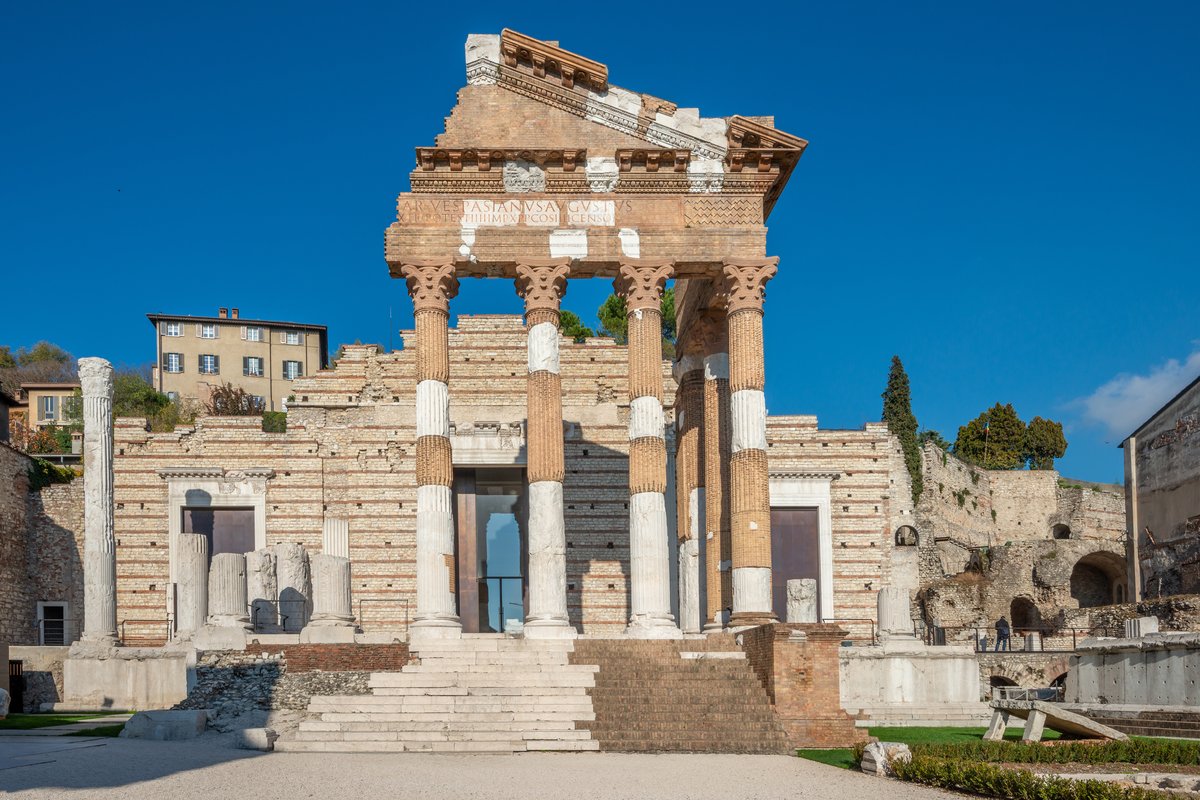 If you're in Brescia and find yourself in Piazza del Foro, you can't miss the Capitoline Temple. It's the city's Roman gem, built by Emperor Vespasian in 73 AD to celebrate victory over Vitellius. Yes, the same one from the Colosseum in Rome. But here the story is different: after a fire in the 4th century, the temple was buried by a landslide from Mount Cidneo and was lost for centuries. Only in 1823 did excavations begin, revealing these imposing ruins. What you see today is partly reconstructed, but the Corinthian columns and three cellae give you an idea of its original grandeur. The central cella still retains its original marble and African breccia floor with mosaic patterns. In front, the staircase leads to a terrace where two fountains once stood. And then there's the Roman theatre next door, partly incorporated into a medieval palace. The best part is you can visit everything with a single ticket, and if you're lucky, the cella of the underlying Republican temple is also open, with Pompeian-style frescoes. Note the opening hours: in summer it's open until 7 PM, winter until 6 PM, but closed on Mondays. If you have mobility issues, there's an elevator (ask at the ticket office). And know that here in 1826 the famous Winged Victory was discovered, now at the Santa Giulia Museum. In short, a place that breathes history at every corner.
Piazza della Loggia: The Renaissance Heart of Brescia
- Piazza della Loggia, Brescia (BS)
- Open in Google Maps
- View on Google Images
 Walking through Piazza della Loggia is like stepping back in time. Opened in 1433, it is considered the most beautiful square in Brescia, with its rectangular shape and porticos framing it. The main attraction is Palazzo della Loggia, a Renaissance masterpiece begun in 1492 and completed with contributions from Andrea Palladio. Today it houses the Town Hall and can be visited for free Monday to Friday (9-12:30 and 2-7 PM) – don't miss the Salone Vanvitelliano. Under the portico, two Botticino marble fountains add freshness. On the south side, the Monti di Pietà stand out, where Roman inscriptions are embedded: it is considered the oldest civic lapidary in the world, dating back to 1480. A bit further, the Clock Tower houses a 16th-century astronomical clock. Above, two copper automata called 'macc de le ure' (the crazy ones of the hours) strike the hours. Unmissable is the Monument to Beautiful Italy by Giovanni Battista Lombardi (1864), dedicated to the Ten Days of Brescia. The square, unfortunately, is also sadly known for the massacre of May 28, 1974, commemorated by a stele. Today it is a lively place, full of cafes and restaurants, ideal for a stop. Access is free and barrier-free, and you can easily reach it by metro (Vittoria stop).
Teatro Grande: A Historic Gem in the Heart of Brescia
- Portici di Corso Giuseppe Zanardelli 9A, Brescia (BS)
- https://www.teatrogrande.it/
- Open in Google Maps
- View on Google Images
- +39 0302979311
 If you're passing through Brescia, Teatro Grande is a must-see. Not only is it one of Italy's oldest theaters – its origins date back to 1664, when the Accademia degli Erranti built the first public theater – but inside there's a surprise at every turn. The Ridotto, for instance, is a riot of Rococo with frescoes by Francesco Battaglioli and Francesco Zugno: it feels like stepping into an 18th-century ballroom. Then there's the main hall, designed by Luigi Canonica in 1810 with the classic horseshoe shape and five tiers of boxes. With a capacity of 970 seats, you never feel lost; every corner has a detail, like the royal box with Egyptian decorations or the Lumino Clock from 1815, restored to working order in 2012. The theater is also a place of memory: here in 1904, Puccini's Madama Butterfly was staged after its failure at La Scala, and it became a worldwide success. Today it hosts the International Piano Festival and the Opera Festival, but it's worth visiting even just for the Caffè del Teatro Grande – open on weekends – where you can take a break in the Ridotto, sipping a drink while admiring the frescoed ceilings. Guided tours (including the summer Grand Tour) take you behind the scenes, onto the stage, and into the dressing rooms. In short, it's not just a theater: it's a piece of Brescian history to experience.
Clock Tower: Time Dancing in Piazza della Loggia
- Via Cesare Beccaria, Brescia (BS)
- Open in Google Maps
- View on Google Images
 If you pass through Piazza della Loggia, you can't help but look up at the Clock Tower, built between 1540 and 1550 on a design by Lodovico Beretta. What you see is not a simple clock: it is an astronomical complex that, besides the hours, shows the lunar phases and zodiac signs, following the Ptolemaic system. The main dial, painted by Gian Giacomo Lamberti in 1547, still retains the Julian calendar (with the equinox on March 11). But the real surprise is at the top: two copper automata, nicknamed "Tone and Batista" (or in dialect "I Màcc de le ure", the madmen of the hours), that have been marking the chimes on the bell since 1581. Under the tower, a passageway from 1554 connects Piazza della Loggia to Via Beccaria, while the Botticino stone portico added in 1595 extends along Via Dieci Giornate. The clock is still working – restored by FAI in 2000 – and every day offers a unique spectacle, uniting art, history and astronomy. A tip? Try to be there on the hour to see the two "madmen" in action.
Piazza della Vittoria: the Rationalist Heart of Brescia
- Piazza della Vittoria, Brescia (BS)
- Open in Google Maps
- View on Google Images
 Entering Piazza della Vittoria, the first thing that strikes you is the impressive Torrione INA, which with its 15 floors and 57.25 meters in height was the first skyscraper built in Italy. Designed by Marcello Piacentini between 1927 and 1932, the square was created from the demolition of the medieval Pescherie district—an urban intervention typical of the Fascist era, today a subject of debate. Walking under the white marble porticoes, you'll notice the contrast between the simplified neoclassical style and the rationalist elements. On the L-shaped corner stand the Palazzo delle Poste with its white-ochre bichromy and the Torre della Rivoluzione, beneath which is the arengario made of red Tolmezzo stone, decorated with bas-reliefs telling the story of Brescia: from the Winged Victory to the Ten Days. Unfortunately, the original sculpture "L'Era Fascista" by Arturo Dazzi, popularly known as "il Bigio," was removed after the war and now lies in municipal storage. Today the square has been pedestrianized and renewed: in 2013 it received new paving and a fountain. If you happen to be there on the second Sunday of the month, you'll find the antique market animating the space. Beneath your feet, a 450-space underground parking lot and the "Vittoria" metro stop. It's a place that leaves no one indifferent: a piece of urban history to observe with a critical eye, but also a lively gathering spot for the people of Brescia.
Tosio Martinengo Art Gallery: A Renaissance Treasure in Brescia
- Go to the page: Tosio Martinengo Art Gallery: Raphael and Moretto in the Heart of Brescia
- Piazza Moretto 4, Brescia (BS)
- https://www.bresciamusei.com/pinacoteca.asp
- Open in Google Maps
- View on Google Images
- +39 030 2977833
 If you think Brescia is just industry and medieval squares, the Tosio Martinengo Art Gallery will change your mind. Housed in the elegant Palazzo Martinengo da Barco (dating from the 1500s but renovated in the 1800s by Antonio Tagliaferri), the gallery is a gem spanning five centuries of art. Reopened in 2018 after a thorough restoration, it offers a chronological journey from the 1300s to the 1800s, with a focus on the Brescian Renaissance school. Here you'll find the big names: Raphael with the Angel and the Redeemer, Lorenzo Lotto with the Adoration of the Shepherds, and local masters Savoldo, Romanino, and Moretto. But the museum is also famous for its rich collection of Giacomo Ceruti, known as il Pitocchetto, with sixteen paintings depicting the poor and humble in a touching realism – the famous La Lavandaia is unmissable. There are also sculptures by Canova and Thorvaldsen, Venetian glass (Brozzoni collection), and two monumental canvases by Francesco Hayez. The modern layout plays with colored velvets and variable lighting, creating an intimate atmosphere. The visit takes about 90 minutes and is wheelchair accessible via elevator. Hours: Tuesday-Sunday 10 am-6 pm (until 7 pm in summer), closed Mondays. Full ticket €12, or combined Museums (+ Brixia) ticket €19. You can reach it on foot from the metro (Vittoria stop) or by bus. In short, a must for anyone wanting to understand Brescia's artistic soul.
Luigi Marzoli Arms Museum: Inside the Visconti Keep
- Corridoio Fortificato 9, Brescia (BS)
- https://www.bresciamusei.com/ncastello.asp?nm=17&t=Museo+delle+Armi+L%2E+Marzoli
- Open in Google Maps
- View on Google Images
- +39 030 44176
 If you're passing through Brescia and stop at the Castle, don't miss the Luigi Marzoli Arms Museum. It is housed in the 14th-century Visconti Keep, a building that is worth a visit in itself: built in 1343 by Luchino Visconti, it rests on the remains of a Roman temple from the 1st century AD, whose foundations and a staircase are still visible. Inside, the museum houses one of the most important European collections of ancient armor and weapons, the result of the passion of Luigi Marzoli, an entrepreneur from Palazzolo sull'Oglio who bequeathed his collection to the city in 1965. Opened in 1988, it displays over 700 pieces documenting Brescia's arms-making tradition from the 15th to the 18th century. You'll come face to face with 16th-century Brescian armor, infantry corselets, and especially the famous Gardone barrels, firearms that made Brescia famous worldwide. Among the highlights: a rare German arming cap (only three exist in the world), a large Venetian sallet, and a 1563 parade shield with mythological scenes. The tour winds through ten rooms, with knights on wooden horses and Visconti frescoes as a backdrop. I recommend downloading the free EasyGuide (just a QR code and a pair of earphones) to not miss the details. If you come with children, there's the Geronimo Stilton app-game for interactive exploration. The museum is part of the Fondazione Brescia Musei system, so consider the combined ticket if you also want to visit the Pinacoteca or Santa Giulia. Hours: Tuesday to Sunday, 10 AM–6 PM (until 7 PM in summer). Closed on Mondays. In short, a dive into history that you'll never tire of admiring.
Brixia Roman Archaeological Park
- Via dei Musei 55, Brescia (BS)
- Open in Google Maps
- View on Google Images
 Entering the Brixia Roman Archaeological Park is like stepping back two thousand years. Located right in the heart of Brescia, it has been a UNESCO World Heritage site since 2011. This is no ordinary museum: it's a genuine Roman district brought to light. The first thing that strikes you is the Capitolium, the main temple commissioned by Vespasian in 73 AD. Its three cellae still retain the original opus sectile floors, a breathtaking mosaic of colored marbles. But the star is the Winged Victory, a bronze statue nearly two meters tall, discovered in 1826 and recently restored. It is displayed in the eastern cella with a lighting setup that makes it even more evocative. Next to it, the Republican Sanctuary, older (1st century BC), with extremely rare frescoes that look freshly painted. Then there is the Roman Theatre, capable of seating 15,000 spectators, partially excavated into Cidneo Hill. Strolling among the ruins, you cannot miss the UNESCO Corridor, a kilometer-long walkway connecting the park to the Santa Giulia Museum: a free and open path offering a unique view of the city's historical stratification. I visited in the afternoon, when light filtered through the columns of the Capitolium, creating plays of shadows. If you go, take your time: there's also a free audio guide app (EasyGuide) that tells stories and curiosities. For families with children, there is the 'Geronimo Stilton Adventures' game. Hours: summer until 7 pm, winter until 6 pm, closed on Mondays. Combined ticket with Santa Giulia: €15. In short, an unmissable spot in Brescia.
Mille Miglia Museum: The Temple of the World's Most Beautiful Race
- Viale della Bornata, Brescia (BS)
- https://www.museomillemiglia.it/
- Open in Google Maps
- View on Google Images
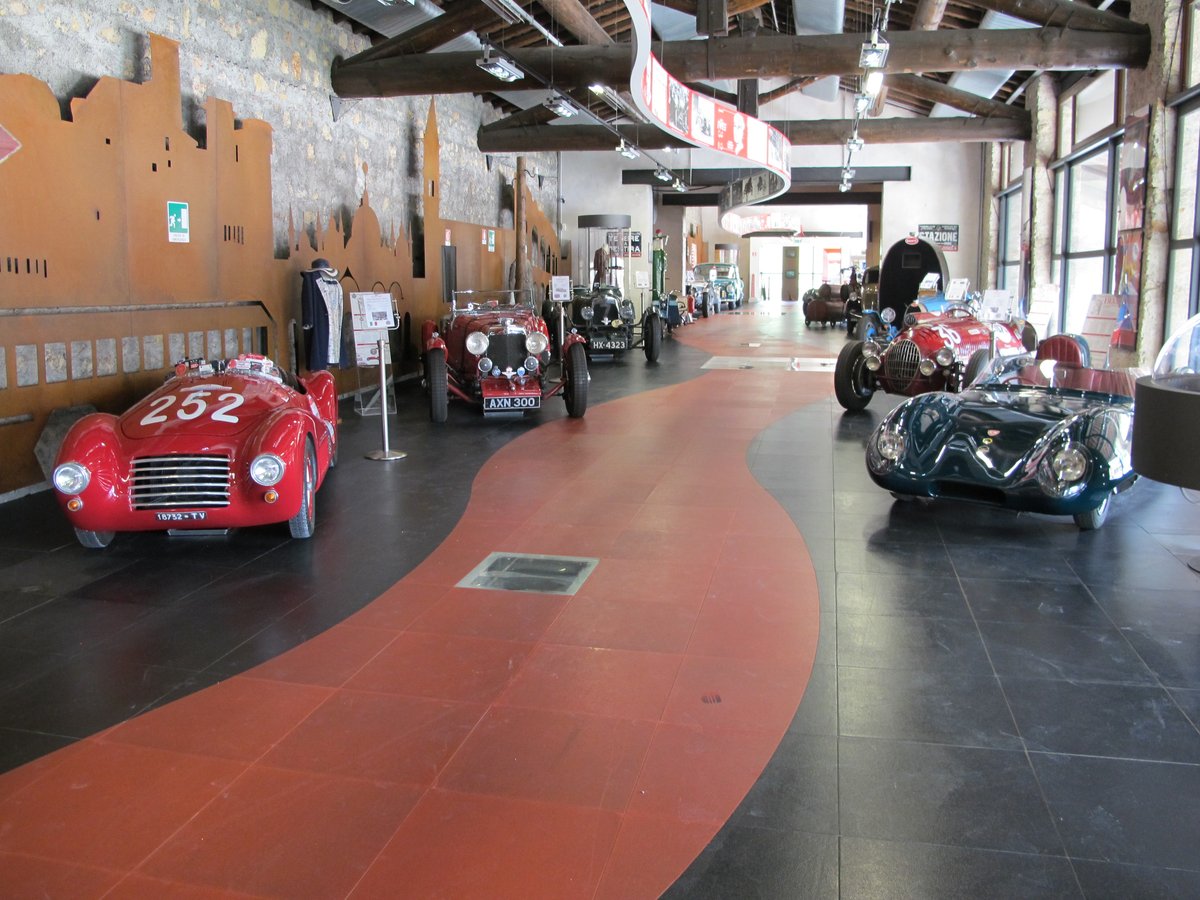 If in Brescia you want to breathe the legend of motor racing, the Mille Miglia Museum is a must-see. Inaugurated in 2004, it is housed in a former Benedictine monastery from 1008, a surprising blend of sacred and profane. Here the history of the famous race – which Enzo Ferrari called “the most beautiful in the world” – comes to life through over 20 vintage cars (Alfa Romeo, Jaguar, Mercedes-Benz, Maserati and many others) displayed in rotation. The route winds through nine chronological sections, from 1927 to 1957, and you are given a tablet with an audioguide to accompany you. There are also vintage films, photographs and memorabilia: you can almost hear the roar of the engines.
A gem: the Historical Archive with over 130,000 digitized documents, accessible online. And after the visit? Stop at the Taverna Mille Miglia for a taste of Brescian cuisine. Small note: from 2026 the museum will change its name due to a legal dispute with ACI (it will perhaps be called “Museo di Sant'Eufemia”), but the soul remains the same.
Opening hours: daily 10-18. Full ticket €10, reduced over 65 €8, under 10 free. Getting there is easy: bus 3, stop S. Eufemia.
Palazzo Broletto: History and Charm in the Heart of Brescia
- Piazza Paolo VI, Brescia (BS)
- Open in Google Maps
- View on Google Images
 If you pass through Piazza Paolo VI, you can't help but notice Palazzo Broletto, the medieval heart of Brescia. Today it houses municipal and provincial offices, but its history begins in the 12th century. The complex is a mix of eras: from the Torre del Popolo (53.7 meters tall) to the Loggia delle Grida, rebuilt in the 20th century. The inner courtyard is always open and connects the square to Via Mazzini: it's a pedestrian passage where you stop to look at the 18th-century fountain. Few know that here lies the Sala dei Cavalieri, with a cycle of frescoes 52 meters long, the longest secular-themed fresco in Italy. It dates back to the late 13th century and depicts scenes of city life. Too bad the interiors are only open during special events organized by FAI and Touring Club – I was lucky enough to participate in one of these tours and it was worth it. Outside, you can admire the brick facade of the Church of Sant'Agostino and architectural details like the Antelamic capitals. The palace has undergone changes over the centuries: in 1626 they added a classical-style wing, and the bombings of 1944 left their mark. As you walk, you'll notice tombstones and fragmentary frescoes. If you go in the evening, the courtyard is illuminated and creates a special atmosphere. All for free: entrance is free. For info on guided tours, check the Brescia municipality website.
Teatro Sociale: History and Rebirth
- Via Felice Cavallotti 20, Brescia (BS)
- https://www.centroteatralebresciano.it/
- Open in Google Maps
- View on Google Images
- +39 0302808600
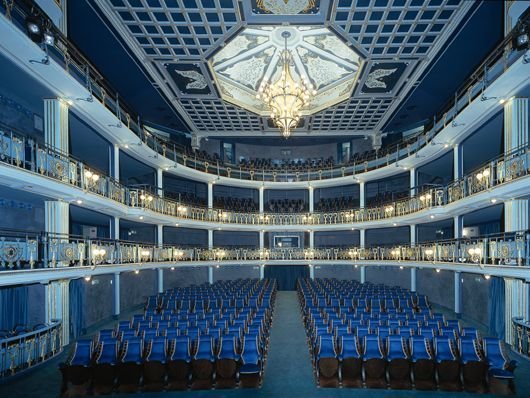 If you stroll along Via Felice Cavallotti, a stone's throw from Piazza Bruno Boni, you'll come across an elegant building that tells a beautiful story of rebirth: the Teatro Sociale. Born in 1851 as Teatro Guillaume, it was a wooden theater for equestrian shows. Then, in 1905, it was rebuilt in Liberty style, with reinforced concrete and refined decorations. For decades, operettas, cabaret, and concerts were held here, while the nearby Teatro Grande hosted opera. Then came abandonment until the 1980s. The restoration, lasting from 1988 to 1999, returned to the city a hall of about 600 seats, intimate and refined, with stalls and two tiers of galleries. Today, the Teatro Sociale is the home of the Teatro Stabile di Brescia, managed by CTB: a program of drama, dance, and music ranging from classics to contemporary works. The atmosphere is welcoming, the Liberty interiors well preserved. If you happen to be in town, check the schedule: you might find a show that suits you. Admission is paid and the theater is open only during events. It is accessible without architectural barriers. For info: tel. 030 2928617 or info@centroteatralebresciano.it.
Parco delle Cave: An Ex-Industrial Nature Oasis
- Brescia (BS)
- Open in Google Maps
- View on Google Images
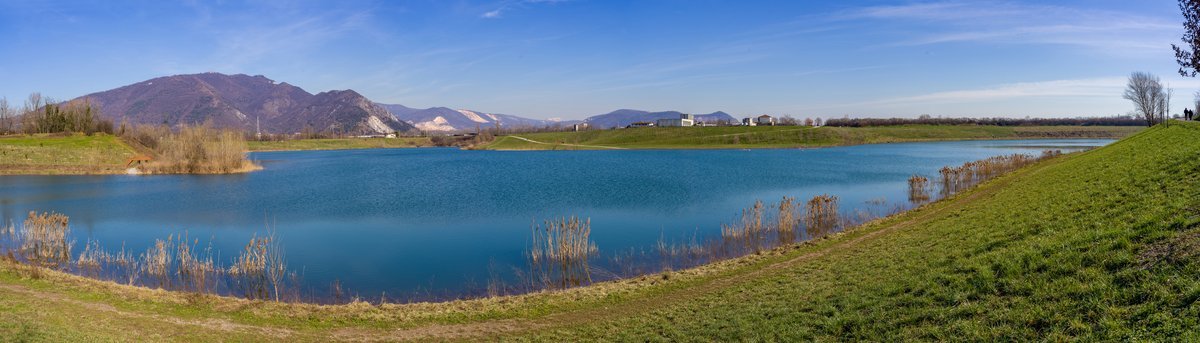 The Parco delle Cave is one of Brescia's greenest surprises, a 960-hectare area born from the reclamation of old sand and gravel quarries. Inaugurated in 2018, this local park of supra-municipal interest (PLIS) stretches across the southeastern part of the city, encompassing the neighborhoods of Buffalora, Sanpolino, and San Polo. Here, water has reclaimed its dominance: four groundwater-fed lakes – Canneto, Bose, Gerolotto, and Fuserino – occupy the former excavations, now surrounded by meadows, reed beds, and small woods. It's a place that surprises with its tranquility, even though it's just a stone's throw from the city center.
The cycling and walking paths wind for about 15 km, connecting all the lakes. The surface is compacted dirt, suitable for strollers and bicycles as well. But be warned: there are few shaded areas along the route, so in summer it's best to bring a hat and water. I visited on a May morning, and the sun was already beating down. Fortunately, each lake offers different spots: at Gerolotto there are birdwatching observation points, while at Fuserino a rowing school operates. The park is always open, free, and easily reached by metro (San Polino or Sant'Eufemia-Buffalora stops) or by bus line 9.
If you're looking for a different experience from the usual historic center, Parco delle Cave is the place to be. Don't expect benches or picnic tables: here you come to walk, run, watch birds, or simply enjoy the silence away from traffic. A true breath of fresh air for Brescia.
Monument to Moretto: A Dive into Brescian Art
- Piazza Moretto, Brescia (BS)
- Open in Google Maps
- View on Google Images
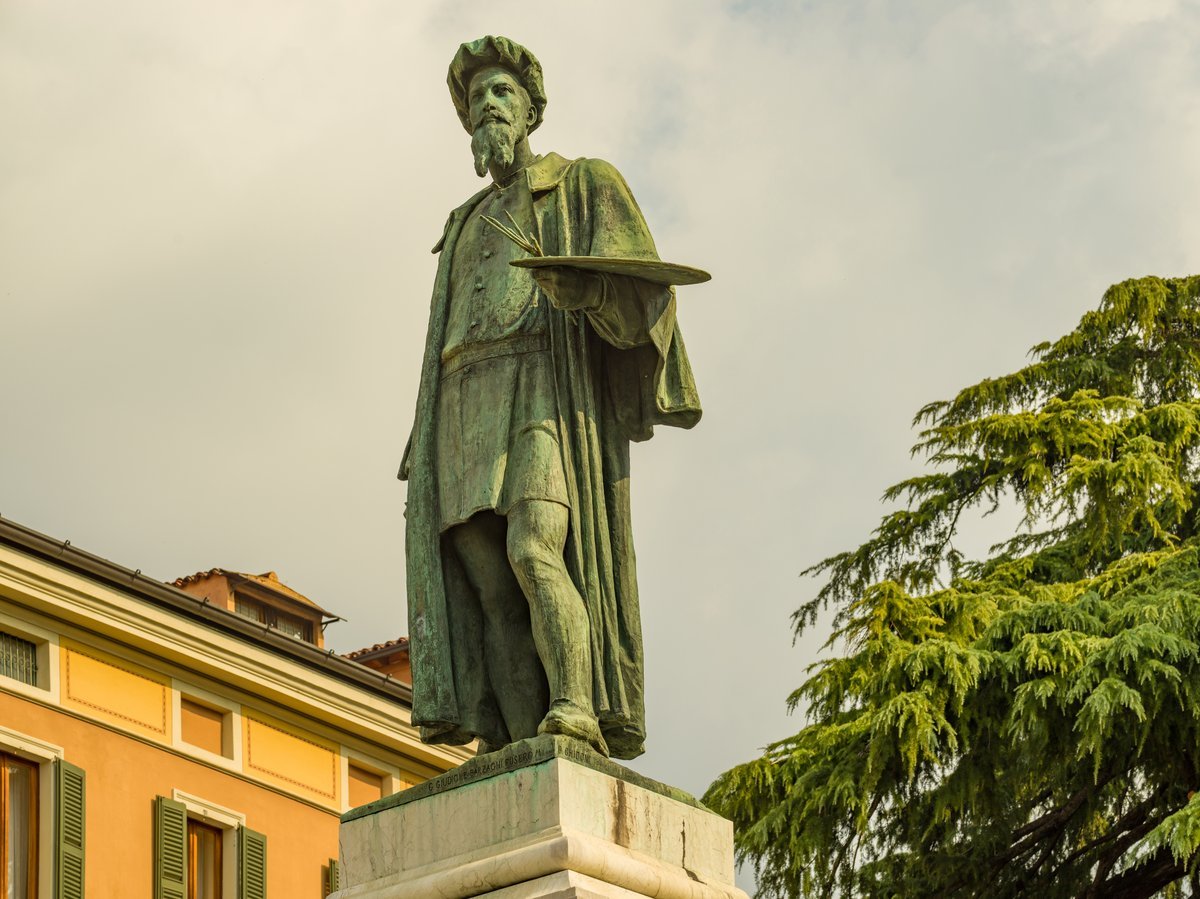 If you find yourself in Brescia, you can't miss the Monument to Moretto, which dominates the square of the same name. This tribute to the Renaissance painter Alessandro Bonvicino, known as Il Moretto, is a true sculptural gem. Created by Domenico Ghidoni and inaugurated on September 4, 1898, the monument tells a fascinating story. Ghidoni won a public competition in 1893, not without controversy, and the final work was unveiled in the presence of ministers Fortis and Finocchiaro Aprile. The statue depicts Moretto with palette and brushes, observing one of his works. But the most curious part is the base, designed by architect Antonio Tagliaferri: here sits the female figure of “mystical painting,” inspired by model Ninì Manziana Tagliaferri. Historian G. Panazza noted its lively realism and a touch of Pre-Raphaelitism. On the sides of the base are inscriptions recalling the painter and the legacy of G.B. Gigola that made the work possible. The square itself is named after the monument, and it's an ideal starting point to discover Moretto's works in the city. As you stroll, you'll notice how the statue catches the morning light, creating a special atmosphere. A traveler's tip: take a few minutes to observe the details – the modeling of the female figure's dress is astonishing. In short, a place that speaks of art, history, and a bit of healthy artistic rivalry.