
If you love medieval atmosphere, this one-day walking itinerary through Viterbo’s historic center is just for you. Starting from the majestic Palazzo dei Papi, a symbol of papal power in the 13th century, I’ll guide you through eight unmissable stops: from the Cathedral of San Lorenzo to the charming San Pellegrino district, from ancient fountains to hidden squares. Every step lets you breathe history among stone alleys, towers, and noble palaces. The itinerary is designed for those who want to immerse themselves in art and culture without rushing, with practical tips on opening hours and refreshment spots. Perfect for a day trip from Rome, medieval Viterbo will surprise you with the authenticity of its towns. Wear comfortable shoes and bring lots of curiosity: in eight stops you’ll experience the beating heart of one of Lazio’s most fascinating cities.
🗺️ Your trip at a glance
In short, this itinerary offers a full immersion in the history and medieval atmosphere of Viterbo, with curated stops and practical information. It’s the ideal choice for a day of discovery.
Ideal for those who love art, history, and authentic towns, without sacrificing a relaxed pace. Highlights: a carefully planned route starting from Palazzo dei Papi covering 8 iconic stops, with tips on how to best experience the city. Who it’s for: perfect for solo travelers, couples, or small groups wanting an intense cultural experience in one day.
Itinerary stops
Stop no. 1
Basilica of San Francesco alla Rocca
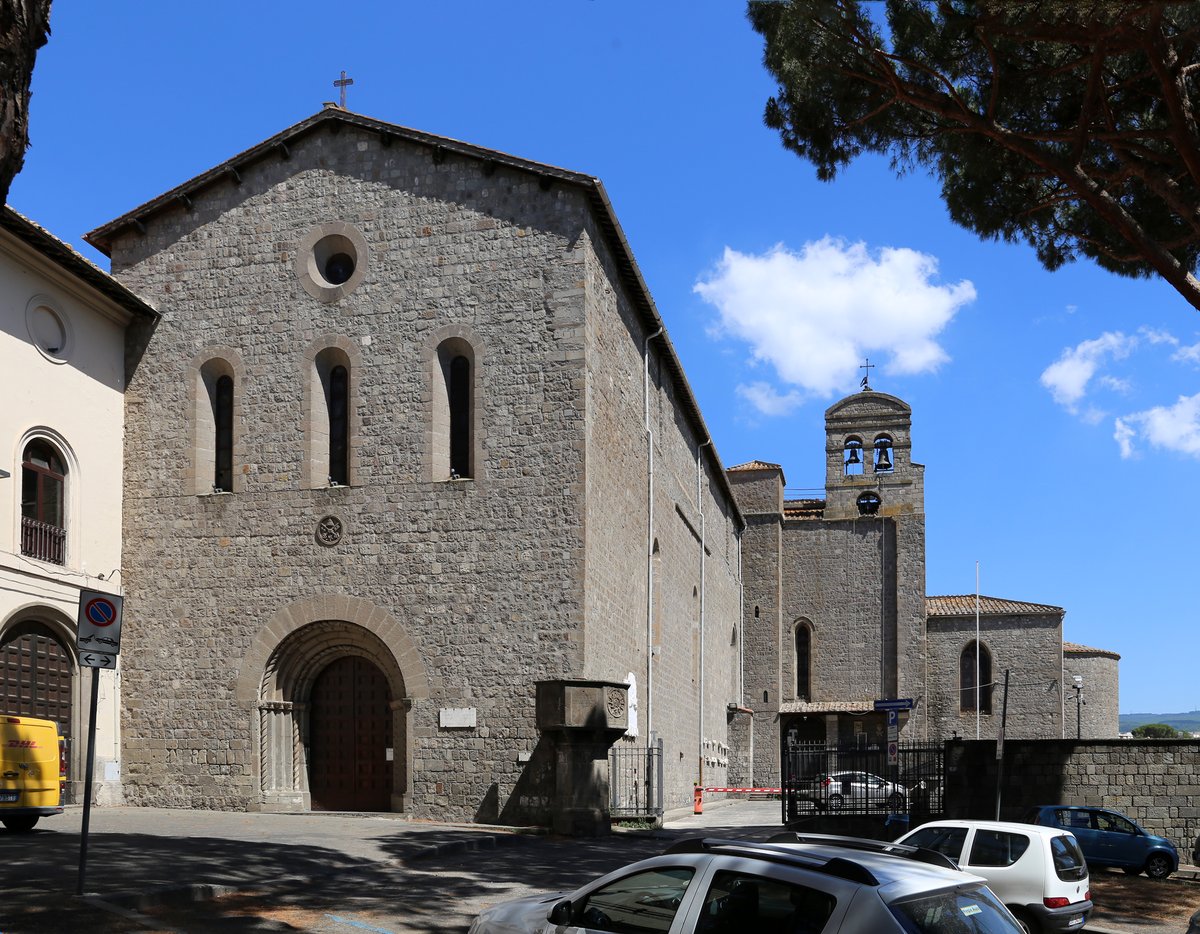 Start your journey into the medieval heart of Viterbo from here. The Basilica of San Francesco alla Rocca was built starting in 1237 on land donated by Pope Gregory IX, modeled on a smaller scale after the Basilica of Assisi. The style is Romanesque, with a Latin cross plan and a wooden truss roof. Beneath the pointed arches rest two popes: Clement IV and Adrian V, whose funerary monument is attributed to Arnolfo di Cambio. Outside, the hexagonal pulpit from 1428 recalls the sermons of St. Bernardine of Siena, while the sail bell tower houses a bell from 1259. Bombed in 1944 and rebuilt in 1953, the basilica lost its Baroque embellishments and returned to medieval simplicity. Inside, don’t miss the 1572 panel showing the city of Viterbo as seen from the southwest. Admission is free, open daily 9-12 and 15-18.
- Piazza della Rocca, Viterbo (VT)
- Open in Google Maps
- View on Google Images

You should go if…
Stop no. 2
Santa Maria della Verità
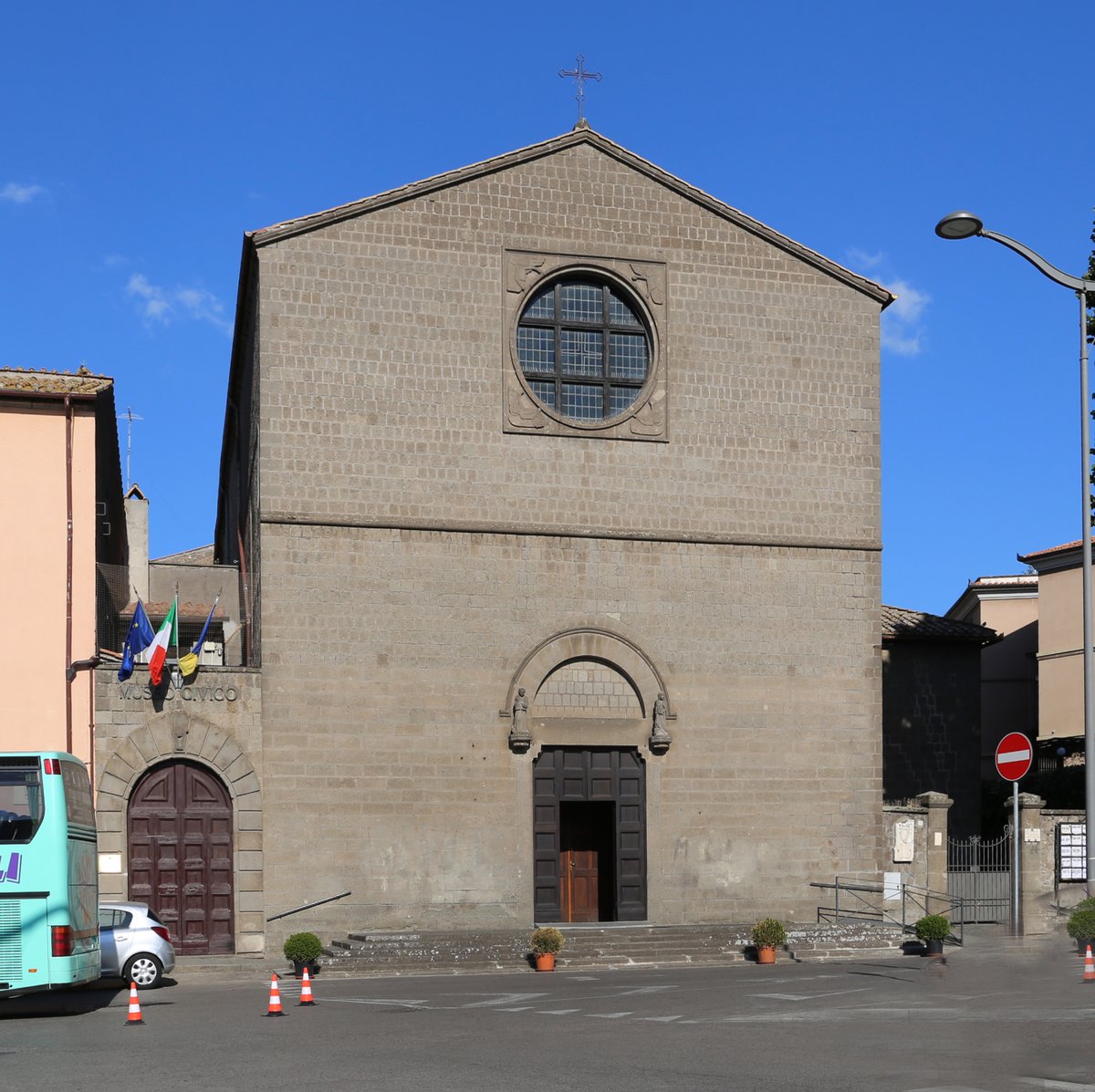 After the majestic departure from the Palazzo dei Papi, the second stop is a place that left me breathless: Santa Maria della Verità. The church, founded in the 12th century by the Premonstratensians, houses a true treasure: the Mazzatosta Chapel, frescoed by Lorenzo da Viterbo in 1469. The frescoes, depicting the life of the Madonna, were shattered by the bombings of 1944 and then patiently restored – 23,000 pieces reassembled! It is incredible to think that guilds of masons and weavers gathered here, and that in 1446 the Madonna is said to have appeared to three children. The atmosphere is almost intimate, despite the soaring single nave. Don’t miss the Gothic cloister of the convent, now home to the Museo Civico, with its elegant four-light windows. Admission is free, open daily from 8 am to 7 pm. A stop that combines art, history, and a touch of legend.
- Via Lorenzo da Viterbo, Viterbo (VT)
- Open in Google Maps
- View on Google Images
You should go if…
Stop no. 3
Fountain of Saint Thomas (or of Death)
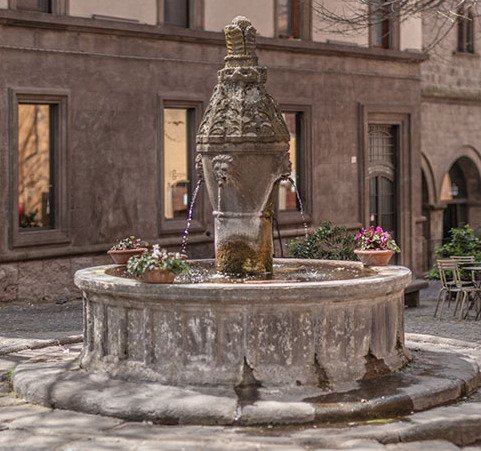 Third stop: we move to Piazza della Morte, where one of Viterbo’s oldest fountains stands, the Fountain of Death, originally dedicated to Saint Thomas. Built in the mid-13th century, it is a classic example of a spindle fountain. Water flows from lion heads and falls into a circular basin decorated with geometric motifs. At the top, an octagonal spire with acanthus leaves supports a pinecone, a symbol of Viterbo that here recalls burial. The name ‘of Death’ came in the 16th century, when the nearby church housed the Confraternity of Prayer and Death, dedicated to burying abandoned dead. Today the square is a quiet corner between the medieval district of San Pellegrino and the Cathedral. A stop that combines history and legend, ideal for immersing yourself in the medieval atmosphere of Viterbo.
- Piazza della Morte, Viterbo (VT)
- Open in Google Maps
- View on Google Images
You should go if…
Stop no. 4
Santa Maria del Suffragio
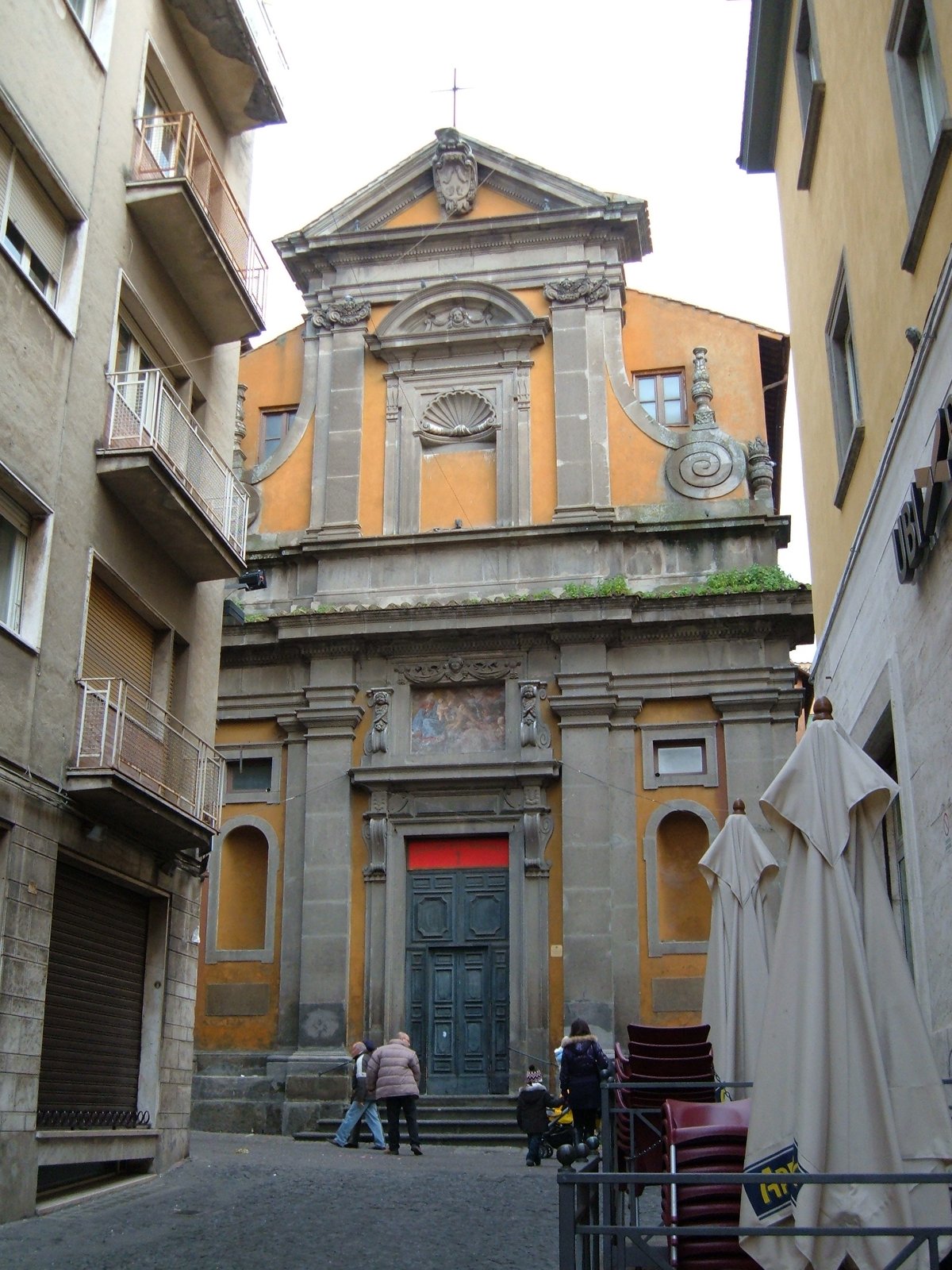 Continuing along Corso Italia, you come across the Church of Santa Maria del Suffragio. Originally built as San Quirico in the 12th century, it passed to the confraternity that gives it its current name in 1618. The Baroque facade, dominated by the coat of arms of Cardinal Brancaccio, features a deteriorated fresco of the Madonna with the Souls of Purgatory. Inside, a single nave with four side altars. The ceiling is hidden by a large canvas of God the Father in glory, while the raised presbytery houses a 1730 fresco by Luigi Vanvitelli depicting Habakkuk and Daniel. Not to be missed is the Baptism of Christ by Anton Angelo Bonifazi (1630), which ended up on a stamp of the Order of Malta. The organ from 1777 is still functional. A little-known gem, perfect for a stop between history and art, restored in 2006.
- Corso Italia, Viterbo (VT)
- Open in Google Maps
- View on Google Images
You should go if…
Stop no. 5
National Etruscan Museum Rocca Albornoz: A Dive into Etruscan Civilization
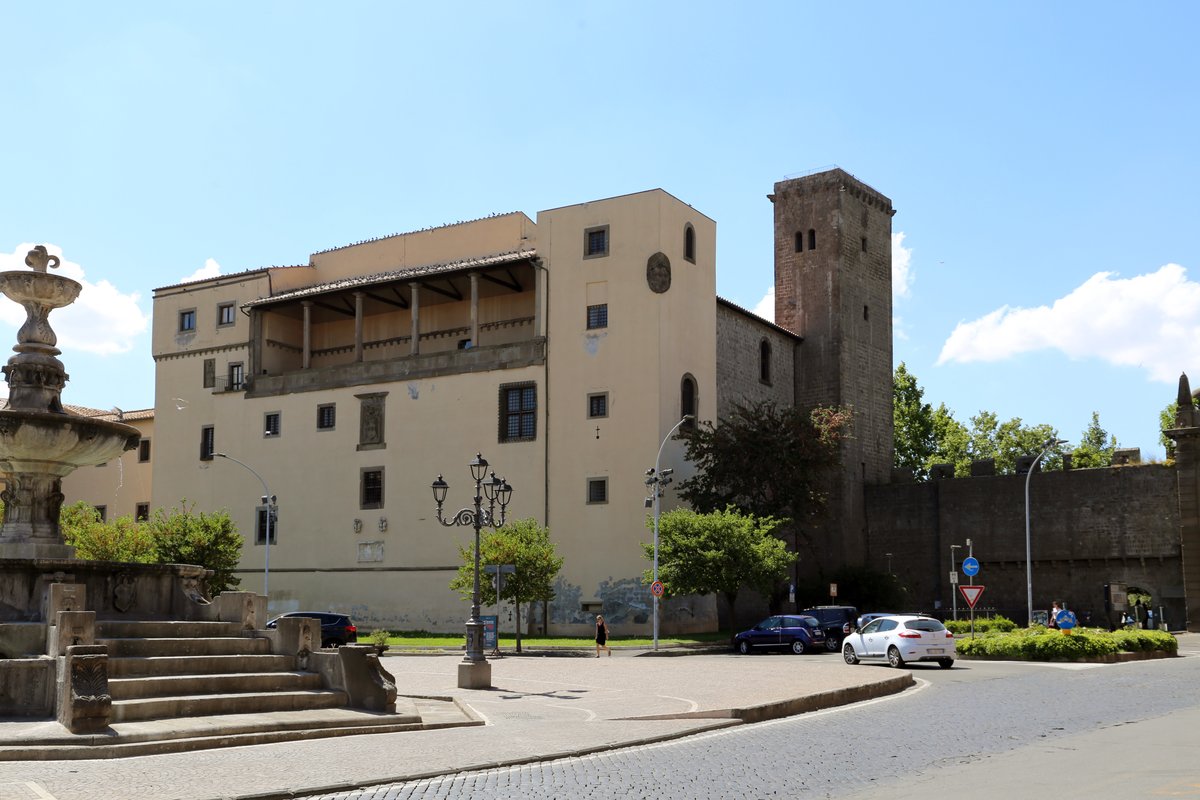 After the Baroque church, we climb up to the Rocca Albornoz, which dominates the square. This medieval fortress, commissioned by Cardinal Albornoz in 1354, houses the National Etruscan Museum, opened in 1986. Inside, the courtyard and fountain bear the signature of Bramante, commissioned by Pope Julius II. On the ground floor, you’ll find life-size reconstructions of Etruscan houses from Acquarossa, with original terracottas from the 7th-6th centuries BC. On the first floor, the cycle of Muses from the theater of Ferento and the mosaic with Etruscan inscription from Musarna stand out. The highlight? The Tomb of the Chariot from Ischia di Castro: a finely crafted bronze chariot that belonged to a high-ranking woman. The museum is accessible, open from 8:30 AM to 7:30 PM (closed on Mondays). Full ticket €7. An unmissable place for those wanting to understand Etruscan life.
- Piazza della Rocca 21/b, Viterbo (VT)
- https://www.polomusealelazio.beniculturali.it/index.php?it/174/museo-nazionale-etrusco-rocca-albornoz
- Open in Google Maps
- View on Google Images
You should go if…
Stop no. 6
Villa Lante and Its Enchanted Gardens
 After leaving Rocca Albornoz, we move to Bagnaia, a few kilometers from Viterbo’s center, to visit Villa Lante. Here, Cardinal Gianfrancesco Gambara wanted to create a summer residence that was also a masterpiece of architecture and nature. The project, attributed to Jacopo Barozzi da Vignola, unfolds on terraces connected by a stunning water system. Two twin villas, Gambara and Montalto, face each other in the boxwood parterre, while in the center the Fountain of the Four Moors, a work by Giambologna, dominates the scene. Climbing up, you encounter the Cardinal’s Table, a stone table with running water to cool food and drinks, and then the Fountain of the Flood, with water games that amaze visitors. The garden is a succession of fountains, grottoes, and statues, immersed in a forest of centuries-old holm oaks. Don’t miss the water chain shaped like a crayfish, referencing the cardinal’s coat of arms. Villa Lante was voted Italy’s Most Beautiful Park in 2011. Today, with a reduced ticket of €2 due to ongoing restorations (until 2026), it’s even more accessible. Open Tuesday to Sunday, with hours varying by season – check the official website for updated times.
- Viterbo (VT)
- Open in Google Maps
- View on Google Images
You should go if…
Stop no. 7
San Martino al Cimino Abbey
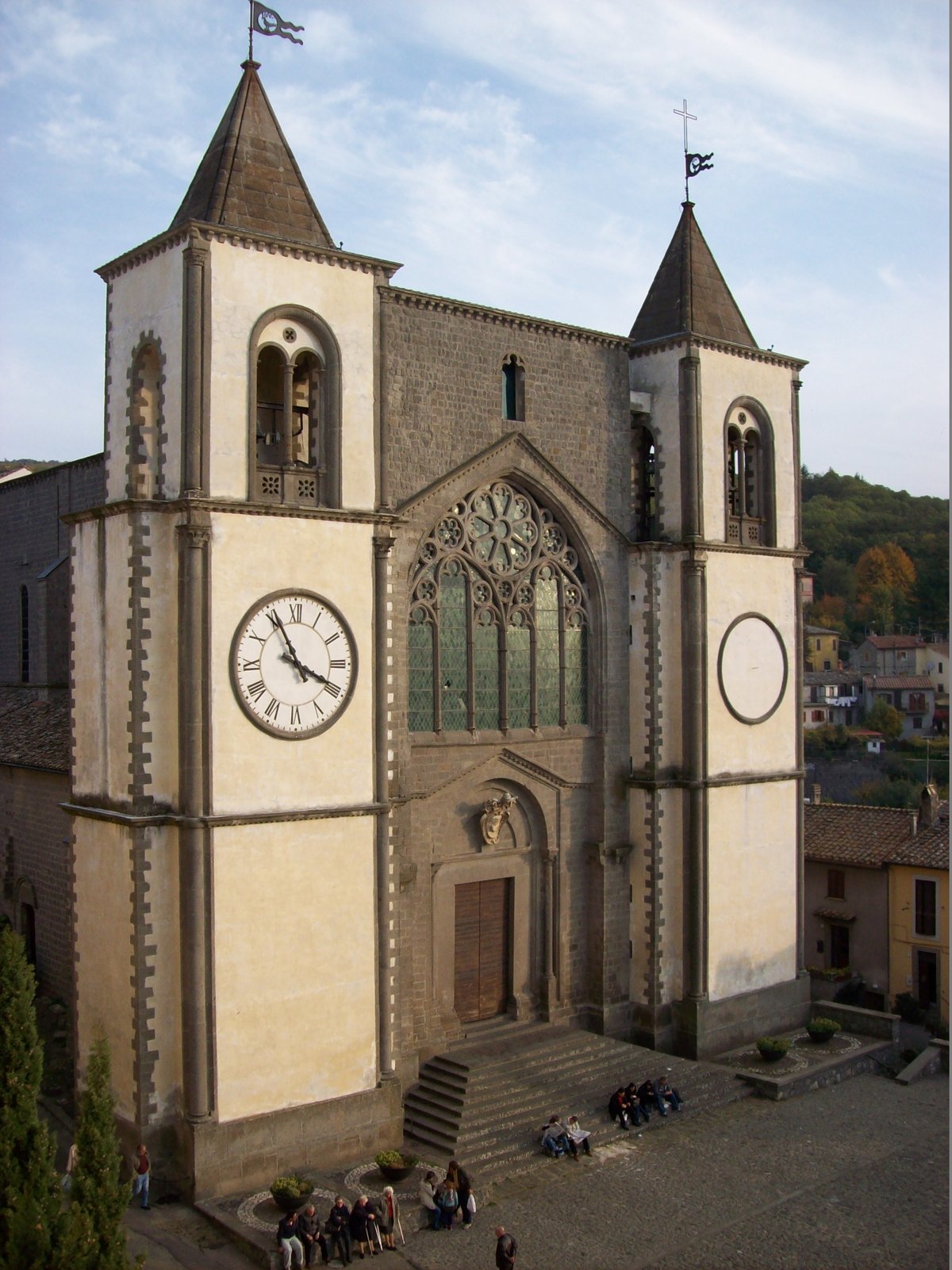 After the wonder of Villa Lante, you reach San Martino al Cimino, a village that guards an abbey of unique charm. Founded in the 13th century by the Cistercians of Pontigny and consecrated in 1225, the church retains its austere Gothic structure, but in the mid-1600s it was transformed by Donna Olimpia Maidalchini, sister-in-law of Pope Innocent X. She added two imposing 17th-century bell towers framing the façade and rebuilt part of the monastery as a noble palace. Entering, you breathe a solemn atmosphere: light filters through the rose window and single-lancet windows, illuminating the gray stone. Not to be missed are the chapter house, with its black and white marble floor designed by Francesco Borromini, and the scriptorium, which now houses the Abbot’s Museum, with sacred vestments and the Jubilee Banner by Mattia Preti. Admission is free, but it’s best to respect the times of services. Strolling through the village, you’ll notice the row houses commissioned by Olimpia, an early urban planning experiment.
- Piazza Nazionale, Viterbo (VT)
- Open in Google Maps
- View on Google Images
You should go if…
Stop no. 8
Ferento: An Ancient Roman City with Theater and Baths
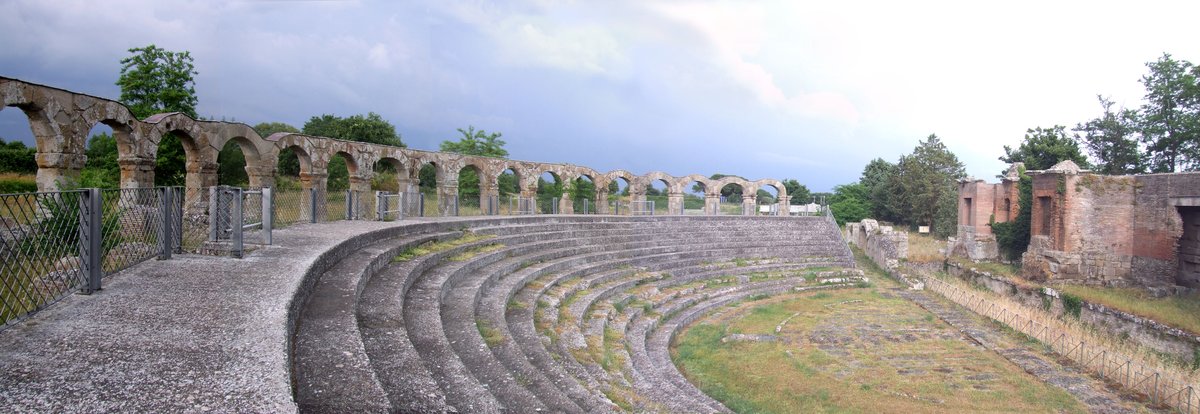 The last stop of the day is Ferento, an archaeological site that surprises with its vastness and charm. Founded in the 3rd century BC as a Roman municipality, Ferento reached its peak splendor in the Augustan age, so much so that it was called a ‘most splendid city’. Here were born Emperor Otho and Flavia Domitilla, wife of Vespasian. The best-preserved monument is the Roman theater, dating back to the 1st century AD, with a cavea 60 meters in diameter that could hold up to 3,000 spectators. Even today, during the summer, the theater hosts shows and concerts. Walking along the decumanus maximus, the paved road, you encounter the remains of the baths with black-and-white mosaics, taverns, and an atrium house. Not to be missed: the statues of the Muses and the Pothos by Skopas, now in the National Museum of Viterbo. The area is managed by the Archeotuscia Association, entry is by free donation. A place that offers emotions between history and nature.
- Strada Ferento, Viterbo (VT)
- Open in Google Maps
- View on Google Images
You should go if…


