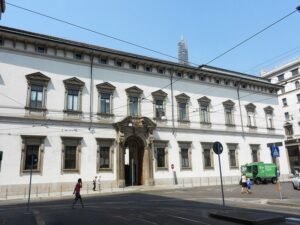
Palazzo Clerici: Tiepolo in the Heart of Milan
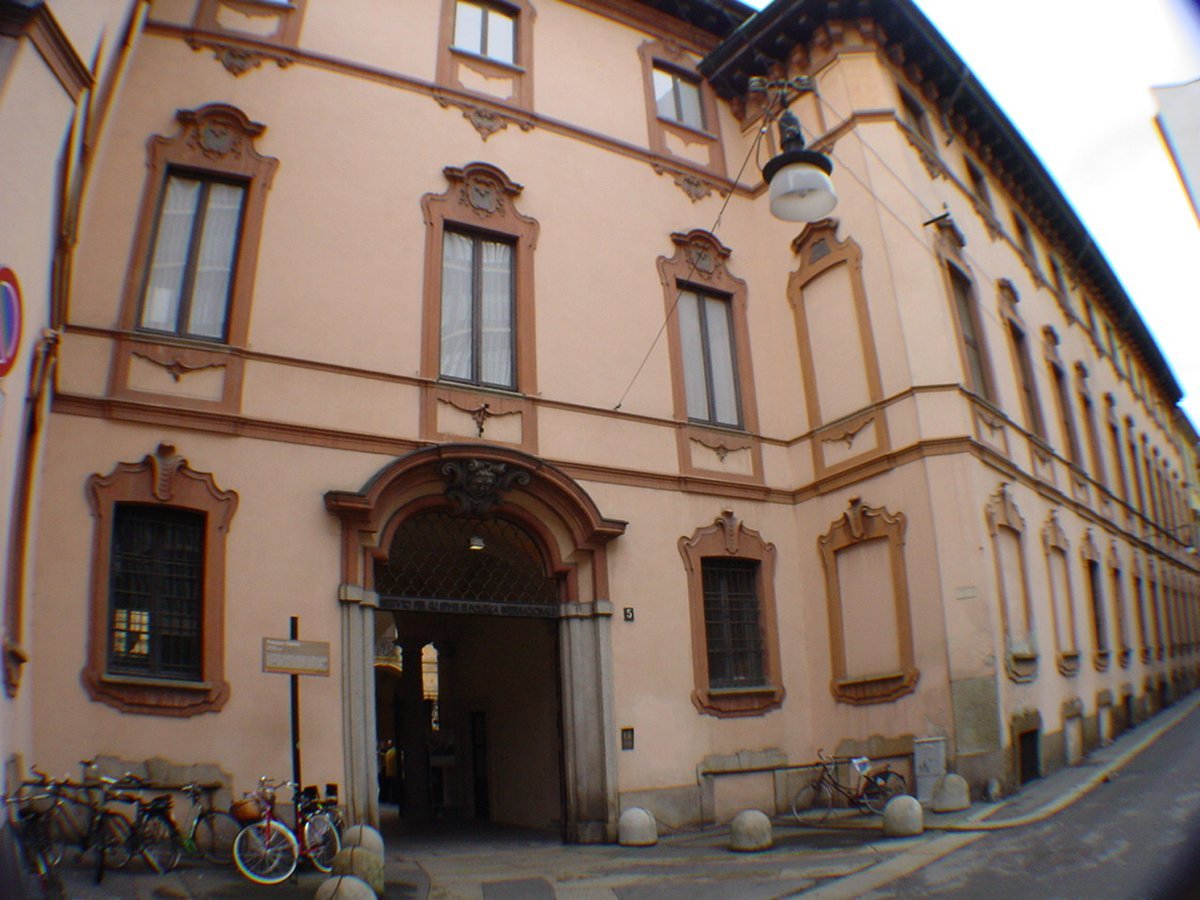
Entering Palazzo Clerici is like opening any door in the chaos of Milan and finding yourself in another era. The facade on Via Clerici is austere, almost hidden, but you only need to climb to the piano nobile to understand why this is one of the most lavish residences of 18th-century Milan. The highlight is the Tiepolo Gallery: the frescoed ceiling sits above you like an open sky, with the Sun’s chariot drawn by horses among clouds and deities. There’s no crowd, no ticket. Just a free guided tour, by reservation, that in half an hour gives you back the feel of a princely court. It’s an intimate, almost private experience, a stone’s throw from the Duomo. If you love art without mass tours, here you feel like a privileged guest.
Historical Background
The palace stands on a property of the Visconti family, purchased in the seventeenth century by the Clerici family, silk merchants originally from Lake Como. It was Giorgio Antonio Clerici who transformed it into a princely residence and, in 1741, commissioned Giambattista Tiepolo to fresco the gallery. Here, in 1771, the wedding between Archduke Ferdinand of Austria and Maria Beatrice d’Este was celebrated, with a young Mozart in attendance. After the court moved to Palazzo Reale in 1778, the building was rented out and divided. Sold to the State in 1813, it became the seat of the Court of Appeal in 1862 and has housed ISPI since 1942.
- 1653: The Clerici purchase the property
- 1741: Tiepolo paints the Gallery
- 1771: Archducal wedding
- 1813: Sale to the State
- 1942: ISPI headquarters
The Tiepolo Gallery: A Breathtaking Ceiling
It is the heart of the palace, a hall 22 meters long and just over 5 meters wide. Tiepolo’s fresco depicts the race of the Sun’s chariot among the Olympian deities, with allegories of the four continents and a trompe-l’œil that seems to open the ceiling toward the sky. Looking at it, you can’t help but wonder how a painter could work on such a large surface. Below, the walls are covered with Flemish tapestries by Jan Leyniers II and a white-and-gold boiserie by Giuseppe Cavanna, featuring scenes from Jerusalem Delivered. The result is a harmonious ensemble where painting, fabric, and wood converse without overpowering one another. It is not a museum: it is a living room, and the light coming in from the windows continually changes the colors.
Courtyard of Honour, Grand Staircase, and State Rooms
Before heading upstairs, pause in the courtyard of honour: paired Doric columns and vaulted porticoes greet you with understated elegance. The granite staircase, with its four flights, is unique in Milan for the female statues in oriental dress that decorate it. Ascending, you arrive at the two-storey-high Ballroom, complete with musicians’ galleries and a chiaroscuro-painted ceiling. Just beyond, the Picture Gallery once housed a collection of 110 paintings—now dispersed—featuring works by Guido Reni, Rubens, and Van Dyck. Every room tells a piece of history: Maria Theresa’s boudoir, the archdukes’ bedroom, the gilded mirrors. It’s an unexpected Rococo journey, waiting to be explored at a leisurely pace.
Why Visit It
First: seeing a Tiepolo masterpiece in person in a room with few visitors, without barriers or glass, is a privilege that few Milanese palaces offer. Second: visits are free with reservation, a rare opportunity in a city where museums cost more and more. Third: ISPI’s headquarters is a living place, not a cold monument: entering here means discovering a piece of Milan that continues to be used, with careful restorations and special openings. If you want to amaze your companions with something different from the usual Duomo-Scala tour, this is the right place. Booking is mandatory, but it’s truly worth it.
When to go
The best time is early morning, before the city’s hustle and bustle: the light enters at an angle through the windows, igniting the golden tones of the fresco. The early afternoon can also be perfect, especially on weekdays, when visits are more infrequent. Avoid weekends with special events like Fuorisalone if you’re seeking silence. In winter, the halls are more intimate, with low light creating an almost theatrical atmosphere; in summer, the palace’s coolness is a refuge from the chaos. But there’s only one real rule: check the ISPI calendar and book on the day the visit is available. Beauty waits for no one, and neither does entry here.
In the Vicinity
After your visit, you’re a stone’s throw from Brera, with its art gallery and the constant bustle of artists and students – perfect for a coffee or to catch another masterpiece if you have time. Alternatively, head towards the Teatro alla Scala and the Galleria Vittorio Emanuele II, which are a short walk away: you can pair the visit with some window-shopping or an aperitif near Piazza Cordusio. If you prefer a quieter route, the palace is just a few minutes from the Duomo, but it’s easy to forget to turn the corner and discover these quiet little streets. A walk to Via della Spiga, in the fashion district, rounds off the day.