Introduction
Corfinium Archaeological Area: Italic capital and mosaics. In Corfinio, the ancient capital of the Peligni reveals mosaic domus, temples, and a sanctuary in an archaeological park steeped in Abruzzo’s history. It’s one of those places where you feel like you’re walking through a history book, but without filters. You arrive, park, and after a few steps you’re among Roman streets with gravel sidewalks, column bases, and thresholds of ancient shops. The beauty is that not everything is reconstructed: real remains, with grass growing between the stones. The most exciting part? The domus with its polychrome mosaics, still in place. No crowds, no noisy ticket office; just silence, broken only by the wind. A place I recommend to anyone who loves authentic Abruzzo.
Historical Notes
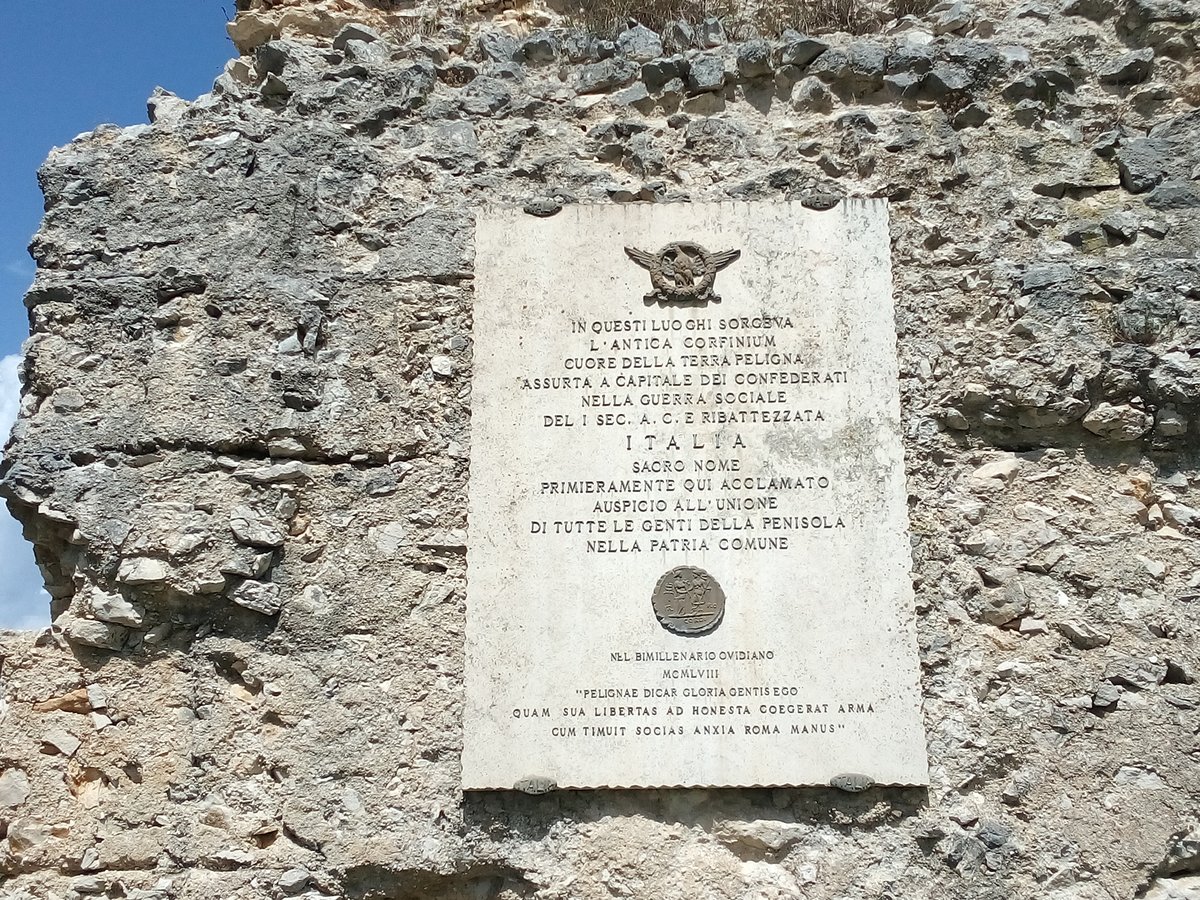
Corfinium was the capital of the Peligni, an Italic people who controlled the Aterno valley. In 304 BC it came under Rome’s influence, but it was during the Social War (91–88 BC) that it became the heart of the revolt: here the Italic allies elected it their capital, minting the first coin bearing the word ‘Italia’. After the defeat, its name changed to Valva and the city experienced a long Roman phase, with a theater, baths, and rich domus. Sacked during the Gothic War and by the Saracens, it re-emerged in the medieval era as Pentima, then Corfinio. Modern excavations, begun in 1985 thanks to a methane pipeline, have brought to light the Piano San Giacomo quarter and the sanctuary.
- 1st millennium BC: capital of the Peligni.
- 304 BC: alliance with Rome.
- 91–88 BC: capital of the Italic League, coin ‘Italia’.
- 49 BC: Caesar arrives, episode of ‘clemency’.
- 6th–10th century: sackings and decline.
- 1985: excavations of the archaeological park.
Piano San Giacomo: mosaics, workshops and neighborhood life
Here stood the imperial city: a true, densely populated neighborhood, with gravel-paved streets, gravel sidewalks, and stone curbs. Along the porticoed axis of via Popedio, the urban continuation of the via Valeria, tabernae and private houses opened up. Then comes the surprise: a domus with polychrome mosaics and inlays of precious marbles. Not far away, the remains of a bath complex. What struck me? The squatter occupations: in late antiquity, some wooden sheds had invaded the street, a sign that the city was alive. Quality terra sigillata pottery was also produced here, as the molds found demonstrate. You walk among foundations, porticoes, and thresholds, and with a little imagination you can see the bustle of carts and workshops again.
Italic Temple and Sanctuary of Sant’Ippolito
Two souls, two places. The Italic temple, dating to the 1st century BC, is a block in opus incertum (about 23×16 meters) with a cella preserving a black-and-white mosaic floor; next to it, a smaller temple in opus reticulatum. Not far away, a 4th-century BC necropolis with tombs dug into the gravel. The other pole is the Sanctuary of Sant’Ippolito, born around a thermal spring already exploited in ancient times. The ritual basins, the marble altar, and the ex votos (statuettes of Hercules, anatomical parts, cattle) tell of a cult linked to water and pastoralism. Over time, Christians and pagans left the same signs of devotion here: a rare religious palimpsest.
Why Visit It
Because it is one of the rare cases in Abruzzo where you can see a Roman city ‘in situ’, with its floor mosaics still in place. Because the park is visited by reservation and often you have it almost all to yourself. And because, after the walk, the Antonio De Nino Civic Archaeological Museum completes the picture, with the ‘Italia’ coin and the cameo of Claudius.
When to go
If I can, I choose the late afternoon, when the raking light brings out the colors of the mosaics and the park’s silence grows deeper. On a mid-season day, with the grass still fresh around the sanctuary, it’s the best time. I would avoid the central summer hours, when the sun is strong on the gravel.
In the Surroundings
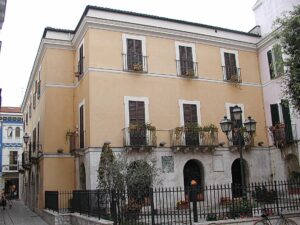
In the surroundings, the Concattedrale di San Pelino is worth a visit, a Romanesque gem of Abruzzo. And, for those who want to stay in the same atmosphere, the village of Corfinio with its alleys and Roman fragments. If you have time, the Sirente-Velino Regional Natural Park is there, with its trails.