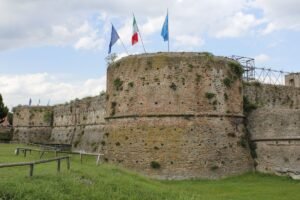
Castello di Scipione: The Salt Manor of Parma

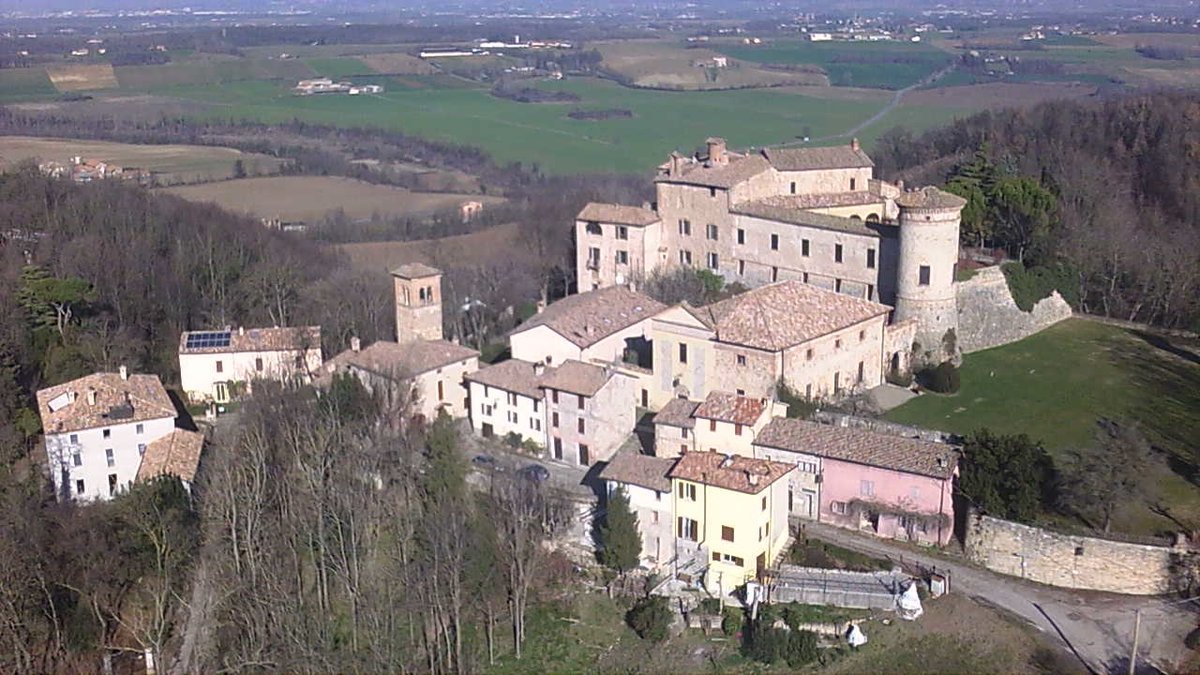
The Castello di Scipione, in Salsomaggiore Terme (PR), is the oldest castle in the province of Parma, built before 1025 by the Pallavicino family. Still inhabited by their heirs, it overlooks the Stirone Park and preserves 15th-century prisons, sloping walls, coffered ceilings, and frescoes. Guided tours from March to November: full price €10, reduced €9, booking recommended.

Salt and history: a stronghold on the salt route, a cylindrical tower from 1447, and intact prisons.
Interiors: the Devil’s Lounge with a secret door, an imperial table, a library.
Exteriors: court of honor, garden, 17th-century loggia, and views over the hills.
Services: two charming suites, a traditional restaurant, events and weddings; pet-friendly.


Events nearby

Copertina itinerario Castello di Scipione: The Salt Manor of Parma
Castello di Scipione, the oldest manor in the province of Parma, overlooks the Stirone Park: salt, frescoes, a 17th-century loggia, and guided tours from March to November.

Good to know


Castello di Scipione, the manor you can see from afar

Castello di Scipione reaches you before you do: you see it from a distance, planted on a hilltop with its crenellated walls and the double-headed eagle on its coat of arms, while the Po Valley stretches out below like a carpet. We are in Scipione Castello, a hamlet of Salsomaggiore Terme, in the province of Parma, and this is considered the oldest castle in the province: the first records date back to 1025. It is not a postcard ruin, because it is still inhabited by the descendants of the Pallavicino marquises, the family that built it. The medieval village wrapped around it, the view over the Stirone Park, the 17th-century loggia that opens onto the hills: everything here speaks of salt, ancient wars and a nobility that never really went away.

Historical Background

The manor enters history in 1025, when Adalberto Pallavicino, invested by Emperor Conrad the Salic, built it to control the Stirone valley. Legend has it that the name comes from a Roman villa belonging to the family of Publius Cornelius Scipio. In 1145 the Commune of Piacenza granted the fief to Oberto I Pallavicino; in 1267 attacks by the Piacenzans arrived, and between 1403 and 1407 those of the Guelph Rossi, Da Correggio and Terzi families. In 1407 Ottobuono de’ Terzi captured the castle, which Rolando Pallavicino regained by ceding Borgo San Donnino, present-day Fidenza. In 1447 the brothers Lodovico and Giovanni rebuilt it with a cylindrical tower, battered walls and dungeons. In the 17th century the loggia was added, and in 2011 the north-west wing was restored.

  • 1025 – founded by the will of Adalberto Pallavicino
  • 1145 – investiture of Oberto I Pallavicino by Piacenza
  • 1407 – capture by Ottobuono de’ Terzi
  • 1447 – reconstruction with cylindrical tower and battered walls
  • 1969 – purchase by Count von Holstein for Maria Luisa Pallavicino
  • 2011 – restoration of the north-west wing

The Salt Castle: Where Salt Was Power

The nickname isn’t just a flourish: here salt mattered more than the walls. The Pallavicino family controlled the salt extraction wells of the area, and the castle, together with Vigoleno, Bargone, and Contignaco, defended the salt route and the Pallavicino State, a fief of the Holy Roman Empire. The village of Scipione probably grew as part of this defensive system. Curiously, the circle closes: the same saline-iodine waters from which salt was once extracted are today the raw material for the thermal spa tradition of Salsomaggiore. On the structure one can recognize the Ghibelline battlements and the double-headed eagle, while the entrance to the keep still preserves its drawbridge. A striking detail: because it is still inhabited, it is not a stage set but a real home, with furnishings, ceilings, and doors that continue to live.

Inside the Castle: The Devil’s Salon and the Frescoed Rooms

The guided tour is a plunge into five centuries of decoration. You enter from the courtyard of honour, climb the Staircase of the Horses and pass through the Gallery of the Ancestors. Then the blue drawing room, the room where the imperial table is laid with the Pallavicino family service from the 18th century, the red dining room, the yellow salon and the library. The highlight everyone waits for is the Devil’s Salon: 16th- and 18th-century frescoes and a small secret door that opens onto a spiral staircase, an ancient escape route. Don’t miss the 15th-century carved wooden coffered ceiling with the heraldic devices of the Pallavicino and the Santa Barbara corridor. It ends on the 17th-century loggia, with views stretching over the hills.

The Village and the Stirone Park

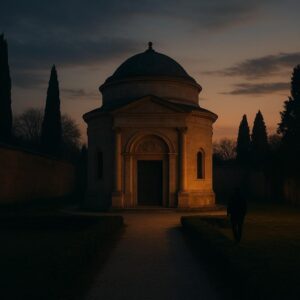
The castle is the heart of Scipione Castello, a hilltop village well worth a stroll. Here you’ll find the Church of San Silvestro, rebuilt in Neoclassical style between 1787 and 1790, and the 1887 cemetery, where Demetrio Stratos rests—the voice of Area and a pioneer of vocal research, who passed away in 1979; the ‘Scipione Castello 56’ club holds a summer memorial in his honour. All around stretches the Stirone and Piacenziano Regional Park, an area of great geological interest, with the stream that has carved through fossil layers and shells: a landscape you wouldn’t expect just a stone’s throw from the plain. In the village there is also a late nineteenth-century building originally built as a guesthouse for the marquesses’ hunting parties.

Why visit it

Few castles in Emilia-Romagna can claim to still be inhabited by the descendants of those who built them: this one can, and that’s the difference between a museum and a lived-in home. Second, visits are guided only, so you truly step into history without crowds and without labels to read on your own. Third, you can stay overnight: the castle offers two charming suites with independent entrances and panoramic views, and there is a restaurant serving local specialties. It is also pet-friendly, dogs enter free on a leash, and concerts, receptions and weddings are held in the halls. If you are in the area for the Salsomaggiore thermal baths, this is the cultural detour that pays off.

When to Go

I’d say a spring or early autumn afternoon, when the low light sets the Stirone hills alight and the 17th-century loggia becomes the perfect spot for a photo. The castle is open from March to November, and on sunny days the courtyard of honour and the private garden are at their best; in March, with Saturday tours, there are fewer people and it’s easier to chat with the guide. High summer is lovely but muggy on the plain: better to go in the late afternoon, when there’s a breeze on the terrace. If you’re after the most romantic atmosphere, aim for an off-season Sunday morning: the frescoed rooms, with light streaming through the windows, take on a completely different character.

Nearby

Close by is Salsomaggiore Terme, the town of salt and spa waters: after the castle, a stop at its salt-iodine springs closes the loop begun with the Salt Road. Still on the nature theme, Stirone and Piacenziano Park can be explored on foot among badlands, fossils, and easy trails, also great with children. If you have an extra half-day, Fidenza, with its Romanesque Cathedral and Antelami sculptures, is the most natural cultural stop, on the same historic route that linked the castle to Borgo San Donnino. And for those who love fortified villages, the Parma hills are full of them: choose at your leisure.

Itineraries nearby


💡 Did You Know…?

Legend has it that the spirits of Giangerolamo Pallavicino, murdered by his cousins, and of his wife Giacoma, founder of a charitable order, roam the castle. In the Devil’s Lounge, a secret door opens onto a spiral staircase, an ancient escape route. In the village, the cemetery preserves the tomb of Demetrio Stratos, to whom the summer memorial is dedicated.