Castelguelfo Castle: A Medieval Manor in Noceto

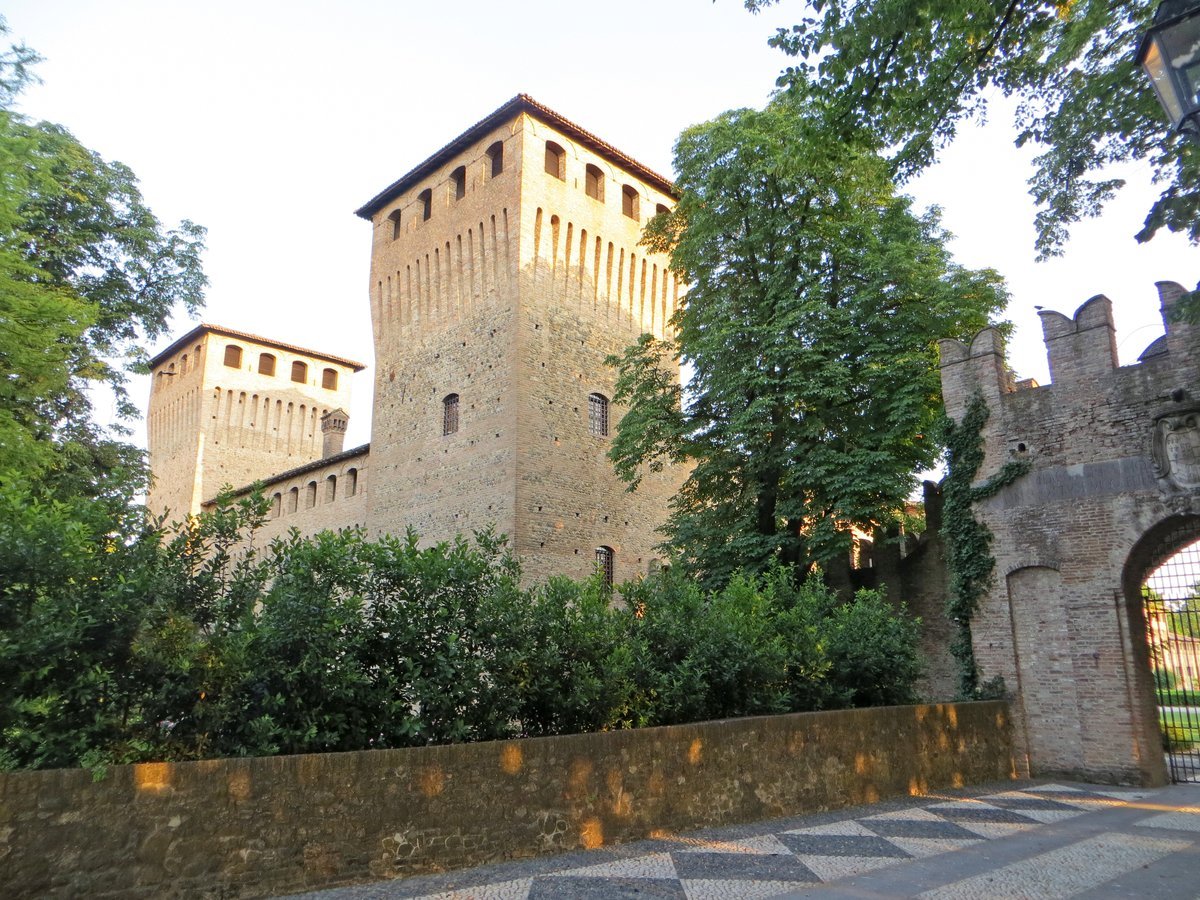
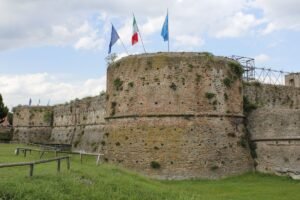
The Castelguelfo Castle is a medieval manor along the Via Emilia, in the hamlet of Castelguelfo in Noceto, in the province of Parma. Its origins date to before the 12th century, as a guard post at the ford over the Taro; today its crenellated towers and park with a lake are striking. It is privately owned by the Rovagnati family and is not open for interior visits: it can be seen from the outside along the Via Emilia between Parma and Fidenza.
History: Sinibaldo Tower, conquest by the Rossi family, Castrum Guelphum in 1407.
Architecture: square plan, two towers to the north, battlements and corbels.
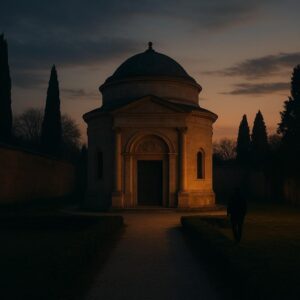
Estate: park with a small lake, stables, mill and 19th-century oratory.
Visit: exterior only, private property, facing the Via Emilia.


Events nearby

Copertina itinerario Castelguelfo Castle: A Medieval Manor in Noceto
A medieval manor along the Via Emilia in Castelguelfo, a hamlet of Noceto: origins before the 12th century, crenellated towers and a park with a lake. Privately owned; interior not open to visitors.

Good to know


Castelguelfo Castle: Medieval Manor in Noceto – Introduction

Arriving along the Via Emilia and seeing Castelguelfo Castle is like encountering a piece of the Middle Ages in the middle of the plain. The manor is in Castelguelfo, a hamlet of Noceto, in the province of Parma, and it stands out for its brick profile, its crenellated towers, and the large park with a lake that you sense beyond the walls. This is not a castle to visit inside: it is privately owned and not open to the public. Yet it is worth stopping for, because from the outside it tells of centuries of sieges, changes of ownership and restorations. I found it more fascinating this way, with that reserved air of a residence that is still lived in. The light on the brickwork, the greenery around it and the great entrance arch are the details that stay with you. A place to see with respect, without trying to go in, and to combine with a trip between Parma and Fidenza. It is a discreet symbol of the Parma countryside.

Historical background

The origins of Castelguelfo Castle are ancient: the first fortification dates back to before the 12th century, probably as a tower guarding the ford of the Via Emilia over the Taro. In 1189 Frederick Barbarossa invested Marquis Oberto I Pallavicino with the castle. In 1212 it probably passed to Bishop Obizzo Fieschi and then to his nephew Sinibaldo, the future Pope Innocent IV, who renamed it Tower of Sinibaldo. In 1312 the Rossi family conquered it and used it as a prison for Guelphs; in 1314 Giberto III da Correggio had it razed to the ground, but it was rebuilt. In 1397 Gian Galeazzo Visconti assigned it to Niccolò Pallavicino, and in 1407 Ottobuono de’ Terzi renamed it Castrum Guelphum. Over the following centuries it changed hands many times, until the Rovagnati family in 1994.

  • Before the 12th century: first fortification.
  • 1189: investiture of Oberto I Pallavicino.
  • 1212: Obizzo Fieschi and Sinibaldo.
  • 1312-1314: Rossi family, then destruction by Correggio.
  • 1397-1407: Visconti and birth of the name Castelguelfo.
  • 1994: purchase by the Rovagnati family.

Architecture: square plan, towers and corbels

The plan is square, gathered around a central courtyard. On the north side rise two towers, while other large towers mark the center of the east and south facades. Everything is clad in brick, with swallowtail merlons and corbels with machicolations, traces of the ancient covered walkways. The north facade is tall and flanked by two corner towers: from there you understand the defensive function of the complex. Access is through a round arch opened in the ravelin, toward the Via Emilia, next to a Neo-Gothic building originally used as a gatehouse. The south facade was reworked in the early twentieth century and has a central entrance tower; the western corner opens toward the park with another large tower. To me it gave the idea of a serious fortress, more military than elegant, but with careful details. The towers can be seen even from afar.

The Park with Lake and Outbuildings

Around the castle there is a whole world: to the south and east stretches a large park with a lake, while to the west, around a large courtyard, many outbuildings stand in a row. They were originally used as greenhouses, stables and a mill; there is also a 19th-century chapel. The estate also includes a private heliport, courtyards and livestock farms linked to the Rovagnati family’s business. Don’t expect a public park: it is all private and can only be glimpsed from the outside, among gates, trees and cultivated fields. The view from the edge of the Via Emilia shows the contrast between the old brickwork and the green countryside. In my opinion, it is precisely this mix that makes Castelguelfo special: it is not an isolated monument, but an agricultural and manorial complex that is still alive. From the outside you can sense its scale, but you cannot go in.

Why visit it

First reason: it is a rare example of a medieval manor along the Via Emilia, with easily recognizable towers and battlements. Second: it lets you learn about the history of the province of Parma away from the usual tourist routes, with no tickets or crowds. Third: it is an easy stop to include in an itinerary between Parma and Fidenza, perhaps by bike or by car, and it offers a lovely image of the Emilian countryside. Note, however: it cannot be visited inside, so the visit is mainly external. I liked it precisely for this reason, for the feeling of discovering a place that does not put itself on display. If you are looking for a castle museum, this is not the right choice; if you like glimpsing private architecture from the landscape, yes. Better not to linger in an intrusive way and to respect the property.

When to Visit

There are no visiting hours, because the castle is private. In my opinion, the most evocative time is late afternoon, when the raking light sets the brick aglow and the battlements stand out against the sky. In autumn, with the light mist of the plains, the outline of the towers takes on a special charm; in spring, with the new greenery around it, the contrast is fresher. I would avoid the middle hours of summer, when the sun beats down on the Via Emilia and the view is flatter. A clear morning works well for a photo stop, but don’t expect openings or entry: you can only observe from outside. If you pass by bike, choose a dry day. In any case, soft light is better than full sun.

In the Area

Castelguelfo is in an area full of things to do. In Fontanellato you can visit the Rocca Sanvitale, with its moat and frescoes by Parmigianino; a short distance away is the Labirinto della Masone, made of bamboo and ideal for an unusual walk. If you prefer the city, Parma offers the Duomo, the Baptistery and a food scene worth the trip. Fidenza is also a genuine and convenient stop, with its historic centre and its connection to the Via Francigena. These stops combine well with Castelguelfo, but remember that the castle cannot be visited inside: use it as a scenic viewpoint along the route. I would pair it with a day of art, prosciutto and the plains. No rush, though: the area deserves calm.

Itineraries nearby


💡 Did You Know…?

The castle is linked to the Rovagnati family: Paolo Rovagnati, creator of Gran Biscotto cooked ham, bought the residence in 1994 and visited it every Sunday with his family and every Wednesday for work. After his death in 2008, his son Lorenzo began spending time at the manor again and supporting local initiatives. Today the castle remains private, but its crenellated profile is part of the Via Emilia landscape.