Monguzzo Castle, the Medeghino’s Stronghold in Brianza

Monguzzo Castle is a medieval stronghold on the Mons Acutus hill, halfway between Como and Lecco, overlooking the upper Brianza. First documented in 920, it belonged to the Visconti and then the Bentivoglio: between 1527 and 1531 it was the headquarters of Gian Giacomo Medici, known as the Medeghino. Today it hosts conferences of the Fatebenefratelli, on a 60,000 sq m estate.
– Panoramic views over the Brianza and the mountains from Mons Acutus
– U-shaped plan with battlements, courtyards and a well
– Memories of the Medeghino: underground passages and secret routes
– Three buildings: the Castle, the Castelletto and the Pusterla


Events nearby


Copertina itinerario Monguzzo Castle, the Medeghino's Stronghold in Brianza
The medieval fortress of Monguzzo, in the province of Como, dominates the Brianza from the Mons Acutus hill: history from the Visconti to the Medeghino, a U-shaped layout and a 60,000 sq m park.

Good to know


Monguzzo Castle, the Fortress on Mons Acutus

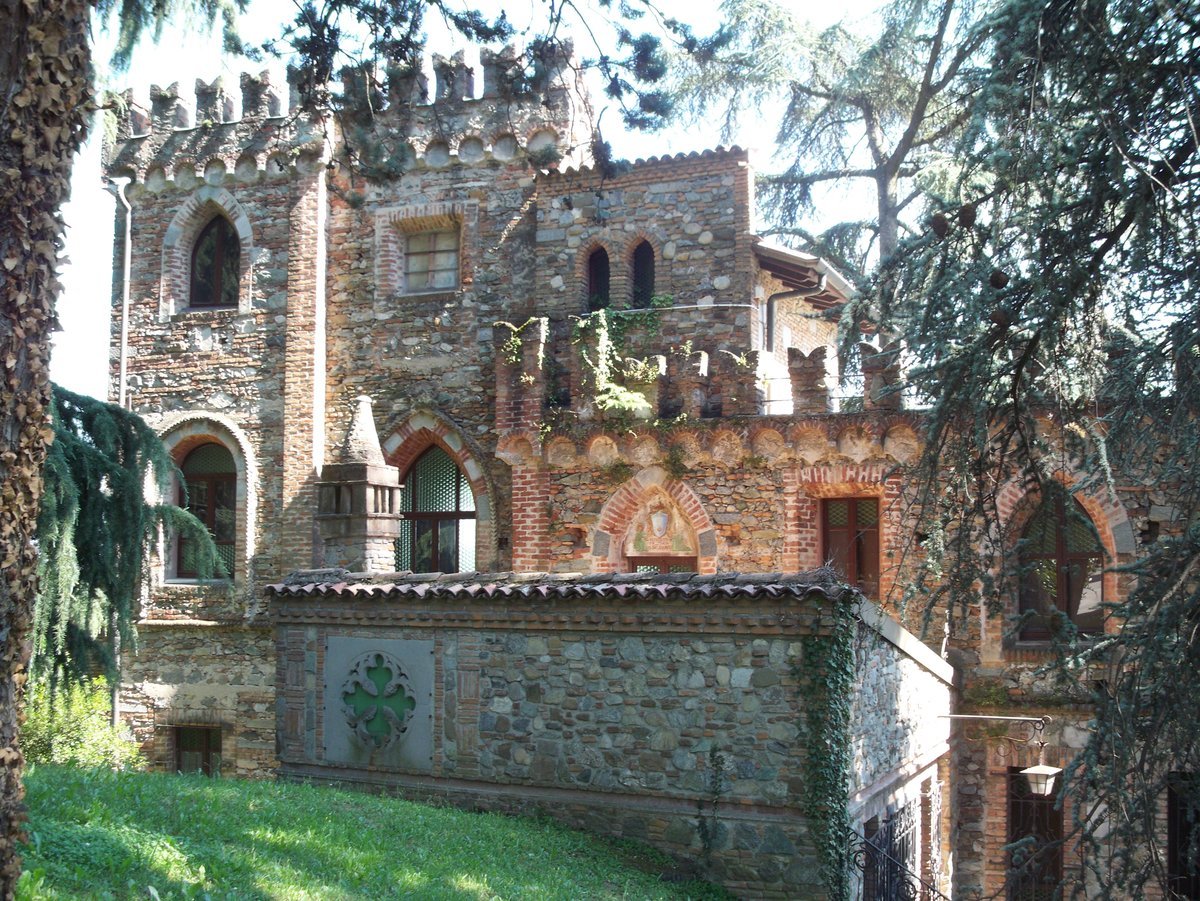
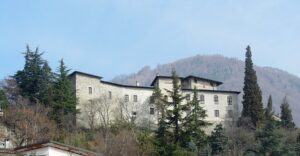
Monguzzo Castle appears all at once, atop an isolated hill once called Mons Acutus, the sharp mountain. From up there, your gaze sweeps across the whole of upper Brianza and the mountains that enclose it. It is not the classic postcard manor: its U-shaped plan, battlements, courtyards and well tell of centuries of sieges, restorations and changes of ownership. Today the complex is private, home to the Centro Studi Ospedalieri dei Fatebenefratelli, and opens to the public very rarely. And that is precisely what makes it special: no crowds, no ticket office, just a large 60,000 sq m park and three buildings—the castle, the small castle and the postern gate. For anyone passing through Erba or Como, it is a detour worth taking, if only for the view.

Historical background

The earliest records mention 920: Berengar I, King of Italy, assigned the court of Calpuno, together with Monguzzo, to the canons of San Giovanni Battista in Monza. No fortifications are mentioned at that time; it is thought that an initial structure may have been built between the 9th and 10th centuries against Hungarian raids. The first reference to a fortress dates to 1383, when the Visconti donated it to the condottiero Jacopo Dal Verme. In 1486 it passed to the Bentivoglio, and between 1527 and 1531 it was captured through a stratagem by Gian Giacomo Medici, known as il Medeghino, who made it his headquarters. It was then held by the Novati, Rosales, Mondolfo and Benocci families; since 1946 the complex has belonged to the Fatebenefratelli.

  • 920: Berengar I assigns Monguzzo to the canons of Monza
  • 1383: the Visconti donate the stronghold to Jacopo Dal Verme
  • 1486: it passes to the Bentivoglio
  • 1527-1531: il Medeghino occupies the castle
  • 1564-1596: Gabriele Ferrante Novati as feudal lord
  • 1664-1751: the Rosales, later a pleasure villa
  • 1853-1880: Mondolfo and Lodigiani
  • c. 1900: Ferruccio Benocci begins the restoration
  • 1946-1972: donation to the Fatebenefratelli, Michelini restoration
  • Today: Hospital Studies Centre

The U-shaped plan, the small castle and the postern gate

The complex is not just the castle. The estate extends over more than 60,000 sq m and includes three buildings. The castle, with its unmistakable U-shaped plan, has been rebuilt and restored several times; the oldest part is the northern one, overlooking a courtyard. Then there is the small castle, with guest rooms and libraries. And finally the postern gate, the entrance with the drawbridge, with the porter’s lodge, the caretakers’ quarters and the dining room. In between remain battlements, inner courtyards and a well: details that tell a story spanning a thousand years. It is curious to note how much of its current appearance is largely the result of twentieth-century restoration, which recreated a Renaissance manor where ruins, additions and alterations remained.

The Medeghino’s Headquarters

If there is one name tied to Monguzzo, it is that of Gian Giacomo Medici, known as the Medeghino. Between 1527 and 1531 he took the fortress by trickery, not through a conventional siege, and turned it into his operational base in Brianza. Here the first part of his war against Francesco II Sforza played out. He had tunnels dug, secret passages opened, and trapdoors installed: they were used to imprison enemies, and part of the castle became a private jail. After his death, the Bentivoglio family erased almost all of his additions. But something remains: in the Sala Rossa, the old banquet hall, the griffin statues are still preserved. A detail that alone makes the visit worthwhile, if you can get inside.

From fortress to villa, by way of the Carboneria

After the Medeghino, the castle changed its skin. In 1564 it passed to Marquis Gabriele Ferrante Novati, then the Spanish government took the property from the Novati and assigned it to the Rosales. It was not a quiet transaction: the transfer dates to 1664, but the new owners could take possession only in 1751, after long disputes with the former holders and the tax authorities. It was they who transformed it into a holiday residence, with renovations in the mid-eighteenth century and the closing of some battlements. Then, during the Risorgimento, the castle became a meeting place for the Mazzinian Carbonari of Brianza. In short: a fortress that ends up as a place of conspiracy, before becoming an elegant residence. Strange but true.

Why It’s Worth a Visit

Three concrete reasons. First: the views. From Mons Acutus you can take in much of upper Brianza and the surrounding mountains, and this is no ordinary view. Second: the layering. Medieval, Visconti, Medici, eighteenth-century and twentieth-century elements overlap in the same building, and you can read them almost with the naked eye as you walk around the walls. Third: the near-invisibility on the tourist trail. There are no tour buses, no lines. The flip side is that the castle is privately owned and rarely open: it’s best to write to the Pro Loco (proloco@monguzzo.org) or contact the property, which can also provide information on disabled access, which is available. If you find it open, that’s the moment to go.

When to go

Don’t expect fixed opening hours: the complex is in private use, so the advice is pragmatic. The best opportunities are event days, conferences, cultural gatherings, religious or social events in the park, when the gate opens and the castle comes back to life. As for the season, autumn is generous: the Brianza hills glow yellow, and the raking light on the battlements is just right for photos. A clear spring morning works well too, with fresh air and the cleanest views. Avoid the midday heat of summer: the hill is exposed and offers no shelter. In any case, if the castle is closed, the walk around the outside and the view are still worth the climb.

In the area

Monguzzo lies between Como and Lecco, in an area that deserves at least an extra half day. Nearby is Erba, with its historic centre and lake of the same name: a stroll along the lakeshore is the simplest way to round off the trip. If you’re interested in the local history, the Triangolo Lariano offers villages such as Canzo and Asso, with their towers and narrow streets. And for those who want to walk, the trails of Monte Rai and the Corni di Canzo start right there and reward you with views over Lake Como. Nothing complicated: everything is within easy reach by car, at the relaxed pace of a Brianza day.

Itineraries nearby


💡 Did You Know…?

At the heart of the castle, the memory of the Medeghino lives on: underground chambers, secret passages and trapdoors used to imprison enemies, and the griffin statues in the Red Hall, once the ballroom. In 1946 Ferruccio Benocci died during a robbery, and his widow Leonilde Trussardi donated the complex to the Fatebenefratelli. Today it is privately owned and opens to the public only on rare occasions: to try to visit it, it is best to contact the Pro Loco.