Are you ready for a Novara castles itinerary that will take you to discover medieval fortresses and authentic villages? In two days you'll explore the Novara countryside starting from Galliate, with its imposing Sforza castle, then continuing to Ghemme, famous for its wine and manor. Along the way you'll encounter ancient manors like Briona Castle and Barengo Castle, immersed in rural landscapes that seem straight out of a painting. This journey will reveal a lesser-known Piedmont, rich in history and timeless atmospheres. Get ready to experience an authentic adventure among ancient walls, cobblestone alleys and traditions that withstand time.
🗺️ Your trip at a glance
An intensive weekend to discover six perfectly preserved medieval castles in the Novara countryside, from Galliate to Ghemme. Follow a structured two-day itinerary with precise stops, interactive maps, and detailed addresses for each manor.
- Ideal for travelers seeking historical authenticity and medieval architecture without tourist crowds, appreciating well-preserved structures that are not overly museum-like.
- Key features: a structured 2-day itinerary with 6 precise stops, includes interactive maps and detailed addresses for each castle, from the Sforza fortress of Galliate to the fortified village (ricetto) of Ghemme.
- Perfect for enthusiasts of medieval history, military architecture, and those wanting to explore a lesser-known Piedmont among ancient walls and rural landscapes.
Itinerary stops
Day 1 - Stop no. 1
Sforza Castle of Galliate
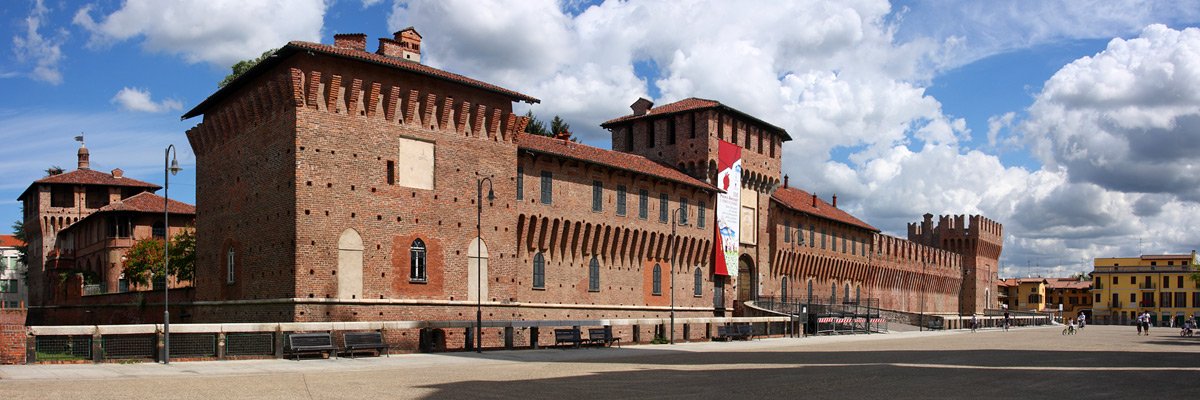 The Sforza Castle of Galliate is the perfect first stop to immerse yourself in the atmosphere of our "Castles and Villages of Novara" itinerary. Located on Via Caduti per la Patria, this 15th-century manor welcomes you with its massive brick walls and still-visible moat. Built at the behest of Galeazzo Maria Sforza, the castle preserves its original defensive features intact, such as the corner towers and drawbridge. Inside, the coffered ceilings and monumental fireplaces stand out, while the central courtyard often hosts cultural events. The distinctive feature is its dual function: not only a fortress but also a noble residence, as demonstrated by the elegant Renaissance loggias. A concrete example? The private chapel with well-preserved 15th-century frescoes. Perfect for starting the journey, it immediately gives you a sense of the Visconti-Sforza power in the area.
You should go if...
Day 1 - Stop no. 2
Caltignaga Castle
 After leaving Galliate, the route continues towards Caltignaga, where the Castle stands out against the sky with its imposing bulk. Built in the 15th century, this fortress still displays the typical architectural features of Novara castles: square towers, battlements, and a moat that once provided protection. The building, located on Via Guglielmo Marconi, dominates the surrounding landscape, offering a panoramic view over the rice fields that characterize this area of Piedmont. Although it is private property and not always open for interior visits, it's worth stopping to admire the exterior and capture some photographs. The castle represents a well-preserved example of medieval military architecture in the province of Novara, testifying to the strategic importance of these territories during the struggles between the Visconti and Sforza families.
- Via Guglielmo Marconi, Caltignaga (NO)
- Open in Google Maps
- View on Google Images
You should go if...
Day 1 - Stop no. 3
Castello Ricetto
 Arriving in Ghemme, the Castello Ricetto in Piazza Castello presents itself as a rare example of medieval defensive architecture. This complex, dating back to the 14th century, was originally a place of refuge for the population and for storing supplies during invasions. Today, its walls of pebbles and bricks enclose an inner courtyard where the atmosphere of the era can still be felt. The well-preserved structure displays typical elements such as corner towers and narrow passages, showcasing the construction ingenuity of the time. It's worth observing the architectural details up close and imagining the daily life that unfolded here. An opportunity to discover an authentic corner of Novara's history, away from the beaten path.
- Piazza Castello, Ghemme (NO)
- Open in Google Maps
- View on Google Images
You should go if...
Day 2 - Stop no. 4
Briona Castle
 Leaving behind the characteristic Ricetto di Ghemme, Briona Castle rises imposingly on a hill along Via Tenente Paolo Solaroli. This 12th-century stronghold, built by the Counts of Biandrate, features a massive structure with square towers and crenellated walls that have withstood centuries of history. Unlike many castles in the Novara area, it still preserves its original defensive layout with a moat and drawbridge. The interior, though not always accessible to visitors, reveals traces of ancient frescoes and patrol walkways. From the forecourt, visitors can enjoy an exceptional panorama of the surrounding countryside, stretching to the first foothills of the Prealps. An interesting detail: the stones used for the walls come from local quarries, characterized by that distinctive pinkish hue that sets them apart.
- Via Tenente Paolo Solaroli, Briona (NO)
- Open in Google Maps
- View on Google Images
You should go if...
Day 2 - Stop no. 5
Castelletto Castle
 After leaving Briona Castle, the route continues towards Momo, where Castelletto Castle hides among vineyards and cultivated fields. This manor, located on Via Castello, dates back to the 13th century and features a compact structure with corner towers and exposed brick walls. Unlike other Novara fortresses, it preserves original architectural elements such as bifora windows and stone fireplaces. The interior, although partially restored, shows traces of the medieval frescoes that once decorated the noble halls. From the inner courtyard, you can access a hanging garden with views over the surrounding plain, perfect for a peaceful break. One detail worth noting: the castle's cellars were used for storing local wines, highlighting the historical connection to the area's winemaking tradition.
- Via Castello, Momo (NO)
- Open in Google Maps
- View on Google Images
You should go if...
Day 2 - Stop no. 6
Agnellengo Castle
 Agnellengo Castle, located on Via Quattro Novembre in Momo, represents one of the most evocative stops on the itinerary. This manor, dating back to the 14th century, stands out for its imposing structure with crenellated towers and well-preserved internal courtyards. Unlike other castles in the area, it features unique architectural elements such as terracotta bifora windows and still-walkable patrol walkways. The interior, although not always accessible, preserves traces of 15th-century frescoes that depict the courtly life of the era. From the rear garden, visitors can enjoy a panoramic view of the surrounding vineyards, perfect for capturing memorable photographs. One detail not to be missed: the ancient stables, now converted into an exhibition space, occasionally host displays on local history.
- Via Quattro Novembre, Momo (NO)
- Open in Google Maps
- View on Google Images
You should go if...