
The Church of the Eremitani stands on Piazza Eremitani in Padua, near the Scrovegni Chapel. Built between 1276 and 1306, it preserves a single nave with a wooden keel-shaped ceiling and cycles of 14th-century frescoes by Guariento and Giusto de’ Menabuoi, as well as fragments from Mantegna’s Ovetari Chapel. Admission is free, and the building is part of the UNESCO site “Padua’s 14th-Century Fresco Cycles”.
– Façade in brick and stone, with a rose window and a five-arch loggia.
– Interior: a single nave with a keel-shaped ceiling rebuilt after the 1944 bombing.
– Ovetari Chapel: Mantegna fragments repositioned and put back on display since 2006.
– Practical information: weekdays 7:30–12:30 and 15:30–19:00; Saturdays and Sundays 9:00–12:30 and 16:00–19:00.
Events nearby


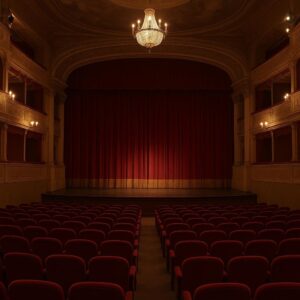
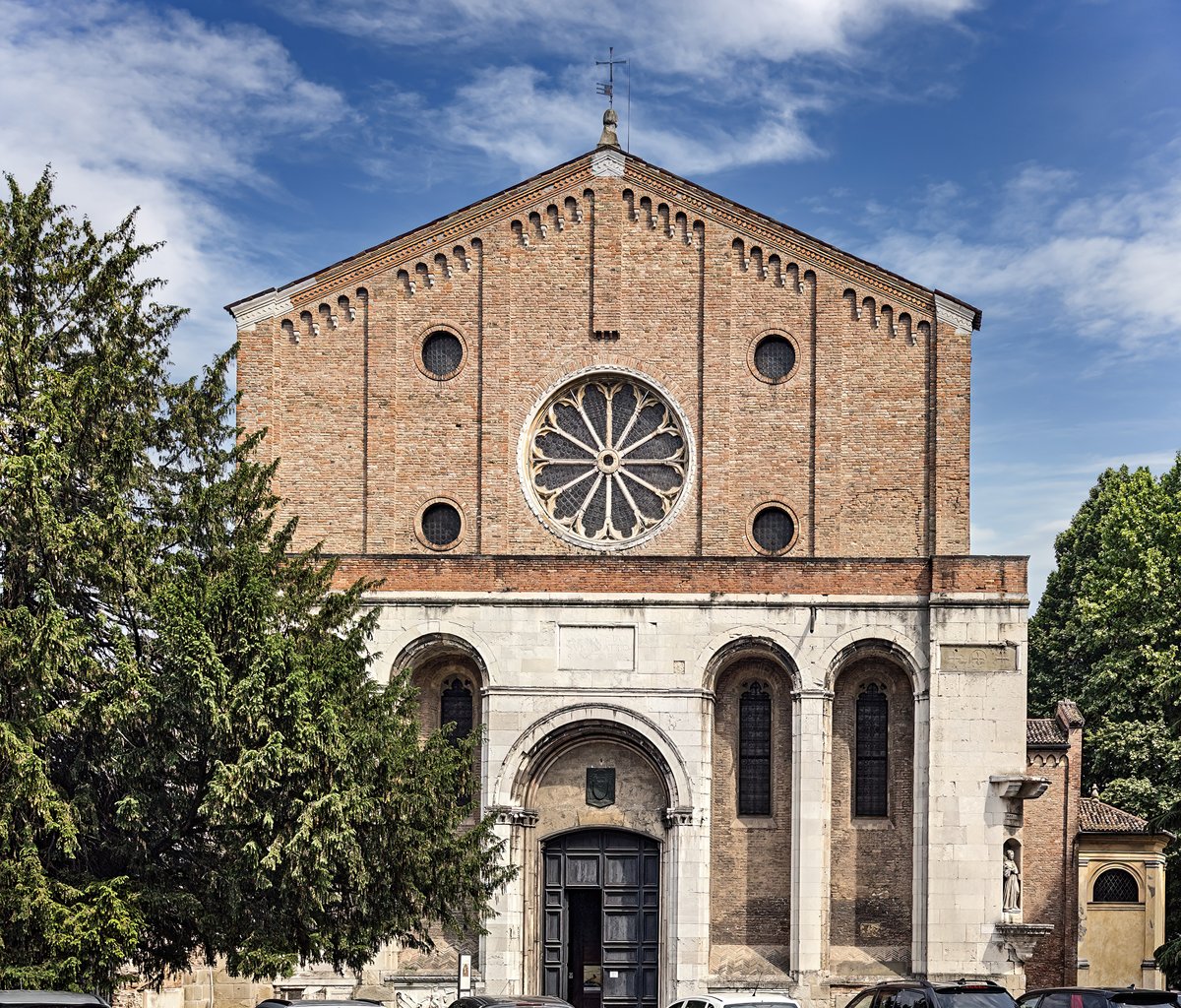
The Gothic church on Piazza Eremitani in Padua: a brick façade, a single nave with a keel-shaped ceiling, frescoes by Guariento and Giusto de’ Menabuoi, Mantegna’s Ovetari Chapel, and free admission.
- Piazza Eremitani, Padova (PD)
- Open in Google Maps
- View on Google Images Chiesa degli Eremitani a Padova
Good to know
Introduction: Church of the Eremitani, Mantegna and the UNESCO Frescoes
Historical background
- 1218: wooden temple
- 1276-1306: construction
- 1360: façade
- 1448-1457: Mantegna
- 1944: bombing
- 2021: UNESCO
The brick façade and the keel-shaped nave
Ovetari Chapel: Mantegna and the Surviving Fragments
Guariento, Giusto de’ Menabuoi and the UNESCO Fourteenth Century
Why it’s worth a visit
When to go
In the Surrounding Area
Itineraries nearby


💡 Did You Know…?
The keel-shaped ceiling was made with timber left over from the vault of the Palazzo della Ragione: a detail that links two Paduan building sites. In the Ovetari Chapel, the Martyrdom of Saint Christopher and the Transport of the Beheaded Body were detached in 1880, and this is precisely how they survived the bombing of 11 March 1944; the fragments have been on display again since 2006. On Jacopo da Carrara’s tomb runs an inscription in Latin distichs by Petrarch.