Bishop’s Palace of Sant’Agata: 18th-century frescoes and courtyard with well in the medieval village

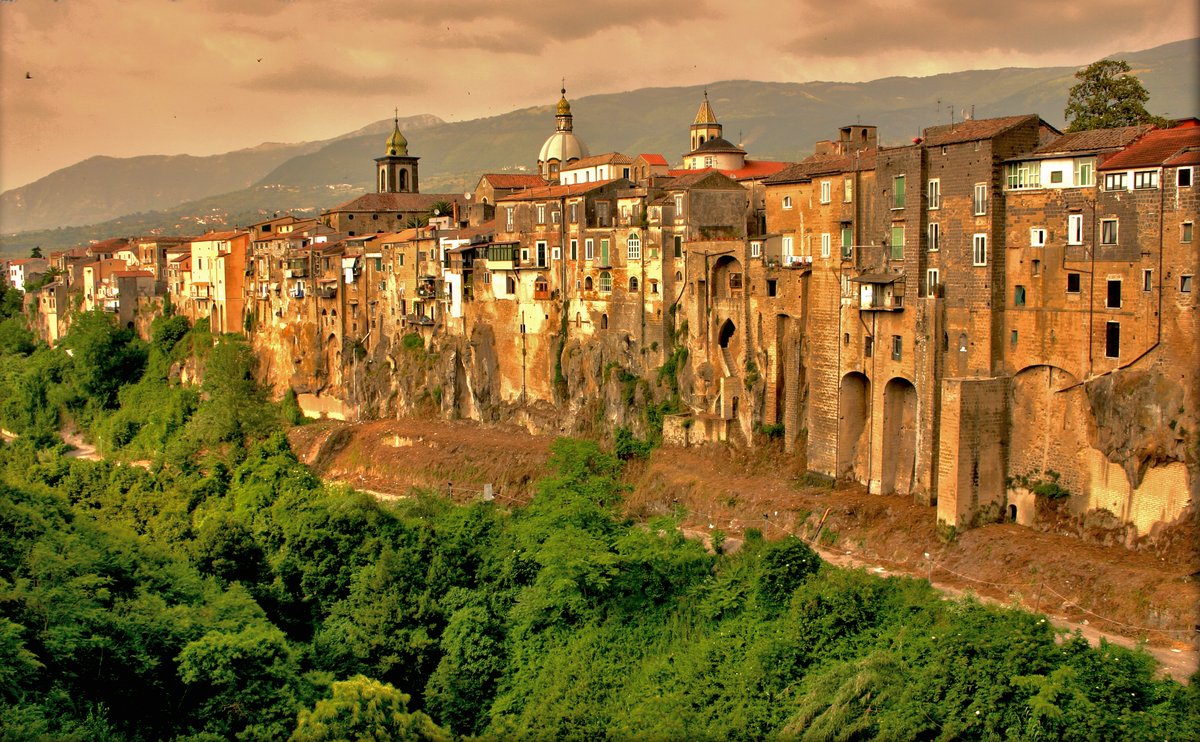
The Bishop’s Palace of Sant’Agata de’ Goti is an 18th-century jewel in the heart of the medieval village, overlooking Piazza Umberto I. Inside, it preserves 18th-century frescoes and coffered ceilings, while the inner courtyard with its central well offers an atmosphere suspended in time. Its strategic location allows visitors to also explore the nearby Cathedral of the Assumption and the characteristic cobblestone alleys.

  • 18th-century frescoes among the best preserved in the province of Benevento, depicting sacred scenes and daily life
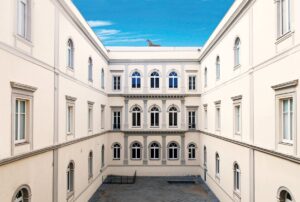
  • Inner courtyard with central well, portico, and monumental staircase in a historic atmosphere
  • Coffered ceilings that recount centuries of ecclesiastical history
  • Central location in the medieval village, just steps from the Cathedral of the Assumption

Copertina itinerario Bishop's Palace of Sant'Agata: 18th-century frescoes and courtyard with well in the medieval village
Bishop’s Palace in Sant’Agata de’ Goti: 18th-century architecture with frescoes, coffered ceilings, and inner courtyard with central well in the heart of the medieval village of Benevento

Good to know


Introduction

As soon as you cross the entrance of the Bishop’s Palace in Sant’Agata de’ Goti, you immediately understand you’re in a special place. This eighteenth-century jewel stands out in the heart of the medieval Benevento village with a discreet elegance that strikes you. The inner courtyard, with its portico and monumental staircase, welcomes you into an atmosphere suspended in time. The frescoes decorating the halls tell stories of bishops and nobles, while the light filtering through the windows creates plays of shadows that enhance the architectural details. It’s not just a palace, but a journey into the art and history of a land rich in traditions.

Historical Overview

The Bishop’s Palace of Sant’Agata de’ Goti was established in the 18th century as the residence for local bishops, replacing earlier structures. It was commissioned by Bishop Giuseppe Maria Foschi to bring renewed dignity to the episcopal seat. Over the centuries, it has hosted prominent religious figures and witnessed changes in ownership that have enriched its artistic heritage. The interior frescoes, created by Campanian master craftsmen, depict sacred and allegorical scenes connected to diocesan history.

  • 18th century: construction of the palace under Bishop Foschi’s direction
  • 19th century: expansions and interior decorations
  • 20th century: conservation restorations and opening to the public
  • Today: venue for cultural events and guided tours

The Hidden Frescoes

One of the most delightful surprises at the Bishop’s Palace are the lesser-known frescoes in the side rooms. While the main ones depict saints and bishops, here you’ll find scenes of everyday life from the 18th century: farmers at work, market scenes, moments of celebration. The well-preserved colors showcase warm tones of ochre and red that contrast with the painted blue skies. These details reveal a strong connection to the local territory and its traditions, offering an authentic glimpse into Sant’Agata de’ Goti’s past.

The Courtyard and Its Secrets

The inner courtyard is not just a passageway, but a true narrative space. Observe the column capitals: some feature carvings with religious symbols, others display floral motifs typical of local craftsmanship. The limestone pavement, worn by time, tells centuries of pilgrims and visitors. In one corner, an ancient cistern reminds us how rainwater was stored here. It’s a place where architecture converses with history, ideal for a moment of reflection away from the crowd.

Why Visit It

Visit the Bishop’s Palace for three concrete reasons. First, the 18th-century frescoes are among the best preserved in the province of Benevento and offer a rare example of Campanian sacred art. Second, the inner courtyard is an oasis of tranquility where you can breathe in the atmosphere of the village without the crowds. Third, the central location allows you to combine your visit with other symbolic places of Sant’Agata de’ Goti, such as the Cathedral or the medieval alleys, in a compact and history-rich itinerary.

When to Go

The best time to visit the Bishop’s Palace is in the early morning hours, when the sunlight illuminates the inner courtyard, highlighting the architectural details. In autumn, the warm colors of the foliage in the surrounding village create a striking contrast with the palace’s pale stone. Avoid days of heavy rain, as some outdoor areas may be less accessible.

In the Surroundings

Just steps away from the Bishop’s Palace, don’t miss the Cathedral of Sant’Agata de’ Goti, with its Romanesque crypt and Lombard artifacts. For a thematic experience, explore the artisan workshops in the historic center, where you’ll find hand-painted ceramics and local products like Aglianico wine. Both locations enrich your visit with elements of art, faith, and tradition.

Itineraries nearby


💡 Did You Know…?

It is said that the palace houses an ancient reliquary containing fragments of Christ’s cross, brought here by bishops in the 18th century. During restoration work, traces of older frescoes were discovered beneath the visible ones, evidence of the different construction phases that have followed one another over the centuries.