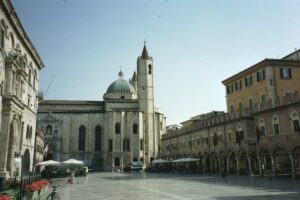
Macerata: 3-Day Itinerary Among Authentic Castles and Villages with Maps. This three-day itinerary takes you to discover the province of Macerata, a corner of the Marche region rich in history and authenticity. Starting from the capital, you will visit Recanati, Urbisaglia with its archaeological excavations, Montelupone, Sarnano, San Severino Marche, Cingoli, and Treia. Each stop is a village that preserves the intact medieval charm, with castles, squares, and churches. Ideal for those who want to immerse themselves in local culture, away from mass tourism. The maps will guide you through secondary roads, among hills and valleys, making the trip even more authentic. Perfect for a long weekend or a mid-week getaway.
🗺️ Your trip at a glance
In three days you will explore authentic castles and villages in the province of Macerata, combining history and breathtaking landscapes. A different itinerary because it touches lesser-known but charming locations, perfect for those seeking genuine experiences.
- Ideal for: history enthusiasts and authentic village lovers looking for a slow trip off the tourist track.
- What you do: visit medieval castles, archaeological sites, and some of Italy’s most beautiful villages, with maps to move freely.
- Why it’s different: combines culture and authenticity in an off-the-beaten-path territory, giving you a personal and surprising experience.
Itinerary stops
Day 1 – Stop no. 1
Arena Sferisterio: Where Opera Meets History
 Start your itinerary at a place that will leave you breathless: the Arena Sferisterio, a neoclassical amphitheater unique in its kind. Built between 1823 and 1829 by one hundred consorts (local wealthy citizens) on a design by Ireneo Aleandri, it was originally intended for the game of pallone col bracciale, but today it is a temple of opera. As soon as you enter, you are struck by the imposing straight wall measuring 18×88 meters, flanked by 56 columns supporting two tiers of boxes and a stone balcony. The acoustics? Natural and astonishing, so much so that it has hosted the Macerata Opera Festival since 1967. Here, in 1921, the first Aida was performed with 70,000 spectators. Today the capacity is about 2,500 seats, but the magic remains: in summer, between operas, you can enjoy the view of the city from the stands. A practical tip: if you visit off-season, take a look from the outside – the facade blends in with the walls, but the interior is a gem. Box office at Piazza Mazzini, 10, open Tuesday to Saturday.
- Go to the page: Arena Sferisterio Macerata: Open-air theatre with perfect acoustics and opera season
- Via Diomede Pantaleoni, Macerata (MC)
- https://www.sferisterio.it/
- Open in Google Maps
- View on Google Images

You should go if…
Day 1 – Stop no. 2
Piazza della Libertà: Macerata’s Living Room
 This is Macerata’s beating heart, a square that has witnessed centuries of history. Born in the 16th century from a design by Cassiano Da Fabriano, it has a trapezoidal shape and is surrounded by architectural gems. Loggia dei Mercanti, with its Istrian stone columns, takes you back to 1505 when merchants conducted business under its arches. Palazzo del Comune houses the Civic Tower with an astronomical clock that, every hour, stages the procession of the Three Kings. Spectacular, right? Nearby, the Teatro Lauro Rossi, designed by the Bibiena family, is an 18th-century jewel with gilded interiors. Today, the square is a lively meeting point: outdoor cafés, cultural events, and in the evening it fills with students and families. Fun fact: it has been pedestrian-only since 2015, so you can stroll around leisurely and admire the details without rushing.
- Piazza della Libertà, Macerata (MC)
- Open in Google Maps
- View on Google Images
You should go if…
Day 1 – Stop no. 3
Palazzo Ricci Museum: A Dive into 20th-Century Art
 From Piazza della Libertà, you venture into a quieter corner of the historic center, where the Palazzo Ricci Museum houses one of Italy’s finest collections of 20th-century art. Housed in a 17th-century noble residence, the Fondazione Carima collection includes over 300 works of painting and sculpture, with a focus on Futurism and the Roman School. Here you’ll find masterpieces by Balla, Severini, Depero, and Ivo Pannaggi’s famous Speeding Train, which launched the collection in 1975. Also not to be missed: The Octopus by Scipione and Medardo Rosso’s Ecce Puer. The palace itself is worth a visit: the Vanvitellian-style staircase, the frescoed ceilings depicting scenes from Ovid’s Metamorphoses, and the chapel with a Pietà by Vittore Crivelli are true gems. Admission is free, but check the opening hours: it’s only open Saturday afternoon and Sunday.
- Via Domenico Ricci 1, Macerata (MC)
- https://www.palazzoricci.it/
- Open in Google Maps
- View on Google Images
You should go if…
Day 1 – Stop no. 4
Villa Colloredo Mels Civic Museum
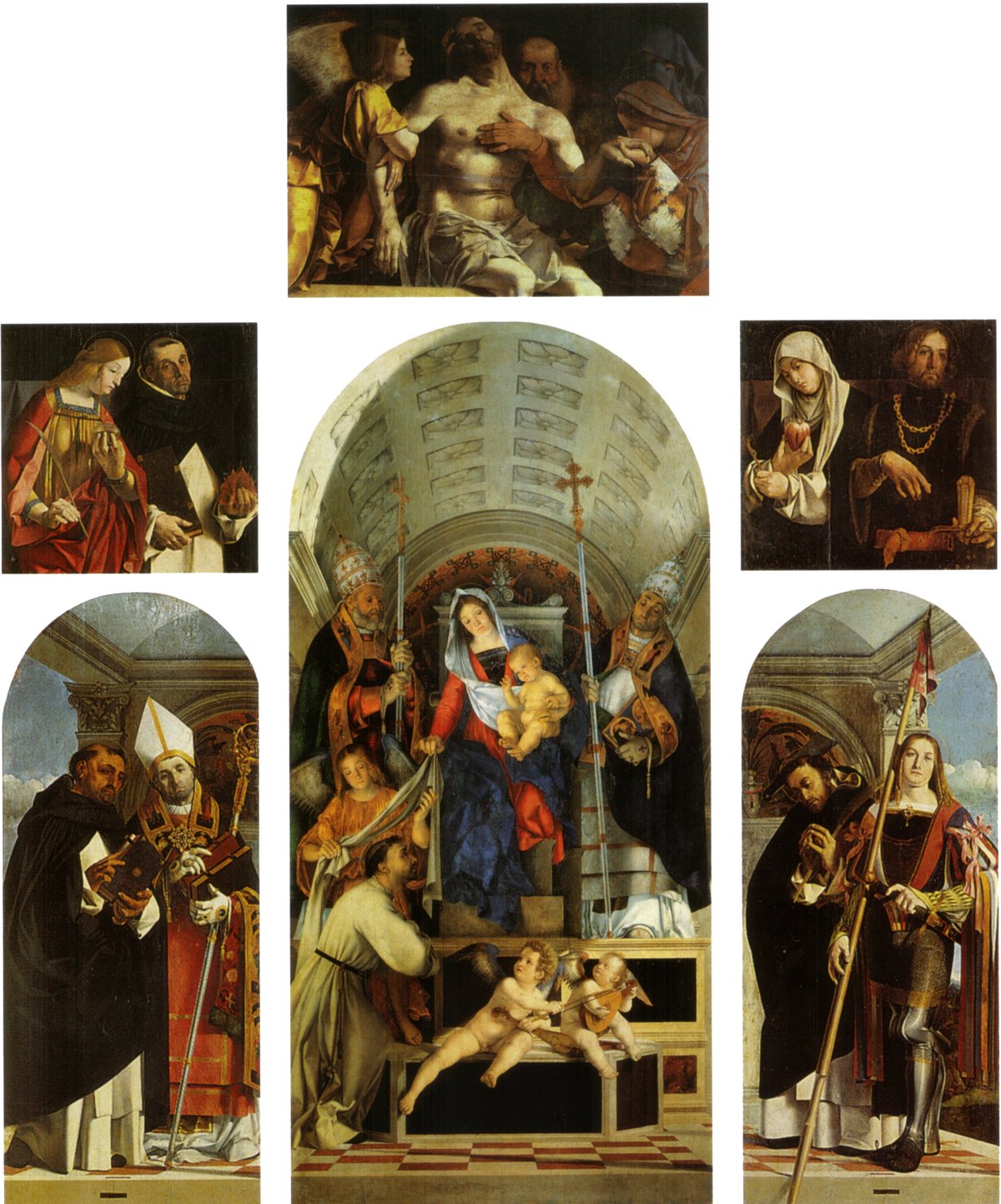 Leaving Macerata, the journey continues to Recanati, where the Villa Colloredo Mels Civic Museum holds an extraordinary heritage. Housed in a noble villa of medieval origins, since 1998 it has gathered treasures spanning from prehistory to the 20th century. The true highlights are the works by Lorenzo Lotto: the Polittico di San Domenico from 1508, the Annunciation with the startled cat, the Transfiguration, and Saint James the Greater. But the museum offers much more: Neolithic archaeological finds, the bull of Frederick II with a golden seal, and a section dedicated to Giacomo Leopardi with manuscripts and memorabilia. Also unmissable are the ceramics by Rodolfo Ceccaroni and the Museum of Emigration from the Marche in the basement. The park behind the villa is perfect for a break. Open Tuesday to Sunday (10:00 AM–1:00 PM and 3:00 PM–6:00 PM), admission fee applies with the Recanati Museums combined ticket.
- Go to the page: Colloredo Mels Museum Recanati: Lotto’s Annunciation and Picene Artifacts in a Renaissance Villa
- Via Gregorio XII, Recanati (MC)
- Open in Google Maps
- View on Google Images
You should go if…
Day 1 – Stop no. 5
Torre Civica: The Heart of Recanati
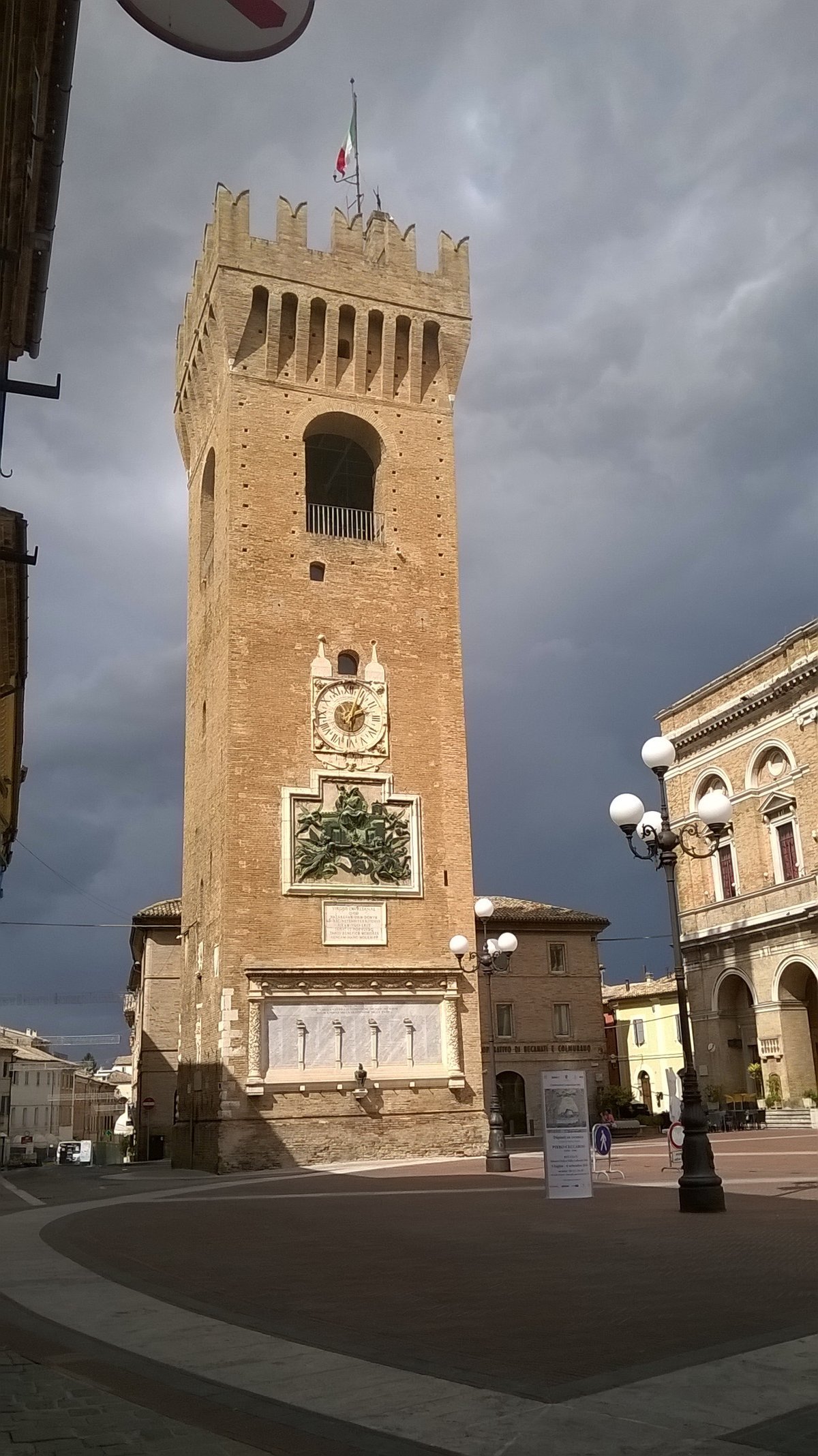 Just a stone’s throw from the museum, the Torre Civica – or Torre del Borgo, as Leopardi called it – dominates Piazza Giacomo Leopardi with its 36 meters of height. Built in 1160 to celebrate the union of the three original castles, it has stood isolated since the demolition of the old town hall in 1872. The Ghibelline battlements and the white stone clock from 1562 are immediately recognizable. Climbing the steep 153 steps, you pass through seven levels, now home to the MUREC, the city museum that tells local history with interactive screens and temporary installations. At the top, a 360° view stretches from Monte Conero to the Sibillini Mountains, just like in the verses of “Le ricordanze”. Not to miss: the four bells (the huge Campanone weighing 2,200 kg rings only for special occasions), the bronze bas-relief by Jacometti, and the rampant lion by Sansovino. Single ticket €5, but the Recanati Museums cumulative ticket at €9.50 (valid for 7 days) is a better deal.
- Piazza Giacomo Leopardi, Recanati (MC)
- Open in Google Maps
- View on Google Images
You should go if…
Day 2 – Stop no. 1
Urbs Salvia Archaeological Park
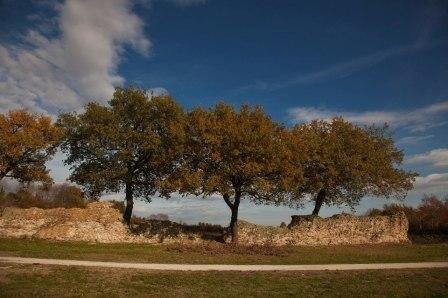 Leave Leopardi’s poems behind and immerse yourself in Roman history: the Urbs Salvia Archaeological Park is the first stop of the second day. Spread over 40 hectares, it is the largest archaeological park in the Marche region and preserves the remains of an ancient Roman colony. The approximately one-kilometer path will lead you to discover extraordinary monuments: the Theater, one of the largest in Italy with traces of original painted plaster; the Amphitheater built by Lucius Flavius Silva Nonius Bassus, the same who besieged Masada; and the Temple of Salus Augusta with its cryptoportico frescoed in the Third Pompeian style. Don’t miss the imposing city walls (up to 5 meters high) and the aqueduct reservoir. Admission is €5, but check the hours on the official website because the park closes in February. Park along SP 78 near the amphitheater and cross the wooden bridge: the adventure begins.
- Go to the page: Urbs Salvia: Amphitheater for 5,000 Spectators and Roman Cisterns in the Marche Region
- Strada Statale 78 Picena, Urbisaglia (MC)
- https://www.beniculturali.it/mibac/opencms/MiBAC/sito-MiBAC/Luogo/MibacUnif/Luoghi-della-Cultura/visualizza_asset.html?id=151488&pagename=57
- Open in Google Maps
- View on Google Images
You should go if…
Day 2 – Stop no. 2
Roman Amphitheater of Urbis Salvia
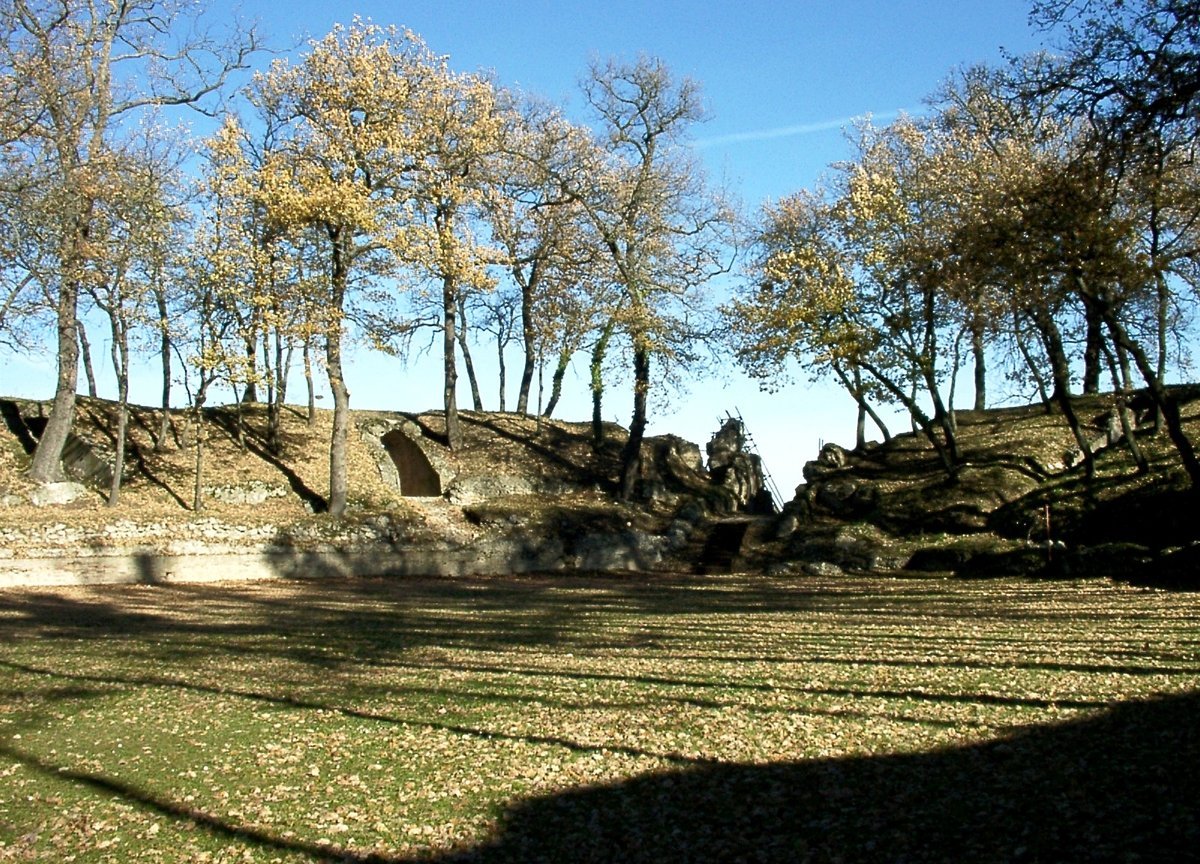 After visiting Urbisaglia, it’s time to dive into Roman history. The amphitheater of Urbs Salvia, built in 81 AD by Lucius Flavius Silva Nonius Bassus, is one of the best-preserved in the Marche region. Its elliptical shape, with an arena measuring 59 by 35 meters, could hold up to 5,150 spectators. Even today, you can still spot the Porta Libitinensis, the gate through which fallen gladiators were carried out. Strolling along the steps of the ima cavea, you can almost hear the clash of combat. In summer, the site comes alive with theatrical performances, making it a magical place. A tip: look for the QR code for a 3D reconstruction of the amphitheater. I found it fascinating.
- Strada Statale 78 Picena, Urbisaglia (MC)
- Open in Google Maps
- View on Google Images
You should go if…
Day 2 – Stop no. 3
Abbey of San Firmano: Between Faith and Legend
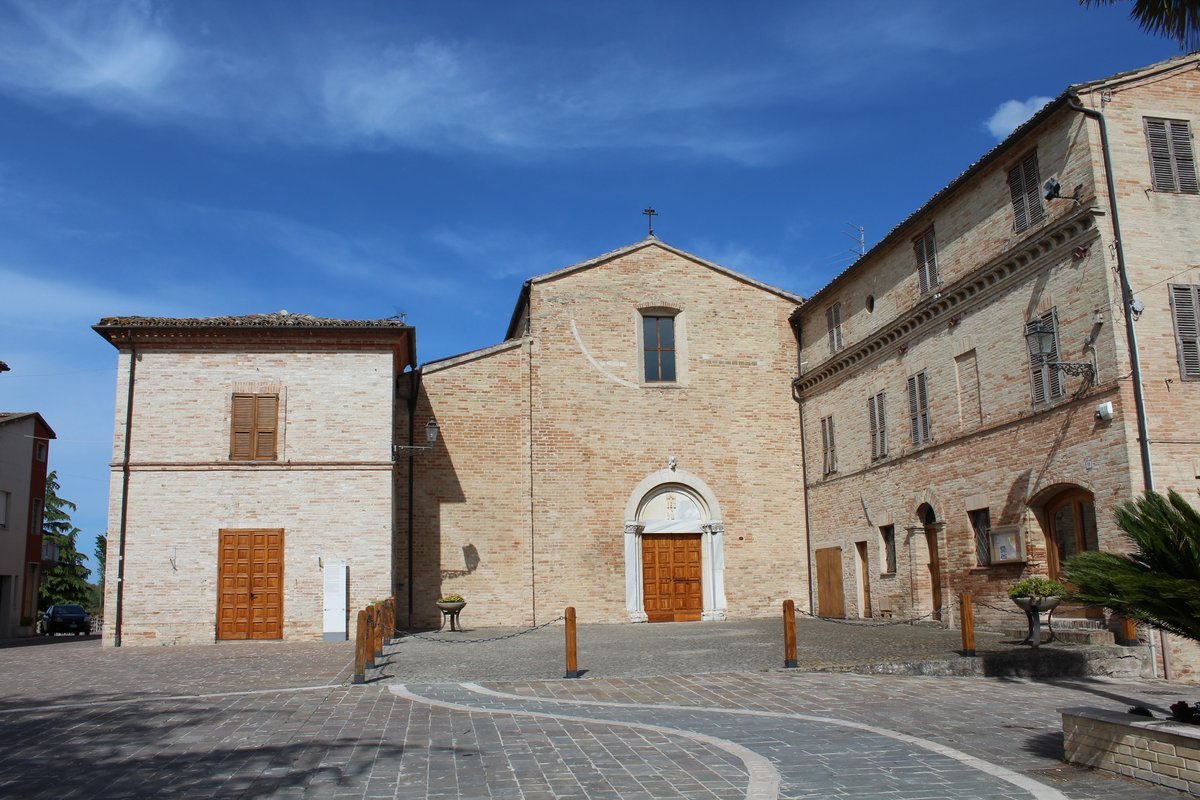 The Abbey of San Firmano is one of those places that surprises you. Just outside Montelupone, nestled in the greenery of the Potenza valley, its red brick façade seems almost modest. Then you step inside and you understand. Three naves, twelve pillars like the apostles, an atmosphere of contemplation. The staircase of 17 steps leading to the high altar is dramatic: it keeps the crypt safe from river floods. Right below is the heart of the place: the Romanesque-Gothic crypt, with the terracotta statue of Saint Firmano (15th century) and his relics. Tradition says that passing nine times under the altar eases bone pain – I haven’t tried, but the atmosphere is steeped in devotion. Don’t miss the lunette above the portal, a Byzantine high relief of Christ crucified with a royal crown, and the 15th-century fresco by Giacomo da Recanati. The visit takes about half an hour, but if you’re curious, stop to admire the details: the concentric circles on the crypt floor, the red crosses of the Crociferi, and a monk’s skull in a niche. A piece of history that speaks of faith, land reclamation, and medieval battles.
- Via San Firmano, Montelupone (MC)
- Open in Google Maps
- View on Google Images
You should go if…
Day 2 – Stop no. 4
Teatro Della Vittoria: Sarnano’s Little Jewel Box
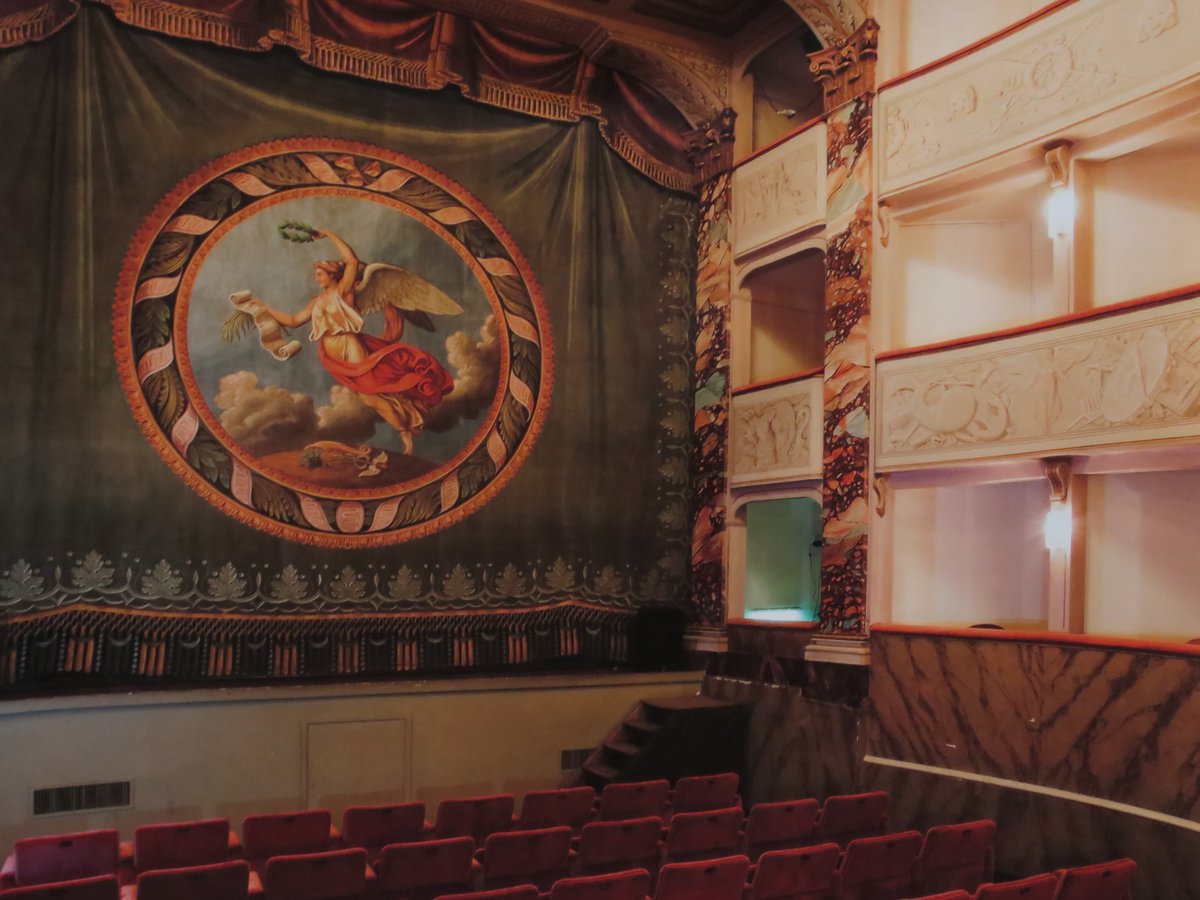 As you stroll through Piazza Alta, it’s easy to miss the Teatro della Vittoria, hidden on the first floor of the Palazzo del Popolo. Stepping inside feels like discovering a jewel box: just over 100 seats, red velvet interiors and tiny lights, a horseshoe-shaped auditorium with three tiers of boxes. The ceiling, with its neoclassical Roman velarium design, and the painted curtain featuring the Winged Victory – hence the name – are 19th-century works by Gaetano Ferri and the painter Rossi. Unfortunately, it’s all closed for post-earthquake restoration since 2016. The earthquake rendered it unusable, and since then, the community has been waiting to reopen this little gem. In the past, it was named after tenor Mario Del Monaco, and for years it hosted performances, dances, and even cinema. During the war, the stage sets were burned for heating. Now, while waiting, the Circolo di Piazza Alta keeps culture alive elsewhere. If you pass through Sarnano, at least stop to look at the palace façade: the theater is there, silent, but its story deserves a thought.
- Piazza Alta, Sarnano (MC)
- Open in Google Maps
- View on Google Images
You should go if…
Day 3 – Stop no. 1
Teatro Feronia: A Neoclassical Gem
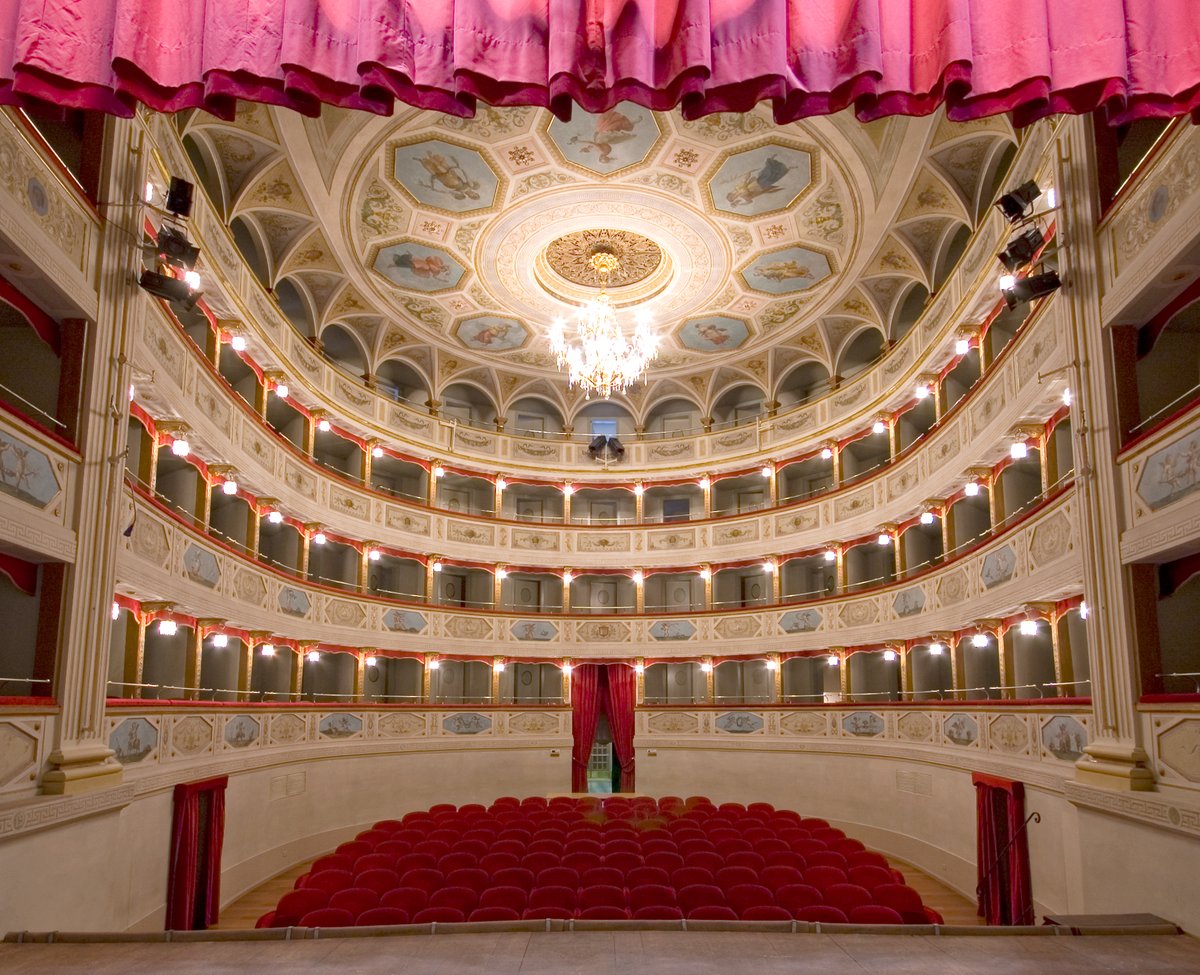 We start the third day right here, in Piazza del Popolo, in front of the Teatro Feronia. A theater that leaves you speechless: designed by Ireneo Aleandri (the same architect of the Sferisterio in Macerata) and inaugurated in 1828 with a Rossini opera, it is a triumph of neoclassical style. 442 seats across three tiers of boxes and a gallery, all in a horseshoe shape. The historic curtain, painted by Bigioli and Fogliardi, depicts the goddess Feronia freeing a slave – a myth that gives the theater its name. Closed in 1961 for safety issues, it reopened in 1985 with a concert by Katia Ricciarelli. Today the theater season is very lively: for 2025/26 the program “a proposito di crisi…” features works from Chekhov to Shakespeare, while the 2026/27 season “Trasformazioni” brings Benni and Wilde. The acoustics are excellent and visibility is great from every seat. If you’re passing through, book a free visit at the Tourist Office: entering this jewel box is an experience that enriches your journey.
- Piazza del Popolo, San Severino Marche (MC)
- Open in Google Maps
- View on Google Images
You should go if…
Day 3 – Stop no. 2
Torre dell’Orologio
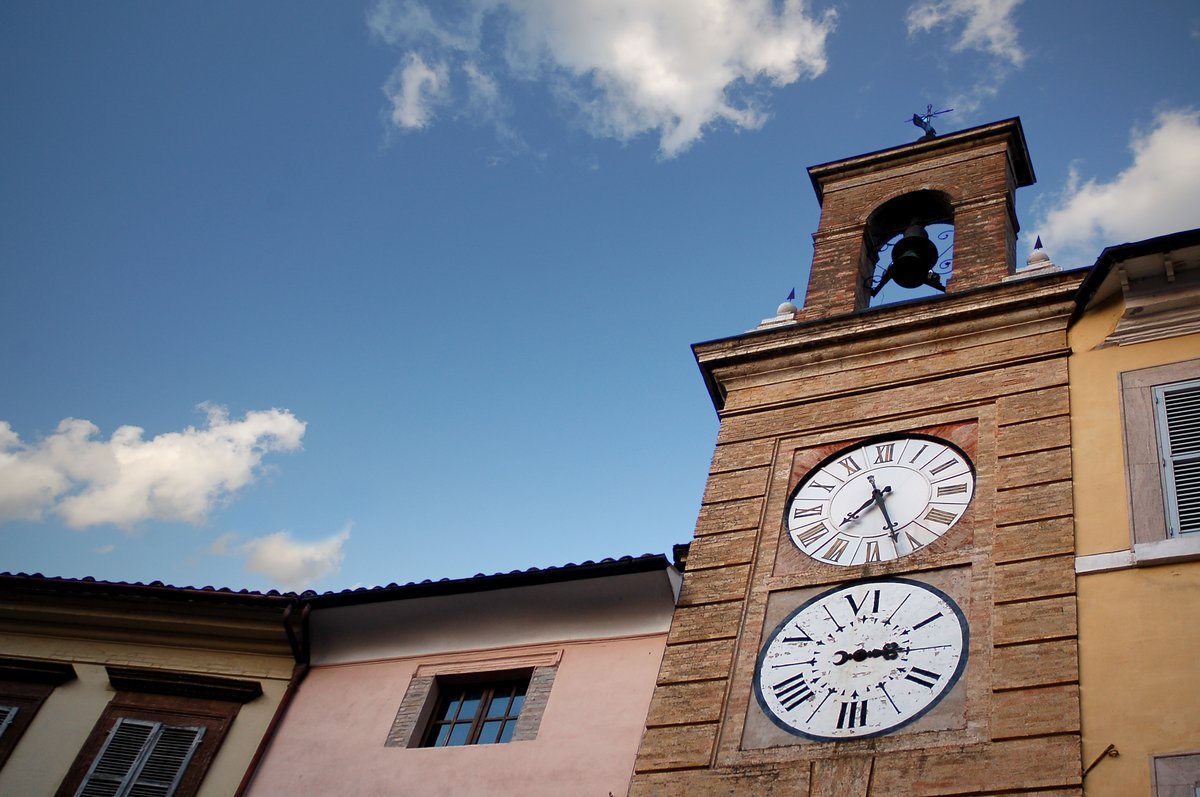 In San Severino Marche, in Piazza del Popolo, stands a tower that doesn’t go unnoticed: the Torre dell’Orologio (Clock Tower). Designed by architect Ireneo Aleandri and built in 1832, it replaced an older public clock on the Smeducci tower. Its peculiarity? Two dials: one for Italian time (a 6-hour system in use until the 19th century) and one for astronomical time (a 12-hour system introduced by Napoleon). A curious detail that tells the story of the transition between two ways of measuring time. The tower is part of Palazzo Servanzi Confidati, now home to the municipal library and a hospitality facility. At its base, the 15th-century Fountain of Mercy. Stop and observe the elliptical square, 224 meters long, with its scenic loggia: it’s one of the most fascinating places in the Marche region.
- Via Cesare Battisti, San Severino Marche (MC)
- Open in Google Maps
- View on Google Images
You should go if…
Day 3 – Stop no. 3
State Archaeological Museum of Cingoli
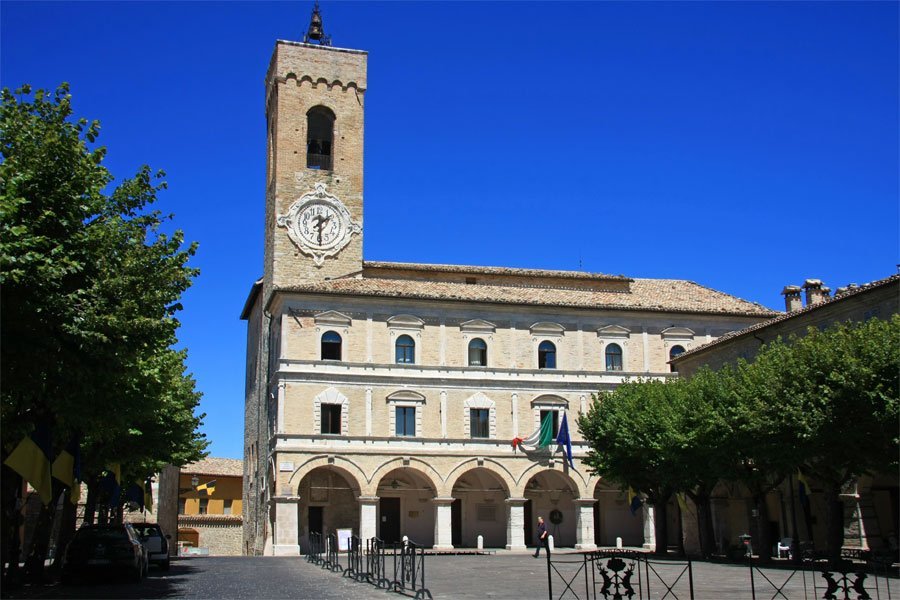 We end the day in Cingoli with a stop that feels like a discovery: the State Archaeological Museum, nestled inside the 16th-century Palazzo Comunale on Piazza Vittorio Emanuele II. Entering here is like opening a book on the region’s history, from the Paleolithic to the Roman era. The section that struck me most is the one dedicated to the Bronze Age, with artifacts from the Moscosi – Piano di Fonte Marcosa site: a sub-palafitticolo settlement that came to light in the 1980s due to the Castreccioni dam. Among the highlights are the grid of wooden beams from a dwelling and objects made of bronze and deer antler. Moving up to the ground floor, you go from Neolithic artifacts (with obsidian from Lipari!) to materials from the water sanctuary of San Vittore, including a miniature black-figure lekythos depicting Dionysus. The museum is small but well-organized, with informative panels to help you navigate. Admission is free, which is no small thing. If you love archaeology, here you’ll find a piece of authentic Marche history, far from the tourist trails.
- Piazza Vittorio Emanuele II 25, Cingoli (MC)
- http://musei.beniculturali.it/musei?mid=205&nome=museo-archeologico-statale-di-cingoli
- Open in Google Maps
- View on Google Images
You should go if…
Day 3 – Stop no. 4
Teatro Comunale di Treia
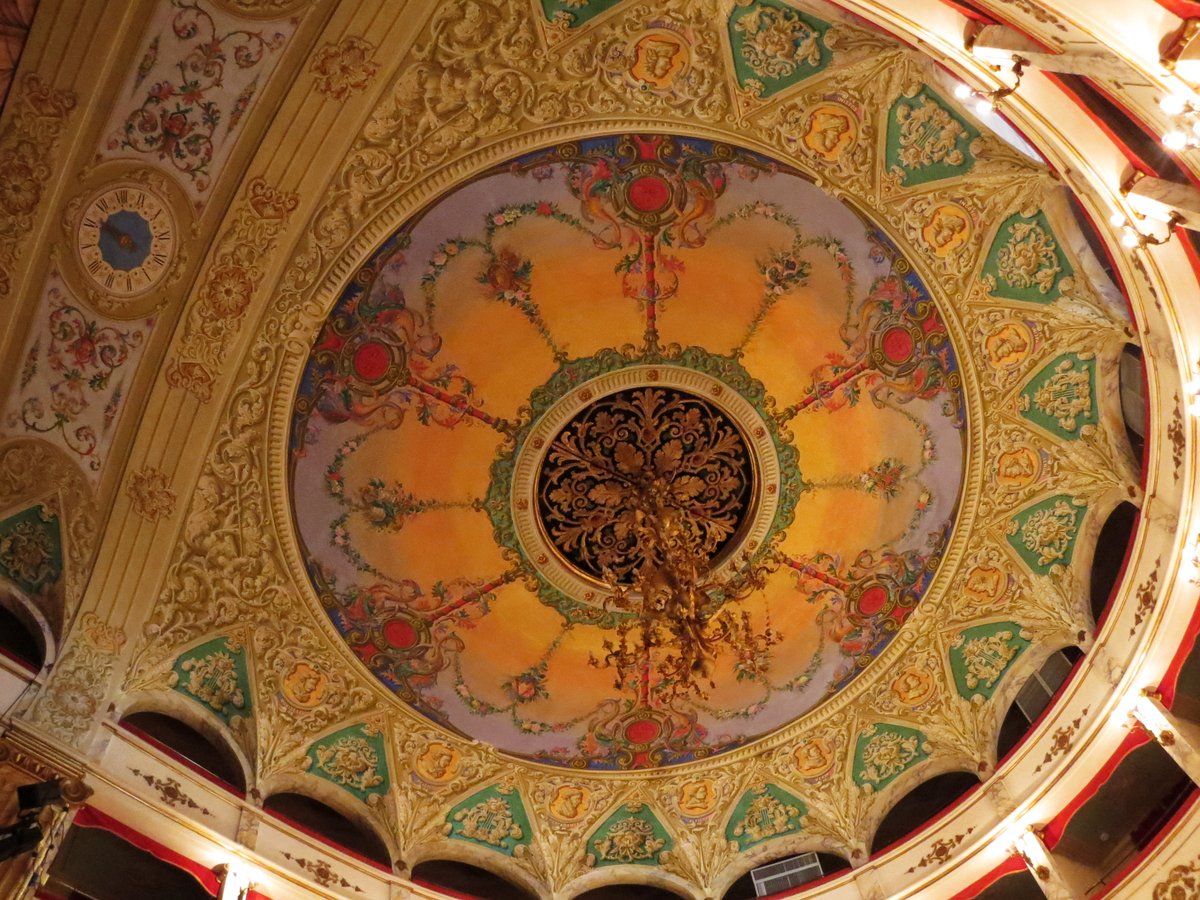 The last stop of the day, but perhaps the most elegant: the Teatro Comunale di Treia, in Piazza Don Pacifico Arcangeli. Entering here is like stepping back in time. Built starting in 1794 on a design by Carlo Rusca and Giuseppe Lucatelli, it was inaugurated in 1821. It has an almost semicircular horseshoe layout, with 45 boxes and 80 seats in the stalls (270 total). The real highlight is the historic curtain: a large canvas painted in 1865 by Silverio Copparroni, depicting the Battle of Vallesacco of 1263, a key event for Treia. After years of closure, a restoration lasting about thirty years reopened it in 2002, giving the city a vibrant space for plays, music, and children’s theater. Today the theater season is rich: brilliant comedies, monologues, fairytale Sundays for families. The theater is small, intimate, perfect for feeling part of the show. I recommend checking the program (on the city’s website or by calling 0733 218778) to discover if there’s something on the bill during your visit.
- Piazza Don Pacifico Arcangeli 1, Treia (MC)
- https://www.treiamusei.it/teatro-comunale/
- Open in Google Maps
- View on Google Images
You should go if…
Day 3 – Stop no. 5
Villa Spada: Count Lavinio’s Neoclassical Dream
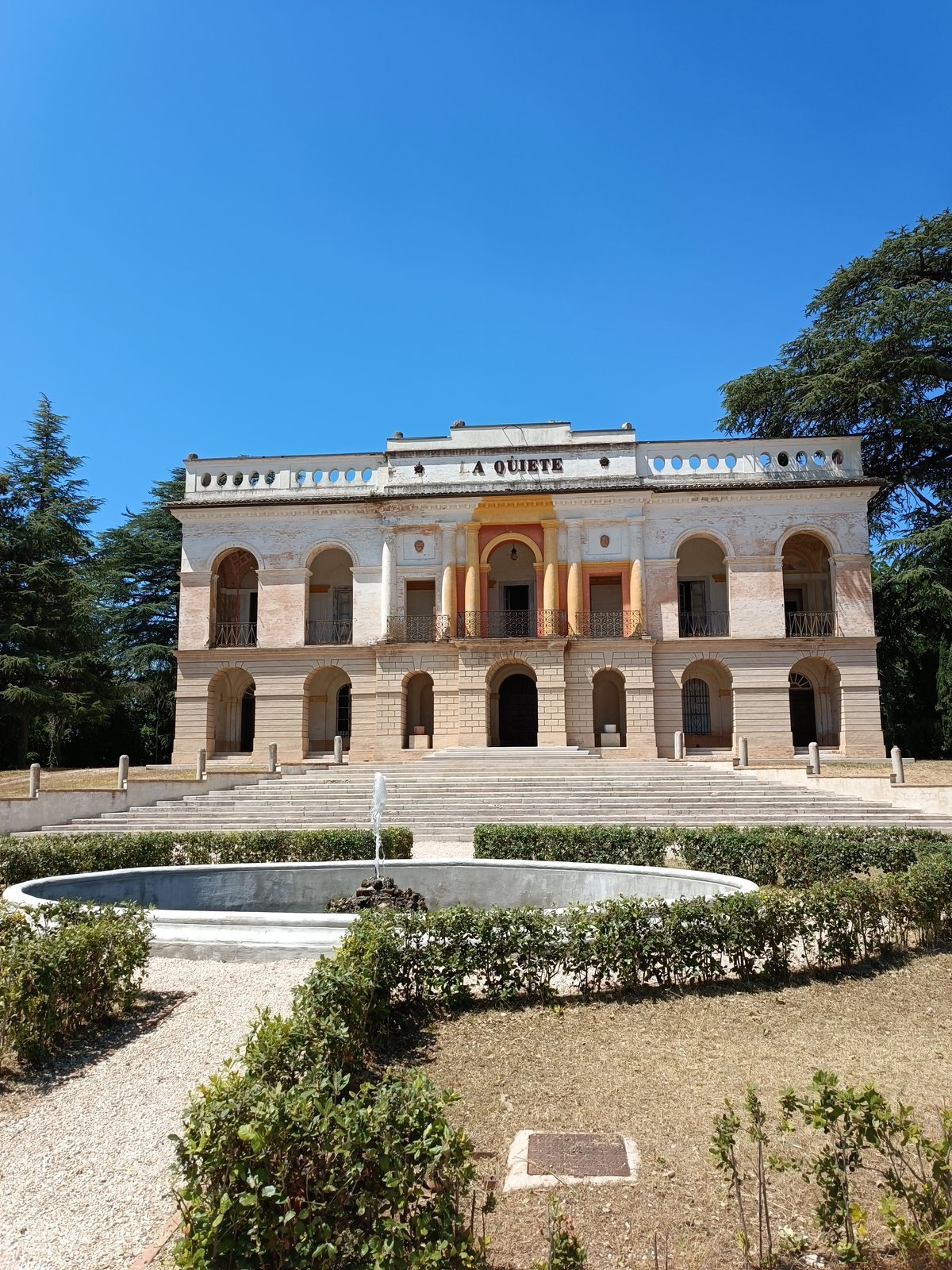 The final stop of the day—and what a stop: Villa Spada, also known as Villa la Quiete, is a neoclassical gem designed by Giuseppe Valadier in 1815. It sits on a hill just a few kilometers from Treia, surrounded by a nearly 3-hectare park with Italian gardens, trident avenues, and ancient trees. The villa was built on the site of a 16th-century Capuchin convent, but owes its splendor to Count Lavinio de’ Medici Spada, who bought it in 1828 for his Polish wife, Natalia Komar. Lavinio—poet, mineralogist (the mineral spadaite is named after him), and passionate botanist—transformed the park into a botanical garden with over 10,000 species, including 400 varieties of camellias. Today, unfortunately, the villa is in a state of decay and visits are suspended for restoration work, but from the loggia you can still enjoy a breathtaking view that stretches to the Adriatic Sea, about 30 km away. A place rich in history and charm, waiting to be rediscovered.
- Strada Provinciale 107 Romana, Treia (MC)
- Open in Google Maps
- View on Google Images
You should go if…