
🧭 What to Expect
- Ideal for wine and food lovers seeking authentic experiences among villages and wineries.
- Highlights: historic wineries, well-preserved castles, rolling hills, food and wine events.
- Not to be missed: Asti Cathedral, Canonica di Vezzolano, Castello di Costigliole, Gelso Bialbero.
- Best time: spring and autumn for mild weather and grape harvest.
Events nearby
The Province of Asti is a concentration of authentic beauty: hills cultivated with vines, ancient villages, and castles that tell centuries of history. Here you will find some of the best Piedmontese wines, such as Barbera and Moscato, but also typical products like truffles and cheeses. The article guides you through iconic places: from the majestic Cathedral of Asti to the evocative Canonica di Vezzolano, from the castles of Costigliole and Montemagno to the vineyards surrounding the Gelso Bialbero of Casorzo. Each stop offers a practical experience, with tastings, walks, and cultural visits. Organize your itinerary to discover the heart of Monferrato, with tips on wineries, restaurants, and scenic routes. The province of Asti is ideal for a weekend or a longer tour, immersing yourself in the food and wine tradition and local hospitality.
Overview
- Cathedral of Santa Maria Assunta: A Gothic Masterpiece in the Heart of Asti
- Canonica of Santa Maria di Vezzolano: A Medieval Jewel Among the Hills
- Castle of Costigliole d'Asti: History, Wine, and Atmosphere
- Troyana Tower: Ascend to Asti's Sky
- Montemagno Castle: Where History Meets Wine in Monferrato
- Baptistery of San Pietro: A Romanesque Gem in Asti
- Risorgimento Museum: A Dive into Asti's History
- Monastero Bormida Castle: A Medieval Dive Among Towers and Wine Cellars
- Casorzo's Mulberry Double Tree: One Tree, Two Species
- Domus Romana del Varrone: A Dive into Ancient Hasta
- Moncucco Castle: History and Views in the Province of Asti
- Crypt and Museum of Sant'Anastasio: History and Charm Beneath the High School
- Moncalvo Civic Museum: Art and History in a Former Convent
- Vengore Tower: A Leap into the Middle Ages Amid Langa and Legends
- Madonna del Castello: A Baroque Gem on Ranello Hill
Itineraries nearby


Cathedral of Santa Maria Assunta: A Gothic Masterpiece in the Heart of Asti
- Go to the page: Cathedral of Santa Maria Assunta: Frescoes of the Last Judgment and Romanesque Bell Tower in Asti
- Piazza Cattedrale, Asti (AT)
- Open in Google Maps
- View on Google Images
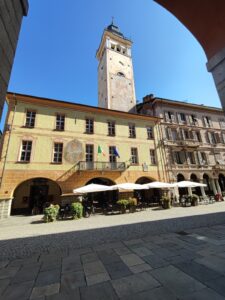
 Stepping into the Cathedral of Santa Maria Assunta in Asti is like diving into the Middle Ages, with a touch of Baroque that only adds to its charm. It is one of the largest churches in Piedmont: 82 meters long and 24 meters high, all in brick with sandstone details. The façade is a triumph of three rose windows, oculi, and a cross-shaped window, while the south side features the ornate Gothic portal known as "dei Pelletta," adorned with 15th-century saint statues. Inside, the three naves with cross vaults are enveloped in a solemn atmosphere created by the 18th-century frescoes by Francesco Fabbrica and Carlo Innocenzo Carloni. The real gem, however, is the Romanesque floor mosaic from the 12th century, depicting the rivers of Paradise and biblical scenes, hidden beneath the presbytery. Don't miss the works by Gandolfino da Roreto: the "Madonna del banchiere" (1516) with the kneeling patron, and the "Marriage of the Virgin." The 18th-century wooden choir and two historical organs (a Serassi from 1844 and a Grisori from 1768) complete the picture. The Romanesque bell tower from 1266, lowered during the Napoleonic era, watches over the square. Free admission, open daily 8:30-12:00 and 15:00-17:30. A stop here is a must for lovers of art and history.
Canonica of Santa Maria di Vezzolano: A Medieval Jewel Among the Hills
 If you happen to be in the area, don't miss the Canonica of Santa Maria di Vezzolano. It's one of those places that seems to have stepped out of a history book, but with an authentic atmosphere. Perched on the hills of Albugnano, this regular canonica – note: don't call it an abbey, it never was – retains a unique medieval charm. The facade, with its alternating red bricks and sandstone, welcomes you with three rows of small loggias and sculptures that will leave you speechless: Christ Blessing between the archangels Michael and Raphael, and the Virgin enthroned in the lunette above the portal. Inside, the two-aisled interior surprises you with a marble pulpit from 1189, a rood screen decorated with bas-reliefs depicting the Dormition of the Virgin and the genealogy of Christ. Thirty-five sculpted ancestors, plus five painted – a detail that still sparks debate among scholars. Then there's the cloister, with its 14th-century frescoes. The most famous? The Meeting of the Three Living and the Three Dead, a scene that makes you reflect on the transience of life. And don't miss the terracotta polyptych on the high altar, perhaps donated by Charles VIII of France during his descent into Italy. A place to visit at a leisurely pace, maybe on a sunny day when the light filters through the mullioned window and illuminates the statues of the Annunciation. Free entry, hours vary by season. It's truly worth it.
Castle of Costigliole d'Asti: History, Wine, and Atmosphere
- Via Pola, Annunziata (AT)
- Open in Google Maps
- View on Google Images
 If there is one place that captures the essence of the Asti lands, it is the Castle of Costigliole d'Asti. Perched on the rock overlooking the village, this manor is a perfect mix of history, architecture, and food and wine tradition. Its current appearance is the result of centuries of transformations: from a 14th-century fortress to an elegant noble residence, passing through the 19th-century interventions that preserved the Juvarra staircase, a true masterpiece. Wandering through its halls, you discover unique rooms such as the Chinese Hall, with orientalist paintings by the Pozzo brothers, or the Hall of Triumphs, decorated with military panoplies. The inner courtyard tells stories of ancient disputes among the co-lords, while the garden, purchased by the municipality in 1928, is now a public park where you can relax. But the real surprise? Inside the castle are the ICIF, the Italian cooking school for foreigners, and the Consortium of Barbera d'Asti and Wines of Monferrato. A perfect combination of culture and flavors, enhanced by the Confraternity of San Gerolamo and the Museum of Sacred Art. Visiting this castle means immersing yourself in an atmosphere where the past intertwines with the present, among steep alleys and breathtaking views of the Monferrato hills.
Troyana Tower: Ascend to Asti's Sky
- Go to the page: Troyana Tower of Asti: Climb 199 Steps for a 360° View of the Historic Center and Monferrato
- Piazza Medici, Asti (AT)
- https://www.comune.asti.it/pagina806_torre-troiana.html
- Open in Google Maps
- View on Google Images
- info@fondazioneastimusei.it
- +39 0141 399 489
 If there's one place that captures Asti's medieval soul, it's the Troyana Tower, also known as the Clock Tower. Square in plan, 44 meters tall – it's the city's tallest surviving tower – and 199 wooden steps that lead you straight to one of the most stunning views of Monferrato. The effort? Forgotten as soon as you reach the top: the panorama sweeps over Asti's red rooftops, the hills, and on clear days, all the way to the Alpine arc. One of those experiences that makes you understand why this area is a jewel of Piedmont.
The tower dates back to the 13th century, when the powerful Troya family – wealthy bankers who lent money across half of Europe – had it raised to showcase their status. The mullioned windows and the triple crown of brick and sandstone hanging arches are the hallmark of Asti's fortified architecture. In 1560, it passed to the municipality, which turned it into a civic clock. Even today, every hour is marked by the 1531 bell, considered the oldest in Piedmont still in use. A sound that has accompanied city life for centuries, marking school openings, shop closures, and public punishments.
Inside, you climb a staircase of 199 steps, with stops on each floor to admire the mullioned windows and the clock mechanism. At the top, besides the view, you can see the bell up close and the metal pinnacle that protects the gears. The tower is part of Asti's museum circuit (Smarticket single ticket) and is open daily from 10 am to 7 pm, closed from November 1 to March 31. In short, if you're passing through Asti, don't miss it: it's a dive into the Middle Ages that leaves you breathless – literally.
Montemagno Castle: Where History Meets Wine in Monferrato
- Vicolo III, Montemagno Monferrato (AT)
- Open in Google Maps
- View on Google Images
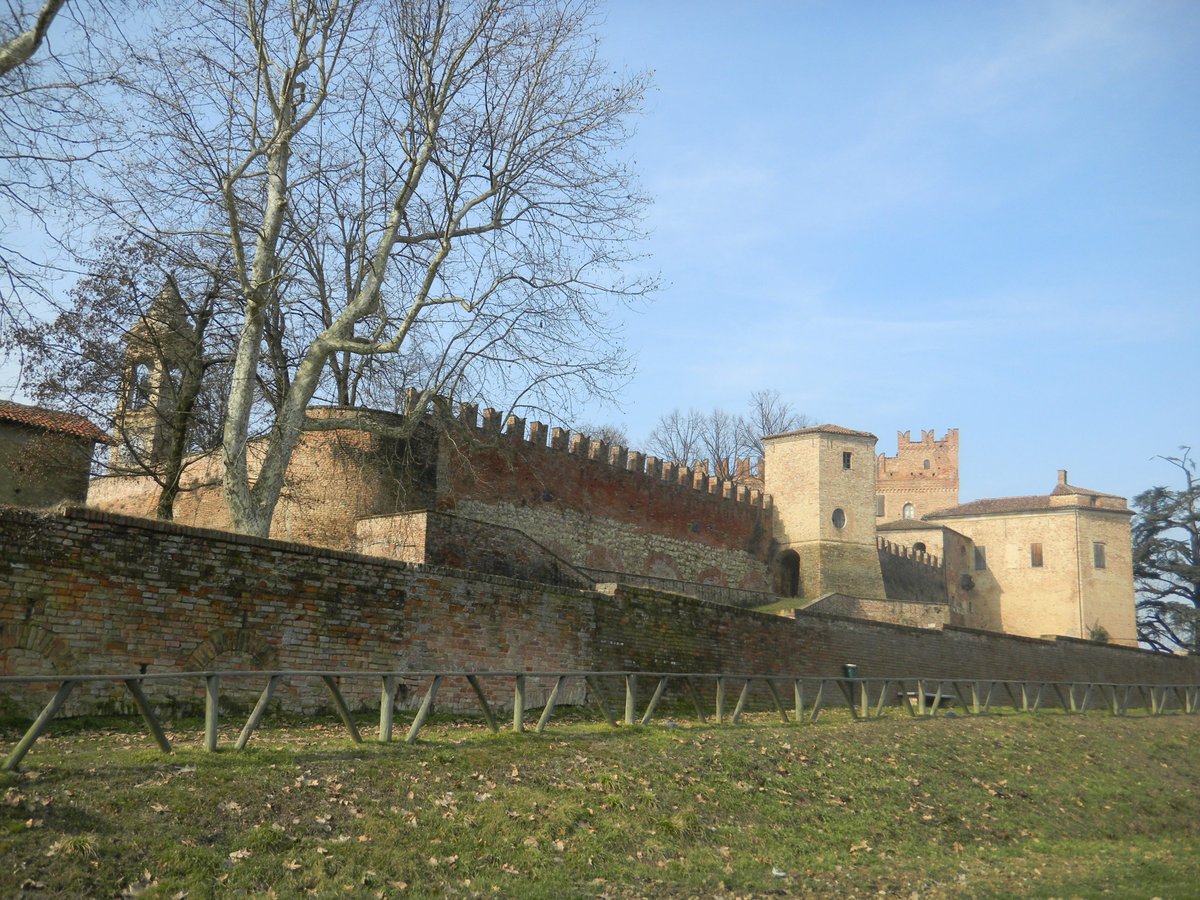 Perched atop the hill, the Montemagno Castle towers over the village with its imposing bulk. The earliest traces date back to 981, when it was a simple keep with a moat. Since then, it has seen centuries of battles: destroyed in 1290 during the wars between Asti and the Marquisate of Monferrato, it was rebuilt in the 1300s. Today, after changing hands among families such as the Della Cerda, the Callori, and the Calvi di Bergolo, it is a private residence, but you can admire it from the outside or visit on special occasions (from May to October, the first and third Tuesday of the month, by appointment).
The architecture is a fascinating mix of eras: the irregular layout, the pointed windows with two-tone bricks and tufa, the Ghibelline battlements, and the 18th-century elliptical courtyard. Don't miss the drawbridge and the underground cellars that once served as prisons. The real spectacle, however, is the view: from the road behind the castle, you get one of the most beautiful vistas of Monferrato, with hills dotted with vineyards. Montemagno is also the homeland of Ruchè DOCG, a fragrant red wine that supposedly originated here. If you come in May, there's the "Pane al Pane" festival with local products. In short, a place that combines history, wine, and picture-postcard landscapes.
Baptistery of San Pietro: A Romanesque Gem in Asti
- Corso Vittorio Alfieri 2, Asti (AT)
- https://www.comune.asti.it/pagina796_san-pietro-in-consavia.html
- Open in Google Maps
- View on Google Images
- nfo@fondazioneastimusei.it
- +39 0141 399489
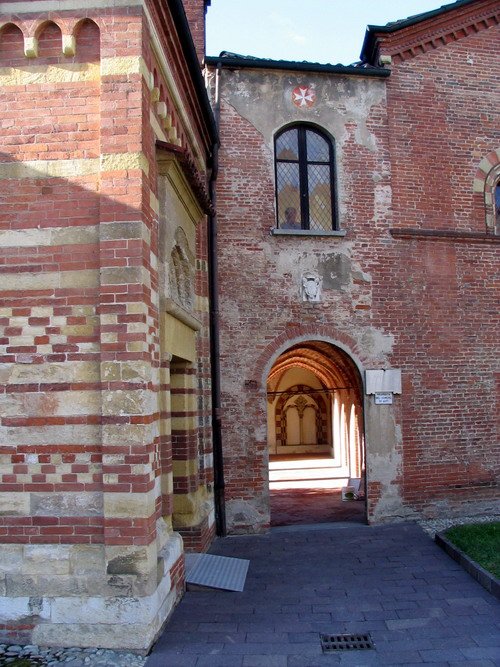 If you pass through Asti, the Baptistery of San Pietro (or Rotonda di San Pietro in Consavia) is a stop you can't miss. This Romanesque complex, dating back to the first half of the 12th century, is a small treasure trove of history and architecture. As soon as you enter, the intimate atmosphere strikes you: light filters through the single-lancet windows and rests on the eight paired columns in brick and tufa that support the dome. The exterior, octagonal with hanging arches, hides a circular interior, a symbol of resurrection. At the center, a beautiful 14th-century baptismal font reminds you that baptisms were celebrated here. Don't miss the Valperga Chapel (15th century), with its rich terracotta friezes and corbels carved with grotesque masks. The complex also includes the cloister and the prior's house, now home to the Archaeological Museum (unfortunately closed for restoration). A curiosity: the ancient priory of the Knights Hospitaller once stood here. Entry is free, but if you also want to visit other museums, the Smarticket is worthwhile, including six sites for €10. Hours: Tuesday to Sunday, 10 am-1 pm and 3-6 pm (until 7 pm in summer). I was captivated by the sandstone friezes on the columns: zoomorphic figures and cornucopias that seem to tell medieval stories. In short, a place that smells of the sacred and of history, to be savored slowly.
Risorgimento Museum: A Dive into Asti's History
- Go to the page: Asti's Risorgimento Museum: Original 1821 Flag and Astigian Memorabilia
- Corso Vittorio Alfieri 350, Asti (AT)
- https://www.comune.asti.it/pagina948_museo-del-risorgimento.html
- Open in Google Maps
- View on Google Images
- musei@comune.asti.it
- +39 0141 399555
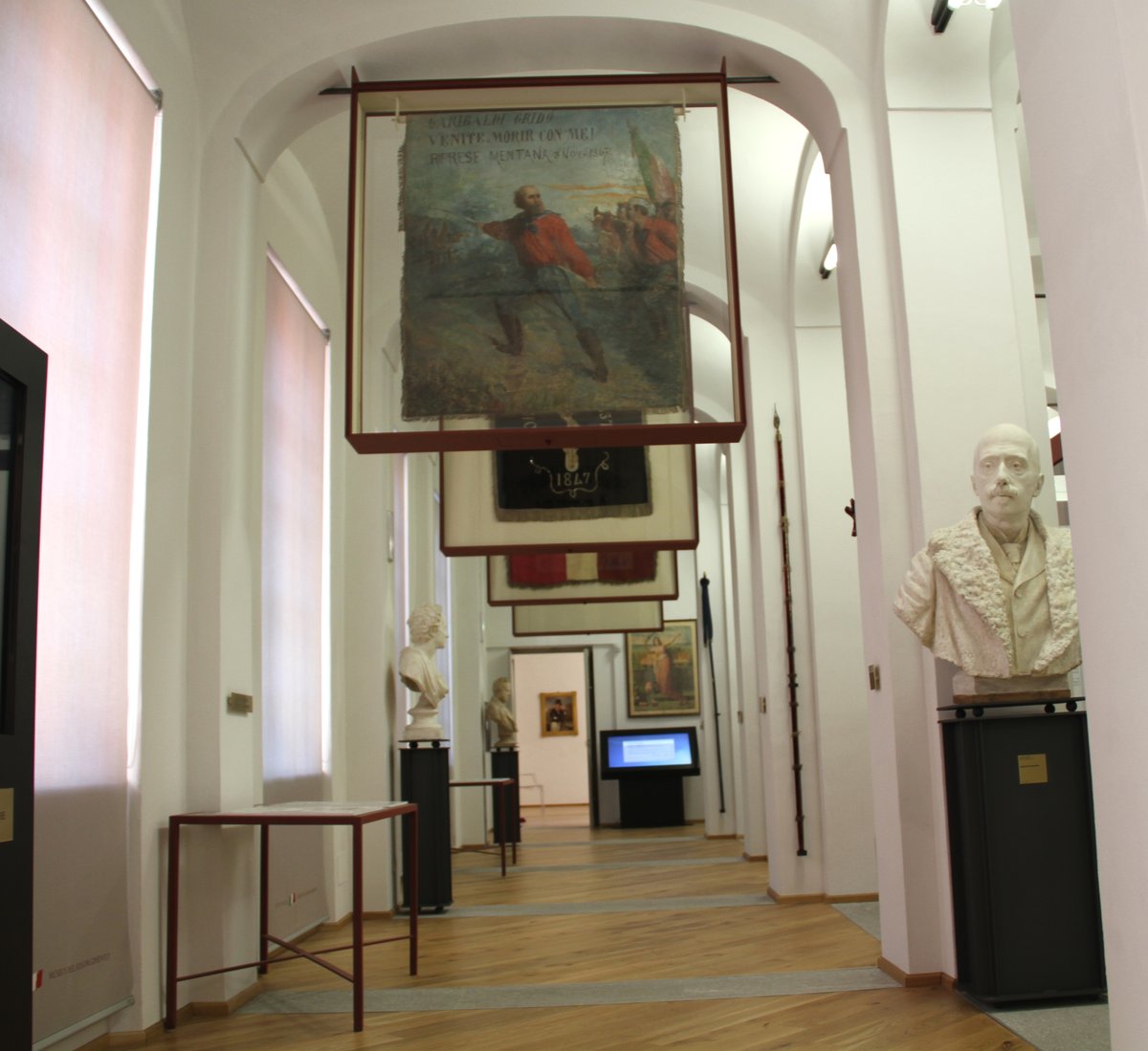 If you're passing through Asti, don't miss the Risorgimento Museum, housed in the elegant Palazzo Ottolenghi (Corso Alfieri 350). Born from donations by local families, it tells the story from 1797 (the year of the Astese Republic) to 1870, with forays into the two world wars. The original core dates back to 1898, when Count Leonetto Ottolenghi commissioned paintings for the fiftieth anniversary of the Albertine Statute. After several relocations, the museum reopened in 2012 right here, with a modern layout that enhances both the artifacts and the spaces.
The collection is a fascinating mix: battle paintings by Morgari, Pontremoli, and Cerruti Bauduc, and oval portraits of Cavour, Garibaldi, and Brofferio, by Asti-born painter Paolo Arri. Don't miss the Garibaldian flags – nine out of 39 are on display – and the famous 1866 red shirt. Also notable are the uniform and saber of Major Orazio Dogliotti and the travel chest of Vincenzo Gioberti.
The museum spans three levels. On the second basement floor, you can access a World War II air-raid shelter, restored and enhanced with a 20-minute projection on Asti's war history. It's all very well curated, with informative panels and multimedia aids. Good news: admission is free! But be aware: the museum is currently closed for renovations (indefinitely). Before visiting, check visit.asti.it or call 0141 594791. When it reopens, it will be an exciting dive into our past.
Monastero Bormida Castle: A Medieval Dive Among Towers and Wine Cellars
- Piazza Castello 1, Monastero Bormida (AT)
- https://www.castelliaperti.it/it/strutture/lista/item/castello-di-monastero-bormida.html
- Open in Google Maps
- View on Google Images
- info@comunemonastero.at.it
- +39 0144 88012
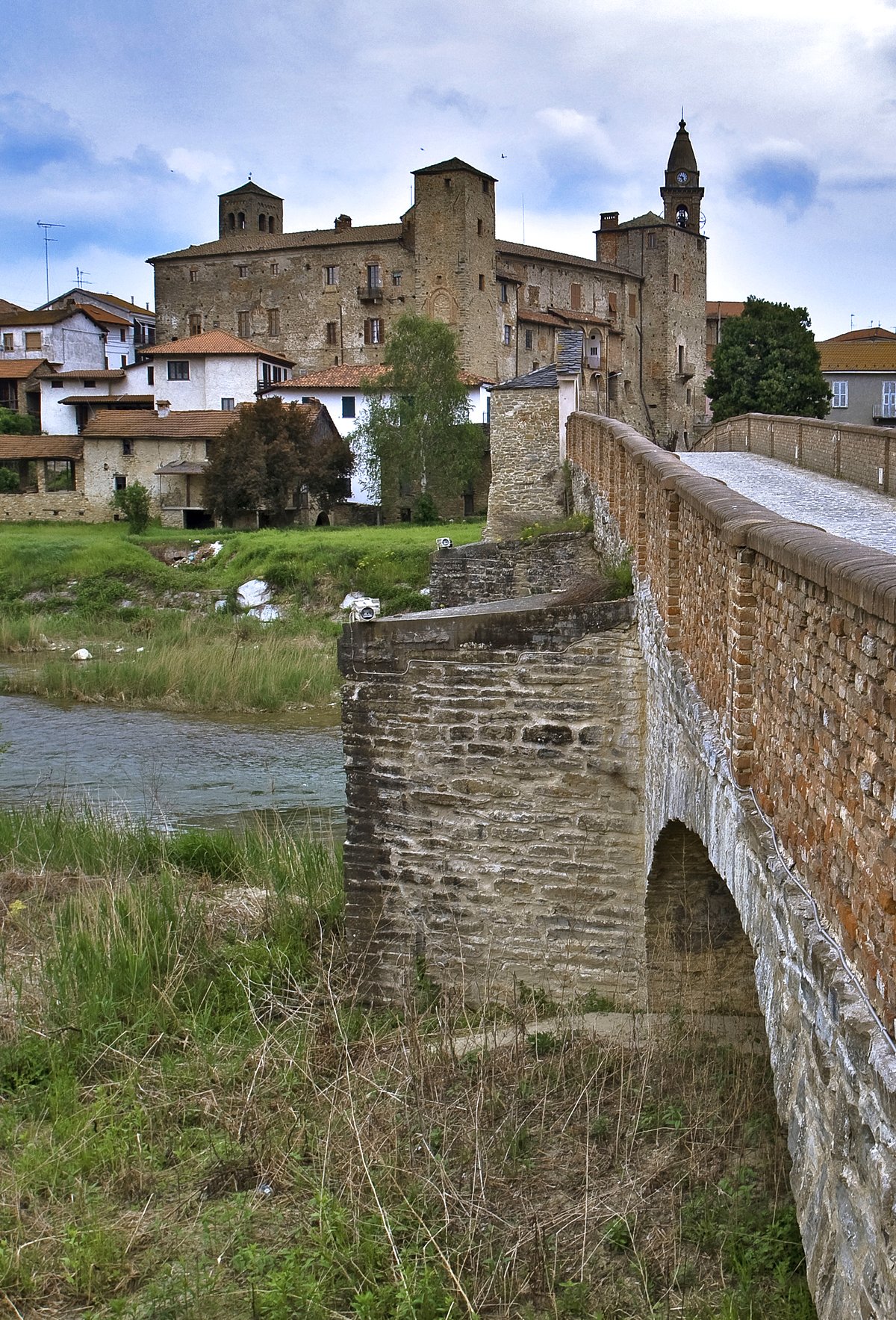 If you're passing through the Langa Astigiana, stop by Monastero Bormida. Here, Monastero Bormida Castle will surprise you with its layered history. Built around 1050 as a Benedictine monastery dedicated to Santa Giulia, it still retains its 27-meter-high Romanesque bell tower, with four tiers of friezes and hanging arches. Walking under the stone arch that connects the tower to the castle body, you can almost hear the echo of the monks' footsteps. Between 1394 and 1405, the Marquises Del Carretto turned it into a fortress, but what you see today is the result of Renaissance and Baroque remodeling. The 17th-century façade with its Baroque pilasters is imposing, but it's at the back that you'll find the most fascinating part: a 16th-century two-arched loggia with a central stone column. Inside, mosaic floors and sail and cross vaults adorned with floral and geometric frescoes make you feel like you're in a noble residence. Don't miss the wine cellars, dedicated to aging the great local wines, and the Edoardo Rubino Plaster Cast Gallery on the main floor, featuring early 20th-century plaster sculptures. If you're lucky, you might catch one of the historical reenactments in costume organized by the Castelli Aperti circuit – every year they offer animated tours that bring history to life. The ticket costs €2.50, but for a full experience, I recommend the guided tour with an aperitif featuring local products.
Casorzo's Mulberry Double Tree: One Tree, Two Species
- Strada Cascine Napoli, Prato Casale (AT)
- Open in Google Maps
- View on Google Images
 If you think you've seen it all, the Double Tree of Casorzo will make you think again. Imagine a century-old mulberry tree serving as the base for a vigorous cherry tree, whose roots descend through the hollow trunk to the ground. A botanical alliance that defies the rules. You'll find it along SP38, between Casorzo and Grana, in the province of Asti. The equipped area with picnic tables and a sculpture by the Malvasia Protection Consortium welcomes visitors.
The cherry tree, about six meters tall, is taller than the mulberry (five). In spring, between March and April, the spectacle is incredible: the cherry blooms white while the mulberry is still bare. A contrast worth photographing. In summer, with both green, the double tree blends in. The best time? Definitely spring.
It is said to have sprouted from a seed brought by a bird, which fell into the mulberry's cavity. Today it is a natural monument. The nearby town of Casorzo is worth a visit: the Church of Madonna delle Grazie (13th century) and the social winery where you can taste Malvasia. If you love walking, the Malvasia Trail passes right here. A place that tells of the power of nature, and a bit of the local community, which takes care of this botanical embrace.
Domus Romana del Varrone: A Dive into Ancient Hasta
- Via Varrone 30, Asti (AT)
- https://www.fondazioneastimusei.it/domus-romana/
- Open in Google Maps
- View on Google Images
- info@fondazioneastimusei.it
- +39 0141 530403
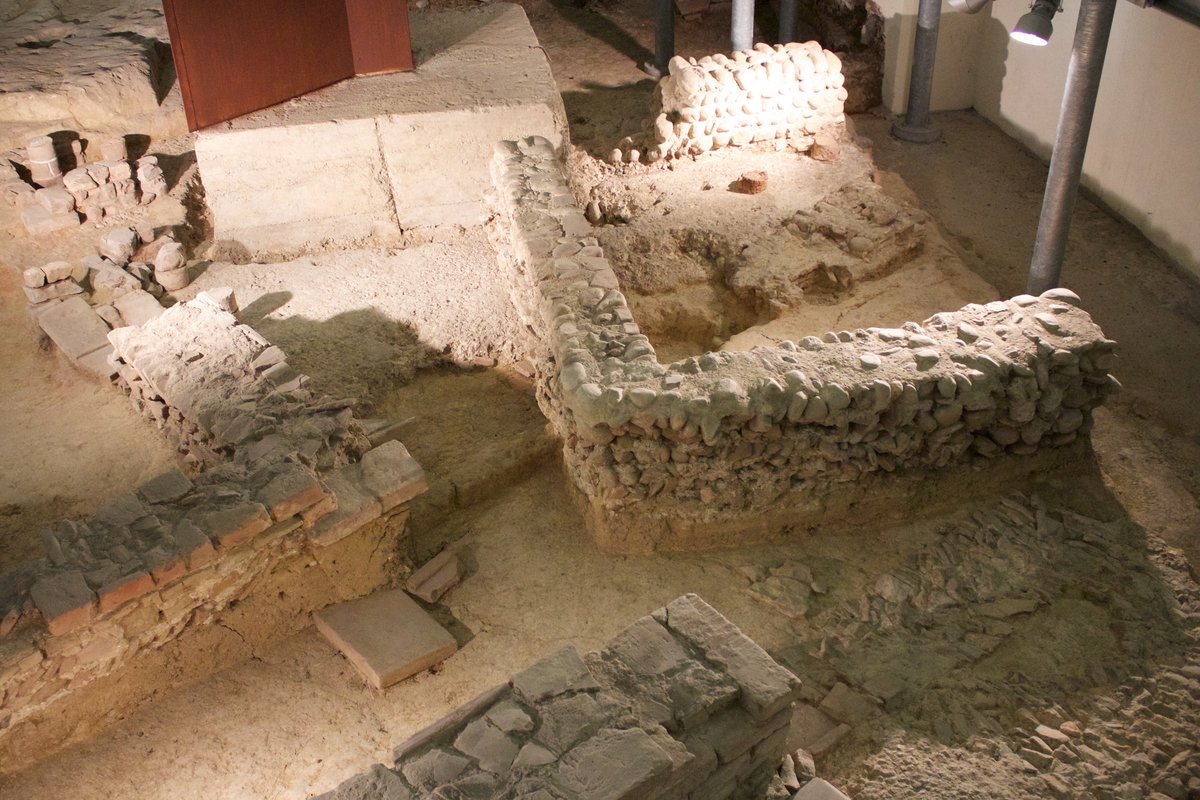 If you think Asti is just about wine and truffles, think again. In the heart of the historic center, a stone's throw from the Red Tower, lies a piece of Roman history few know: the Domus Romana del Varrone. Located at Via Varrone 30, in the basement of what was once the Canuto Borelli retirement home, this site sits about eighty meters north of the ancient western gate (the Red Tower). Here stood a wealthy patrician residence built in the second half of the 1st century AD, when Asti was still called Hasta. The remains are fragmentary, but the absolute gem is the mosaic floor of the triclinium, the dining room. Measuring 3 x 1.70 meters, it is unique in Piedmont for its quality and complexity. Made in opus tesselatum and opus sectile, it features a white background with colored marble tiles (serpentine, green, Numidian yellow) alternating with fish figures and ivy branches. Two black-and-white tessera borders frame it: one herringbone and one braid. Spectacular, right? But that's not all. Later, the house was equipped with a hypocaust heating system: hot air from a furnace (praefurnium) circulated under the floor, and the brick pillars are still visible. Small fragments of painted plaster and colored marbles hint at a luxurious dwelling. Today, the site is managed by the Fondazione Asti Musei. Open daily from 10:00 AM to 7:00 PM, last entry at 6:00 PM. Tickets cost €5 (reduced €3). For info: +39 0141 530403. A short but intense stop, perfect for archaeology lovers wanting to discover Asti's Roman roots.
Moncucco Castle: History and Views in the Province of Asti
- Via S G Bosco, Moncucco Torinese (AT)
- Open in Google Maps
- View on Google Images
 As soon as you arrive in Moncucco Torinese, the castle greets you from above. Imposing, with its massive walls and two towers soaring over the town, it dominates the Monferrato hills and offers a panorama that stretches as far as Superga and the Alpine arc. It's one of those places where you can breathe history at every step. The first written record dates back to 1164, when Frederick Barbarossa confirmed it to the Marquis of Monferrato. But it was in the 13th century that the castle became legend: here were born the brothers Nicolao and Jacopo, two Knights Templar. Jacopo went on to become Grand Preceptor of Italy of the Order of the Temple – the kind of thing that gives you chills. Over the centuries, it passed from hand to hand: from the Solaro to the Grisella family, until the municipality bought it in 1855. Today, besides housing schools, it contains the Plaster Museum, which tells the story of working with this material so tied to the rural architecture of Lower Monferrato. And that's not all: in 2025, work began to transform the south wing into a restaurant and guesthouse with ten rooms. A way to make the castle not just a monument, but a living place. If you're passing through, don't just look at it from outside: go in, climb the walkways and enjoy the view. And maybe, after visiting the museum, take a stroll through the nearby villages. Moncucco Castle is one of those stops that stays with you, between history, art, and a panorama you won't forget.
Crypt and Museum of Sant'Anastasio: History and Charm Beneath the High School
- Go to the page: Crypt and Museum of Sant'Anastasio: History and Archaeology in Asti
- Corso Vittorio Alfieri 365, Asti (AT)
- https://www.comune.asti.it/pagina793_cripta-e-museo-di-santanastasio.html
- Open in Google Maps
- View on Google Images
- info@fondazioneastimusei.it
- +39 0141 437454
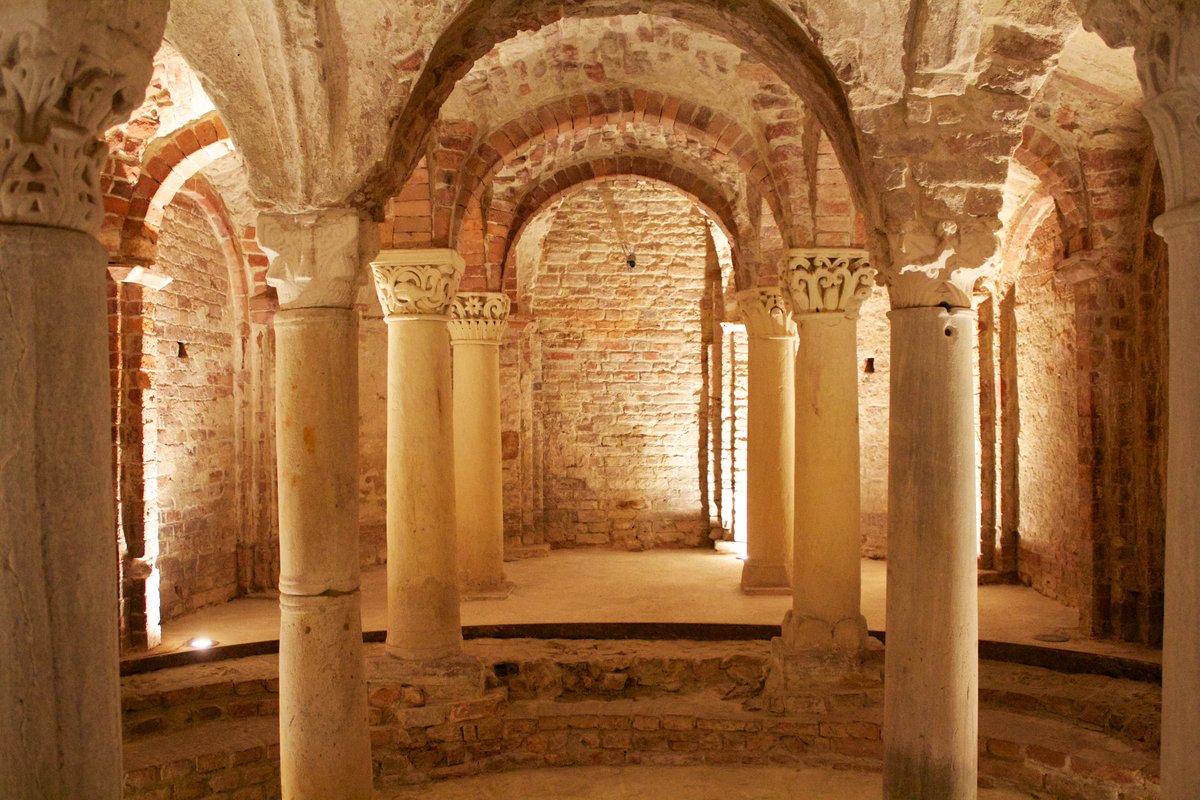 Beneath the Classical High School of Asti, a stone's throw from the cathedral, lies an archaeological treasure few know: the Crypt and Museum of Sant'Anastasio. Excavated in the heart of the city, this crypt dates back to the 8th century and preserves traces of Lombard and Roman dominion. The plan is basilical, with three naves and cross vaults. The oldest columns are Roman spolia, with capitals blending late Roman and early medieval elements. Among these, a Lombard capital with incised Greek crosses stands out. The eastern part is a 12th-century expansion, with sandstone columns carved with scrolls and animals. The lapidary museum displays early 12th-century Romanesque capitals, artifacts from the Gothic church of Santa Maddalena, and a 14th-century antependium from San Pietro in Consavia. But the real magic is in the stratifications: underfoot, you can see slabs from the Roman forum of Hasta (1st century AD), Lombard tombs from the 7th-8th centuries, and the walls of three successive churches. The atmosphere is evocative: the silence and soft light make it very intimate. A place I recommend to those who love hidden stories. Hours: daily 10am-7pm (last entry 6pm). Cost: €10 full, €8 reduced. Info: 0141 437454.
Moncalvo Civic Museum: Art and History in a Former Convent
- Via Guglielmo Caccia 5, Moncalvo (AT)
- Open in Google Maps
- View on Google Images
- +39 0141 917427
 In the heart of Moncalvo, amidst the gentle landscapes of Monferrato, the Civic Museum will surprise you. Housed in the halls of the former Ursuline convent – a 17th-century building commissioned by the painter Guglielmo Caccia – it is a small treasure chest of art. The main collection is that of Moncalvo-born ambassador Franco Montanari: an extraordinary donation blending works of 20th-century masters like Giorgio De Chirico, Marc Chagall, Renato Guttuso, and Afro with African and Oriental art. Among the prized pieces are a pencil drawing by Modigliani and a drypoint by Chagall. But the true heart consists of three still lifes by Orsola Maddalena Caccia, Guglielmo's daughter, painted as theological narratives. The museum is managed by the A.L.E.RA.MO Onlus association, which organizes temporary exhibitions throughout the year – such as the fascinating “Paesaggio – 景色” dedicated to Japanese art. The atmosphere is intimate, with no architectural barriers. Please note: the museum is open only on Saturdays and Sundays (10 a.m. to 6 p.m.), but by appointment during the week as well. A tip? Always check the website before heading out, as hours may vary. A cultural gem worth a detour, especially if you happen to visit during the truffle or fat ox fairs.
Vengore Tower: A Leap into the Middle Ages Amid Langa and Legends
- Regione Pianbruno, Roccaverano (AT)
- Open in Google Maps
- View on Google Images
 Perched on a hill east of Roccaverano, amidst wheat fields and woods, Vengore Tower is one of those places that catches you off guard. You spot it from afar, nearly 30 meters high, and wonder how it has endured so long. Built in the second half of the 14th century by order of the town, it served as a watchtower overlooking the Bormida Valley of Spigno and the Acqui area. Its square plan is made of local Langa stone, with thick walls and a moat 4.5 meters deep that is still visible. The arrow slits and corbels—those stone brackets—once supported a wooden walkway, now gone. The original entrance is 7.5 meters above ground, reachable via a recently installed steel staircase. Inside, you can only climb by reservation (call the town hall at 0144 93025), but it's worth it: from the top, the view spans the Alps, the badlands of Mombaldone, and the hills of Alto Monferrato. Immersed in silence, the tower is part of the Tour of the 5 Towers, a hiking route of about 30 km connecting the area's fortifications. And then there's the legend: they say the name comes from an ambitious marquis who shouted "I come, King!"—or perhaps from a group of villagers who wanted to emulate royalty, punished by divine wrath. Other stories make it a home to goblins and ghosts. No matter: today it is a symbol of this Langa Astigiana, restored and ready to let you experience a piece of the Middle Ages suspended in greenery.
Madonna del Castello: A Baroque Gem on Ranello Hill
- Via Madonna del Castello 4, Ranello (AT)
- https://www.castelliaperti.it/it/strutture/lista/item/torre-e-cappella-dei-rivalba.html
- Open in Google Maps
- View on Google Images
- alberto.moret@libero.it
- +39 011 9928855
 Madonna del Castello is a surprise waiting for you on the highest hill of Ranello, in the province of Asti. Here, where the ancient castle stood before being demolished at the beginning of the 16th century, now rises a small Baroque church that is a true gem. All that remains of the old fortress is a lowered tower, almost as a testament to the passage of time. The church, dedicated to the Madonna and overlooking the street of the same name, impresses with its elegant structure and trompe-l'oeil decorations that create an illusory sense of depth. As you enter, your gaze is captured by the paintings adorning the walls: a burst of colors and details that tell stories of faith and art. The atmosphere is intimate, secluded, almost otherworldly. Strolling around the area, you also come across the Chapel of San Sebastiano, a small gem marking the exit from the town center. A place you don't expect, but that stays in your heart. Perfect for those who love discovering hidden corners away from mass tourism. I recommend visiting it calmly, perhaps on a sunny morning when the light filters through the windows and illuminates the frescoes, creating a magical atmosphere.