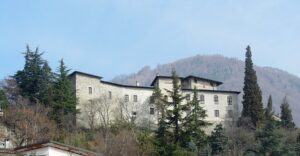
Are you ready to discover the castles of Pavia province? This 2-day itinerary takes you on a journey through historic manors that tell centuries of stories, from Vigevano to Zavattarello. We'll start from the majestic Piazza Ducale in Vigevano, then explore the Visconteo Castle of Pavia and the charming village of Zavattarello with its imposing Dal Verme Castle. A journey through art, architecture, and hilly landscapes that will make you fall in love with this fascinating land. Get ready for an unforgettable weekend among the hidden treasures of Pavese!
🗺️ Your trip at a glance
A weekend dedicated to the castles of the Pavia province, from Vigevano to Zavattarello. Walk along the Covered Road, climb the Bramante Tower, and discover perfectly preserved medieval manors.
- Ideal for enthusiasts of medieval history and fortified architecture looking for a structured 2-day itinerary.
- Highlights: includes 6 distinct castles with interactive maps, from the Renaissance-style Vigevano to the hilltop villages of Varzi and Zavattarello.
- Perfect for those wanting a weekend getaway in Lombardy, among art, scenic views, and structures like the still-inhabited Castello Dal Verme.
Itinerary stops
Day 1 - Stop no. 1
Vigevano Castle
 Our Castles of the Pavia Area itinerary begins precisely at Vigevano Castle, an extraordinary architectural complex spanning over 70,000 square meters. Built mainly between 1341 and 1499 by the Visconti and Sforza families, this castle represents one of the most significant examples of Lombard fortified architecture. The Covered Road, stretching 164 meters long, connects the castle to the historic center and was used for protected troop movements. Today, you can walk along this evocative passageway while discovering the ancient defense systems. The ducal stables, among the largest in Europe, host temporary exhibitions, while from the Bramante Tower you can enjoy a breathtaking view of Piazza Ducale and the city. Particularly interesting is the system of internal courtyards that develops across different levels, showcasing the structure's evolution through the centuries.
- Strada coperta, Vigevano (PV)
- Open in Google Maps
- View on Google Images

You should go if...
Day 1 - Stop no. 2
Bramante Tower
 Bramante Tower rises imposingly over Piazza Ducale, the Renaissance heart of Vigevano. Built in the 15th century by order of Ludovico il Moro, this 75-meter-high bell tower represents one of the finest examples of Sforza architecture in Lombardy. Its slender structure and elegant mullioned windows testify to the transition from Gothic to Renaissance. Climbing the 133 steps of the internal spiral staircase, you reach the bell chamber from which you can enjoy a breathtaking view of the entire square and the Sforza Castle. The tower still houses historic bells, including the "Bell of the Fallen" cast in 1924. Its strategic position, at the corner between the square and the castle, makes it a privileged observation point over the ducal complex.
- Piazza Ducale, Vigevano (PV)
- Open in Google Maps
- View on Google Images
You should go if...
Day 1 - Stop no. 3
Visconti Castle of Voghera
 Leaving behind the Renaissance city of Vigevano, the Visconti Castle of Voghera emerges as an imposing military structure that narrates centuries of Lombard history. Built in the 14th century by order of Galeazzo II Visconti, this fortress represents one of the best-preserved examples of fortified architecture in the Pavia region. Its massive brick structure and corner towers define the urban skyline of the city, while the original moat, now filled in, recalls its defensive purpose. Crossing through the entrance portal leads to the inner courtyard, where the elegant mullioned windows and patrol walkways testify to its evolution from stronghold to noble residence. Particularly fascinating are the underground prisons and the castle chapel, which preserve traces of original 14th-century frescoes. Its strategic position along the Via Francigena made it for centuries a crucial crossroads for controlling the territory between Piedmont and Lombardy.
- Piazza della Liberazione, Voghera (PV)
- Open in Google Maps
- View on Google Images
You should go if...
Day 2 - Stop no. 1
Malaspina Castle of Varzi
 The second day of our itinerary through the castles of Pavese begins with a stop of great historical charm: the Malaspina Castle of Varzi, strategically perched on a hill overlooking the namesake village. Built in the 12th century by the powerful Malaspina family, this fortified complex represents one of the best-preserved examples of medieval military architecture in Oltrepò. Its cylindrical towers made of local stone and the crenellated walls characterize the village's skyline, while the central keep, over 30 meters high, offers an exceptional panoramic view of the Staffora valley. Inside, visitors can admire the frescoed halls of the noble floor, where traces of 14th-century decorations are preserved, and the castle chapel dedicated to Saint John. Particularly interesting is the defense system with arrow slits for archers and the still-walkable patrol walkways, which testify to the strategic importance of this outpost along the trade routes between the Po Valley and Liguria.
- Vicolo alla Torre, Varzi (PV)
- Open in Google Maps
- View on Google Images
You should go if...
Day 2 - Stop no. 2
Dal Verme Castle
 Dal Verme Castle in Zavattarello represents the pinnacle of our itinerary through the castles of Pavia. This imposing manor dominates the village from its 567-meter height, offering breathtaking views of the surrounding valleys. Built between the 10th and 14th centuries, the castle preserves intact its crenellated walls and cylindrical towers that characterize medieval military architecture. Inside, visitors can admire the frescoed halls and underground prisons, testaments to the long domination of the Dal Verme family. Particularly evocative is the noble chapel with its 15th-century frescoes. The castle is perfectly preserved thanks to recent restorations that have enhanced its historical and architectural aspects, making it one of the finest examples of fortified architecture in Oltrepò Pavese.
- Via Dal Verme, Zavattarello (PV)
- Open in Google Maps
- View on Google Images
You should go if...
Day 2 - Stop no. 3
Scaldasole Castle
 Leaving the Dal Verme Castle of Zavattarello behind us, we head towards Scaldasole to discover another fortified gem. Scaldasole Castle rises majestically in Piazza Castello, with its quadrangular structure and four corner towers defining its typically Visconti appearance. Built between the 14th and 15th centuries, this castle represents one of the best-preserved examples of military architecture in the Lower Pavia area. Inside, you can admire the porticoed courtyards and halls that preserve traces of ancient frescoes, while the exterior is characterized by the dry moat that once contributed to its defense. Particularly interesting is the northeast tower, the tallest one, which offers a panoramic view of the surrounding countryside. The castle, still inhabited today, maintains its medieval charm intact thanks to careful restoration that has preserved its original features.
- Piazza castello, Scaldasole (PV)
- Open in Google Maps
- View on Google Images
You should go if...