The Grosio Rock Engravings Park is an open-air museum between Grosio and Grosotto, in Valtellina. Here you can admire the Rupe Magna, one of the largest engraved rocks in the Alps, and visit the castles of San Faustino and Castello Nuovo. The path winds through terraced vineyards and ancient chestnut trees, offering a dive into history and nature.
Over 5,000 rock engravings of human, animal, and geometric figures.
Open from April to October with guided tours included in the ticket.
Guided tours and educational workshops for all ages.
Panoramic view of Valtellina from the castles and Rupe Magna.
A Dive into Valtellina’s Prehistory
If you think Valtellina is just wine and mountains, get ready to think again. The Grosio Rock Engravings Park is a place where two worlds meet: prehistoric rock art and medieval castles. Walking among the terraced vineyards, you come face to face with the Rupe Magna, a rock slab with over 5,000 engravings – human figures, animals, mysterious symbols. And right above, as if watching over this treasure, stand two castles: Castello di San Faustino and Castello Nuovo. A place that surprises at every step.
A Dive into Valtellina’s Prehistory
If you think Valtellina is just wine and mountains, get ready to think again. The Grosio Rock Engravings Park is a place where two worlds meet: prehistoric rock art and medieval castles. Walking among the terraced vineyards, you come face to face with the Rupe Magna, a rock slab with over 5,000 engravings – human figures, animals, mysterious symbols. And right above, as if watching over this treasure, stand two castles: Castello di San Faustino and Castello Nuovo. A place that surprises at every step.
Historical Background
The oldest carvings date back to the Neolithic period (4th millennium BC), but the Rupe Magna was only discovered in 1966 by archaeologist Davide Pace. The park was founded in 1978 thanks to the donation of land by the Marquise Margherita Visconti Venosta, and is now managed by a consortium. On the hilltop, the Castle of San Faustino (10th-11th century) and the New Castle (built between 1350 and 1375) recount centuries of defensive history. Here are the key moments:
Historical Background
The oldest carvings date back to the Neolithic period (4th millennium BC), but the Rupe Magna was only discovered in 1966 by archaeologist Davide Pace. The park was founded in 1978 thanks to the donation of land by the Marquise Margherita Visconti Venosta, and is now managed by a consortium. On the hilltop, the Castle of San Faustino (10th-11th century) and the New Castle (built between 1350 and 1375) recount centuries of defensive history. Here are the key moments:
In the Footsteps of the Rupe Magna
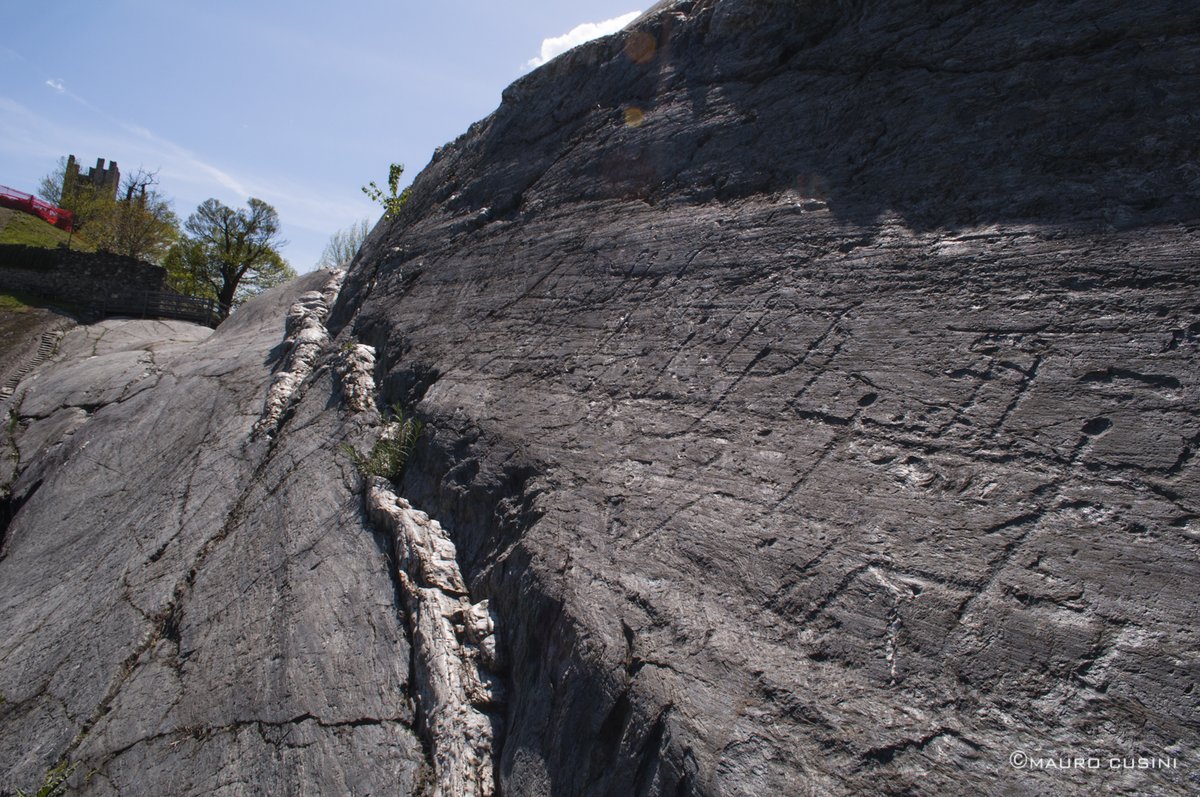
The Rupe Magna is the heart of the park: a vast sloping rock surface engraved with over 5,000 figures dating from the Neolithic to the Iron Age. Among them stands out a warrior with a round shield and a stick-like sword – the park’s symbol, still enigmatic in meaning. In addition to human and animal figures, there are cup marks and geometric signs. The rock is protected by a walkway that lets you observe up close without damaging anything. Tip: go with the low light of morning or late afternoon, when the engravings are most visible.
In the Footsteps of the Rupe Magna
The Rupe Magna is the heart of the park: a vast sloping rock surface engraved with over 5,000 figures dating from the Neolithic to the Iron Age. Among them stands out a warrior with a round shield and a stick-like sword – the park’s symbol, still enigmatic in meaning. In addition to human and animal figures, there are cup marks and geometric signs. The rock is protected by a walkway that lets you observe up close without damaging anything. Tip: go with the low light of morning or late afternoon, when the engravings are most visible.
Two Castles, a Thousand Stories
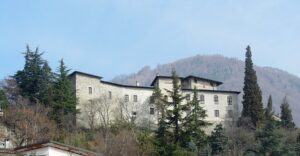
On the ridge overlooking the Rupe Magna, two medieval castles of different eras and structures stand. The Castello di San Faustino (or Castello Vecchio) is the oldest: dating back to the 10th-11th century, it preserves a Romanesque bell tower with a chapel and rock-cut tombs. The Castello Nuovo, built between 1350 and 1375 by the Visconti, features a double ring of walls and a massive internal tower. From here, the view over the terraced vineyards and mountains is spectacular. You can almost hear the echo of ancient battles.
Two Castles, a Thousand Stories
On the ridge overlooking the Rupe Magna, two medieval castles of different eras and structures stand. The Castello di San Faustino (or Castello Vecchio) is the oldest: dating back to the 10th-11th century, it preserves a Romanesque bell tower with a chapel and rock-cut tombs. The Castello Nuovo, built between 1350 and 1375 by the Visconti, features a double ring of walls and a massive internal tower. From here, the view over the terraced vineyards and mountains is spectacular. You can almost hear the echo of ancient battles.
Why Visit It
It’s not just an archaeological park: it’s a journey through different eras. First reason: the unique combination of rock art and castles, hard to find elsewhere. Second: in summer they organize night tours with illuminated paths – the engravings emerge under the stars, a magical experience. Third: the landscape of vineyard terraces, a heritage of toil and beauty, frames everything. And then, tickets are cheap and children under 10 enter for free.
Why Visit It
It’s not just an archaeological park: it’s a journey through different eras. First reason: the unique combination of rock art and castles, hard to find elsewhere. Second: in summer they organize night tours with illuminated paths – the engravings emerge under the stars, a magical experience. Third: the landscape of vineyard terraces, a heritage of toil and beauty, frames everything. And then, tickets are cheap and children under 10 enter for free.
When to Go
The park is open from April to October with varying hours, and also on winter weekends. The best time? For me it’s late spring or early autumn: the climate is mild, the colors are stunning, and the raking light highlights the engravings. If you go in summer, aim for late afternoon: the golden light turns the Rupe Magna into an animated work. And don’t miss a night visit if you get the chance – but book ahead.
When to Go
The park is open from April to October with varying hours, and also on winter weekends. The best time? For me it’s late spring or early autumn: the climate is mild, the colors are stunning, and the raking light highlights the engravings. If you go in summer, aim for late afternoon: the golden light turns the Rupe Magna into an animated work. And don’t miss a night visit if you get the chance – but book ahead.
Nearby
After the park, I recommend two stops. First: Tirano, just a few kilometers away, with its Madonna di Tirano sanctuary and the terminus of the Bernina Red Train (a UNESCO World Heritage site). Second: Bormio, for a relaxing spa visit or a stroll through the historic center. If you love strong flavors, stop at a wine cellar to taste sfurzat (the Valtellina passito wine) or bresaola. Valtellina is a concentration of tastes and landscapes.
Nearby
After the park, I recommend two stops. First: Tirano, just a few kilometers away, with its Madonna di Tirano sanctuary and the terminus of the Bernina Red Train (a UNESCO World Heritage site). Second: Bormio, for a relaxing spa visit or a stroll through the historic center. If you love strong flavors, stop at a wine cellar to taste sfurzat (the Valtellina passito wine) or bresaola. Valtellina is a concentration of tastes and landscapes.