
The Athlete of Fano is a rare Roman bronze statue from the 2nd century AD, found in the waters off the city and now preserved in the Archaeological Museum of the Malatesta Palace. It portrays a young athlete in the act of cleansing himself after physical exercise, with well-defined anatomical details that attest to the high artistic level of the era.
- Intact Roman bronze: a rare example of a perfectly preserved bronze statue from the 2nd century AD.
- Sea discovery: accidentally recovered by fishermen in 1964 in the waters of Fano
- Evocative location: displayed in the Malatesta Palace, a Renaissance jewel in the historic center
- Museum highlight: alongside pre-Roman, Roman, and medieval artifacts from the region
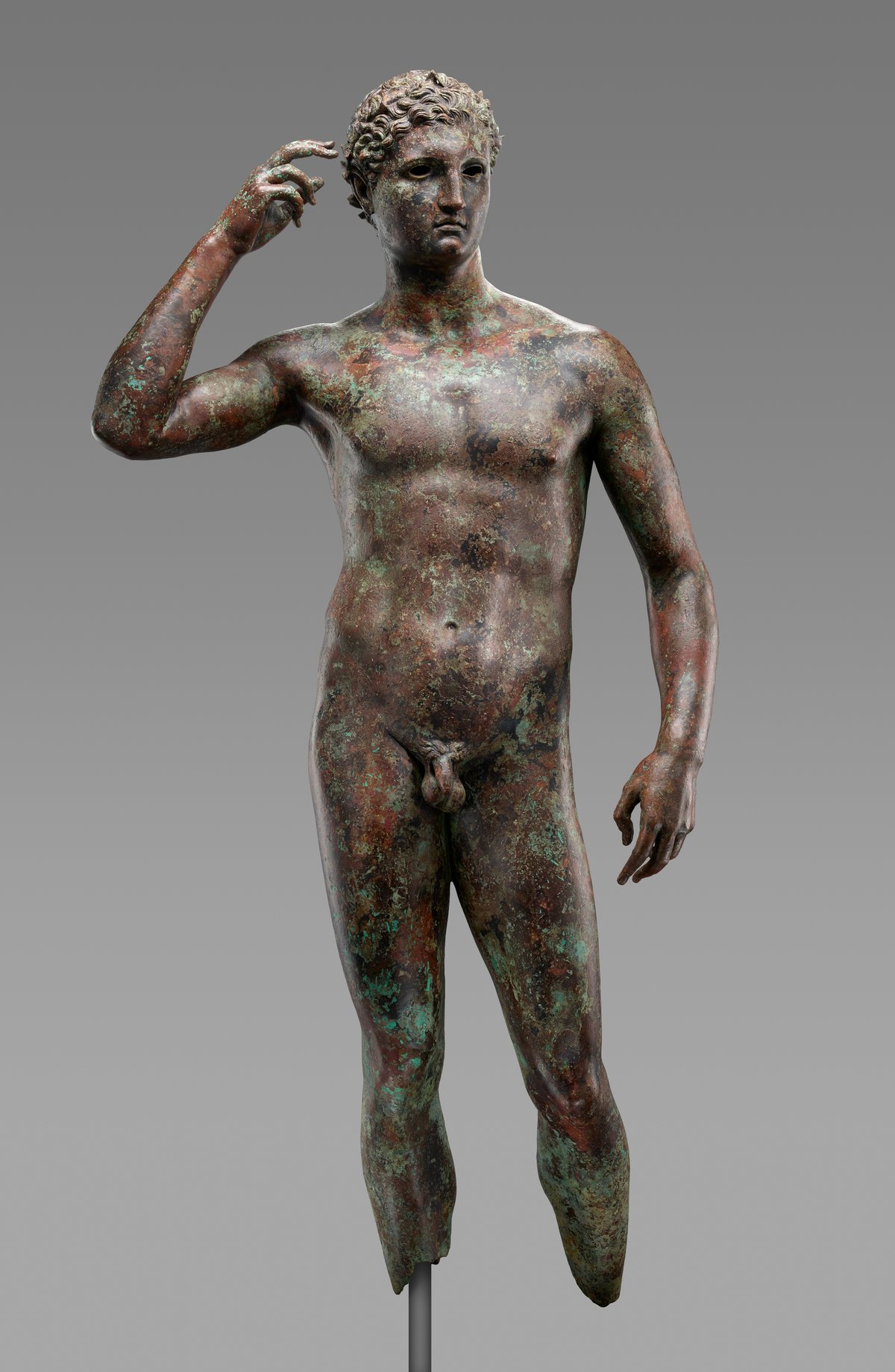
A 1.50-meter-tall Roman bronze statue depicting an athlete, discovered at sea in 1964 and now displayed in the Archaeological Museum of Fano. Discover its history and perfectly preserved anatomical details.
- Passeggiata del Lisippo, Pesaro (PU)
- Open in Google Maps
- View on Google Images Atleta di Fano a Pesaro
Good to know
Introduction
Historical Notes
- 2nd century AD: Period of the statue’s creation (Roman imperial age).
- 1964: Fortuitous discovery at sea by fishermen.
- 2013: Acquisition by the Municipality of Fano and permanent exhibition in the city museum.
An Athlete Among the Malatesta Walls
The Allure of the Surviving Bronze
Why Visit It
When to go
In the Surroundings
💡 Did You Know…?
The statue was recovered by chance by a local fisherman, who found it entangled in his nets off the coast of Fano. This fortuitous discovery saved an invaluable work of art that would otherwise have been lost. Observing the Athlete up close, one can see signs of its long submersion in the sea, such as encrustations, which enhance its historical allure. Its placement in the Malatesta Palace, a medieval building, creates a suggestive contrast between different eras, making the visit a layered experience through time.