Introduction
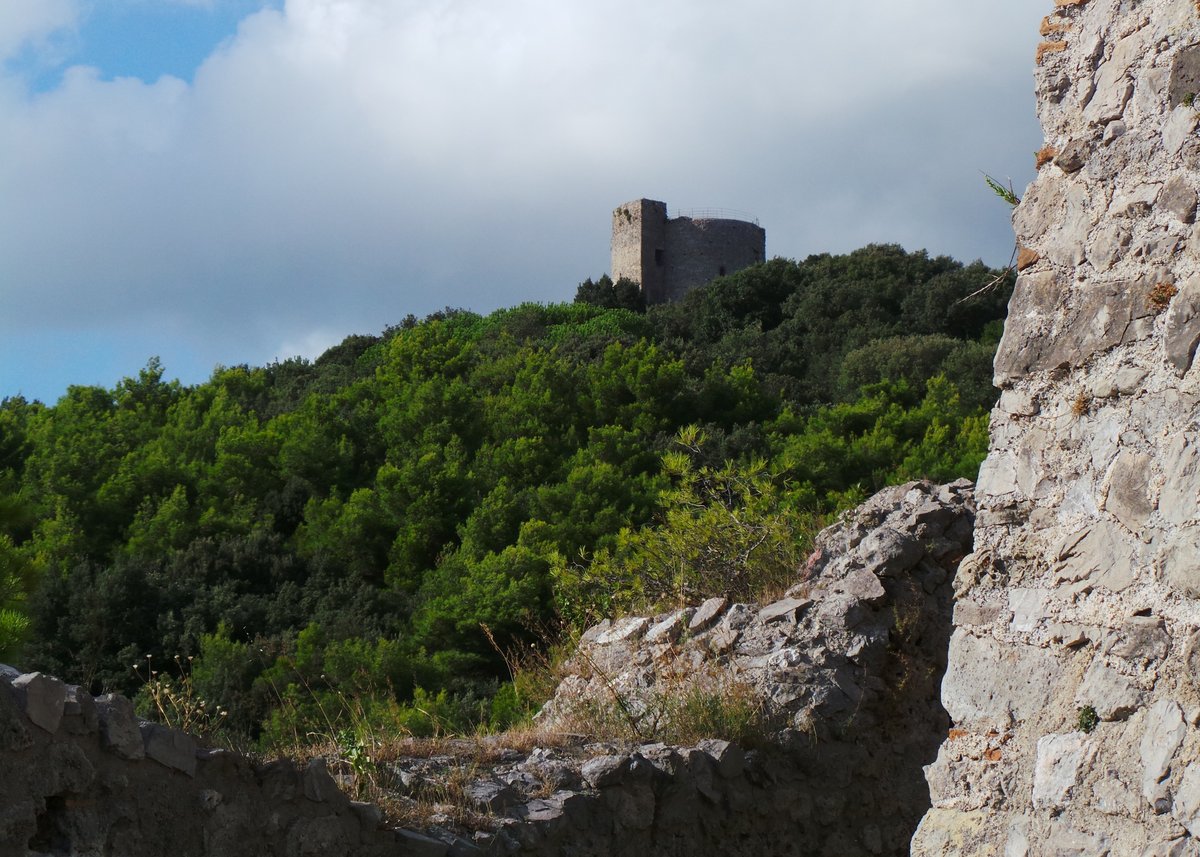
I ascend from Castello di Arechi along a path winding through the vegetation. After a few minutes, the tower appears: massive, circular, perched on a rocky spur. It’s the Bastiglia, a stone sentinel that has watched over the Gulf of Salerno since 1075. Entrance is free, the view is breathtaking. I climb the stairs and lean out: below me, the city stretches to the sea, with Monte Stella and Pizzo San Michele on the horizon. A place that captures you immediately.
Introduction
I ascend from Castello di Arechi along a path winding through the vegetation. After a few minutes, the tower appears: massive, circular, perched on a rocky spur. It’s the Bastiglia, a stone sentinel that has watched over the Gulf of Salerno since 1075. Entrance is free, the view is breathtaking. I climb the stairs and lean out: below me, the city stretches to the sea, with Monte Stella and Pizzo San Michele on the horizon. A place that captures you immediately.
Historical Background
The Bastiglia was built around 1075 by the Lombard prince Gisulfo II in preparation for the siege by Robert Guiscard. It was intended to serve as an advanced outpost to strike the enemy from behind. In the 17th century, historian Antonio Mazza referred to it as ‘Bastea’. The name ‘Bastiglia’ is a 19th-century misunderstanding: it was thought to be a prison, but the prisons were actually in the castle. After centuries of neglect, it was restored and reopened in 2001. Its double-cylinder shape is unique: an outer shell and an inner one to protect the stairs.
Historical Background
The Bastiglia was built around 1075 by the Lombard prince Gisulfo II in preparation for the siege by Robert Guiscard. It was intended to serve as an advanced outpost to strike the enemy from behind. In the 17th century, historian Antonio Mazza referred to it as ‘Bastea’. The name ‘Bastiglia’ is a 19th-century misunderstanding: it was thought to be a prison, but the prisons were actually in the castle. After centuries of neglect, it was restored and reopened in 2001. Its double-cylinder shape is unique: an outer shell and an inner one to protect the stairs.
A Gem of Military Architecture
The tower’s design combines two circular rings, built with stone masonry. The single interior chamber sits about 5 meters above ground—accessible only by removable ladders for security. Its vantage point, higher than the castle, offered control over blind spots and long-range detection of enemy ships. Today, stepping inside that chamber, you see why the Normans chose this spot: the view is a perfect map of the gulf. And there’s rarely a crowd—almost always just a handful of visitors.
A Gem of Military Architecture
The tower’s design combines two circular rings, built with stone masonry. The single interior chamber sits about 5 meters above ground—accessible only by removable ladders for security. Its vantage point, higher than the castle, offered control over blind spots and long-range detection of enemy ships. Today, stepping inside that chamber, you see why the Normans chose this spot: the view is a perfect map of the gulf. And there’s rarely a crowd—almost always just a handful of visitors.
The Panoramic Trail
To get there, start from the Castle of Arechi and follow a dirt path of moderate difficulty – nothing impossible, but you’ll need hiking shoes and water (there are no fountains). The route offers continuous glimpses of Salerno and the sea. In about half an hour you’ll reach the tower. The silence, broken only by the wind and seagulls, makes you feel far from the city chaos. I did it at dawn: the light rising over the bay is one of those things you never forget.
The Panoramic Trail
To get there, start from the Castle of Arechi and follow a dirt path of moderate difficulty – nothing impossible, but you’ll need hiking shoes and water (there are no fountains). The route offers continuous glimpses of Salerno and the sea. In about half an hour you’ll reach the tower. The silence, broken only by the wind and seagulls, makes you feel far from the city chaos. I did it at dawn: the light rising over the bay is one of those things you never forget.
Why Visit It
For starters, it’s free. Secondly, it boasts one of the most stunning viewpoints over Salerno, away from the crowds. Thirdly, history is palpable – touching the 11th-century stones and imagining the Lombard warriors is spine-tingling. What’s more, it’s a perfect excuse for a nature-and-archaeology walk.
Why Visit It
For starters, it’s free. Secondly, it boasts one of the most stunning viewpoints over Salerno, away from the crowds. Thirdly, history is palpable – touching the 11th-century stones and imagining the Lombard warriors is spine-tingling. What’s more, it’s a perfect excuse for a nature-and-archaeology walk.
When to Go
The best time? Late afternoon, just before sunset. The golden light illuminates the tower and the sea becomes a palette of oranges and pinks. In summer, though, the sun is strong: early morning or late afternoon is better. In autumn or spring, with mild temperatures, the trail is perfect. In winter, if the sky is clear, you can see snow on the mountains.
When to Go
The best time? Late afternoon, just before sunset. The golden light illuminates the tower and the sea becomes a palette of oranges and pinks. In summer, though, the sun is strong: early morning or late afternoon is better. In autumn or spring, with mild temperatures, the trail is perfect. In winter, if the sky is clear, you can see snow on the mountains.
Nearby
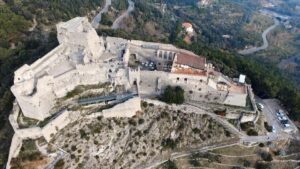
After the visit, the Castello di Arechi itself is worth it, with its museum and walls offering a different perspective. A little further on, the historic center of Salerno with its Cathedral and seafront. If you feel like walking further, the trail continues towards Monte Bonadies – but that requires more time and a good pair of shoes.
Nearby
After the visit, the Castello di Arechi itself is worth it, with its museum and walls offering a different perspective. A little further on, the historic center of Salerno with its Cathedral and seafront. If you feel like walking further, the trail continues towards Monte Bonadies – but that requires more time and a good pair of shoes.