
Castello di Castel d’Ario, built in 1325 by the Scaliger family, is a perfectly preserved medieval fortress overlooking the Mantuan village. The visit offers a tranquil and immersive experience with breathtaking views of the surrounding countryside, ideal for those seeking authentic corners of Lombardy.
- 14th-century Scaliger fortress with corner towers and brick-and-stone walls
- 360-degree views of the Lombard countryside from the top of the walls
- Well-preserved military architecture with arrow slits and patrol walkways
- Authentic and peaceful atmosphere, away from tourist crowds
Events nearby



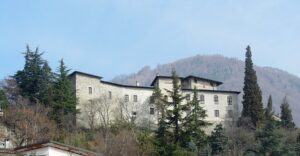
14th-century Scaliger fortress in Castel d’Ario, Mantua. Admire well-preserved crenellated towers, patrol walkways, and 360-degree views of the Lombard countryside. A medieval gem away from mass tourism.
- Piazza Castello, Mantova (MN)
- Open in Google Maps
- View on Google Images Castello di Castel d’Ario a Mantova
Good to know
Introduction
As soon as you arrive in Castel d’Ario, the castle immediately strikes you: a 14th-century Scaliger fortress that dominates the Mantuan village with its imposing bulk. It’s not just a monument, but a symbol of power that has withstood the centuries, surrounded by the Po Valley plains. Climbing onto its walls, the view stretches across cultivated fields and the village rooftops, creating a contrast between history and nature that captures your attention. It’s a place where you breathe an authentic atmosphere, far from tourist crowds, ideal for those seeking a corner of Lombardy off the beaten track. Its elevated position offers breathtaking panoramas, especially at sunset, when the golden light envelops the ancient stones.
Historical Overview
The Castle of Castel d’Ario was built in 1325 under the rule of the Scaligeri, lords of Verona, as a defensive stronghold along the communication routes between Mantua and Verona. Over the centuries, it passed to the Gonzaga of Mantua, who enhanced its structures, and was the scene of sieges during wars between local lordships. Today, despite the damage suffered over time, it retains original elements such as the corner towers and parts of the perimeter walls. Its history is linked to figures such as Cangrande della Scala, who commissioned its construction to control the territory.
- 1325: Construction commissioned by the Scaligeri
- 14th-15th centuries: Transfer to the Gonzaga and expansions
- Subsequent centuries: Use as a military outpost and partial decline
- Today: Restoration and promotion as a historical site
Architecture and Details
As you walk around the castle, you immediately notice the quadrangular layout typical of Scaliger fortresses, with corner towers that once housed guards. The walls, made of brick and stone, show signs of restoration but maintain the austere appearance of the medieval era. Inside, if accessible, you can glimpse the remains of the stables and service rooms, while the central area was once the courtyard for military maneuvers. A curious detail are the narrow arrow slits on the towers, designed for archers, which testify to the attention paid to defense. Unfortunately, not all spaces are open to the public, but the exterior alone offers an immersion into 14th-century castle life.
Visiting Experience
Visiting Castel d’Ario Castle is a tranquil and immersive experience. There are no queues or crowds, so you can take your time to observe the architectural details and take photos without rushing. Climbing the walls offers a 360-degree view of the surrounding countryside, with wheat fields and rows of trees stretching to the horizon. It’s the perfect spot for a solo outing or with company, perhaps paired with a stroll through the village below, where you can breathe in a rustic atmosphere. Remember to check the opening hours in advance, as access may be limited to occasional events or guided tours.
Why Visit It
Three concrete reasons not to miss this gem: first, it’s one of the few well-preserved Scaliger castles in the province of Mantua, with a history that transports you to the Middle Ages; second, the panoramic view from the top is unique and free, perfect for memorable photos; third, its isolated location makes it a perfect refuge for those wanting to break away from routine and discover an authentic corner of Lombardy, far from mass tourism.
When to Go
The best time to visit the castle is in the late afternoon of autumn, when the warm sunlight enhances the colors of the stones and the surrounding countryside takes on golden hues. During this season, the atmosphere is more evocative, with fewer visitors and a gentle breeze that makes the climb along the walls even more enjoyable. Avoid rainy days, as the external paths can become slippery.
In the Surroundings
To enrich your excursion, head to Mantua, just a few kilometers away, where you can admire the Ducal Palace and the lakes surrounding the city. Another option is to explore the rural villages of Lower Mantua, such as Sabbioneta, a UNESCO World Heritage site, for a journey into the Italian Renaissance.
Itineraries nearby

💡 Did You Know…?
Legend has it that a treasure hidden by the Gonzaga during the Renaissance wars is kept in the castle. Some local inhabitants swear they have seen ghosts of ancient soldiers wandering among the walls on full moon nights. Particularly suggestive is the system of secret passages that connected the castle to the center of the village, used for sudden escapes during sieges.