
Castel Sant’Antonio (Schloss Klebenstein) is a stately residence of 13th-century origin, located in Bolzano along the Talvera Promenade, a stone’s throw from the Talvera Meadows. Privately owned and still inhabited, it cannot be visited inside, but it can be admired from the outside, strolling through the greenery or arriving from the Sant’Antonio bridge. Its strategic position at the entrance to the Sarentino Valley makes it an ideal stop for history and architecture lovers.
– Medieval origins: the 13th-century Karnol tower, expanded between the 15th and 16th centuries.
– Baroque chapel: dedicated to Sant’Antonio, giving its name to the whole area.
– No interior visits: it is admired from the outside, but the natural setting is perfect for a walk.
– Link to ceramics: in the castle’s cellar, the famous Thun manufactory was founded in 1950.
Events nearby
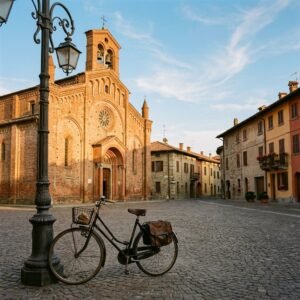



A 13th-century historic residence along the Talvera Promenade, Castel Sant’Antonio (Schloss Klebenstein) is admired from the outside amidst the Talvera Meadows, featuring a Baroque chapel and a connection to Thun ceramics.
- Via Sant’Antonio – Sankt-Anton-Straße, Bolzano (BZ)
- Open in Google Maps
- View on Google Images Castel Sant’Antonio – Schloss Klebenstein a Bolzano
Good to know
Castel Sant’Antonio, Bolzano’s Schloss Klebenstein
Historical Notes
- 13th century: the Karnol tower
- 1346: a residential building is mentioned
- 15th century: the Clewenstain family gives its name
- 15th-16th century: expansions by Weineck and Schidmann
- 1832: passes to Kofler and von Aufschnaiter
- 1900: current appearance completed
- 1950: Thun is founded in the cellar
A residence with the baroque chapel
The cellar that gave birth to Thun
Why Visit It
When to go
In the Surroundings
Itineraries nearby

💡 Did You Know…?
Two details make this visit special: the castle is still inhabited by the descendants of the von Aufschnaiter family, who have owned it since 1832, so beyond the crenellated gate you can catch a glimpse of everyday life. Also, in the manor house’s cellar, the Thun manufactory was born in 1950, now famous for its ceramics: a piece of South Tyrolean industrial history hidden within medieval walls.