Druso Tower (Gscheibter Turm): A Medieval Keep in Bolzano

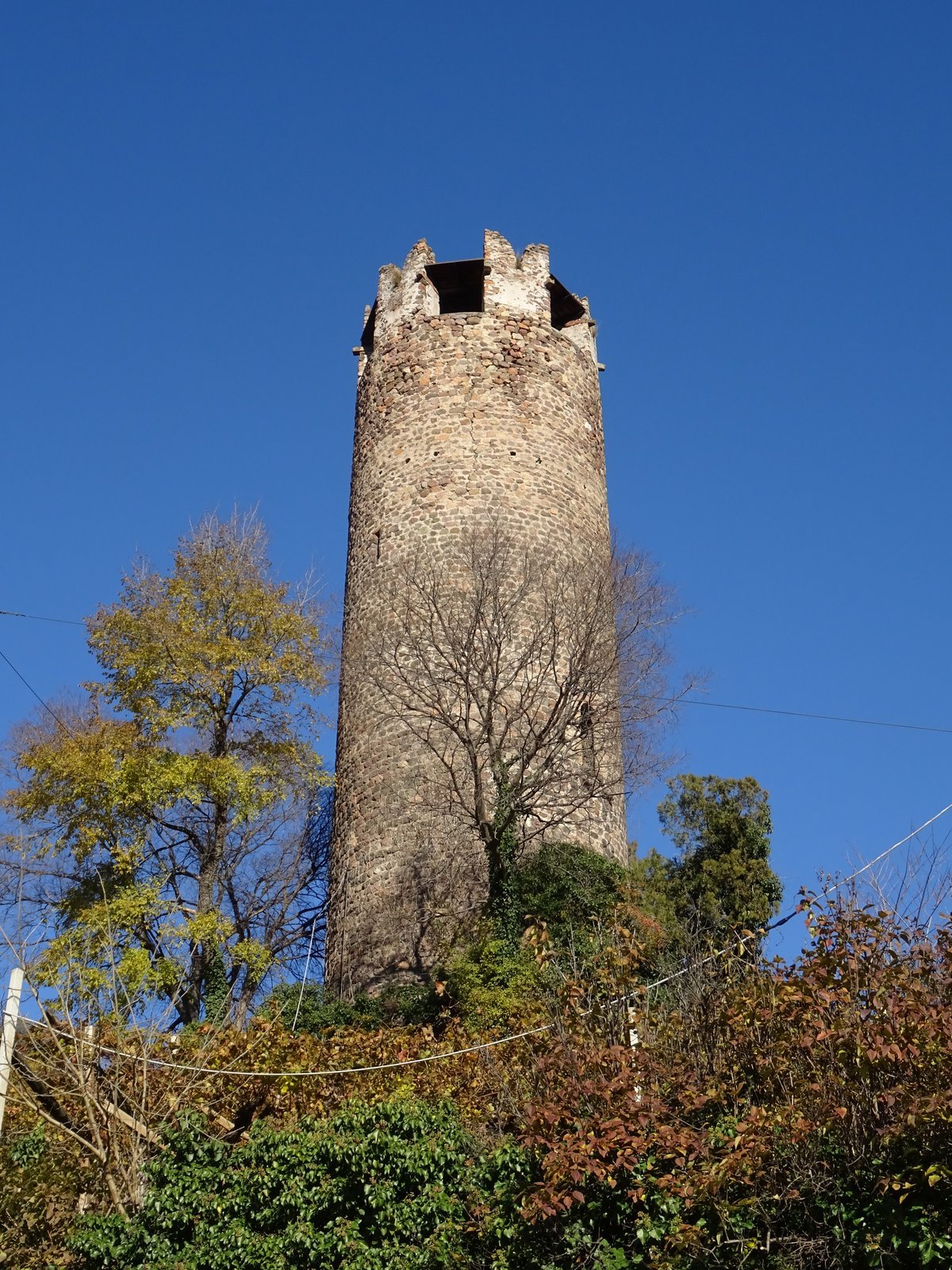
In the Gries district, a stone’s throw from the Fago stream, stands Druso Tower: a cylindrical 13th-century keep, the last remnant of Treuenstein Castle. With its swallowtail merlons and original entrance 8 meters above ground, it tells a story of defenses and legends. The visit is short but intense, perfect for those who love places off the beaten path. Here’s what not to miss:
20 meters tall, with swallowtail merlons and narrow arrow slits
Mentioned in 1231 as Trowenstein, in the heart of Bolzano
Saint Oswald’s Chapel, adjacent and contemporary
Remains of the walls and view of the ancient road to San Genesio


Events nearby

Copertina itinerario Druso Tower (Gscheibter Turm): A Medieval Keep in Bolzano
In Bolzano’s Gries district, Druso Tower (Gscheibter Turm) is a rare 13th-century keep with swallowtail merlons: an unmissable stop among history, architecture, and glimpses of the Fago stream.

Good to know


Introduction

**Torre Druso (Gscheibter Turm)** is a surprise in the Gries district of Bolzano. You find yourself there, perhaps by chance, and suddenly you see this 13th-century keep towering near the Fago stream, along the old road to San Genesio. Its slender cylindrical shape, swallowtail merlons, and narrow arrow slits all speak of a medieval era of defense and territorial control. It’s not as imposing as other towers, but its presence is magnetic. It seems like a small urban jewel, surrounded by traces of ancient walls. If you love authentic places, this is the right spot for a break from the usual downtown stroll.

Historical Notes

The history of Druso Tower begins in the **13th century**: in 1231 it is recorded as *Trowenstein*, the keep of Treuenstein Castle, built by the family bearing that name atop an older structure. In 1497, a document of Maximilian I refers to it as *zum Scheyblingen turn*, i.e., ’round tower’. The Italian name ‘Druso’ is actually a 17th-century invention by the Franciscan friar Ferdinand Troyer, who associated it with the Roman commander Drusus the Elder; a myth later revived by Ettore Tolomei in the 20th century. In 1862, owner Karl Pieschl added a Tudor-style manor, designed by architect Sebastian Altmann, on the ruins of the ancient castle. In a few lines: a story of families, laws, and a few misunderstandings.

  • 1231: first mention as Trowenstein
  • 1497: called ’round tower’ by Maximilian I
  • 1862: addition of the Tudor manor

Architecture: A Tower Built to Defend

Looking at the Druso Tower, its function is immediately clear: **defense**. It is cylindrical, slender, 20.10 meters tall, with a very narrow internal diameter and thick walls. There are no windows, and the original entrance was located 8 meters above ground: you needed a ladder or a rope to get in. Another door, higher up, probably led to a wooden wall-walk. The swallowtail merlons and narrow arrow slits complete the picture. At the base, the remains of the surrounding wall tell us it was not alone: it was part of a larger fortification. That is why the tower, though small, is so fascinating: every detail has a purpose, and speaks of a time when the passage towards San Genesio was controlled here.

The Chapel of Saint Oswald and the Tudor Manor

Next to the tower is the Chapel of Saint Oswald, also known as Oswaldkapelle, a small 13th-century sacred building, contemporary to the tower. Together they form a rather rare medieval corner. Then comes the curious chapter: in 1862, on the ruins of the castle, a Tudor-style manor house was built to a design by the civic architect Sebastian Altmann, on behalf of the owner Karl Pieschl. The result is an unexpected juxtaposition: on one side the austere medieval keep, on the other a 19th-century building with English references. I like it for this reason: it is not a neutral monument, but a place that shows the signs of different eras, with an architectural history all to be deciphered.

Why Visit It

1. **It’s a little-known piece of history**: Druso Tower is not among Bolzano’s most famous monuments, and that makes it special. 2. **The architecture is unique**: a cylindrical keep with swallowtail merlons, so well preserved, is hard to find in the city. 3. **It reveals another side of Bolzano**: away from the crowded center, between the Fago stream and the streets of Gries, you can breathe a more intimate and authentic atmosphere. If you’re a medieval enthusiast, or simply curious, it’s worth a stop. Even just for a photo, because the tower is truly photogenic.

When to Go

The moment I prefer is the **late afternoon**, when the low light illuminates the battlements and you can hear the Fago stream flowing nearby. The atmosphere becomes even more suspended, almost outside time. If you come on a clear day, it’s really worth it. In any case, being an outdoor place, you can combine it with a walk at any time. But the sunset, I assure you, has an extra charm.

Nearby

In the same Gries district, you can visit **Muri-Gries Abbey**, a Benedictine monastery well worth a detour: the church is beautiful and its style is quite different from the tower. Then, if you’re up for a walk, the area along the **Talvera River** offers a green escape just steps from the city. With the Druso Tower, St. Oswald’s Chapel, and these nearby sights, it’s easy to plan a leisurely half-day of exploration.

Itineraries nearby


💡 Did You Know…?

The name ‘Druso’ is a fascinating lie: in the 17th century, the Franciscan friar Ferdinand Troyer invented a connection with the Roman general Drusus the Elder, and the myth was later revived by Ettore Tolomei. In reality, the tower is a 13th-century keep of Treuenstein Castle. Nearby, the contemporary Saint Oswald’s Chapel deserves a glance: together they form a corner of the Middle Ages that has remained almost intact.