Staglieno Monumental Cemetery: Monteverde’s Sculptures and Mazzini’s Tombs

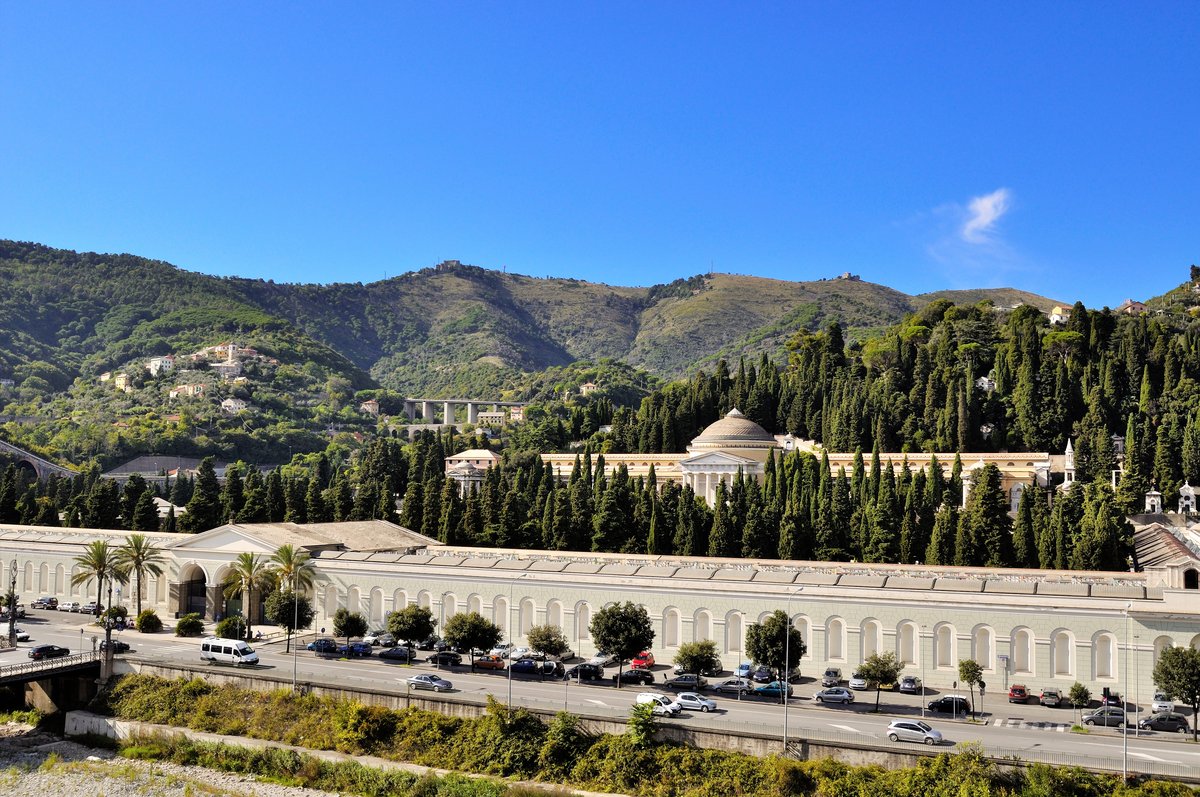
The Staglieno Monumental Cemetery in Genoa is an open-air museum with Neoclassical, Gothic, and Art Nouveau sculptures that tell stories through marble. Founded in 1851, it houses 220,000 burials across hills and tree-lined avenues, offering tranquility and a unique perspective on 19th-century Genoa.

  • Monumental sculptures by artists such as Giulio Monteverde and Giovanni Battista Cevasco
  • Tombs of notable figures including Giuseppe Mazzini and Fabrizio De André
  • Thematic routes among celebrities and iconic works like the Angel and Caterina Campodonico
  • Panoramic view of Genoa and the port from the upper part of the cemetery

Copertina itinerario Staglieno Monumental Cemetery: Monteverde's Sculptures and Mazzini's Tombs
An open-air museum featuring works by Giulio Monteverde and Giovanni Battista Cevasco, tombs of Giuseppe Mazzini and Fabrizio De André, tree-lined avenues, and panoramic views of Genoa.

Good to know


Introduction

The Monumental Cemetery of Staglieno is not just a burial ground, but a true open-air museum that takes your breath away. As soon as you pass through the entrance, you’re greeted by a solemn silence broken only by the rustling of leaves, while your gaze gets lost among hundreds of sculptures that seem to tell forgotten stories. Here, funerary art reaches incredible heights, with works by artists like Giovanni Battista Cevasco and Giulio Monteverde transforming grief into eternal beauty. Walking along these tree-lined avenues is a deeply moving experience, a place where death converses with life through marble and bronze. Personally, I found myself pausing before the tomb of Giuseppe Mazzini, struck by its monumental simplicity that contrasts with the elaborate nearby statues. It’s a place that defies all expectations, closer to an art gallery than a traditional cemetery.

Historical Background

The history of the cemetery begins in 1844, when architect Carlo Barabino designed this space inspired by the great European monumental cemeteries. The official opening took place in 1851, but work continued for decades, enriched with masterpieces during its peak period between the 19th and 20th centuries. It soon became the resting place for prominent Genoese families, who commissioned works from the most renowned sculptors of the time to honor their deceased. During World War II, some areas suffered damage, but subsequent reconstruction preserved the essence of the place. Today, it houses approximately 220,000 burials, including notable figures such as Fabrizio De André, whose simple tomb is always adorned with flowers and notes left by fans.

  • 1844: Initial project by Carlo Barabino
  • 1851: Official opening of the cemetery
  • Late 19th century: Golden age of monumental commissions
  • 1940-45: War damage and subsequent repairs
  • Today: Recognized historical-artistic site

The Sculptures That Speak

What strikes you most at Staglieno is how each statue tells a different story. They are not just simple funeral monuments, but true marble portraits that capture emotions, professions, even passions. I stood for a long time in front of the Oneto family tomb, where the angel by sculptor Giulio Monteverde truly seems about to take flight, with wings spread and a piercing gaze. A little further on, the tomb of opera singer Francesco Maria Piave features a medallion so realistic that you almost expect to hear his voice. Walking along the main avenue, you’ll notice how styles blend: from the most austere neoclassical to nineteenth-century realism, with even touches of Art Nouveau in the decorations. One detail that surprised me? The intertwined hands on a married couple’s tomb, carved with a tenderness that still moves you a century later.

Paths Among the Cypresses

Visiting Staglieno without a clear direction can be overwhelming, so I recommend following two thematic routes that I found particularly meaningful. The first is the tour of celebrities: starting from the main entrance, you’ll reach Giuseppe Mazzini’s tomb in just a few minutes, then Nino Bixio’s (with its distinctive military bust), and finally the simple niche of Fabrizio De André, always surrounded by fresh tributes. The second itinerary is more artistic and leads you to discover the most iconic works: don’t miss the monument to Caterina Campodonico, the peanut seller immortalized with her basket, and the dramatic statue of Faith on the Drago family tomb. If you have time, climb to the upper part of the cemetery: the view of Genoa and the port from up there offers a powerful contrast between the tranquility of the place and the vitality of the city below.

Why Visit It

Three concrete reasons why Staglieno deserves a visit? First, it’s a journey through Italian art history accessible to everyone, with no entrance fee. Here you can admire works by important sculptors that you’d see behind glass in museums, while here you can gaze upon them just a few steps away. Second, it offers a unique perspective on 19th-century Genoa, that of the merchants, shipowners, and families who built the city’s fortune: their tombs are pages of an open social book. Third, it’s a place of silence and reflection surprisingly close to the urban chaos. After an hour wandering these avenues, you leave with a strange sense of peace, as if time had stood still. And let’s be honest: how often have you visited a cemetery that stayed in your heart like an art gallery?

When to Go

The best time? An autumn afternoon, when the low-angled sunlight casts long shadows among the statues and the cypress foliage turns golden yellow. The atmosphere becomes almost melancholic, yet of a heartrending beauty. Avoid the midday hours in summer: the heat can be oppressive and the harsh light flattens the details of the sculptures. In spring, however, the blossoming fruit trees in the older section offer unexpected touches of color. I’ve also been there on a day of light rain and, I must confess, the wet marble took on silvery reflections you don’t notice when it’s dry. If you prefer solitude, weekdays are quieter, while on Sunday mornings you might encounter locals bringing flowers to family tombs, adding a touch of daily life to this timeless place.

In the Surroundings

Complementing your visit to Staglieno with a thematically linked experience is easy. A few minutes by car (or a short bus ride) brings you to the Museo di Scultura Ligure di Sant’Agostino in Genoa’s historic centre. Here you’ll find works by many of the same artists featured at the cemetery, but in a traditional museum setting: the comparison is interesting for understanding how funerary commissions influenced style. Another idea is to dedicate a couple of hours to the Cimitero di Voltri, also in Genoa’s outskirts: less monumental but with picturesque corners and a breathtaking sea view. If instead you want a complete break from the cemetery atmosphere, head to Nervi and stroll through the parks overlooking the gulf: the contrast between the vibrant green of the gardens and Staglieno’s solemnity will make you appreciate both experiences even more.

Itineraries nearby


💡 Did You Know…?

Not everyone knows that Staglieno Cemetery inspired writers like Mark Twain, who called it “a city of the dead,” and artists like Oscar Wilde, who praised its beauty. An interesting fact: the statue of Faith, by Giovanni Battista Cevasco, has become an icon for its serene expression, often photographed by visitors. Additionally, during World War II, some tombs were used as air-raid shelters, adding a chapter of contemporary history to this centuries-old place.