The Museion is Bolzano’s museum of modern and contemporary art, housed since 2008 in a 54-meter glass cube designed by KSV, between the historic center and the Talvera River. Inside you’ll find over 4,500 works, international exhibitions, a library, bar and bookshop, with fluid spaces and views of the Dolomites. On Thursday evenings, admission is free from 6:00 PM to 10:00 PM.
– Architecture: transparent facades and multimedia projections.
– Collection: art and language, sculpture, non-European artists.
– Families: playful trails, workshops and Kids-Lounge.
– Useful info: Piazza Piero Siena 1; closed on Monday; full price €10.
Introduction: Museion Bolzano, contemporary art in a glass cube
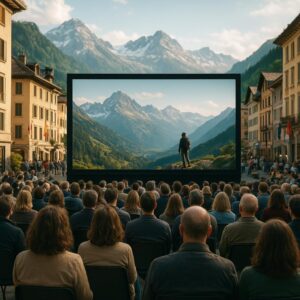
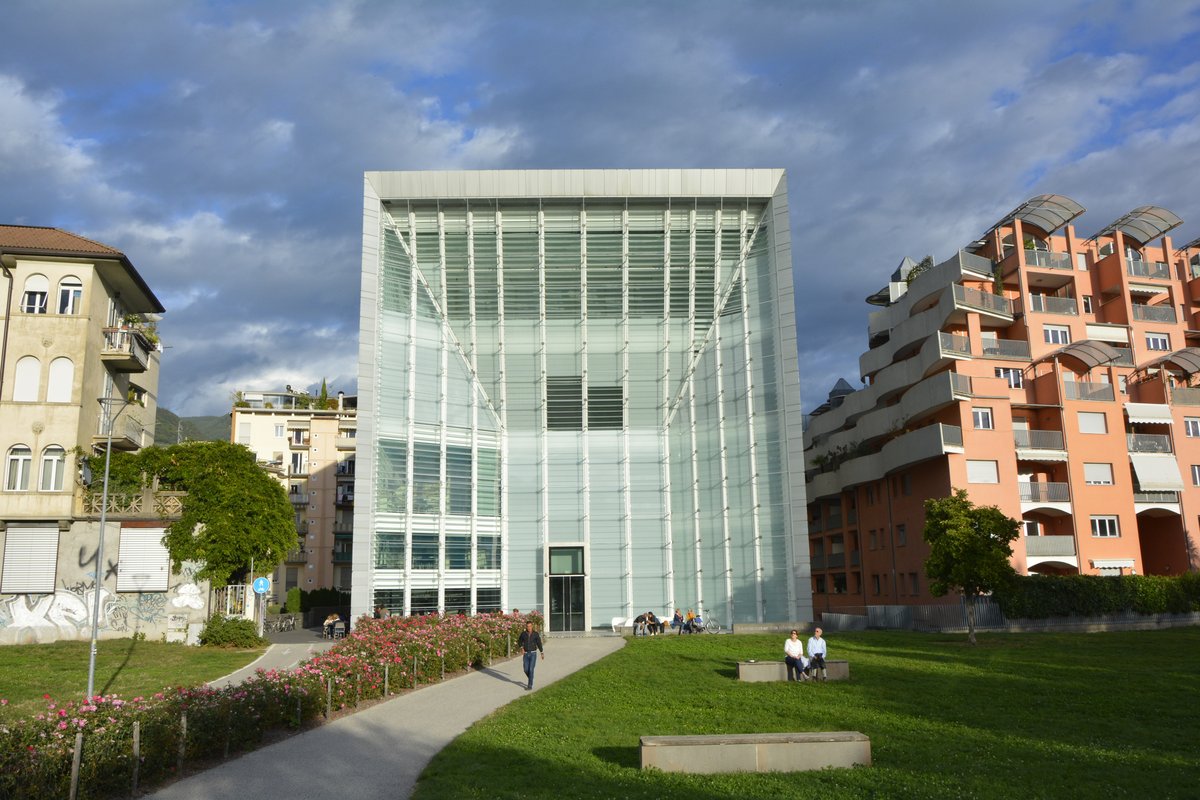
Museion is Bolzano’s museum of modern and contemporary art, and even from the outside it’s hard to miss. Its glass-and-aluminium cube, designed by Berlin studio KSV Krüger Schuberth Vandreike, rises above Piazza Piero Siena like a transparent lantern between the old town and the Talvera river. Inside, the spaces are fluid and bright: exhibition halls, library, café, bookshop, and workshops blend without clear boundaries. The double-skin facade is not just scenic: it regulates light, ventilates the building and, on certain evenings, becomes a screen for video projections. The collection includes more than 4,500 works, with core areas devoted to art and language, sculpture, and non-European artists. Temporary exhibitions bring international names to Bolzano, often as Italian premieres. Don’t expect the classic dusty museum: here contemporary art is experienced by walking, looking out through the windows, and letting yourself be surprised. Free admission on Thursday evenings and family activities complete the picture.
Historical background
The Museion was founded in
1985 by a private association with the support of the Autonomous Province of Bolzano, to promote the visual arts of the historic Tyrol from 1900 onwards. Its first exhibition spaces were on Via Sernesi, in the old hospital, and its activities took off in 1987. In
1991 the museum adopted the name Museion, while in the 1990s the collection opened up to a dialogue between German and Italian art. The big leap came in
2008: the venue in Piazza Piero Siena, the glass cube designed by KSV, was inaugurated. Since then, Museion has been a foundation supported by the Museion Association and the Autonomous Province of Bolzano, with international exhibitions and the three-year Museiopolis programme.
- 1985: founding.
- 1987: opening on Via Sernesi.
- 1991: named Museion.
- 2008: new venue in Piazza Piero Siena.
- 2025-2026: What We Carry and Museiopolis.
The KSV Cube: Architecture to Walk Through
The Museion building is a cuboid measuring 54 by 25 metres, 23 metres wide, built in steel and concrete and clad in aluminium panels. Designed by KSV Krüger Schuberth Vandreike, whose partners studied at the Bauhaus in Weimar, it sits between the historic centre and the new city as an urban hinge. The end facades are fully glazed; the side ones have a double skin with movable opaque fins. By day they filter light, by night they can become a projection screen. The roughly one-metre cavity also acts as a ventilation duct: air flows down to the underground technical rooms. Inside, white dominates and movable walls make the spaces flexible. Staircases connect bright halls with views over the city and the Dolomites. The museum has six floors, four above ground and two below, and you walk through it almost without noticing: from the double-height foyer to the basement events hall, from the bar to the footbridge over the Talvera.
Collection, exhibitions and Museiopolis
Here, contemporary art is not a monolith. The collection comprises more than 4,500 works and is shown in rotation through thematic paths. Its core strengths? Art and language, the formal language of sculpture, a critical re-reading of the present, and positions of non-European artists. The 2026 program is called Museiopolis and aims to dissolve the boundaries between museum, city, and periphery. On the calendar: the first major exhibition on Franco Vaccari’s immersive environments, a solo show by Evelyn Taocheng Wang, a video work by Som Supaparinya, a retrospective on Rammellzee, and an exhibition on Luigi Zuccheri. Museion Passage opens with monumental sculptures by Eduard Habicher and a sound event with Joey Baron and Robyn Schulkowsky. There are also Museion Academy, with the FOAM Master in collaboration with the Free University of Bozen-Bolzano, and Museion Art Club, an incubator for young people. In short: international exhibitions, research, and community in the same glass cube.
With children: caterpillar, workshops and Art Club Young
Museion isn’t just for adults: family activities are a serious part of the program. Children can follow playful trails, such as those with the museum caterpillar, and join interactive guided tours. In summer there are art weeks for children aged 6 to 10: they explore artworks with creative materials and technologies, in a bilingual Italian/German atmosphere, with expert facilitators. The weekly cost is €130 per child, €100 for siblings, lunch included. There are also a Kids-Lounge and the museum lawn for playing and relaxing. Museion Art Club Young offers recreational and educational activities for children and teenagers. For families and schools, workshops are available by reservation: 0471 223435 or visitorservices@museion.it. The best part? Contemporary art isn’t scary here: you take it in with your eyes, talk about it, live it. And on Thursday evenings, admission is free for everyone.
Why visit it
First reason: it’s one of the few Italian museums where architecture and contemporary art truly speak to each other. The KSV glass cube isn’t a neutral box: it filters light, projects images, and connects the city centre with the river. Second: the collection spans more than 4,500 works, and temporary exhibitions bring international names, often as Italian premieres, with a rare focus on non-European art and sculpture. Third: it’s accessible and family-friendly. Under-18s get in free, Thursday evenings are free for everyone, and there are workshops, guided tours, and children’s activities. What’s more, a full ticket costs €10, reduced €5; if one floor is being set up, it drops to €7 and €3.50. For a city like Bolzano, having a museum like this is a small luxury. And after your visit you can stop at the café or bookshop, without the usual museum fatigue.
When to Go
If I can give one piece of advice, choose an evening. Even better if it’s a Thursday, when Museion stays open later and admission is free: that’s when the city slows down and the glass cube lights up. When the sun sets later, the facades can turn into a screen for projections and installations: the building becomes part of the urban spectacle. A bright day is also perfect for seeing how the double skin filters the light and for enjoying the view of the Dolomites from the upper floors. On quieter days, by contrast, the atmosphere is more intimate: fewer crowds, more room for the exhibitions. Avoid Monday, closing day all year except August. Always check the official website, because opening hours change with the seasons and exhibitions.
In the surroundings
Museion is on Piazza Piero Siena, in the heart of Bolzano—but no need to think in distances: just step outside and walk. The Talvera promenade starts right there: meadows, trees, and the cycle-pedestrian footbridge linking the museum to the city. It’s perfect after an exhibition, especially at sunset. Then there’s Piazza delle Erbe, with its historic market: colors, scents, local produce, and the bustle that tells the story of everyday Bolzano. If you’re looking for another cultural experience, the South Tyrol Museum of Archaeology with Ötzi is a stop that pairs well with a day of art: contemporary first, then the glacier mummy. And for anyone wanting to stay outdoors, the Talvera meadows and the paths toward Castel Mareccio offer a green break. No rigid schedule needed: the beauty of Bolzano is that museum, river, and square all lie along the same walk.