Forte Fratello Minore, the tower on Monte Spino
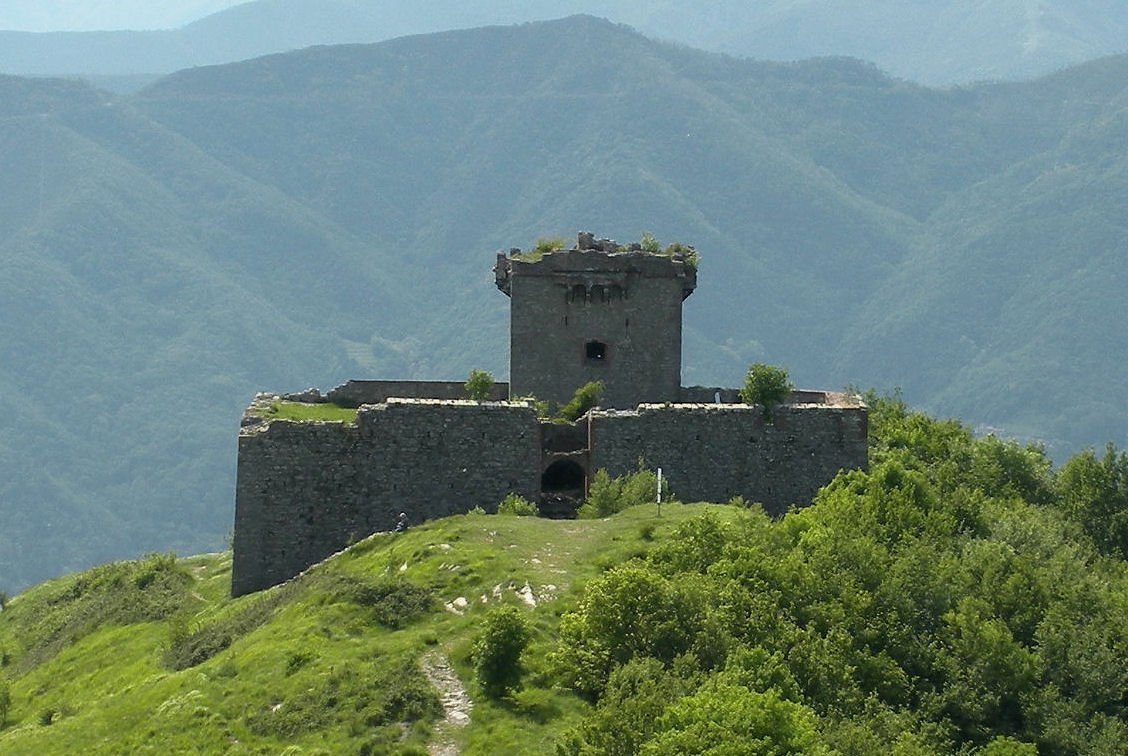
There is something magnetic about a square tower rising from the ridge between Val Polcevera and Val Bisagno. Forte Fratello Minore stands there, on the summit of Monte Spino at about 622 metres, appearing suddenly after a path through the woods. It is not a fairy-tale castle: it is a Savoyard stone fortification, squat and severe, the kind that seeks not beauty but solidity. From up here, the view is the real surprise: 360° over Genoa and its gulf, the Sanctuary of Our Lady of the Guard and the Bocchetta Pass; on the clearest days you can even glimpse Corsica. The name raises a smile: “Fratello Minore” because beside it once stood a larger twin, now gone. Walking inside is like entering a forgotten story, with your feet on a defensive line that no longer protects anyone.
Historical background
The spur of the Due Fratelli was strategically important even before the fort. In 1747 the engineer Jacques De Sicre placed Genoese batteries there against the Austrians entrenched on the Diamante. In 1800 the area was the scene of extremely violent clashes: on 30 April the French troops of Nicolas Soult captured the positions, and Ugo Foscolo was also wounded in that fighting. After the annexation of Liguria to the Kingdom of Sardinia, the Savoyard Military Engineers resumed work: from 1816 a first square tower, then in 1830 the bastioned enclosure, through to completion in 1832. Considered no longer strategic, it was abandoned at the end of the 19th century; during the Second World War it was damaged and the Fratello Maggiore was razed to the ground.
- 1747 – De Sicre’s Genoese batteries
- 1780 – permanent project never carried out
- 1800 – battle of 30 April, Foscolo wounded
- 1816 – construction of the square tower
- 1830 – addition of the bastioned enclosure
- 1832 – completion of the work
- Late 19th century – abandonment
- 1940s – war damage
The Tower, the Rampart and the Cannons
The fort is a square tower set within a bastioned enclosure, covering about 628 sq m. Visitors once entered over a drawbridge, now gone; in its place, a ramp—once cobbled—leads up to the gate. Inside, the ground floor is pierced by rifle loopholes raised above the floor: when needed, a wooden platform for the marksmen was fitted there; otherwise the space served as a dormitory. Below, the basement housed the ammunition magazine, while the powder store could hold 1,200 kg of explosive. The barrel vault is more than two metres thick, designed to withstand bombs. The garrison numbered 12 soldiers, though it could reach 40. Three 12 GRC cannons were aimed toward the Val Polcevera: the emplacements can still be seen.
A fascinating ruin, but one to approach with caution
Today Forte Fratello Minore is abandoned and decaying: its interiors are vandalised, with floors full of holes and collapsed staircases, and the tower itself remains closed. To get in you climb over a low wall or scramble up the remains of the bridge: caution is needed, it is not a place for everyone. Around it, the Parco delle Mura has reclaimed everything: broadleaf woods, clearings and wildlife including wild boar. The contrast is what makes the place special: military stone and advancing nature. From the top the view opens 360° over the gulf, over the Val Polcevera, the Sanctuary of the Madonna della Guardia and the Bocchetta pass; on the clearest days it stretches as far as Corsica. It is not an easy visit, but that is exactly why it stays with you.
Why Visit It
Three concrete reasons. First: the panorama, one of the broadest in Genoa, bringing together sea, city and ridge line in a single glance. Second: the authentic, not overly “museumified” Savoy military architecture: here you won’t find glossy information panels or a ticket office, but loopholes, barrel vaults and gun emplacements just as they have survived. Third: it is perfect for urban trekking, sits within the Parco delle Mura and connects to the Alta Via dei Monti Liguri, between the Puin, Diamante and Sperone forts. What’s more, entry is free and open, no small thing for a protected heritage site. A no-frills place for those who love walking and getting off the beaten track.
When to Go
There is no fixed season: the fort is always accessible. But the best time is probably early morning, when the air is still and the low light carves the walls; or late afternoon, with the sun setting the gulf alight and the lights of the neighborhoods beginning to come on. Choose a clear, dry day: with a clean sky the view reaches all the way to Corsica; in fog or rain the path becomes slippery and the panorama disappears. Avoid the middle hours of a hot day: the summit offers little shade and you walk along an exposed ridge. It can happen that cold, crisp days are the very ones that give the sharpest views.
In the Area
If you have the legs and the time, the Fratello Minore is a perfect loop to link with other forts. Nearby are Forte Diamante, Forte Puin, and Forte Sperone: together they formed the outer defensive system of the Mura Nuove, all to be explored on foot. The setting is the Parco delle Mura in Genoa, with trails through woods and along ridges. For cyclists, the Fratello Minore – Diamante route is suitable for mountain biking and gravel when the ground is dry. Not to be missed, if you look into the distance, is the Santuario della Madonna della Guardia and, for experienced hikers, the link to the Alta Via dei Monti Liguri.