Basilica of Santo Stefano: The Seven Churches of Bologna

The Basilica of Santo Stefano, known as the Seven Churches, is Bologna’s Romanesque jewel and is located at Via Santo Stefano 24, with free admission. The route brings together Lombard, Benedictine, and Franciscan traces in a symbolic pilgrimage to Jerusalem. Open Tuesday to Sunday with split opening hours; on Monday only evening Mass in the Church of the Crucifix.
– Church of the Crucifix: Lombard origins and the papier-mâché Lamentation by Angelo Gabriello Piò.
– Basilica of the Holy Sepulchre: octagonal plan, Roman columns, and the small door opened at Easter.
– Crypt of Saints Vitalis and Agricola: five naves and the column as tall as Jesus.
– Pilate’s Courtyard: Romanesque porticoes and the Lombard Basin of 737-744.


Events nearby
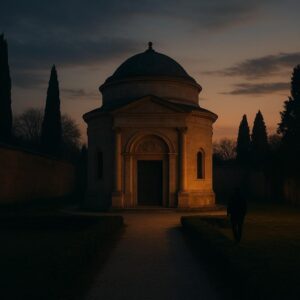

Copertina itinerario Basilica of Santo Stefano: The Seven Churches of Bologna
The Basilica of Santo Stefano, the Seven Churches of Bologna: Romanesque, Pilate’s Courtyard, the octagonal Holy Sepulchre, the Martyrs’ Crypt, and free admission at Via Santo Stefano 24.

Good to know


Basilica di Santo Stefano: the Seven Churches of Bologna

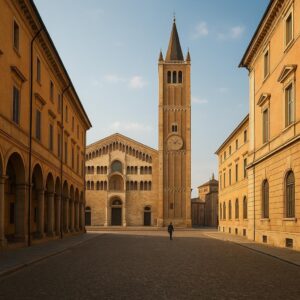
The Basilica di Santo Stefano is not just one church: it is a cluster of sacred buildings, known as the Seven Churches, set in Piazza Santo Stefano, in the heart of Bologna. As soon as you enter, you realize that the name “Jerusalem of Bologna” is not just a tourist gimmick. Here, Emilian Romanesque becomes living matter, among brick, columns and shadows. The entrance is at via Santo Stefano 24 and admission is free. The complex is considered the most interesting Romanesque monument in the city and preserves a rare stratification: pagan temple, martyrs, Lombards, Benedictines, 19th- and 20th-century restorations. Don’t expect a single monumental facade: the beauty lies in getting lost along the route, from the Church of the Crucifix to the octagonal Holy Sepulchre, from Pilate’s Courtyard to the cloister. A place that surprises even those who have always lived in Bologna.

Historical Background

According to the most widely accepted theory, a temple dedicated to Isis stood here, perhaps dating to 100 AD, over a natural spring. In 393, Ambrose recovered the remains of the martyrs Vitalis and Agricola. With Petronius, in the 5th century, the site became a miniature Jerusalem: churches sprang up that evoked the places of the Passion. In 727, the Lombard king Liutprand built the church of St John the Baptist. After the Hungarian invasions of the 10th century, the Benedictines rebuilt it in Romanesque forms from the 11th century, adding a crypt, Pilate’s courtyard, a cloister, and a bell tower. In 1797 the French suppressed the convent. The restorations between 1880 and the early 20th century reduced the original seven churches to four. Today the complex is entrusted to the Franciscan Friars Minor.

  • c. 100 AD: Temple of Isis
  • 393: relics of Vitalis and Agricola
  • 5th century: Petronius and Bologna’s Jerusalem
  • 727: Liutprand, Lombard church
  • 11th century: Benedictine rebuilding
  • 1797: French suppression
  • 1880–20th century: restorations

The Route of the Seven Churches

You enter through the Church of the Crucifix, of Lombard origin, with a single nave and trusses. Below is the Crypt of the Confession, built from 1019, with five naves: here are the urns of Vitalis and Agricola and a column that, according to legend, Petronius brought from Jerusalem and is as tall as Jesus, about 1.70 metres. Then you pass to the Basilica of the Holy Sepulchre, with an irregular octagonal plan and a dodecagonal colonnade: seven paired columns in black cipollino marble and five in brick. One column recalls the one of the flagellation. At the centre, the aedicule that housed the relics of Saint Petronius, found in 1141 and translated in 2000 to San Petronio. Do not miss the church of Saints Vitalis and Agricola, the oldest, with remains of a Roman mosaic floor and the altar formed from a pagan altar. The route is not linear: it is a labyrinth of levels, symbols and references to Jerusalem.

Pilate’s Courtyard and the Cloister

Leaving the Holy Sepulchre, you reach the Courtyard of Pilate, bordered by Romanesque porticoes. At its center is the Pilate’s Basin (Catino di Pilato), a Lombard basin from 737-744 with an inscription. Under the portico appears a 14th-century stone rooster, the Rooster of St. Peter, along with funerary plaques. Here the distance to San Giovanni in Monte is symbolically equal to that between the Holy Sepulchre and Calvary in Jerusalem. The medieval cloister has two levels: the lower one has pre-Romanesque arches dating from before the year 1000, the upper one a 12th-century Romanesque colonnade by Pietro d’Alberico. The monstrous capitals, according to tradition, are said to have inspired Dante. Under the porticoes are plaques with the names of Bolognese fallen in the two world wars. The bell tower, from the 13th century and raised in the 19th century, houses four hand-operated bells. It is not a museum space: it is a piece of the city that breathes.

Museum, the Benda and Relics

The Museum of Santo Stefano occupies seven rooms, including the Renaissance 16th-century church of the Benda. The name comes from the veil that, according to tradition, belonged to the Virgin Mary. Here you can see reliquaries, vestments, monstrances and works of the Bolognese, Venetian and Tuscan schools from the 13th to the 18th century. Among the highlights: the silver reliquary of the head of Saint Petronius, dating from 1380; the Madonna and Child with the Infant Saint John by Innocenzo da Imola; the wooden Adoration of the Magi from around 1290, painted in 1370 by Simone dei Crocifissi, considered the oldest known nativity scene with fully sculpted figures. In the church of the Benda, many relics are preserved: remains of saints, the sacred veil, the stone that killed Saint Stephen, a heel bone of Saint Catherine of Alexandria and wood from the True Cross. A small treasure chest, often overlooked.

Why it’s worth a visit

First reason: it’s free. You enter one of Bologna’s most important complexes without a ticket, with a free-will offering. Second: it’s the city’s most interesting Romanesque monument, but not in the dusty sense of the term. The route blends the 1019 crypt, the octagonal Sepulchre, Pilate’s courtyard and the cloister with monstrous capitals. Third: it’s a miniature Jerusalem right in the city centre. You walk among references to the Passion, relics and Lombard and Benedictine architecture without changing neighbourhood. Fourth: the atmosphere. It isn’t a silent museum: it’s a living basilica, with friars, celebrations and volunteers. If you’re looking for an authentic Bologna, away from the crowds of Piazza Maggiore, this is the right place. And the beauty is that you can come back several times, discovering a new detail each time.

When to Go

Avoid the busy times around religious services: tourist visits can be restricted during Mass. If you can, choose a weekday and slip in shortly after opening. Morning light enters low into Pilate’s Courtyard and sets the cloister bricks aglow; there are fewer people and you can hear footsteps under the porticoes. Late afternoon has its charm too, but you’re more likely to run into groups and services. Seasonally, the mild months are ideal: neither biting cold nor muggy heat, so you can enjoy the route without rushing. If you come in winter, a sunny day is better, when long shadows make the columns stand out. In any case, check the official website or call ahead: hours change, and the monumental complex is closed on Mondays.

In the Surroundings

Step outside and stay in the area. Here is the Church of San Giovanni in Monte, symbolically tied to the Santo Stefano route: the distance between Pilate’s courtyard and this church equals the distance between the Holy Sepulchre and Calvary in Jerusalem. It is a natural stop for anyone who wants to follow the ancient pilgrimage route. Then you can walk to Piazza Maggiore and the Basilica of San Petronio, where the relics of San Petronio have been kept since 2000, having previously been preserved in the Sepulchre of Santo Stefano. Along Via Santo Stefano and the streets of the centre you will find porticoes, workshops and places to take a break. No rigid plan is needed: the beauty of this part of Bologna is getting lost among red bricks, porticoes and the scent of ragù. If you have time, return to Santo Stefano at sunset: the square changes its light.

Itineraries nearby


💡 Did You Know…?

In the crypt, one column is legendarily as tall as Jesus (about 1.70 m) and was brought from Jerusalem by Petronius; in Pilate’s Courtyard, the Basin of Pilate is a Lombard basin from 737-744. The small door of the Holy Sepulchre is opened one week a year after Easter Midnight Mass. The monstrous capitals of the cloister are said to have inspired Dante.