Palazzo Gonzaga-Acerbi: a dive into the Renaissance
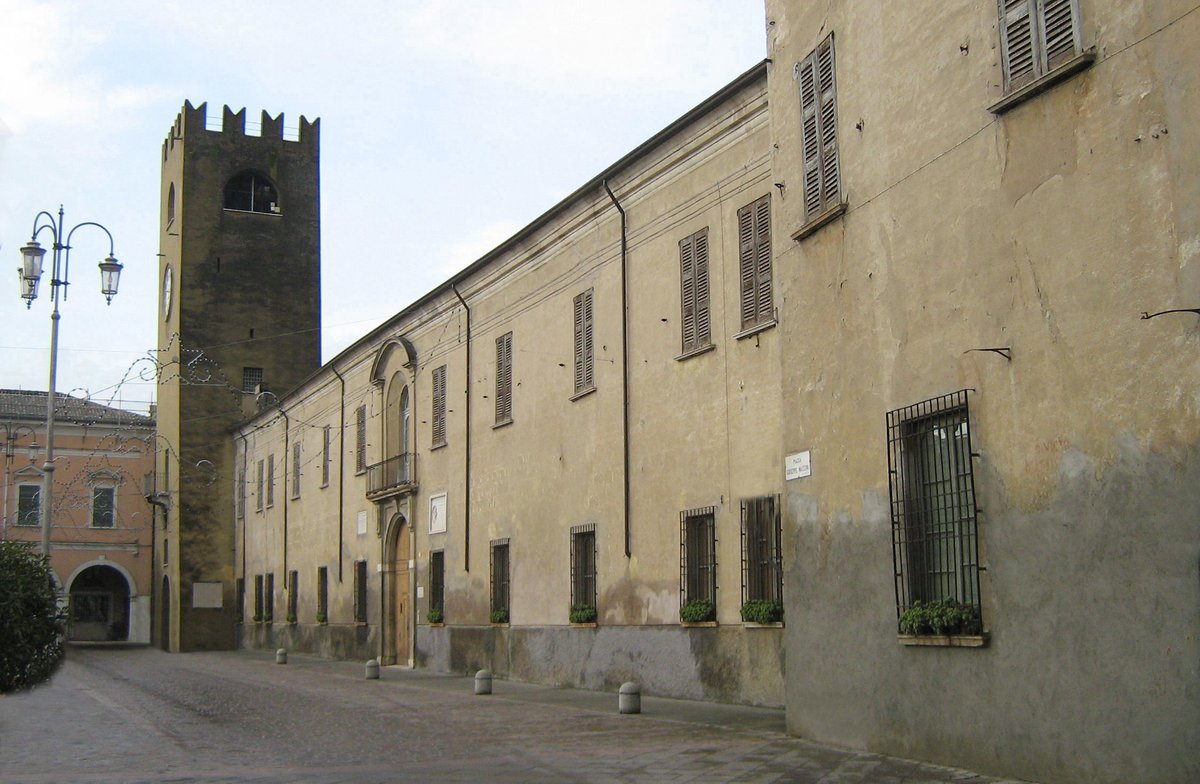
Entering Castel Goffredo and finding yourself in front of Palazzo Gonzaga-Acerbi is a bit like opening a history book: the entire north side of Piazza Mazzini is occupied by this elegant building, nestled between the Clock Tower and the Torrazzo. At first glance it looks like an eighteenth-century palace, but you only need to look at the towers on the sides to realize that a much older past lingers here. It was the home of the Gonzagas, lords of Mantua, and then of the Acerbis, who redesigned its facade in neoclassical style. Today it is a private place, but the portico and some rooms are opened for events and shows: an opportunity to discover a courtyard suspended in time, with its frescoed loggia and secret garden. It is not the usual museum: it is a living residence, which continues to tell stories.
Historical Notes: From Fortified Village to Gonzaga Court
The origins date back to the Middle Ages, when the municipality had a fortified residence here with the Palazzo del Vicario. In 1480 Ludovico Gonzaga began renovations; in 1499 the two buildings were joined. From 1511
Aloisio Gonzaga made it a true Renaissance court, frequented by Aretino, Bandello and in 1543 by Charles V. After Aloisio’s death (1592) decline; in 1776 it passed to the Acerbi family, who renovated it in neoclassical style. Giovanni Acerbi was born here (1825) and in 1862 Garibaldi was a guest. Timeline:
- 1337 – the Gonzagas become lords
- 1480 – Ludovico’s renovations
- 1499 – union of the two buildings
- 1511 – Aloisio and the court
- 1543 – Charles V as guest
- 1592 – killing of Aloisio
- 1776 – purchase by the Acerbi
- 1825 – Giovanni Acerbi is born
The Frescoed Loggia, Between Mystery and Beauty
As soon as you cross the threshold, the loggia welcomes you with four arches on marble columns, opening onto the garden. The cross vault is a riot of grotesques, and mythological scenes and four emperors run along the walls. Tradition attributes them to the school of Giulio Romano: there are no certain documents, but the style closely recalls the master who worked in Mantua for the Gonzagas. In the entrance hall, on the other hand, one recognizes the exploits of Marquis Aloisio, with episodes such as the battle of Marignano in 1515. A curious detail: in 1577 the painter Giulio Rubone undertook to complete the loggia begun by another artist, Alessandro da Casalmaggiore. Few places manage to convey this feeling of a secret court, a stone’s throw from the square.
Centuries-old Garden, Rose Gardens, and the Torrazzo
Beyond the loggia, the centuries-old garden desired by Aloisio opens: tall trees, a white marble fountain, and a pergola of precious grapes. The most romantic surprise are the two rose gardens, born from cuttings brought from Egypt by Giuseppe Acerbi in the early 1800s. On the side of the palace rises the Torrazzo, a medieval tower left almost intact: a protruding summit on corbels, machicolations, and gunports for firearms. On the ground floor was the torture chamber; from 1588 it housed the pawnshop of the Jews. It seems that Saint Aloysius Gonzaga also stayed there. A corner that makes you imagine the life of yesteryear, between splendors and dark stories.
Why Visit It
Why is it worth a stop? First of all, for its rarity: you can see a Gonzaga residence with frescoes of such high quality without having to go to Mantua. Then there’s the garden with its Egyptian rose beds, a small touch of exoticism in the countryside. Lastly, the façade conceals an incredible past: in the 18th century, the Acerbi family renovated it with Gaspare Turbini, but the Renaissance heart remains. It’s not a closed museum itinerary: the ground floor and the portico are opened for events, so you can take your time exploring. And if you’re a Risorgimento enthusiast, this is the birthplace of Giovanni Acerbi, one of the Martyrs of Belfiore: a piece of history you can experience firsthand.
When to Go
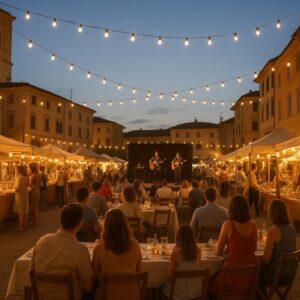
Don’t expect easy opening hours: the palace is private and only opens on special occasions. The beauty comes on clear days in the shoulder seasons, perhaps early in the morning, when sunlight slants into the loggia and the colors of the grotesques come alive. The light changes with the time of day: in the late afternoon, the facade warms up and the garden smells of roses. If you happen to catch an evening event, like the 2024 Red Cross charity dinner, take advantage of it: seeing the illuminated garden is an experience you won’t forget.
In the Vicinity: Upper Mantua Between Gonzaga and Risorgimento
The Upper Mantua area is a region waiting to be discovered. A stone’s throw away, Castiglione delle Stiviere is linked to Saint Luigi Gonzaga: the sanctuary and the historic center are worth a visit. A little further, Solferino preserves the Rocca and the memory of the 1859 battle, which inspired the founding of the Red Cross. If you feel like a dip in nature, Lake Garda is just waiting. But even without venturing far, strolling through the streets of Castel Goffredo, with its piazzas and traces of ancient walls, is already a wonderful journey back in time.