
Palazzo Grassi is an 18th-century neoclassical palace overlooking the Grand Canal, transformed into the home of the Pinault Collection of contemporary art following restoration by architect Tadao Ando. Rotating exhibitions feature works by international artists in minimalist spaces that highlight the contrast with the historic architecture.
- Pinault Collection: one of Europe’s most significant contemporary art collections, featuring artists like Damien Hirst and Jeff Koons
- Unique architecture: restoration by Tadao Ando blending neoclassicism with minimalist design
- Strategic location: directly overlooking the Grand Canal, opposite the Church of San Samuele
- Evolving exhibitions: regularly changing temporary exhibitions with site-specific works
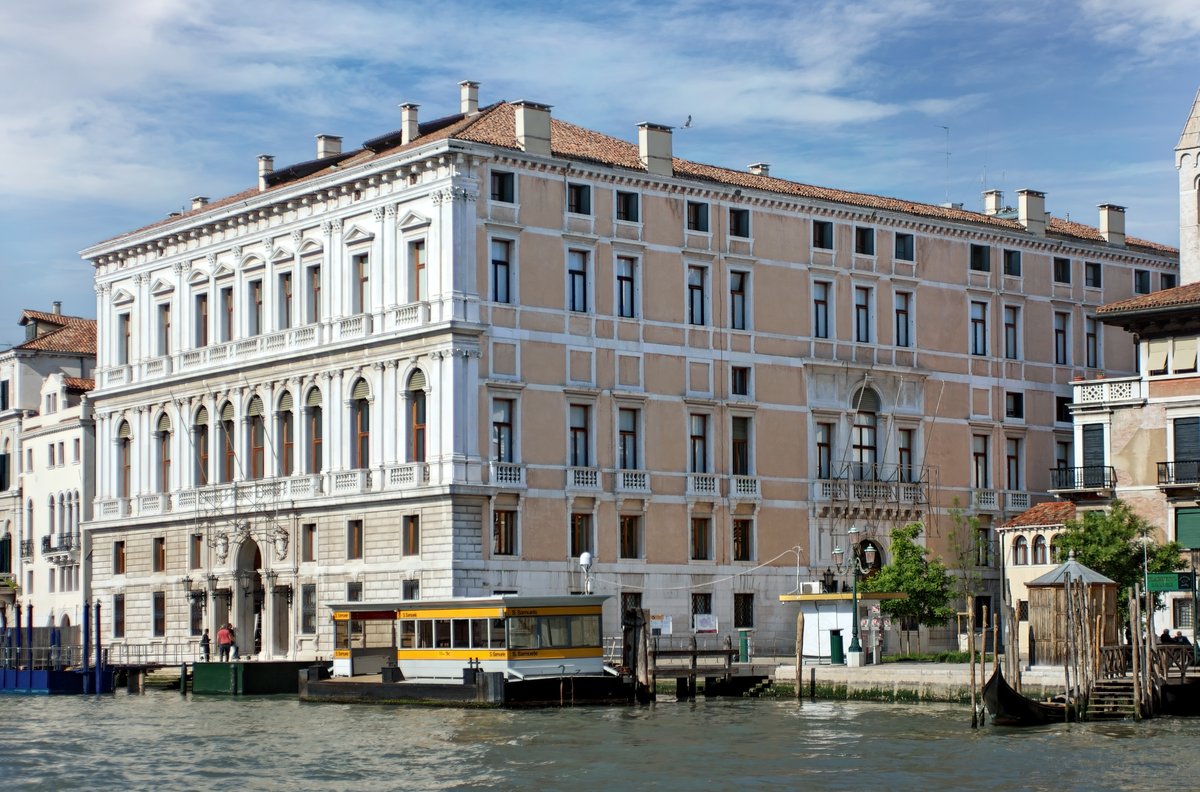
Palazzo Grassi in Venice houses François Pinault’s contemporary art collection in an 18th-century building restored by Tadao Ando. Exhibitions by artists like Damien Hirst and Jeff Koons engage with the neoclassical architecture on the Grand Canal.
- http://www.palazzograssi.it
- Calle delle Carrozze, Venezia (VE)
- Open in Google Maps
- View on Google Images Palazzo Grassi a Venezia
Good to know
Introduction
Historical Overview
- 1748-1772: Construction commissioned by the Grassi family, designed by Giorgio Massari.
- 20th Century: Changes in ownership and use as a temporary exhibition venue.
- 2005: Purchase by François Pinault and restoration by Tadao Ando.
- Today: Home to the Pinault Collection, featuring iconic contemporary art exhibitions.
The Pinault Collection
Architecture and Atmosphere
Why Visit It
When to Visit
In the Surroundings
💡 Did You Know…?
Palazzo Grassi has a curious history: built in 1748 by the Grassi family, it was the last great noble palace erected on the Grand Canal before the fall of the Republic of Venice. In 2005, after years of neglect, it was purchased by François Pinault, who transformed it into an art center. Architect Tadao Ando preserved the original facade but revolutionized the interiors, creating white, luminous spaces. A unique feature: the floor of the main hall was created by artist Rudolf Stingel with a gold leaf pattern that gradually wears down with the passage of visitors, becoming itself an evolving work of art.