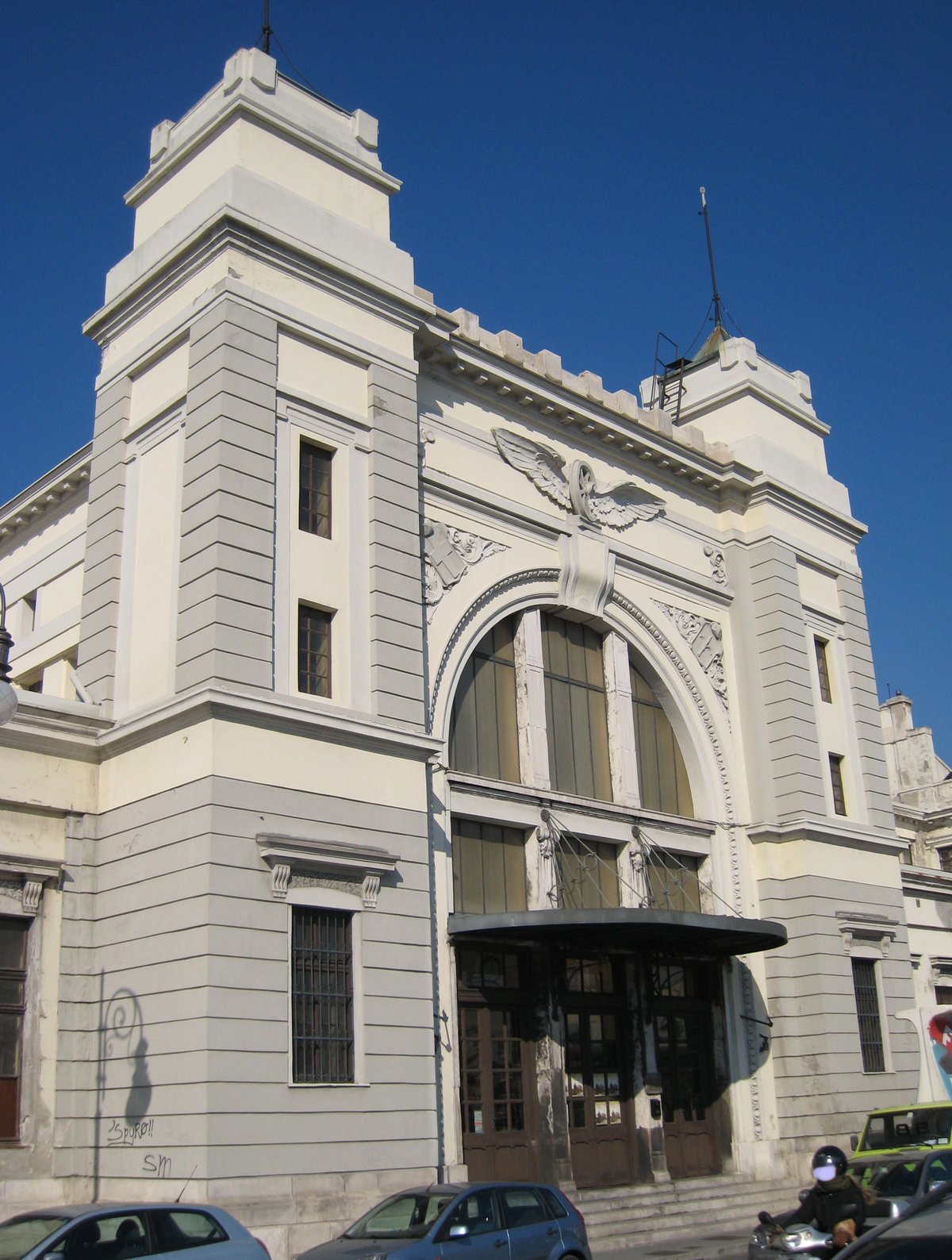
The Trieste Campo Marzio Railway Museum is currently closed for restoration, but its story deserves to be told. Housed in the former Art Nouveau station built between 1901 and 1906, the museum collects memorabilia, models, and historic rolling stock that testify to the railway evolution of Friuli-Venezia Giulia. Despite the closure, the redevelopment project will transform it into a national railway museum, complete with a themed hotel and a panoramic restaurant. Here’s what makes it special:
• Art Nouveau station from 1906 rich in Central European atmosphere, used as a film set.
• Collection of steam locomotives, electric engines, and vintage trams, including a German armored vehicle from World War II.
• Models and dioramas reconstructing historic railway lines, such as the Opicina junction of 1910.
• Future national museum with reopening expected between late 2026 and early 2027.
Introduction
Imagine an Art Nouveau station that looks like it stepped out of a period film, with platforms full of steam locomotives and vintage carriages. The Trieste Campo Marzio Railway Museum is exactly that, but since July 2017 it has been closed for an ambitious restoration. The good news? It will reopen between 2026 and 2027 as Italy’s second National Railway Museum, complete with a themed hotel, a panoramic restaurant under a new steel-and-glass canopy, and the possibility of hosting luxury trains like the Orient Express. A wait worth it, believe me.
Introduction
Imagine an Art Nouveau station that looks like it stepped out of a period film, with platforms full of steam locomotives and vintage carriages. The Trieste Campo Marzio Railway Museum is exactly that, but since July 2017 it has been closed for an ambitious restoration. The good news? It will reopen between 2026 and 2027 as Italy’s second National Railway Museum, complete with a themed hotel, a panoramic restaurant under a new steel-and-glass canopy, and the possibility of hosting luxury trains like the Orient Express. A wait worth it, believe me.
Historical Notes
Campo Marzio station was built between 1901 and 1906 by architect Robert Seelig for the Austro-Hungarian railways, as the terminus of the Transalpina line. After post-war decline, it closed in 1958. Thanks to a group of railway enthusiasts from the Dopolavoro Ferroviario, the museum opened on March 8, 1984. Today it is managed by the FS Italiane Foundation, which has started a restoration costing 24.5 million euros to turn it into a railway tourism hub. Here are the key moments:
Historical Notes
Campo Marzio station was built between 1901 and 1906 by architect Robert Seelig for the Austro-Hungarian railways, as the terminus of the Transalpina line. After post-war decline, it closed in 1958. Thanks to a group of railway enthusiasts from the Dopolavoro Ferroviario, the museum opened on March 8, 1984. Today it is managed by the FS Italiane Foundation, which has started a restoration costing 24.5 million euros to turn it into a railway tourism hub. Here are the key moments:
- 1906: Inauguration of Trieste Campo Marzio station
- 1958: Closure to passenger traffic
- March 8, 1984: Opening of the railway museum
- July 18, 2017: Closure for restoration
- 2026/2027: Planned reopening as National Railway Museum
- 1906: Inauguration of Trieste Campo Marzio station
- 1958: Closure to passenger traffic
- March 8, 1984: Opening of the railway museum
- July 18, 2017: Closure for restoration
- 2026/2027: Planned reopening as National Railway Museum
A Liberty-Style Museum Station
The beauty of this museum is that the venue itself is a museum piece. The Liberty building, with its large frescoed halls and Central European atmosphere, has been a film set and retains the intact charm of the early 20th century. During restoration, the steel and glass truss that collapsed in 1942 was reconstructed, now visible in the central courtyard. The ‘Giulio Cesare’ museum wing will house the historical collection, while in the right wing a hotel with 60 railway-themed rooms will rise. In short, an architectural gem shining again.
A Liberty-Style Museum Station
The beauty of this museum is that the venue itself is a museum piece. The Liberty building, with its large frescoed halls and Central European atmosphere, has been a film set and retains the intact charm of the early 20th century. During restoration, the steel and glass truss that collapsed in 1942 was reconstructed, now visible in the central courtyard. The ‘Giulio Cesare’ museum wing will house the historical collection, while in the right wing a hotel with 60 railway-themed rooms will rise. In short, an architectural gem shining again.
The Collection and Historic Rolling Stock
Inside, the museum gathers memorabilia spanning from the early 19th century to the 20th century: photographs, models (including the Opicina junction from 1910), documents, and a reconstruction of a period ticket office. Outside, on four tracks, you can admire eleven steam locomotives, one electric locomotive, a diesel railcar, and horse-drawn and electric trams from Trieste. Among the rare pieces: a German armored railway vehicle from World War II and the ALe 840 electric railcar. When it reopens, icons like the ETR 252 ‘L’Arlecchino’ and the ‘Settebello’ will also arrive.
The Collection and Historic Rolling Stock
Inside, the museum gathers memorabilia spanning from the early 19th century to the 20th century: photographs, models (including the Opicina junction from 1910), documents, and a reconstruction of a period ticket office. Outside, on four tracks, you can admire eleven steam locomotives, one electric locomotive, a diesel railcar, and horse-drawn and electric trams from Trieste. Among the rare pieces: a German armored railway vehicle from World War II and the ALe 840 electric railcar. When it reopens, icons like the ETR 252 ‘L’Arlecchino’ and the ‘Settebello’ will also arrive.
Why Visit
Even though it’s currently closed, it’s worth keeping an eye on for three reasons. First: it will become Italy’s second National Railway Museum after Pietrarsa, featuring an innovative exhibition layout. Second: you can sleep in a railway-themed hotel right inside the station, a unique experience. Third: the square will be equipped with electrified tracks to welcome historic and luxury trains like the Orient Express, making your visit a journey through time. Plus, its location near the sea and Miramare Castle is perfect for a day trip.
Why Visit
Even though it’s currently closed, it’s worth keeping an eye on for three reasons. First: it will become Italy’s second National Railway Museum after Pietrarsa, featuring an innovative exhibition layout. Second: you can sleep in a railway-themed hotel right inside the station, a unique experience. Third: the square will be equipped with electrified tracks to welcome historic and luxury trains like the Orient Express, making your visit a journey through time. Plus, its location near the sea and Miramare Castle is perfect for a day trip.
When to Go
The best time? Right after reopening, of course! But if you’re in Trieste before that, stop by to see the exterior: the restored facade is already visible and gives a glimpse of the place’s magnificence. For the visit, I recommend spring or autumn, when the weather is mild and you can pair it with a walk along the waterfront. Avoid high summer if you don’t like the heat; the museum is indoors, but the square is outdoors.
When to Go
The best time? Right after reopening, of course! But if you’re in Trieste before that, stop by to see the exterior: the restored facade is already visible and gives a glimpse of the place’s magnificence. For the visit, I recommend spring or autumn, when the weather is mild and you can pair it with a walk along the waterfront. Avoid high summer if you don’t like the heat; the museum is indoors, but the square is outdoors.
Nearby
Just a few steps away, don’t miss Miramare Castle with its seaside park. The historic Miramare train stop (currently under restoration) will be enhanced to connect the museum to the castle. Another idea: a trip to Villa Opicina and the Monrupino border crossing, from where railway routes to Slovenia depart. If you love trains, a stop at the nearby village of Prosecco is a must, combining wine and food with railways.
Nearby
Just a few steps away, don’t miss Miramare Castle with its seaside park. The historic Miramare train stop (currently under restoration) will be enhanced to connect the museum to the castle. Another idea: a trip to Villa Opicina and the Monrupino border crossing, from where railway routes to Slovenia depart. If you love trains, a stop at the nearby village of Prosecco is a must, combining wine and food with railways.